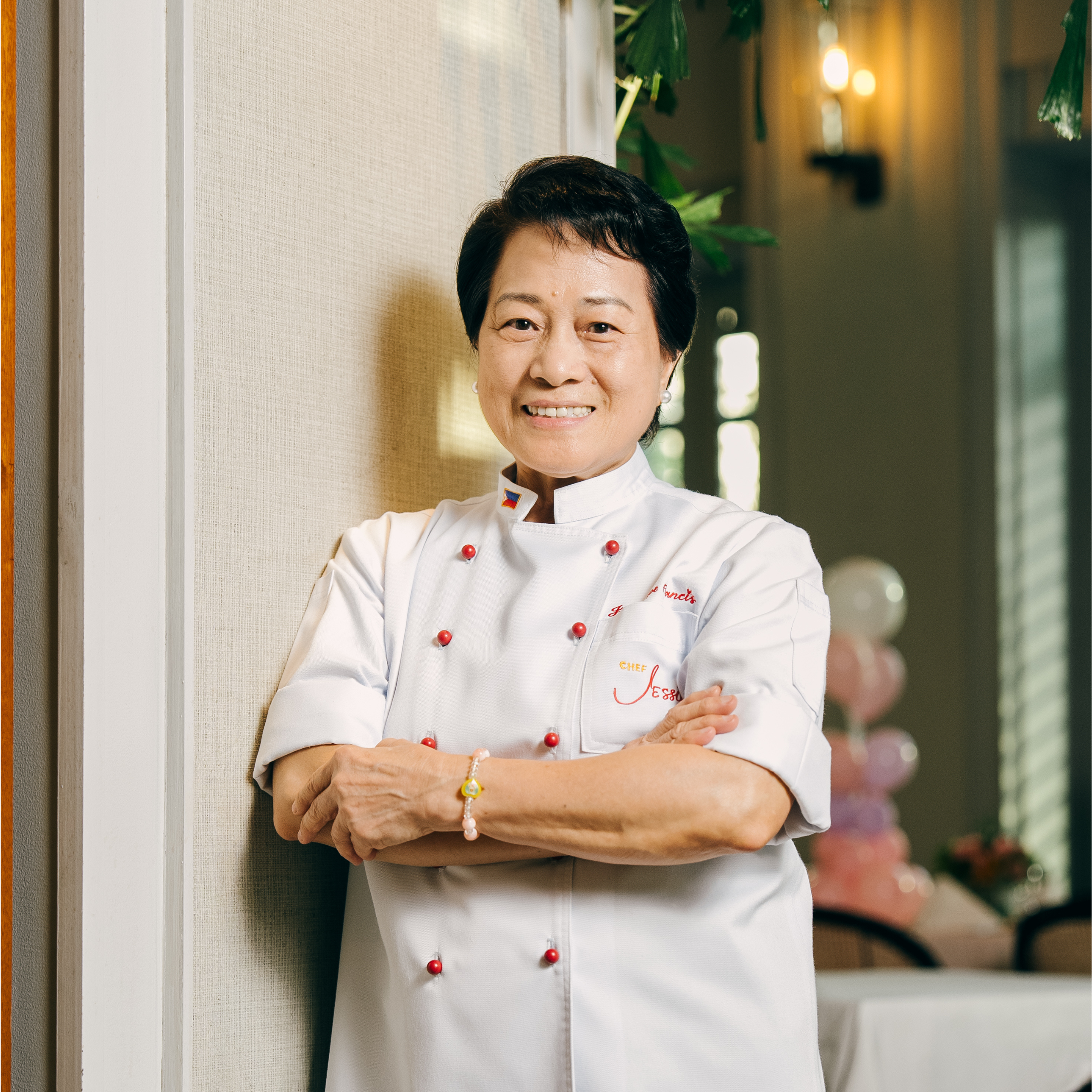
Carrying a bilao, five-year-old Josefina “Jessie” Sincioco roamed around the barrio in Angat, Bulacan with her mother and sold vegetables harvested from their farm.
“Kailangan sasayaw o kakanta muna si Jessie!” their suki would say. “After I sang and danced a little, they would then buy a lot, so we sold out our vegetables quickly,” she recalls, in Filipino, laughing.
The young girl would soon become one of the country’s sought-after chefs. In 2015, Sincioco cooked for Pope Francis during his four-day stay in the Philippines. Her restaurants have been classics in the city’s fine-dining scene for decades. But although she has made a name for herself here and abroad with her classical, French-inflected cooking, she still returns to her hometown three times a year: on her barangay’s fiestaFiestaA community celebration held in honor of a town or barangay's patron saint, marked by processions, music, and long tables of food. Every household opens its doors to guests, soGo to Fiesta Glossary, All Saints’ Day, and Christmas. How did her roots in Bulacan—and the flavors she grew up with—shape the chef today?
The Flavors of Angat, Bulacan That Shaped Chef Jessie Sincioco
Angat is a mountainous town in the eastern part of the province; to its east is the Sierra Madre, from which the Angat River flows. Sincioco’s mother was an enterprising housewife; her father and grandfather were farmers who tilled their own land. In a compound bought by her grandfather, she grew up with five siblings and 12 cousins.
Around her grandparents’ house were all kinds of fruit trees. “Name it!” Sincioco says. “There were chico, siniguelas, caimito, santol, kasuy, duhat, mabolo trees.” Sincioco, who is now 73, spoke as though she were tasting the fruits again. Her mom used camachile, slightly bitter and tart, to flavor sinigang na bangus. Sincioco remembers climbing a sampalok tree, eating the ripe pods high up, and throwing the seeds to her cousins below. “Siyempre, gantihan na ‘yon! (Of course, they’ll retaliate!)”
Sincioco grew up with fresh food—it was all around her. She owned a carabao named Carmela, given by her mother. “Para sa akin lang ‘yung gatas ng kalabaw ko (My carabao’s milk was only for me).” Her mother used what was around them, such as palaka na binuo, frogs caught in rice fields stuffed with their own sautéed meat and fried.
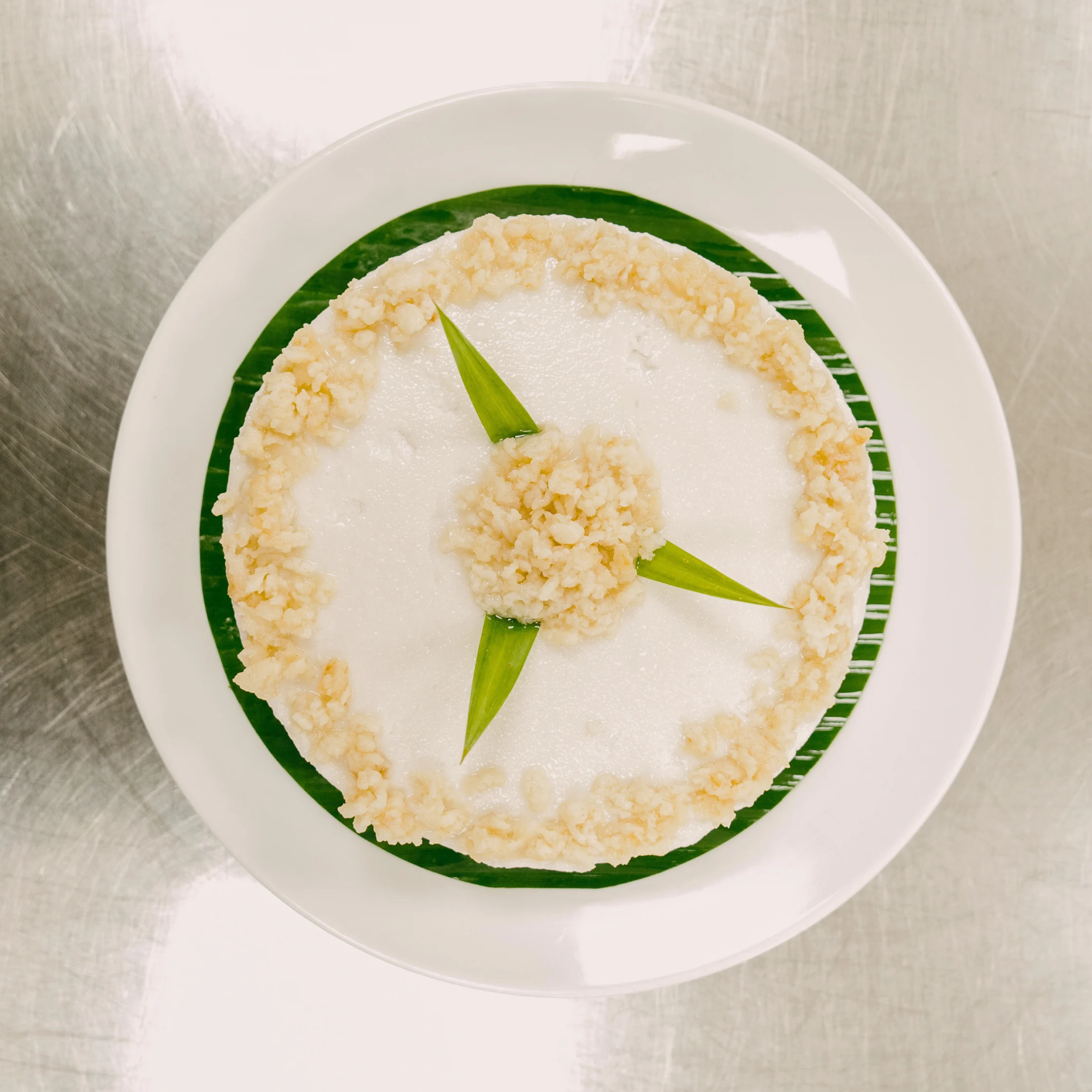
At the back of Sincioco’s grandparents’ house was a rice field, the harvests of which were only used for the family’s kakanin. “When malagkit was harvested, the first thing my grandmother would make was pinipig,” she says. “She would give us pinipig in small baskets that she weaved out of nipa, and we would eat it in the big steps of her house. I still remember the taste, parang may gatas, ang sarap (like milk, it was delicious).” Her mother and grandmother made the most out of the abundance of rice in Angat with their repertoire of kakanin. Sincioco’s favorite is an all-white, eight-layer sapin-sapin made by her mother, which requires precise timing to pour each layer.
The Angat Food Traditions That Taught Chef Jessie Sincioco About Hospitality
She belonged to a family of devout Catholics. The townsfolk of Angat strongly held onto their Catholic traditions, far from the modern beliefs of the metro. Sincioco’s childhood dream was, in fact, to be a nun. But on Easter Sundays, when her grandmother was still alive, her family would ride a borrowed school bus to the Angat River and wash dirty clothes in the stream, and as their elders labored over laundry, Sincioco and her cousins would swim. They had the river’s bounties for lunch: halabos na hipon, suam na tulya, ginataang kuhol, and ginisang sekan, a bitter weed that grew in the banks. They pulled watermelons and corn from relatives’ farms near the river—called tumana—and ate them for free.
The fiesta of Saint Joseph, her barangay’s patron saint, was when their family would butcher fattened pigs and cook them from nose to tail. The bony cuts were cooked into another one of Jessie’s favorites: pinatisan, meat stewed in fish sauce. “’Yung lasa noon, ‘yun ang lasa ng fiesta (Its flavor is the flavor of fiesta),” Sincioco says. The innards were cooked into dinuguan, into which hefty slices of white puto were dipped. “You wouldn’t pick who to welcome. You fed everyone who went to your house.”
How Chef Jessie Sincioco Brought Her Bulacan Roots to Fine Dining
She left this simple way of living when she was eight-and-a-half years old. Her Aunt Lita, an accountant, took her to Manila to send her to school. Enamored by the Makati skyline and its suited bankers, Sincioco majored in banking and finance and graduated from Manuel L. Quezon University. But her career took a turn when she and her aunt concocted a mango cake that won Sincioco the grand prize at the Great Maya Cookfest in 1983.
It led Sincioco to great heights: she managed the French fine-dining restaurant Le Soufflé for 18 years with her business partners, opened her own namesake high-end restaurants and catering business, catered a welcome dinner for 1,500 delegates during the ASEAN Summit, and cooked for the pope. She also owns a flagship building in Makati, named Chef Jessie’s Place. Still, she looked back on every step forward. “Perhaps because my lola and nanay cooked well, my palate was honed for food that’s properly cooked, nicely seasoned, and masarap. My growing up was really influenced by good food,” she says.
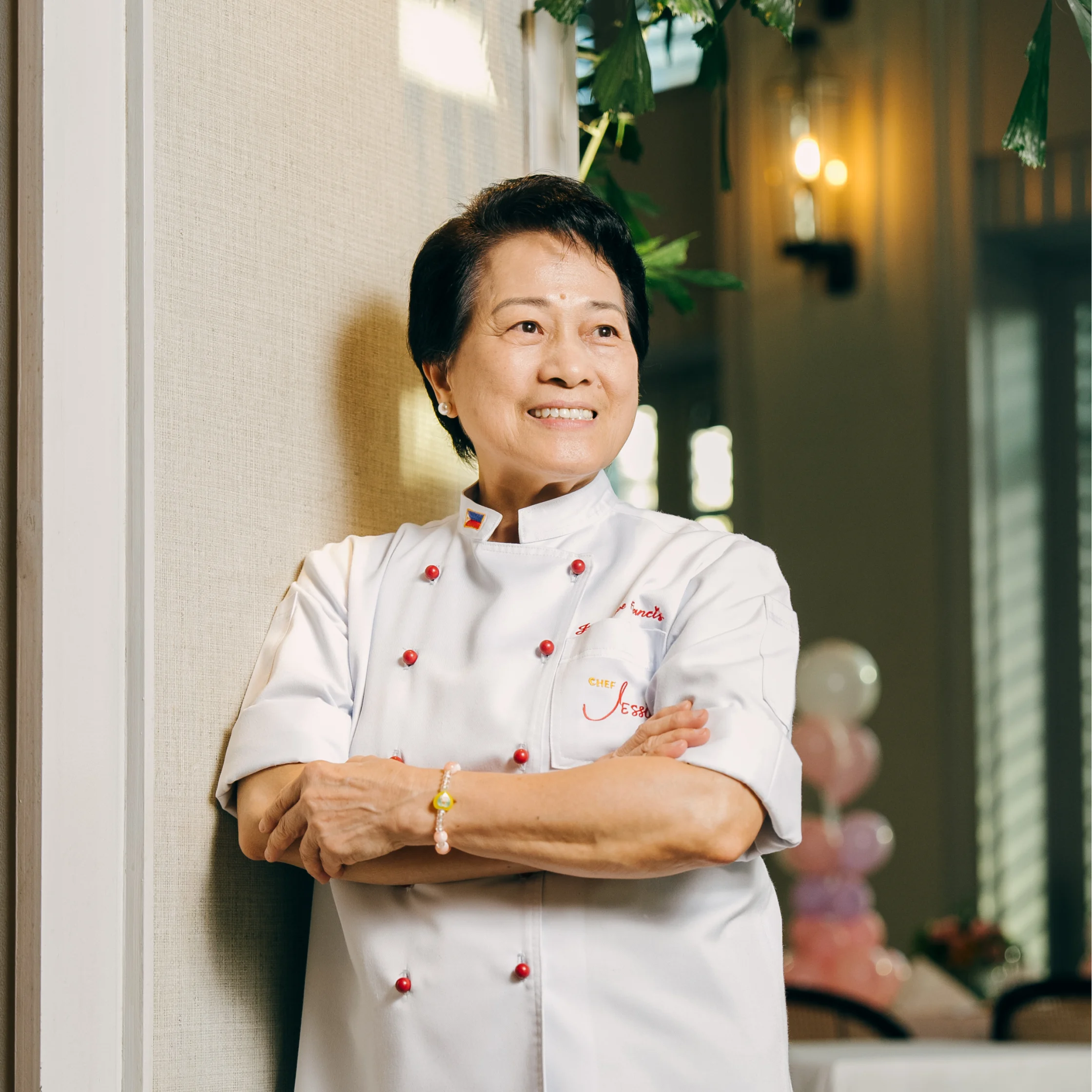
Sincioco still sautées the way her aunt taught her: “Ang pagsasangkutsa ay hindi minamadali (Sautéing is not rushed).” She emulates her family’s hospitality in her restaurants. “I think Bulakenyo hospitality is one of the best,” she says. “We will do everything just to make our guests really happy. Talagang bubusugin natin (We’ll really feed them well).”
When asked if she thinks Bulacan’s cuisine is underrated, she agreed. “I think we Bulakenyos are low-key, but we have so many dishes to be proud of.” Bulakenyo dishes from her hometown are still being served at Chef Jessie’s Place: sinampalukang manok with young tamarind leaves, kilawing puso ng saging, sinigang na bangus sa bayabas, her mother’s sapin-sapin, and kesong puti, which she still gets from the maker near her home in Angat.
“I cook the way Bulakenyos cook, I serve and entertain people the way I was brought up,” Sincioco says. “That is one thing I cannot get out of my system—it’s ingrained in me. Being somebody who was able to grow up in a barrio in Bulacan, I have no other influence. Even the way I think, even the way I cook, the way I treat my employees—I think the Bulacan way of life is very much a part of me.”

Frequently Asked Questions
Chef Jessie Sincioco grew up in Angat, Bulacan, where her family farmed and cooked with ingredients grown and sourced around their community.
Her childhood in Angat exposed her to fresh produce, traditional Bulakenyo dishes, kakanin, farm ingredients, fiestas, and a strong culture of hospitality. She says these experiences continue to influence how she cooks, thinks, and treats guests and employees.
Dishes associated with her Bulacan roots that she continues to serve include sinampalukang manok, kilawing puso ng saging, sinigang na bangus sa bayabas, her mother’s sapin-sapin, and kesong puti.
Chef Jessie Sincioco is known for her fine-dining restaurants and catering work, as well as her classical, French-influenced cooking. She has also cooked for major events, including a welcome dinner during the ASEAN Summit, and for Pope Francis during his 2015 visit to the Philippines.
Sapin-sapin is a Filipino layered rice cake traditionally made with glutinous rice flour, coconut milk, and other ingredients. Sincioco particularly remembers an all-white, eight-layer version made by her mother.