Advertisement

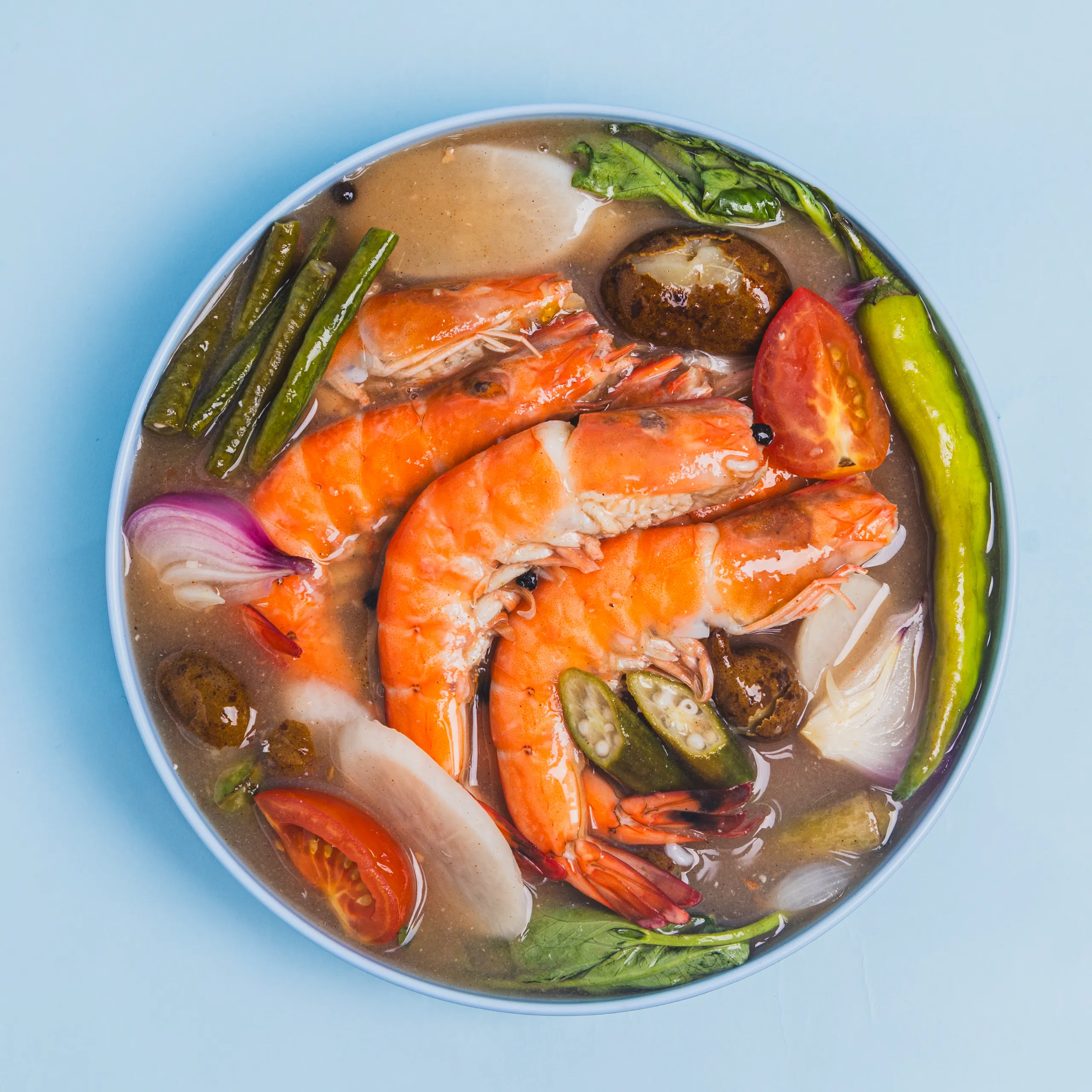
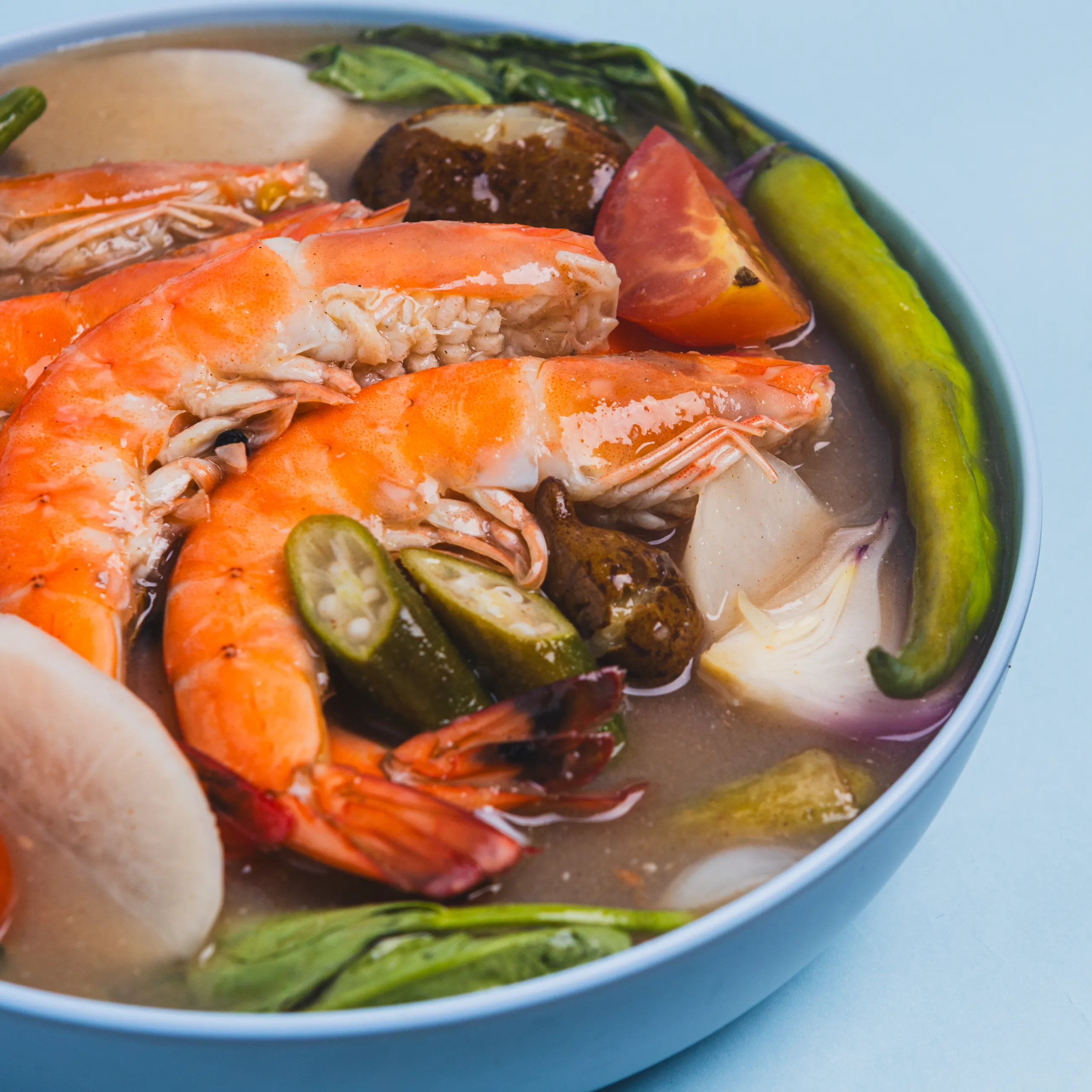
Sinigang na Hipon Recipe

PHOTO: EXCEL PANLAQUE
YIELDS:
4 SERVING(S)
Prep Time:
15 MINS
Total Time:
30 MINS
Cal/Serv:
66

Nutritional Information

Calories 264 kcal
Fat 1 g
Saturated fat 0 g
Trans fat 0 g
Cholesterol 201 mg
Sodium 894 mg
Carbohydrates 39 g
Fiber 6 g
Sugar 22 g
Protein 30 g
Vitamin D 0 µg
Calcium 177 mg
Iron 3 mg
Potassium 1085 mg

Note: The information shown is Edamam's estimate based on available ingredients and preparation. It should not be considered a substitute for a professional nutritionist's advice.

Introduction

Sinigang na Hipon Hipon, is a Filipino Shrimp Soup that’s broth is made with Tamarind. Sinigang was believed to have originated in the Philippines during the pre-colonial era.
Indigenous tribesmen have been using tamarind as a souring agent for their dishes. The
symphony of the tamarind mixing with the rest of the soup’s ingredients, makes it such a
warm bowl of the feeling of home when you have your first sip. There are other
variations of Sinigang. Pork, Beef, chicken and fish are also used as protein for this
dish.

Recipe Tips:

  • Devaine your shrimp. Trim the legs. You may choose to peel your shrimp too.
  • If you choose to use fresh tamarind. Boil water in a pot with the temperature of medium to low heat for 15 to 20 minutes. This is to soften the fresh tamarind. Don’t forget to peel the pods before you boil.
  • Avoid over boiling your shrimp.
  • Start sauteeing your onions then add salt and pepper, then add the sitaw (string beans)
  • Then you can also add your sliced raddish.
  • Start to add water as you sweat out some of the veggies.
  • As you wait for your pot to boil (with your sitaw, raddish and quartered onions) you can add your quartered tomatoes. Slice as many as you like, this is also a souring agent for the Sinigang.
  • Shellfish (or any seafood for that matter) can leave a slight sea smell. You have the option to add kalamansi to your boiling pot or lemon. The acidity can help not only with the smell but the flavor too.
  • Once the 20 minutes of the boiling pot with tamarind is done. Strain the tamarind out and start to squeeze the juice out using a strainer and ladle or if you want to make it into a paste, blend the relaxed tamarind in your trusty blender.
  • Once your complete sinigang pot comes to a boil. I hope your rice cooker was turned on. Sinigang is best served with rice. Enjoy!

Substitutions:

Tamarind

Tamarind powder. Tamarind paste. Kalamansi or Lemon. Fish Sauce is also welcome. 

Sitaw (String Beans)

You can substitute this with: French beans, Baguio Beans (snap beans), Snake Beans or if none of the above- add more kangkong or egg plant or raddish or ocra. 

Fresh Shrimp

Frozen Shrimp from the grocery store or you can also use fish or shellfish or pork or beef. 

Onion

Red, white, or yellow onions can all be used depending on what’s available.

Ingredients

  • 200 Gram tamarind (sampalok)
  • 5 Cup of water
  • 2 Medium tomatoes, wedges
  • 2 Medium onions, wedges
  • 1 Teaspoon whole peppercorn
  • 3 Piece long green chilis
  • 4 Piece ladys finger (okra)
  • 1 Medium white radish, sliced
  • 1 Cup string beans, cut into 2 inch
  • 500 Gram shrimps, cleaned
  • 2 Tablespoon fish sauce
  • salt and pepper to taste
  • 1 Cup water spinach (kangkong)
Keep screen awake

Directions

Step 1

Place the sampalok (tamarind) in a small cooking pot and add enough water to cover the fruit, just about a cup to a cup and a half. Set to medium heat and allow the tamarind to boil for about 15 to 20 minutes, or until the fruit becomes soft, or until the skin of the fruit is cracked or soft. Once softened, remove the pot from the heat and let it cool slightly until you can actually handle the fruit. Using a strainer and a spoon, mash the cooked tamarind to release the juice into the water. 

Step 2

In another pot. We start to cook the Sinigang itself, so please choose a pot that you think would fit all your ingredients. How do you like your veggies done? If you like them a little crunchy, sauté the beans with the onions and the radish as well. If you don’t want your veggies crunchy, let go straight to boiling. Add around 3 to 5 cups of water, medium heat.

Step 3

Once the water reaches a gentle boil, carefully add the tomatoes, onions. Season with salt and pepper. Stir the ingredients lightly to help distribute them throughout the water and allow their flavors to marry into the broth. Lessen your heat as you deem fit. Let the mixture simmer for about 8 to 10 minutes, or until the vegetables begin to soften and release their natural flavors and aromas. The smell of the tomatoes, onions and the vegetables would make you want to add the tamarind.

Step 4

By this time, your vegetables have softened. You can now carefully pour in your tamarind broth. While adding, you can use a strainer to separate the pulp. If you’d like to include the tamarind pulp, go ahead and forego the strainer. If there is a little boiling action, take your teaspoon and have a little try of the broth. If you taste the tamarind and the tomatoes, is it sour enough? Lacks a little more? Add the fish sauce. 

Stir the mixture gently to ensure that the sour tamarind flavor and savory flavor of the vegetables and the fish sauce are evenly tucked throughout the broth. Allow the ingredients to blend together, creating a balanced combination of tangy, salty, and aromatic flavors. Continue stirring for a few moments until the soup embraces everything you have placed in it. Even your love. 

Step 5

Once your soup has been seasoned and stirred out. If you haven’t placed the other vegetables, please do so now. Stir gently to help the vegetables get flavor from the broth. Once you notice the vegetables are softening, let the mixture simmer for another 3 to 4 minutes, giving the vegetables enough time to cook. Not too cooked so you still get the natural nutrients of the vegetables. Try not to overcook the vegetables to preserve their color, nutrients, and slight crunch.

Step 6

Once the vegetables are softened (not too soft. Check your radish and string beans), carefully add the cleaned shrimp into the simmering broth. Stir gently to ensure that the shrimp is evenly distributed so it can cook evenly with the rest of the ingredients. Allow them to cook for about 2 to 3 minutes, or until they change in color from gray to bright orange and become firm and cooked. Take heed while cooking the shrimp, if the shrimp will get over cooked, it becomes gummy and tough. After a quick change of color from grey to orange, that’s when you know the shrimp is cooked. You may now taste the broth, since the shrimp is cooked and adjust the seasoning by adding salt and pepper to your liking. Stir gently once more to allow the seasonings to blend with the soup, enriching the soup base. 

Step 7

After the ingredients are cooked, add the Kang Kong to complete the Sinigang symphony. Drown the Kang Kong using a ladle. Kang Kong cooks fast, so once you see the leaves slightly softening. Turn off the heat. 

Step 8

You’ve finished the kitchen battle of preparing and cooking this hearty dish. Now it’s time to prepare for service. Unleash your creative juices on how you want to serve your finished product. You can serve it personally, but already putting it soup bowls. You can also serve this family style, just in the pot and put the pot in the middle of your dinner table. Please, don’t skip on rice with this dish. They really go well together. Enjoy!

Sinigang na Hipon end
PHOTO: EXCEL PANLAQUE

Alexander Villarante

Recipe Developer

Alexander Villarante is a passionate culinary professional with more than 15 years of experience in the hospitality industry, having built his career in prestigious five-star luxury hotels abroad. He studied Culinary Arts at the Singapore Boston Business School, where he developed a strong foundation in both classical and modern culinary techniques. Throughout his career, he has worked alongside talented chefs from diverse cultural backgrounds, refining his skills and gaining extensive experience in creating exceptional dining experiences. His dedication to excellence has earned him recognition in the competitive culinary scene. Alexander participated in the Philippine Culinary Cup, where he received several citations for his creativity, technical expertise, and commitment to his craft. These achievements reflect his passion for continuous learning and his pursuit of culinary excellence.


Frequently Asked Questions

Yes. Thaw the shrimp completely and drain excess water before cooking.

Add extra tamarind juice or additional tamarind soup mix gradually until the desired sourness is achieved.

Absolutely. Eggplant, taro (gabi), and pechay are popular additions to sinigang.

Steamed white rice is the traditional and most popular accompaniment because it balances the soup’s tangy flavor.

0 0 votes
Total of Ratings
guest
Rating
Ratings for Article
0 Comments
Oldest
Newest Most Voted

To provide a customized ad experience, we need to know if you are of legal age in your region.

By making a selection, you agree to our Terms & Conditions.