

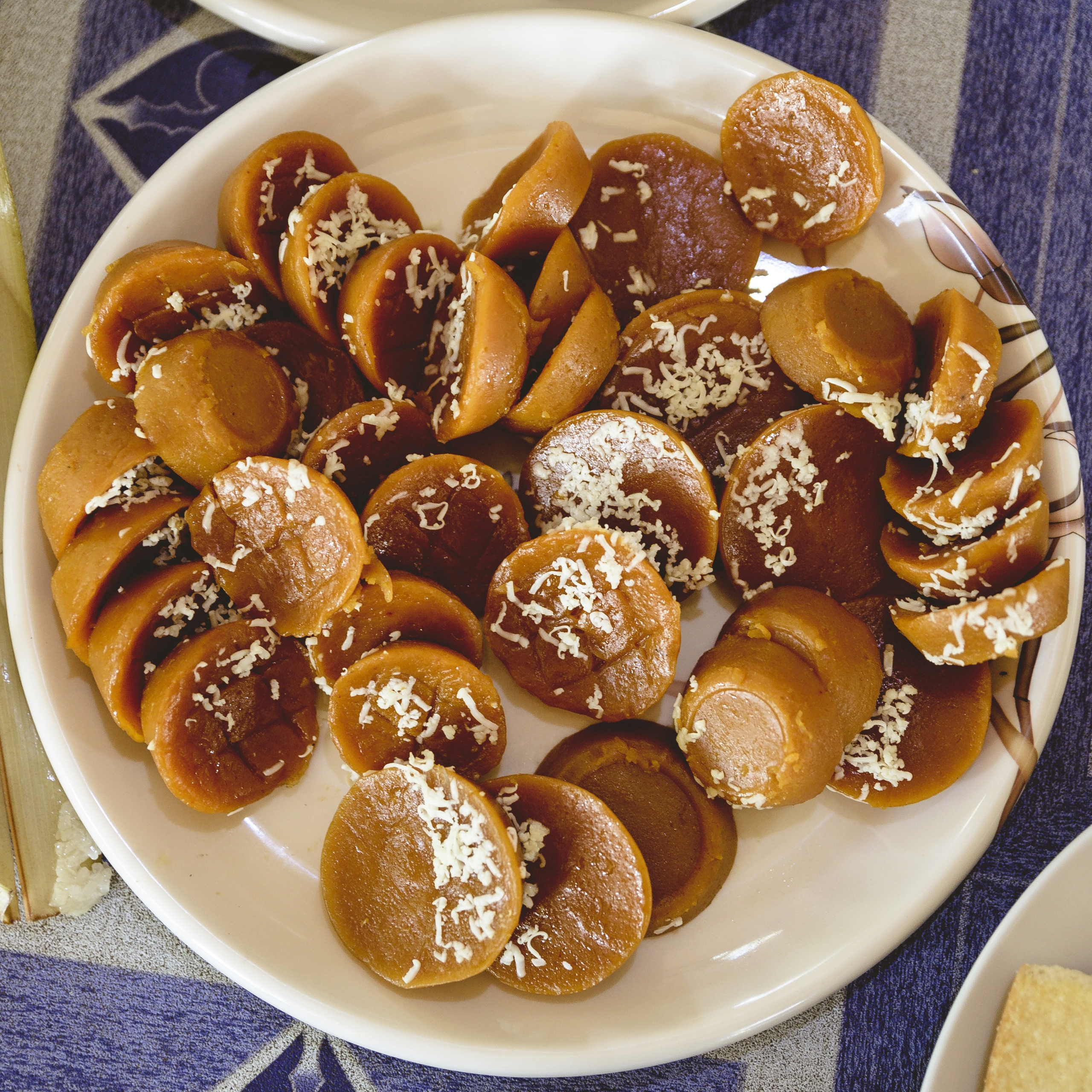
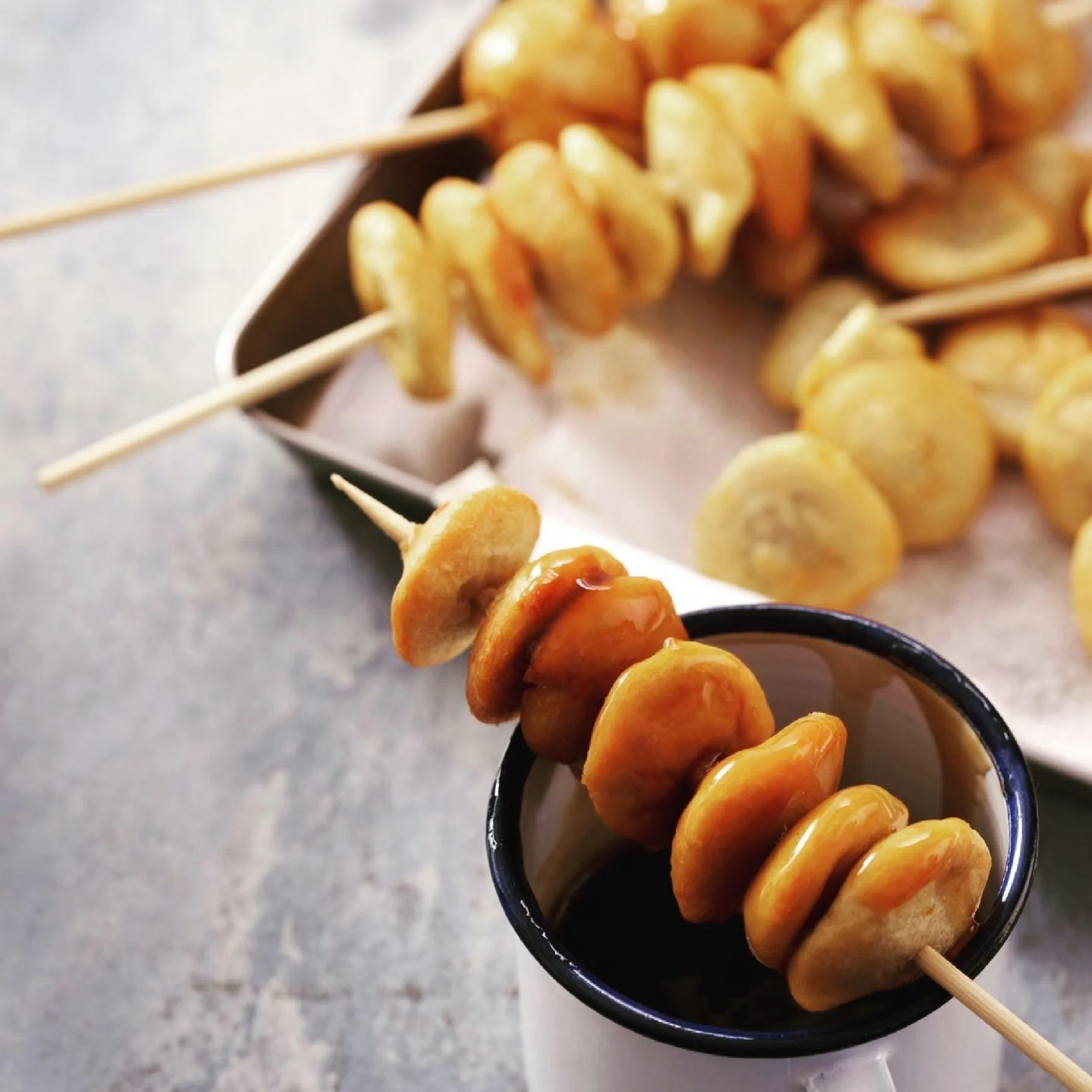
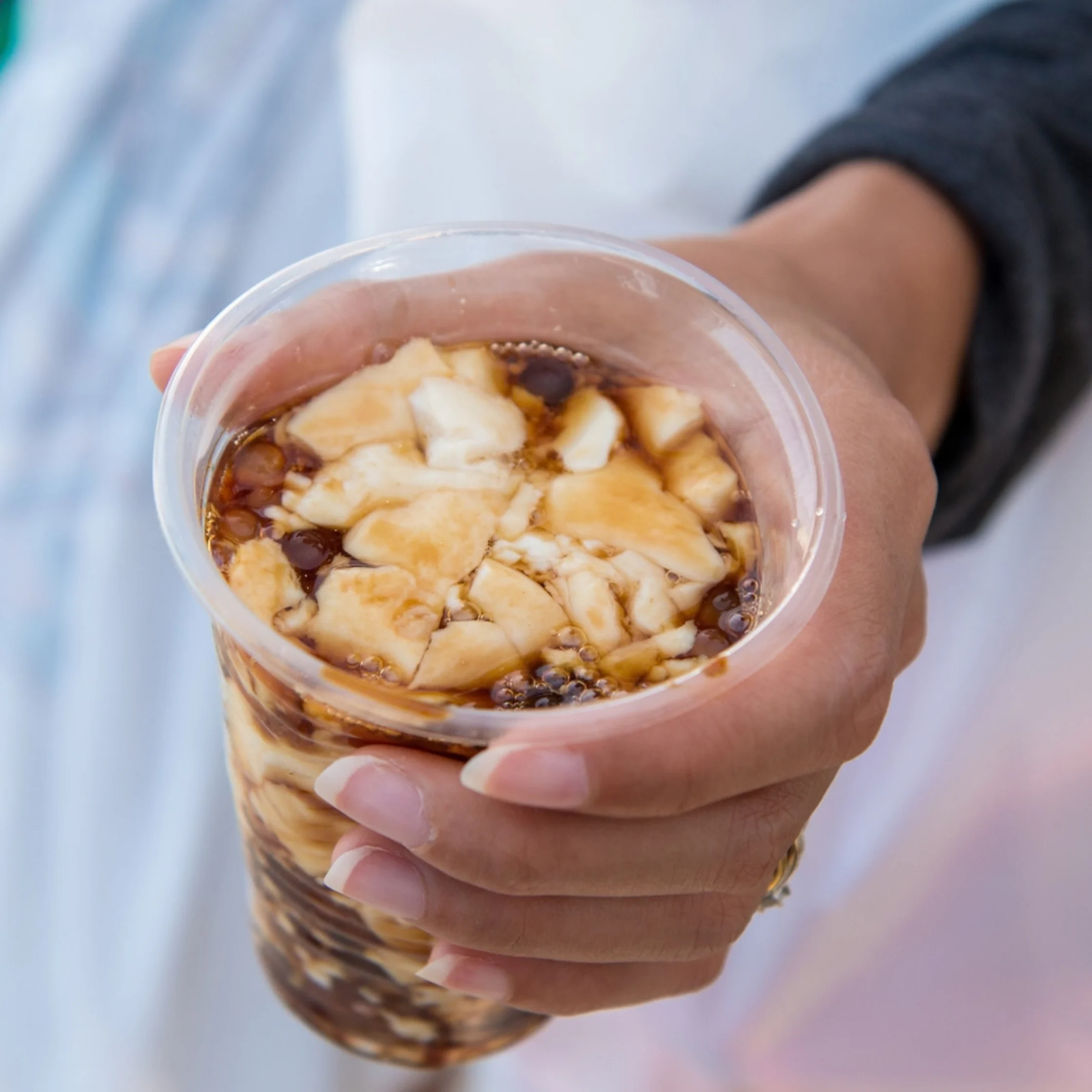
Manila’s streets are pretty much meryendaMeryendaThe light mid-afternoon snack or mini meal that punctuates the Filipino day, often taken between lunch and dinner. It can be simple, like pandesal and coffee, or heartier, like pancit,Go to Meryenda Glossary heaven, buzzing with vendors selling tasty treats on the cheap: green mangoes and singkamas, sold pre-cut and optionally served with salt or bagoong; colorful portions of kakanin from roving carts; warming taho sold by hardworking vendors who spend much of the day roaming the streets; deep-fried treats (banana cue, kamote cue, carioca, turon, lumpia); and all the balls (fish balls, squid balls, you name it).
At home kitchens and school and office canteens, sweet, warm ginataanGinataanAny Filipino dish cooked in coconut milk, known as gata. It spans savory viands like laing and ginataang manok, and sweet snacks such as ginataang bilo-bilo, made with root crops,Go to Ginataan Glossary na halo-halo, munggo, and mais warm rumbling stomachs. Pancit makes for fine afternoon fuel, downed with Coke over ice. Those on the go can grab a packed sandwich for mid-day sustenance on the daily commute.
Beyond Fuel
Clearly, Filipinos love their meryendaMeryendaThe light mid-afternoon snack or mini meal that punctuates the Filipino day, often taken between lunch and dinner. It can be simple, like pandesal and coffee, or heartier, like pancit,Go to Meryenda Glossary, with the 2026 State of Snacking report by Mondelez International, Mintel, and Black Swan Data showing that only 5% of Filipino respondents skip their morning or afternoon snacks.
If the three main meals of breakfast, lunch, and dinner are considered the daily diet’s backbone, meryendaMeryendaThe light mid-afternoon snack or mini meal that punctuates the Filipino day, often taken between lunch and dinner. It can be simple, like pandesal and coffee, or heartier, like pancit,Go to Meryenda Glossary time might be relegated as an optional indulgence, its purpose more rooted in pleasure than the need for fuel. Some might view this mid-meal meal as frivolous, and sure, it is optional. But I’d argue there is value to snacking aligned with the bigger reasons we eat.
It can be beneficial as part of a healthy diet. Snacking, when it involves balanced, good-for-you foods that combine protein, fiber, and healthy fats, keeps energy levels constant between meals and can get you out of the dreaded afternoon slump. It can curb your appetite so you don’t end up gorging by lunch or dinnertime, and can help with whatever #gains and fibermaxxing goals you might have outside full formal meals.
But there’s a case to be for morning or afternoon snackage, even outside the nutrition argument. Meryenda time offers a moment of indulgence that—for those of us otherwise pulling our hairs at the pent-up doom and gloom given the state of the world we’re in—is (I would say) worthwhile. Sure it isn’t strictly necessary from a survival standpoint; neither is music, dance, art. We engage in them anyway, as these pleasures make getting through the next couple of hours more bearable—and our days, all the more colorful.
From Latin Roots to Pinoy Comfort
The term comes from the Spanish merienda, which is similarly a snack or light meal typically enjoyed around 5 PM, akin to afternoon tea. That, in turn, is rooted in the Latin merenda, which also refers to a collation or a light informal meal that could be what we consider lunch, or something had a bit later. And the Latin merenda is derived from the verb merere or “to deserve or earn,” implying it was a meal earned after a hard day’s work.
Filipinos have adopted the practice in much of the same way, albeit with variations. Meryenda in this part of the world takes place either in the morning, around 10 AM between breakfast and lunch; and/or in the afternoon, roughly 3 to 5 PM between lunch and dinner. And although it can certainly be done alone, it’s also not uncommon to engage in the practice with others—consistent with the Filipino love of communal dining.
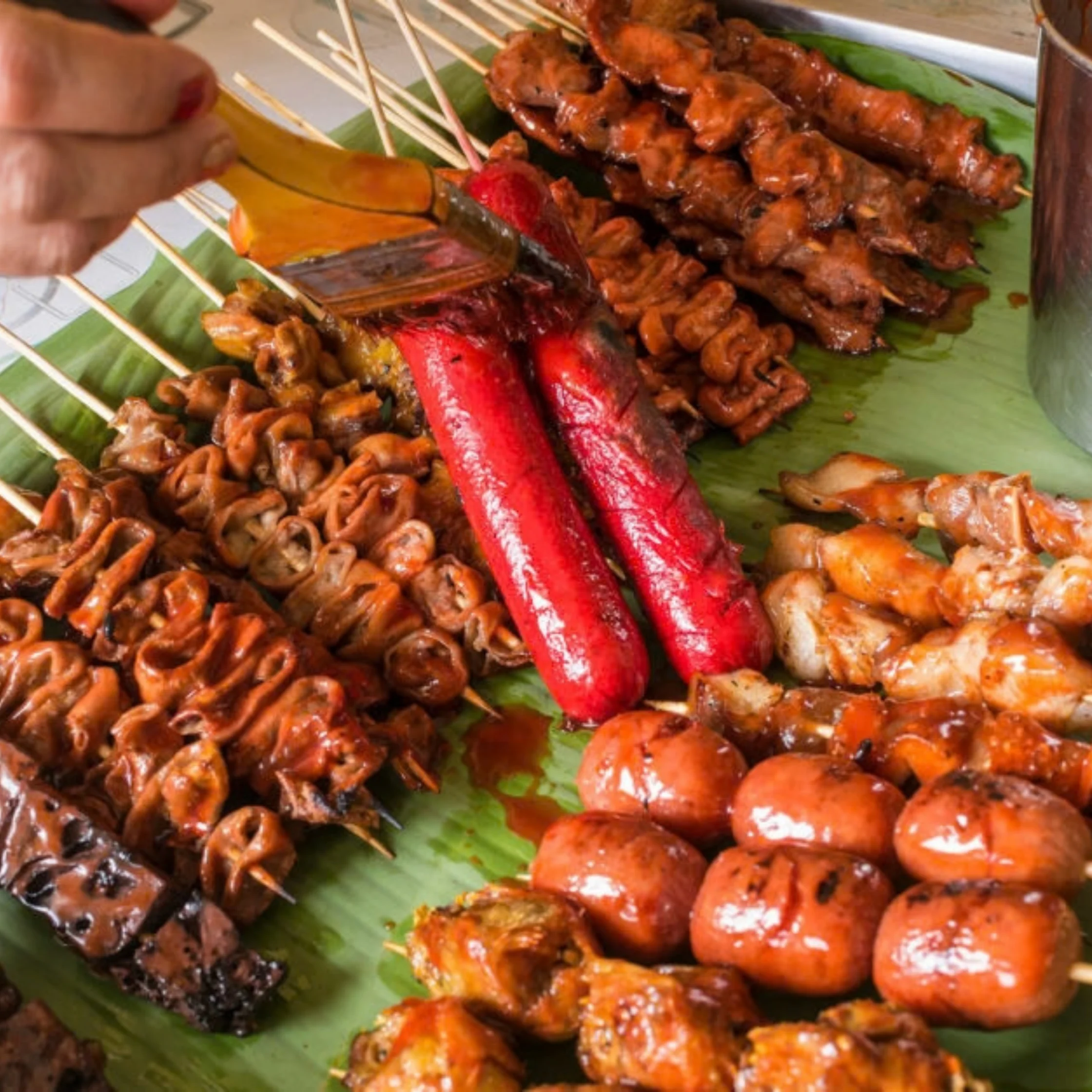
One of the wonders of Filipino meryendaMeryendaThe light mid-afternoon snack or mini meal that punctuates the Filipino day, often taken between lunch and dinner. It can be simple, like pandesal and coffee, or heartier, like pancit,Go to Meryenda Glossary is in the way it embraces the blurring of boundaries between amusement and substance, snack and mealtime, mealtime and dessert. Some, like packaged snack cakes and cookies, lean sweet and are akin to a treat. Some, like siomai doused in toyomansi and chili garlic, are decidedly savory. And some, like the classic cheese-topped ensaymada and the champorado-tuyo combo, fall somewhere within the salty-sugary spectrum.
Likewise, some meryendaMeryendaThe light mid-afternoon snack or mini meal that punctuates the Filipino day, often taken between lunch and dinner. It can be simple, like pandesal and coffee, or heartier, like pancit,Go to Meryenda Glossary foods lean lighter, while others just about approach full meal territory. You’ve got things like fresh fruit from the palengke when you’re looking for a balanced bite; or the likes of Pinoy spaghetti when you’re feeding hungry teenagers right out of a heated basketball session.
To meryendaMeryendaThe light mid-afternoon snack or mini meal that punctuates the Filipino day, often taken between lunch and dinner. It can be simple, like pandesal and coffee, or heartier, like pancit,Go to Meryenda Glossary is to celebrate of the pleasures of eating—pleasures that bring joy to otherwise-mundane days.

Frequently Asked Questions
Meryenda refers to the Filipino practice of eating a light meal or snack either in between breakfast and lunch or in between lunch and dinner.
It comes from the Latin word “merenda,” which pertains to a collation or a light informal meal that could be what we consider lunch, or something had a bit late. To break down the work even further, “merere” means “to deserve or earn.” This implies a meal that is earned after working hard on something.
There is the Spanish word “merienda” which has similar definition of being is a snack or light meal eating around 5PM.
Some foods commonly eaten as meryenda in the Philippines include bread, green mangoes and singkamas served with salt or bagoong, kakanin, taho, banana and kamote cue, packaged snack cakes and cookies, fish and squid balls, and pancit.
Meryenda usually takes place either in the morning, around 10 AM between breakfast and lunch; and/or in the afternoon, roughly 3 to 5 PM between lunch and dinner.
Everyone has their own reasons for eating meryenda. Some do it because they need the extra fuel to get through the day. Some genuinely look forward to eating it out of pure pleasure, seeking just a moment of indulgence before going back to the real world.