

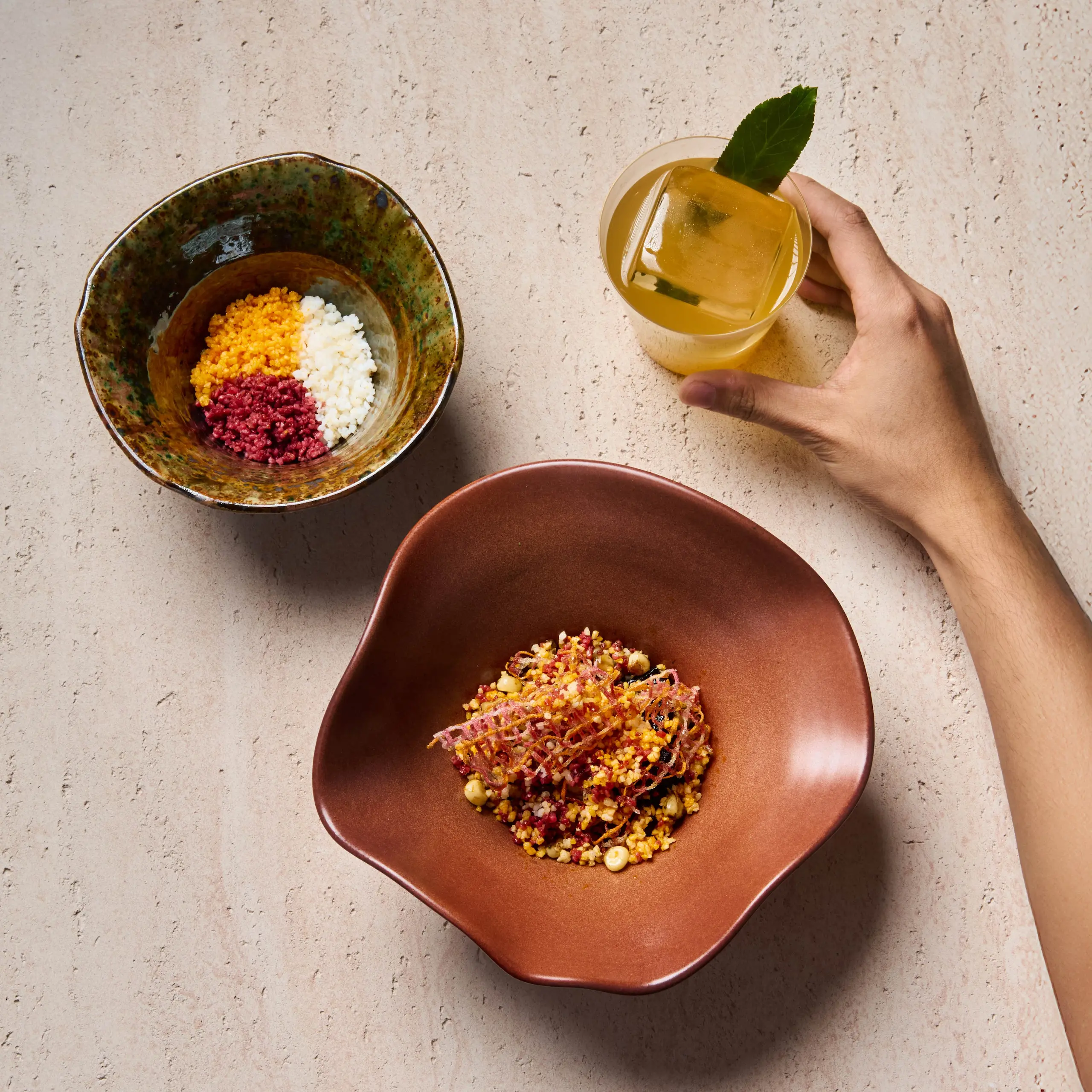
Inspired by Peru and the Philippines, Flow is a fine dining restaurant that blends Latin American and Southeast Asian flavors and highlights indigenous ingredients through biomes, landscapes, and local narratives.
“I would’ve gone to Afghanistan, I would’ve gone to Antarctica, if the right guy was there to teach me,” he said. “It just so happened that the right guy was [in Peru]. [Virgilio] became the best teacher I could ever ask for.”
This was confessed by Kevin Uy, in reference to his five-year work alongside Virgilio Martínez and Pía León at Central in Lima, once considered the best restaurant in the world. He first met Martínez, whom he considers his mentor, at Madrid Fusión Manila in 2016.
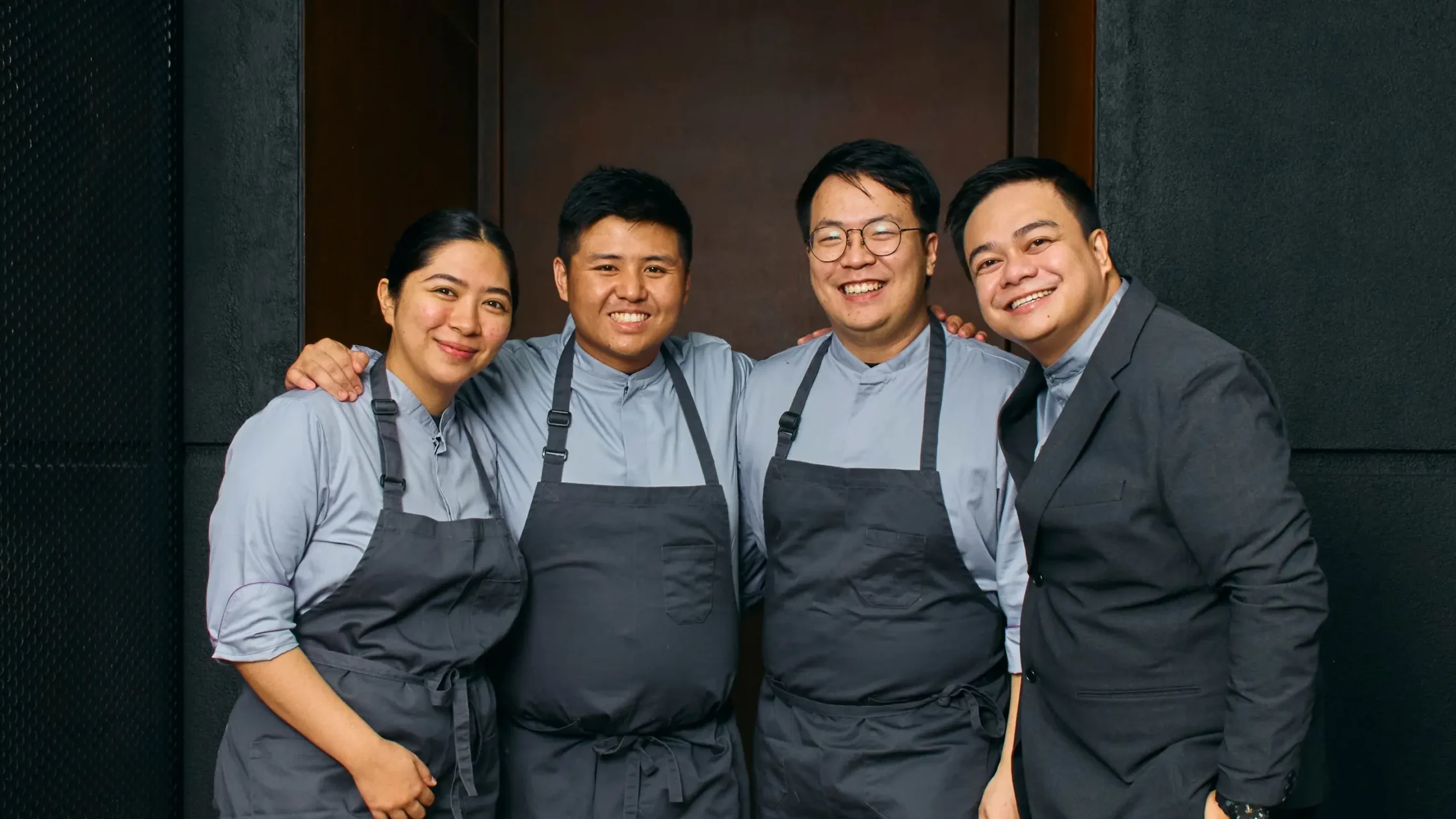
As soon as his stint ended, Uy returned to the Philippines to stay for good and open his first restaurant. Partnering with Gabriel Ong as co-executive chef made sense for him, since Ong has professional experience at acclaimed restaurants such as Alain Ducasse at Morpheus in Macau and Amber in Hong Kong. The two were classmates in nursery and at Enderun Colleges, where they studied culinary arts. After reuniting for a pop-up in 2024, they found a good working dynamic: as Uy conceptualized new dishes, Ong ensured they were enforceable in a restaurant. “I’m the wide-eyed dreamer, and he’s the grounded realist,” Uy said. “The desensitized one,” Ong replied, to which Uy guffawed.
Flow Makati: A Peruvian-Filipino Tasting Menu
Their shared vision resulted in Flow, a fine-dining restaurant hidden within Green Sun Hotel in Makati, which opened in December 2025. The restaurant’s maiden menu, a nine-course tasting with a Peruvian Filipino theme, reflects Uy’s experiences in Peru and Central’s ethos of exploring the possibilities of local ingredients. “Our philosophy here in Flow is we stretch ingredients,” Uy said. “The way we think about ingredients is, How far can we take this?”
The Peruvian flair that Flow brings to Manila’s dining scene is luminous. There is a clear effort to veer away from the cold sleekness of traditional fine dining and toward a more laid-back aesthetic and atmosphere. Each course is served in bespoke tableware, with every local artist credited on thick menu cards that servers place on the table before setting it with ceramics of different persuasions. In one moment, a porous bowl that looked as though corals once latched onto it; in another, a wacky red bowl resembling a banana heart cut open.
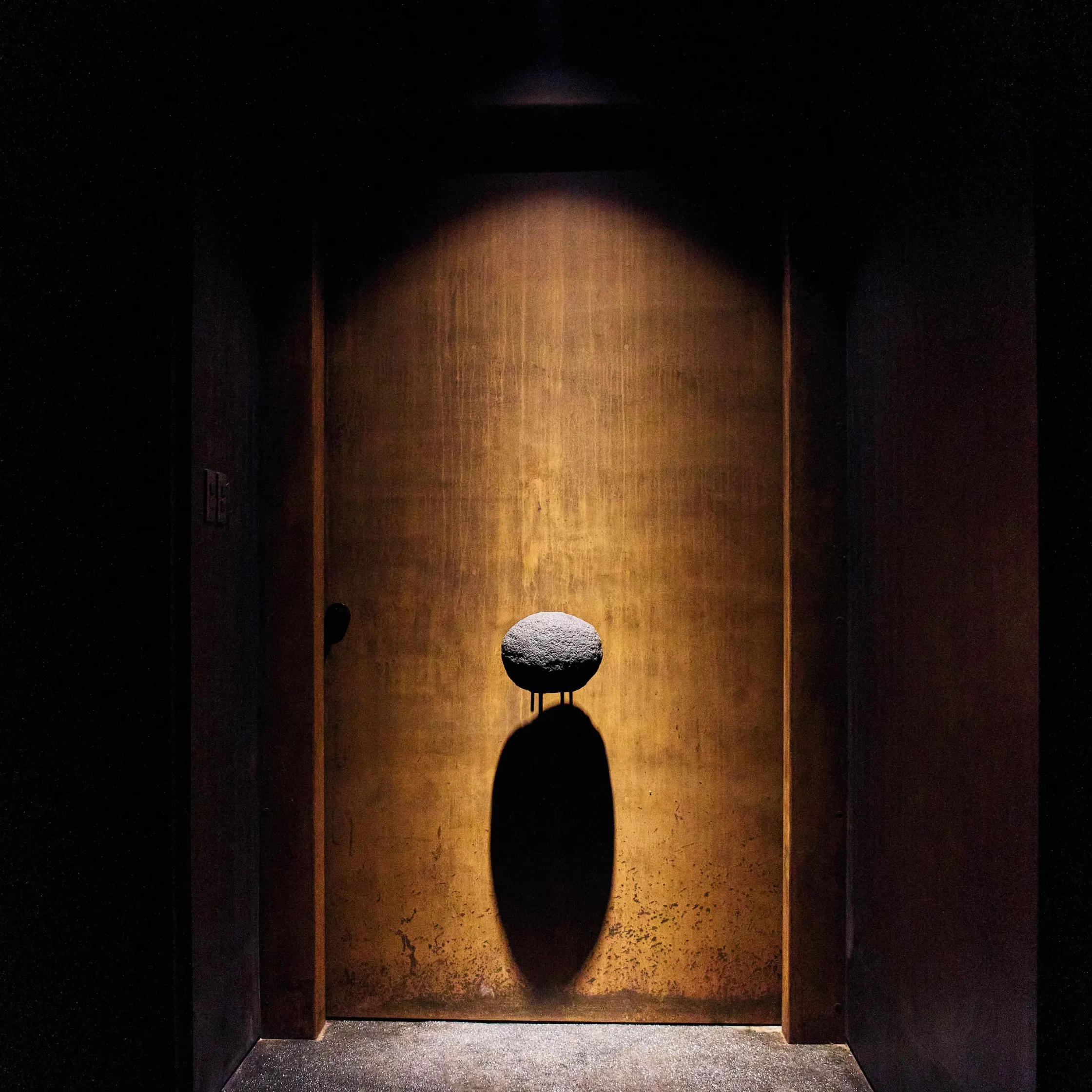
Flow’s idiosyncrasies extend to its modish wood-and-brick interiors. In the dimly lit dining room, glass cloches seemed to float beside the walls, to which our server pointed and explained, museum-guide style, that their contents were the main ingredients we would be tasting later. Called virinas, they are containers traditionally used in Filipino sacred art to house religious images. The display seemed to telegraph that at Flow, ingredients are venerated.
How Flow Blends Peruvian and Filipino Flavors
The story that Flow’s début tasting menu wants to tell is about the commonalities and contrasts of Peruvian and Filipino cuisines. The menu illustrates, thoughtfully and thrillingly, that the two countries are closer than one might think.
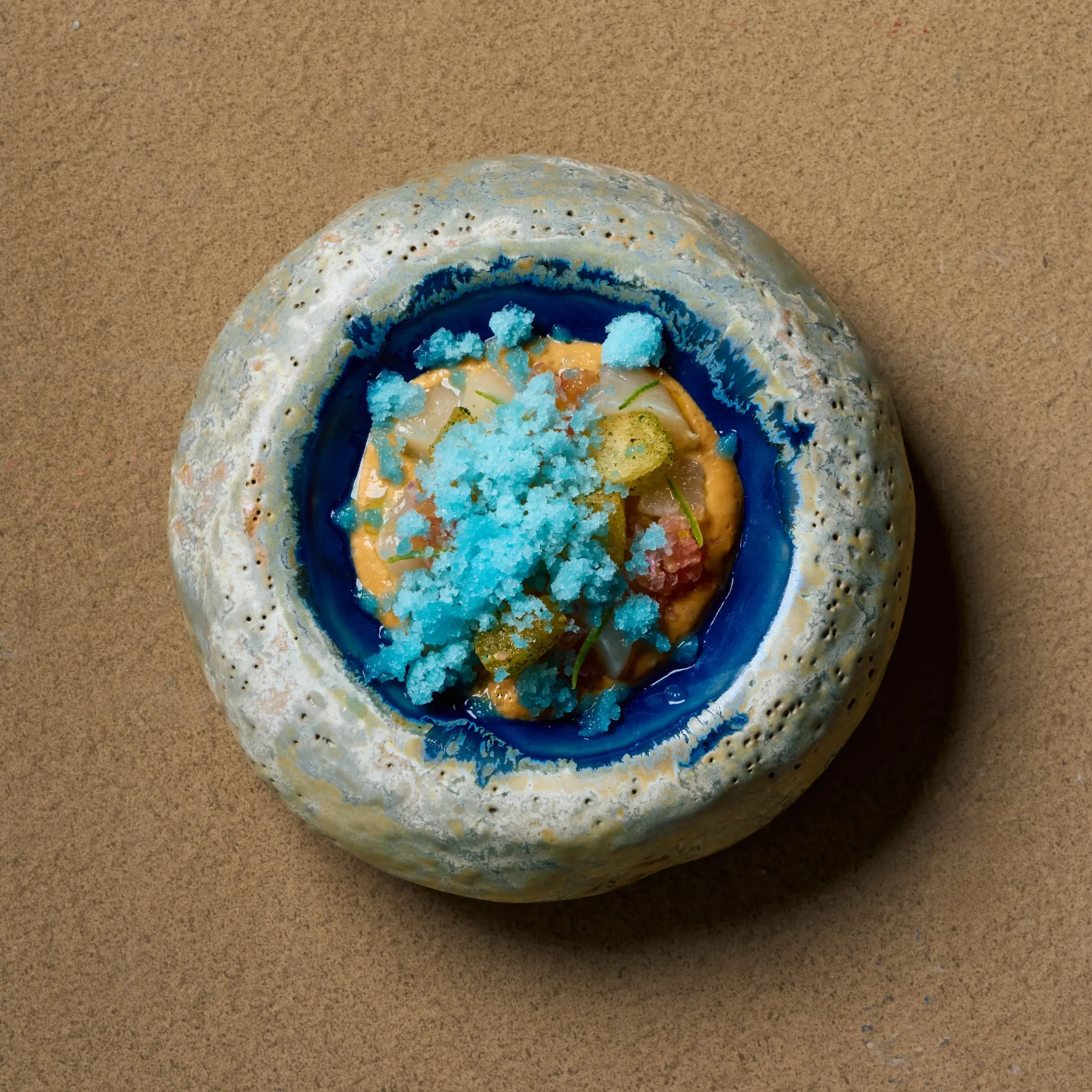
For instance, they serve kinilaw and ceviche-inspired dishes in two different courses, unafraid that they might taste redundant. “Manila,” an interpretation of kinilaw, arrives as the second course. Plump raw scallops, cushioned in a luscious uni emulsion, are topped with cubes of fried cassava and dots of ensalada made with finely minced tomatoes and red onions, then finished, tableside, with a showering of a blue granita made sour with kamias. It was meant to evoke the fish markets of Manila, but the sweet notes of the scallops and uni, cut by the tartness of the ensalada, reminded me more of the way Filipinos do little with seafood to let its freshness speak.
“Lima,” their take on ceviche named after the Peruvian capital, arrives as a rousing interlude between meat courses. Sweetlips is the fish of the day, our server said, caught from Cagayan de Oro and cured in leche de tigre infused, cleverly, with guyabano fruit and leaf oil. One cracks through a heap of crispy fish skin and kamote leaves to reveal the ceviche with an imperceptible kamote purée (a reference to the boiled sweet potato in a traditional ceviche). The crash of fragrant sourness from the lime juice and guyabano opens to the subtlety and richness of the fish. Two distinct approaches to seafood meet through the two cultures’ common regard for freshness.
Reimagining Filipino Comfort Food at Flow
Indeed, Uy and Ong’s ingenuity shines in dishes that show a strong sense of rootedness in the environments of the cultures from which they pull inspiration from. A highlight is the third course, “River,” a nod to the city of Arequipa’s rivers, where the prized camarón del río (Peruvian freshwater shrimp) is caught. Ulang, a giant freshwater prawn endemic to Philippine rivers, is used in a reimagined chupe de camarones, an Arequipan shrimp chowder. Our server prompted us to dig deep through the foam to reach the riverbed of ulang. It was a revelation: the bubbly orange foam tasted of tomatoes with ulang fat and juices, while the flesh, gently cooked in a tamarillo glaze and fermented chili honey, was succulent—an ode to the way riparian communities eat. Two hefty squares of pan chuta, a traditional bread from the Andes, redolent of anise through fennel seeds, were served for sopping up.
Their riff on the kanin at ulam is immortalized by “Mountain,” one of two meat courses, featuring impeccably tender beef cheeks enrobed in a sulky burnt coconut sauce. Tinigib, a native corn variety from the Visayas, serves as foil for the richness of the meat. It brought to mind how both Andean civilizations and Filipino communities have long relied on hardy crops for survival.
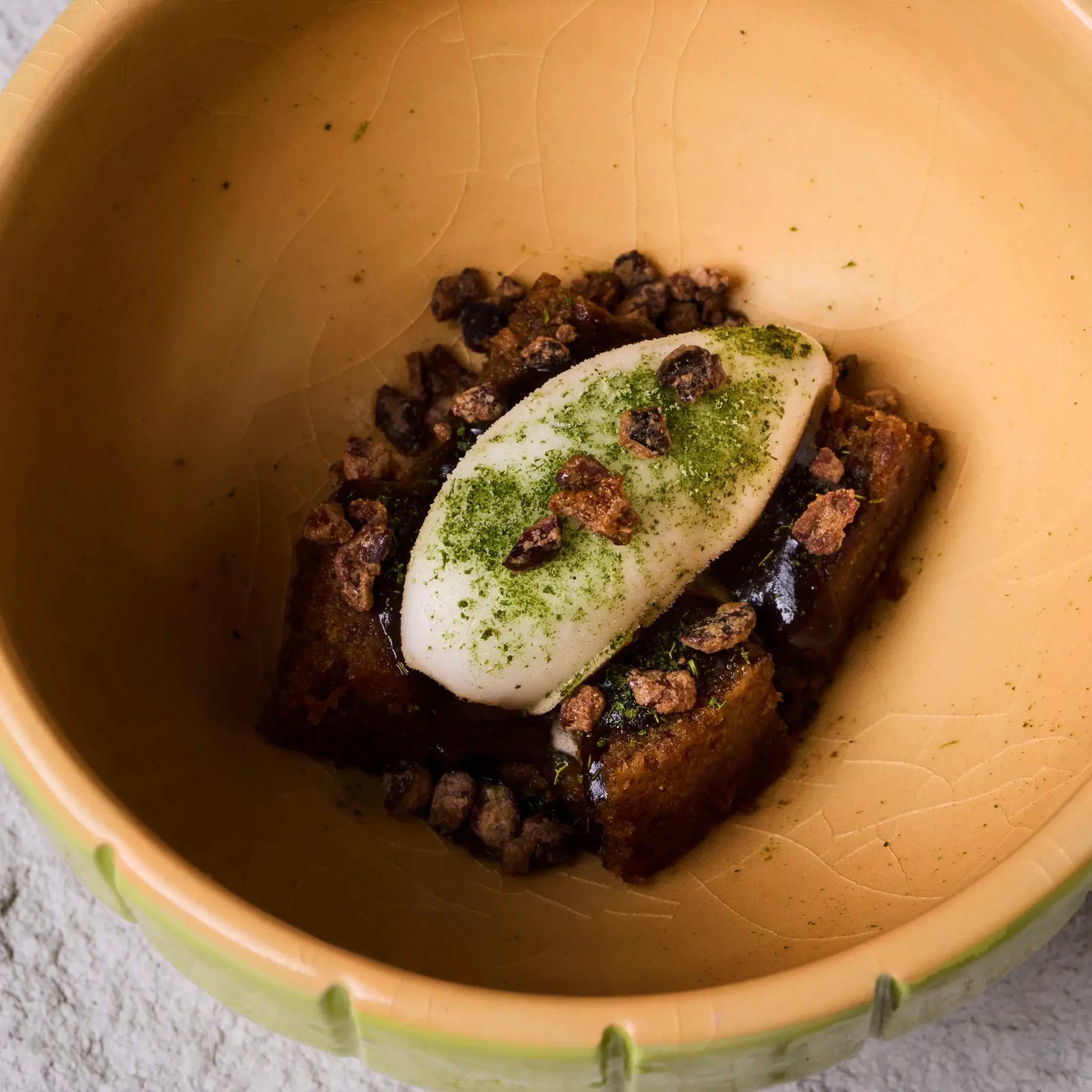
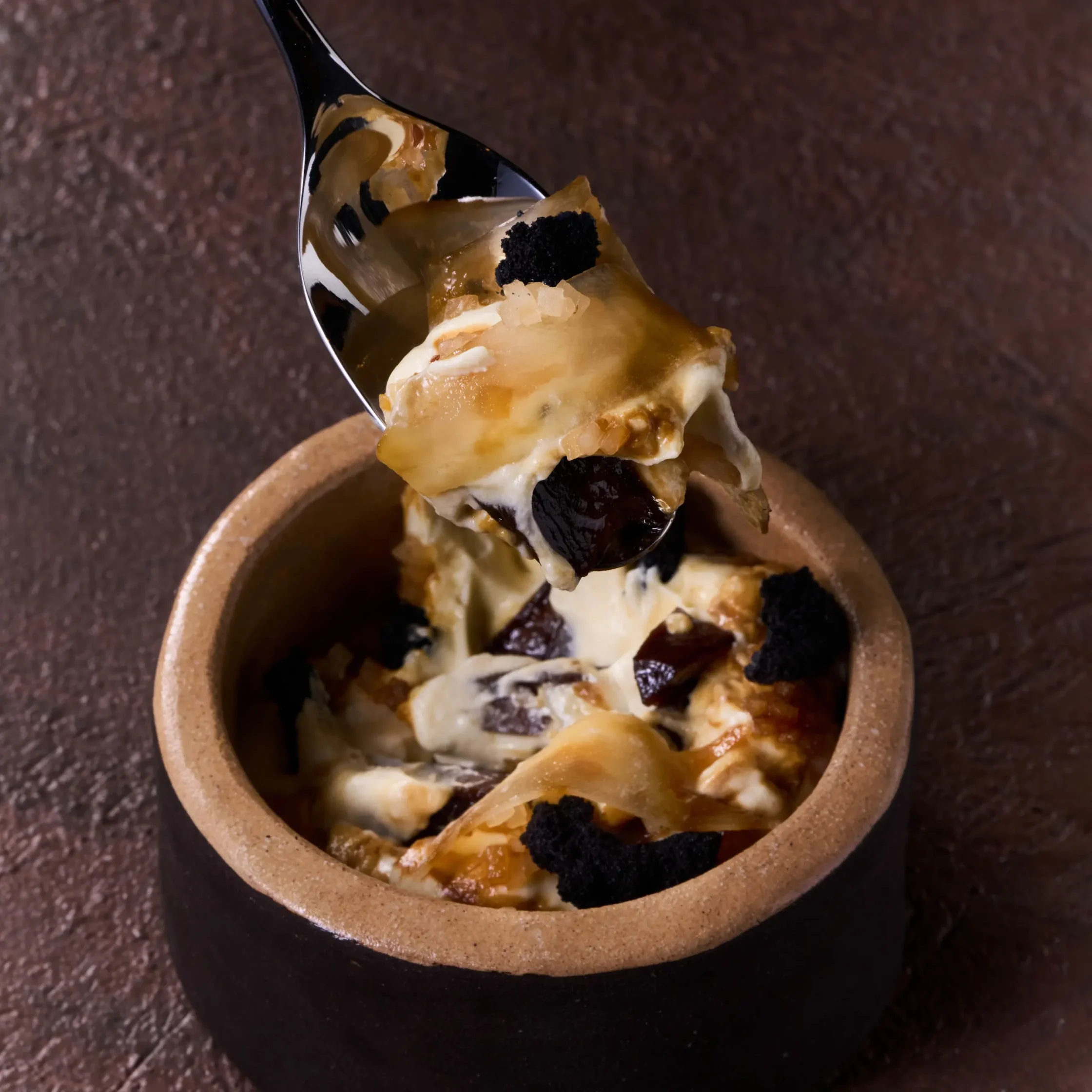
Dessert courses make an autobiographical turn. “Cacao” is a tribute to Martínez, who has a dessert at Central that used all parts of the cacao without completely going the chocolate route. “This has five components, Virgilio has nine,” Uy told me. In his iteration, a sponge is made from the outer husk, a bittersweet fudge from the cascara, a zippy sorbet from the pulp of the pods, earthy candied pebbles from the nibs, and a dusting powder from the leaves. “Yacon,” the finale, follows the same zero-waste concept, turning yacon into a cream with boozy and burnt components.
Zero-Waste Sourcing: The Ethos of Flow Manila
When asked if he found it difficult to set Flow apart from the influence of Central, Uy said, “I think we haven’t fully separated ourselves yet, because at the end of the day, I am a result of my experience, and my experience is there. And I don’t want to. Not because I can’t come up with something on my own—it’s more of I want to honor the first guy to ever give me a chance.”
The cocktail pairings were exquisite, weird in the right moments. The bold saltiness of “Amazon,” a sisig and lumpiang ubod-inspired dish spiced with mishkina (an Amazonian paste made primarily with turmeric), is complemented by “Treetop,” a smoky banana-infused cocktail mixed with local honey and peated whiskey. The earthiness of “Mountain” is cut by the clean notes of culantro (a stronger cousin of cilantro) and calamansi in the drink “Farmland.”
Flow tells a story that only Uy and Ong can tell. My only remark is that while the menu made a point of highlighting local ingredients (with many even included in the Slow Food Foundation’s Ark of Taste), there wasn’t enough novelty on the Filipino side of things. One looks for more unusual references beyond sisig and lumpiang ubod and Manila’s wet markets, for more regional gems to be presented in the same exciting way the menu introduces Peruvian food.
But with the skill and thought present in its first menu, one senses brilliant prospects for Flow. The vagueness of the restaurant’s name signals exactly this, much like how a black-box theatre lends itself to the staging of new worlds. Much like how Flow’s virinas await to be filled with new ingredients for veneration.
Flow is located inside the Green Sun Hotel at 2285 Chino Roces Ave., Makati, Metro Manila.

Frequently Asked Questions
The restaurant is led by co-executive chefs Kevin Uy, who spent five years working at the world-renowned Central in Peru, and Gabriel Ong, who has experience at Michelin-starred spots like Alain Ducasse at Morpheus and Amber.
Flow is located inside the Green Sun Hotel in Makati; the name reflects a “black-box theatre” concept for staging new culinary worlds, featuring a laid-back atmosphere with bespoke tableware and “virinas” (glass cloches) displaying ingredients.
“Manila” is a kinilaw interpretation using raw scallops, uni, and kamias granita to highlight freshness, while “Lima” is a ceviche featuring sweetlips fish cured in leche de tigre infused with guyabano fruit and leaf oil.
The dish follows a zero-waste philosophy by using all parts of the cacao—husk,