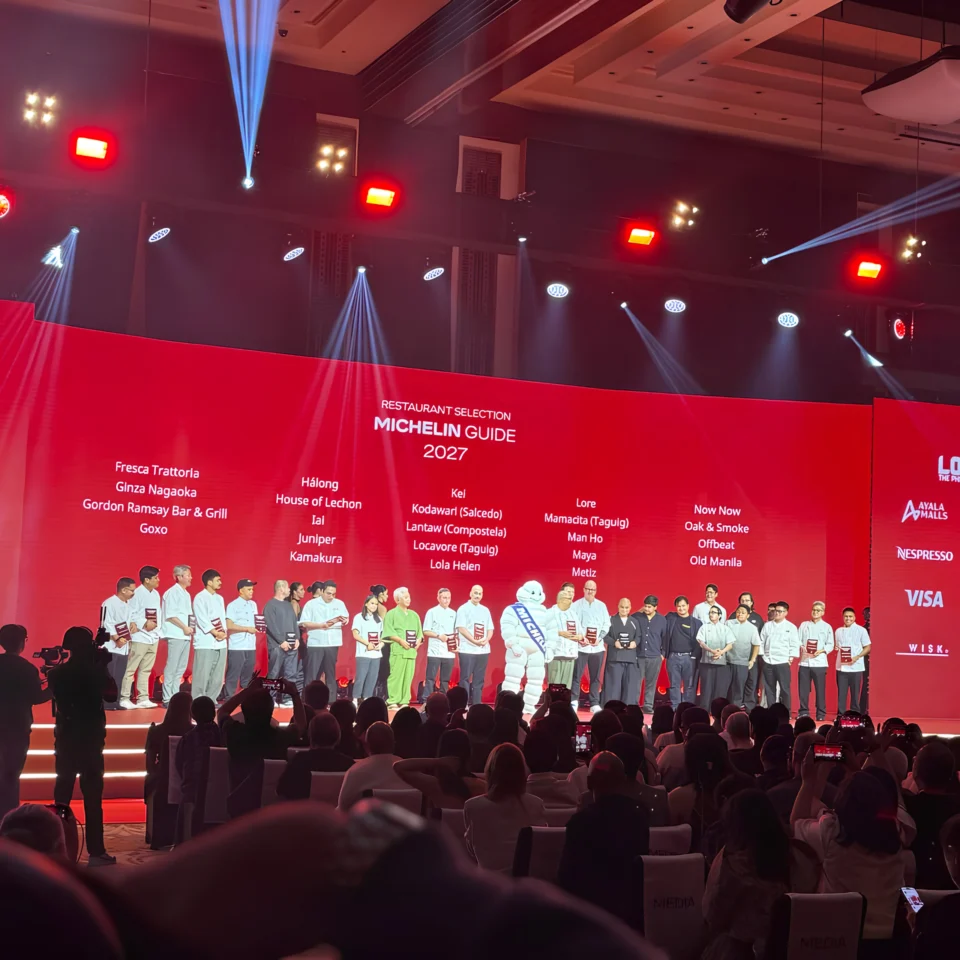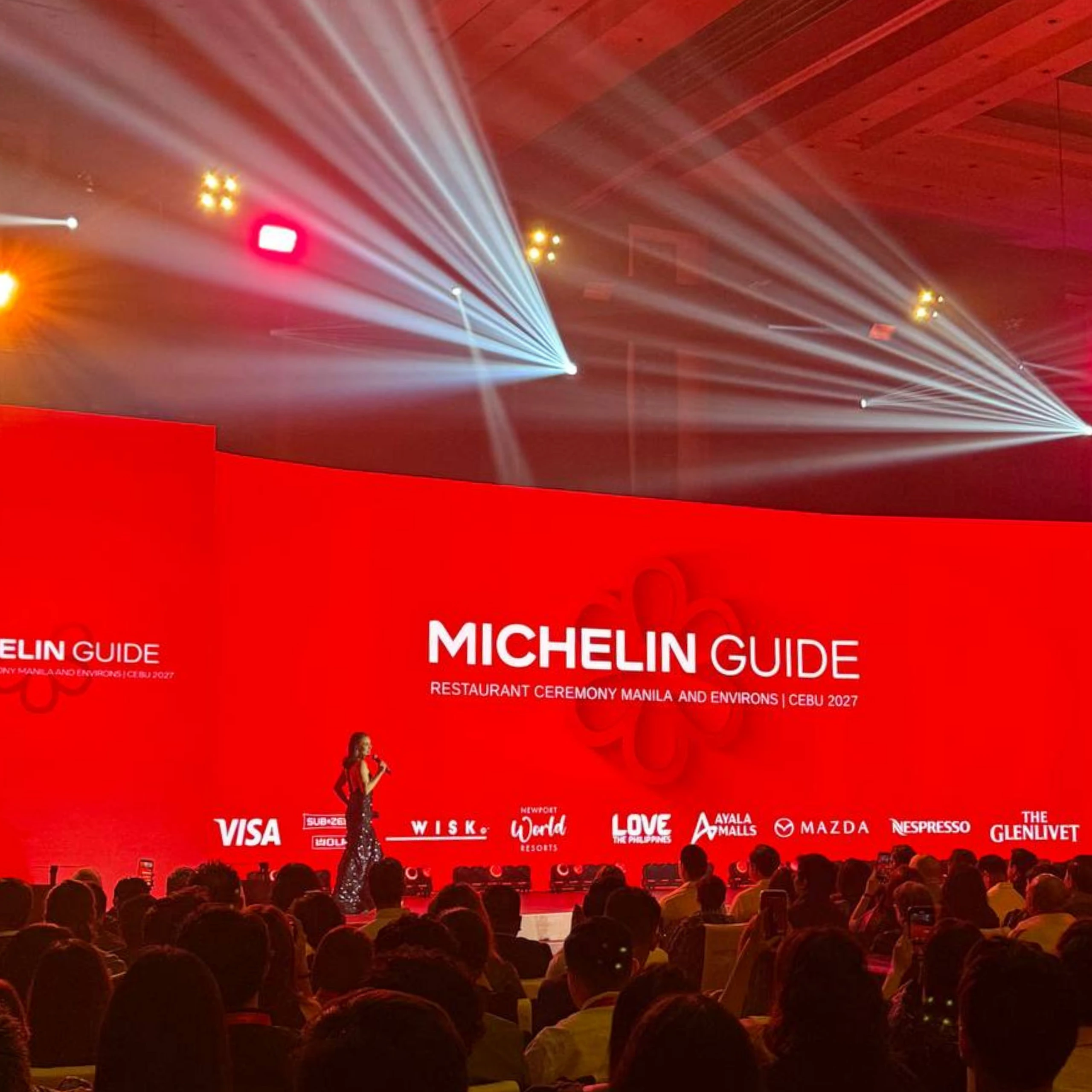
For a country with such a rich and varied food culture, the inaugural selection was a milestone: a chance to see Filipino restaurants, chefs, and the people behind our dining experiences recognized by one of the world’s most established restaurant guides.
A year later, the excitement has had time to settle, but the conversation is only getting started. The Michelin Guide Manila and Environs & Cebu 2027 is here, bringing another round of stars, Bib Gourmand distinctions, and recommended restaurants into the spotlight. What was once a long-awaited debut is beginning to feel like a fixture on the country’s culinary calendar, giving diners another reason to explore and the industry another benchmark to work toward.
This year’s selection recognizes 127 establishments across three categories: 10 Michelin-starred restaurants, 31 Bib Gourmand awardees, and 86 Michelin-Selected restaurants. That’s up from 108 establishments in the inaugural 2026 edition, which included nine starred restaurants, 25 Bib Gourmand recipients, and 74 Michelin-Selected spots. The expanded selection suggests a dining scene with more stories to tell, from ambitious tasting menus to neighborhood favorites that make a compelling case for returning to the table.
The Stars Stay Bright
At the top of the list, Helm by Josh Boutwood retains its Two Michelin Stars, remaining the country’s highest-rated restaurant in the Guide. Its continued recognition gives the Philippines a steady point of reference as the local Michelin story develops.
The One Star roster also sees continuity, with Gallery by Chele, Toyo Eatery, Hapag, Kasa Palma, Linamnam, Asador Alfonso, Celera, and Inatô retaining their distinctions. Joining them is FLOW, the sole new addition to this year’s starred selection. The result brings the total to nine One Star restaurants alongside Helm’s Two Stars.
There is something worth appreciating about both sides of this list. Retaining a star means continuing to meet the Guide’s standards from one edition to the next, and a new star brings another restaurant and its particular point of view into the conversation. Together, the returning names and FLOW’s arrival make this year’s results feel less like a reset and more like a dining scene building on its footing.
Bib Gourmand: More Places to Eat Well
The Bib Gourmand list is where this year’s expansion is especially easy to see. The distinction recognizes restaurants offering good-quality cooking at moderate prices, and the 2027 edition names 31 recipients, up from 25 last year.
Twenty-one restaurants retained their Bib Gourmand status, while 10 joined the category: eight new additions to the Guide and two promotions from the Michelin-Selected category. The new additions are Apag Marangle in Pampanga, Azela in Manila, Balay Dako and Bawai’s Vietnamese Kitchen in Cavite, C.H.E. Bacolod Chicken House Express in Makati, Kalipay! and Tatang’s Lechon in Cebu, and Tito Boy in Pampanga. ATO-AH in Cebu and BUTCHER BOY in Las Piñas earned promotions into the category, bringing the total to 31.
It’s an encouraging mix. The Bib Gourmand category gives recognition to dining experiences that aren’t necessarily defined by fine dining alone. Value, regional cooking, generous portions, and the kind of meal you want to return to are all part of what makes a restaurant matter. From Kapampangan specialties and Cebuano favorites to Vietnamese comfort food, the list reflects different ways people gather around a table.
The geographic spread is promising, too.
With establishments recognized across Manila and its surrounding areas, Pampanga, Cavite, and Cebu, the Guide is bringing more regional food experiences into the conversation. A country’s dining identity is shaped by far more than its capital, and recognition beyond the usual dining hubs gives curious eaters another reason to venture out.
A Wider Table for Philippine Dining
The Michelin-Selected category has grown from 74 restaurants in 2026 to 86 in 2027. Eighteen establishments appear on the list for the first time, including Abé in Taguig, Bombvinos Bodega in Makati, Digámo in Marikina, Haliya in Parañaque, Makanai in Taguig, Mila’s Tokwa’t Baboy in Pampanga, and Tadhanà in Makati. The remaining 68 retain their place from the inaugural edition.
Together, these restaurants represent a range of cuisines, settings, and approaches to cooking. Some bring contemporary interpretations to familiar flavors; others are rooted in dishes that have long been part of local food culture. Their inclusion offers diners more places to discover while giving the people behind them another form of recognition for the work that goes into making a meal memorable.
This year’s special awards put individual talent in focus, too. Clyde Joshua Zafra of Tito Boy receives the Michelin Service Award, Francis Lacson of Digámo earns the Young Chef Award, and Ron Job Sanchez of Automat is recognized with the Exceptional Cocktails Award.
Frances Tariga of Tadhanà also receives the Opening of the Year Award, a new distinction for the Philippine Guide.
These distinctions make an important point: a restaurant’s reputation is built by more than what’s on the plate. Service, drinks, leadership, and the people shaping a restaurant’s identity all contribute to the experience. Recognizing these roles brings more of the work behind a memorable dining experience into view.
The Next Chapter
The Michelin Guide is still relatively new to the Philippines, and one year of results won’t tell the whole story of where our dining scene is headed. But this year’s selection gives us more to talk about: returning restaurants maintaining their distinctions, new names joining the ranks, and regional establishments receiving visibility.
For the local food industry, recognition can bring attention and new expectations. For diners, it can be a starting point for exploring places they might not have considered before. For the people who cook, serve, pour, and run these restaurants every day, it offers an opportunity for their work to reach a wider audience.
The most exciting part is what happens beyond the ceremony. The Philippines has always had food worth traveling for, from regional specialties passed down through generations to restaurants finding fresh ways to tell Filipino stories. As the Michelin Guide becomes a more familiar presence here, the hope is that it encourages greater curiosity about where we eat, what we value, and the people behind our meals.
The lists are growing. Now comes the fun part: getting out there and eating!

Frequently Asked Questions
The Michelin Guide Manila and Environs & Cebu 2027 is the second Philippine edition, recognizing restaurants across Michelin Stars, Bib Gourmand, and Michelin-Selected categories.
Helm by Josh Boutwood retained its Two Michelin Stars, making it the highest-rated restaurant in this year’s Philippine selection.
Michelin Stars recognize restaurants for their cooking, while Bib Gourmand highlights establishments offering good food at great value.
The growing list of recognized restaurants highlights the country’s diverse culinary talent and gives diners more places to discover, while bringing greater visibility to the people shaping the local food industry.