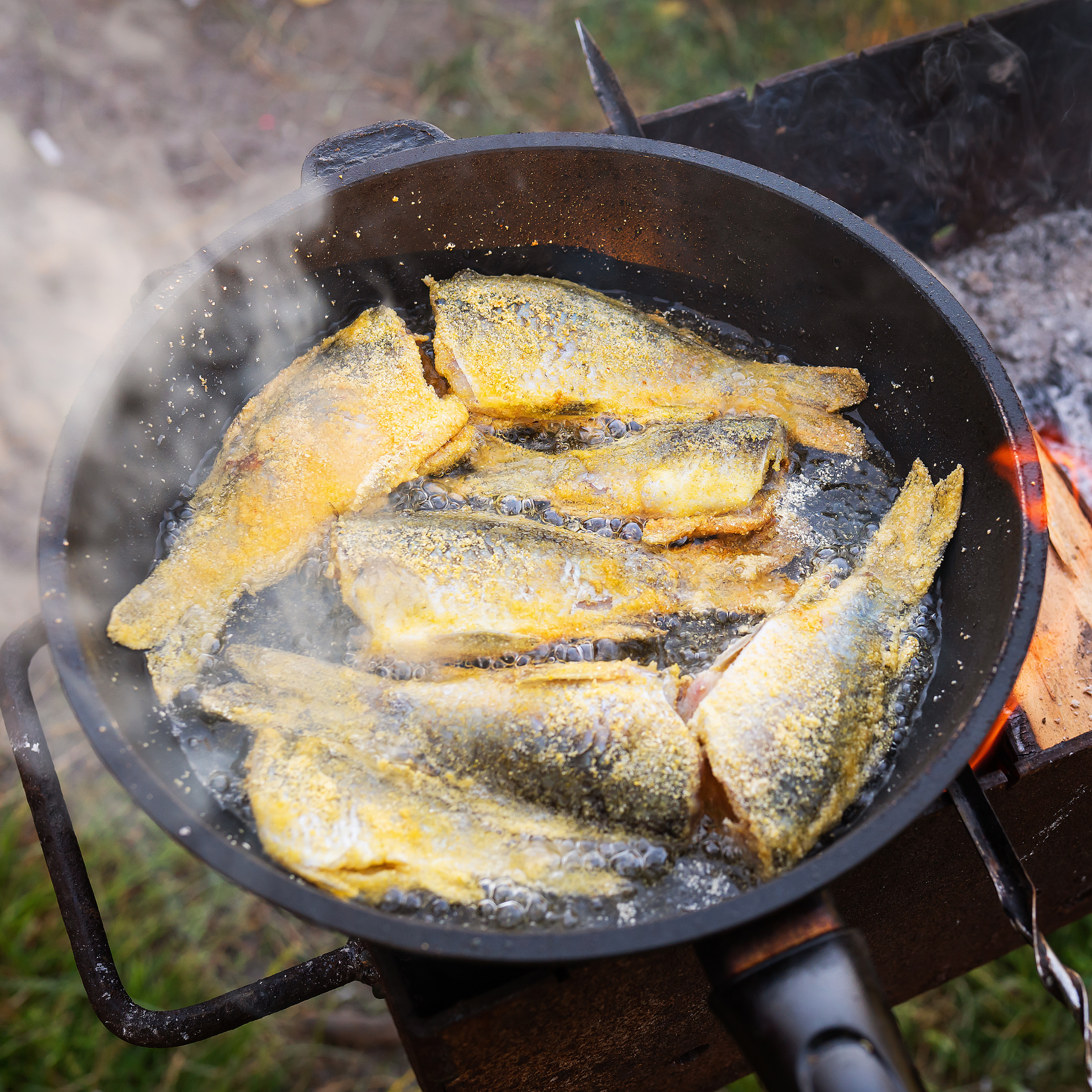
Cooking fish in a pan can be trickier than it sounds.
The last thing you want is to slide your spatula underneath a fillet, only for half the delicate flesh or crispy skin to stay welded to the metal of your pan.
Fish is notorious for sticking because its muscle fibers are short, low in connective tissue, and packed with water-soluble proteins that form chemical bonds with hot metal the instant they touch.
Fortunately, preventing it isn’t a matter of luck. It all comes down to managing moisture, heat, and patience.
1. Choose The Right Pan
Before you even touch your fish, the cookware you reach for can make or break your sear. Different pans handle heat and protein bonding differently, so matching your skillet to the delicacy of the fish makes the whole process much more forgiving.
If you’re pan-searing salmon or other sturdy fillets, go for stainless steel. With proper preheating, it delivers a golden, restaurant-style crust. For delicate, flaky fish like tilapia or cod, a nonstick or ceramic pan is the safest way to go. And if you’re chasing ultra crispy skin at home, reach for a well-seasoned cast iron or carbon steel pan, which holds high heat evenly without cold spots.
2. Pat Your Fish Completely Dry
Water is the single biggest culprit behind stuck fish. When wet fish hits a hot pan, the surface moisture instantly turns to steam, lowering the pan’s temperature and preventing a sear from forming. Instead of crisping, the wet proteins sink into the pan and bond to the metal.
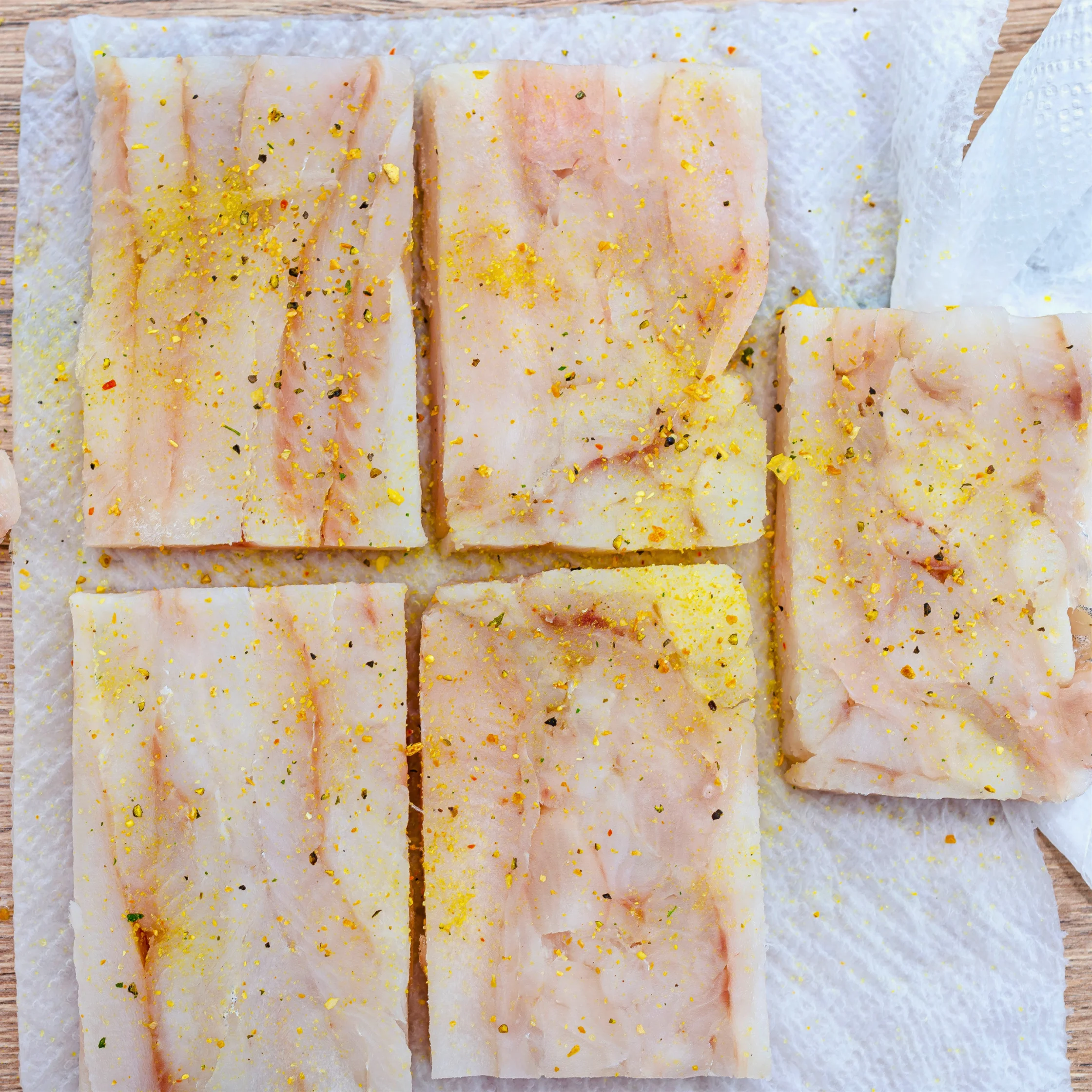
The easiest way to prevent this is to blot your fish aggressively with a paper towel before cooking. It’s as simple as pressing and patting all sides of the fish, especially the skin side, until it feels dry to the touch.
Another method to consider is to use salt. Because sprinkling it all over your fish will draw moisture out of it, you should decide whether to salt your fish 30 minutes before drying it or to season it seconds before putting it in the pan.
3. Preheat Your Pan Before Adding Oil
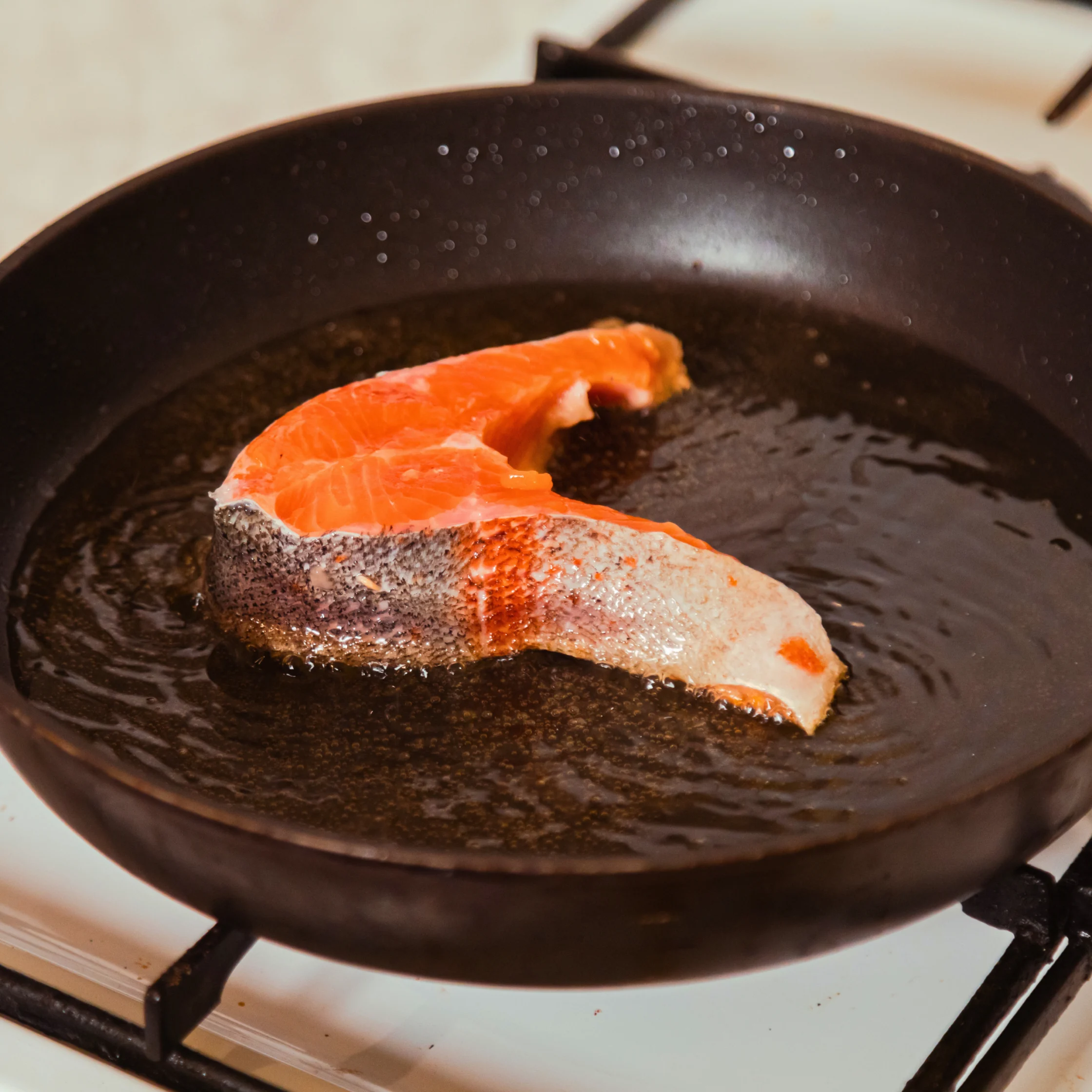
Once your fish is as dry as possible, it’s time to prep your pan and oil. The golden rule is to heat your pan first before adding oil and to make sure you use enough of it.
Preheating a dry pan prevents the oil from overheating, burning, and creating bitter off-flavors before you even start cooking.
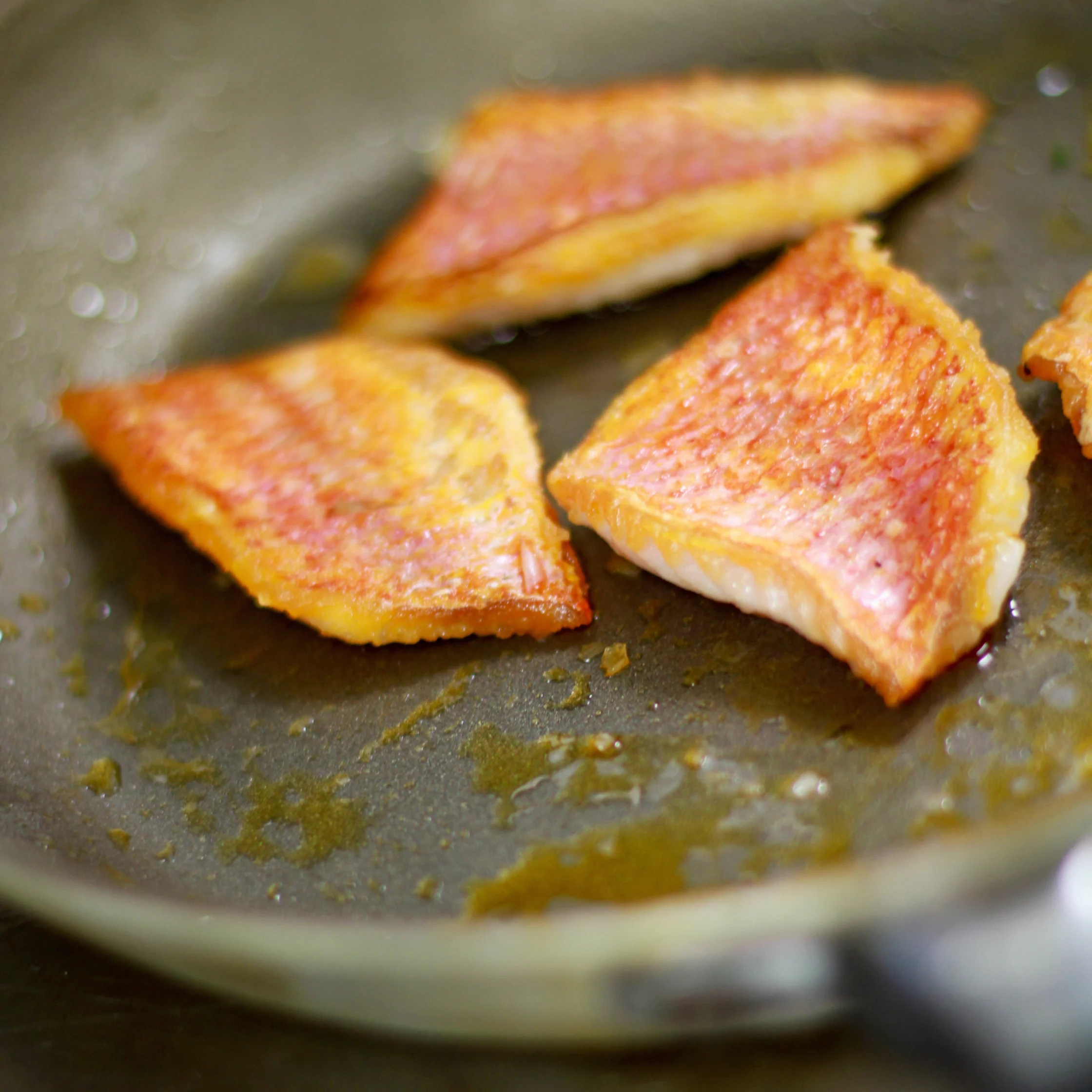
In terms of oil, choosing a neutral one with a high smoking point is ideal. Canola, avocado, or grapeseed oil should suffice. Pour about one to two tablespoons. You just need enough to thinly coat the entire bottom of the skillet. Swirl it around and wait 15 to 20 seconds until the oil shimmers and ripples, just shy of smoking.
4. Lay the Fish Away from You
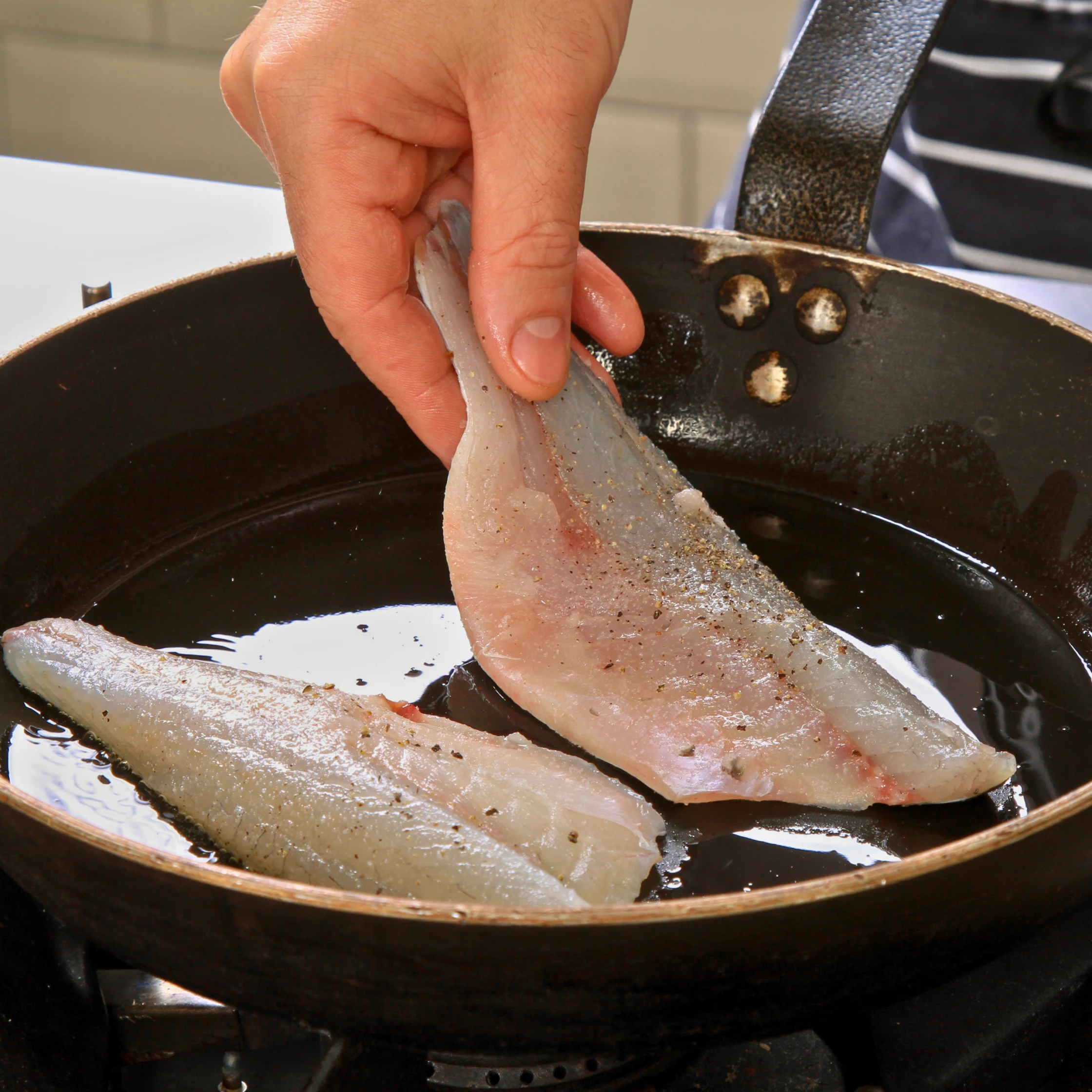
Gently place the fillet into the pan, laying it away from your body so hot oil doesn’t splash toward you. Once it’s in, press down lightly with your fingers or a spatula for the first 5 to 10 seconds.
Fish skin tends to contract and curl the instant it hits high heat, so a gentle press keeps the fillet flat and ensures even contact for a crisp, uniform sear.
5. Leave Your Fish Alone
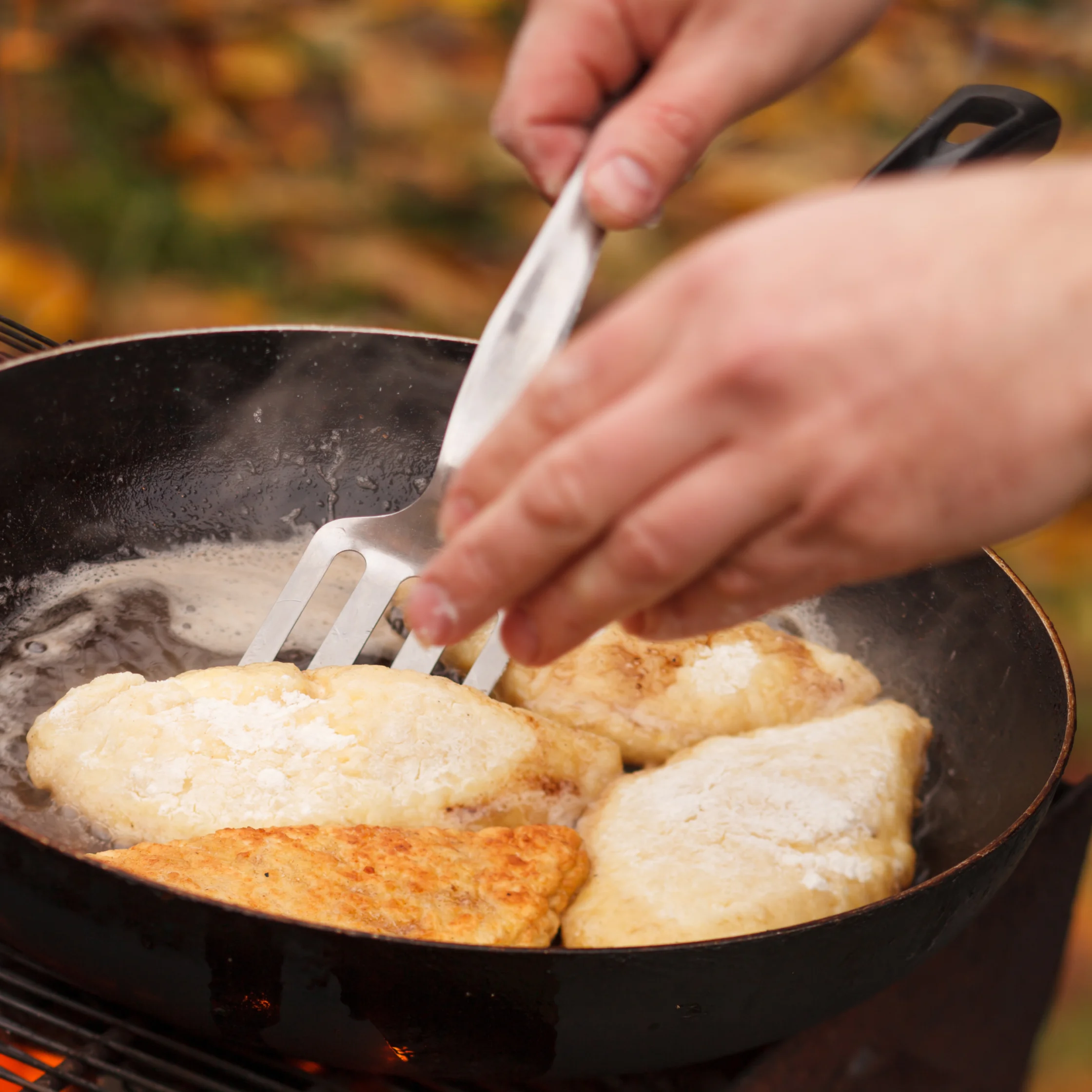
When fish first hits hot oil, it will stick. That initial bond is completely normal. As the surface moisture evaporates and the proteins brown and tighten, the crust shrinks slightly and naturally pulls away from the pan.
First, resist the urge to move or prod the fish during the first two minutes. Doing so tears the forming crust and guarantees sticking.
If you’re cooking your fish skin on, cook 80% to 90% of the way on the skin side. Watch the opaque, cooked color rise up the side of the fillet. Once it reaches about two-thirds of the way up, the skin is crisp and ready to release.
If you own a thin, flexible fish spatula, all the better. Slide it gently underneath the fillet. If you feel resistance, give it another 20 to 30 seconds. When it’s truly ready, it will lift effortlessly.
It takes a lot of guts to buy fresh fish and attempt to cook it at home. As daunting as it may seem, it definitely isn’t impossible.
By following these five simple steps, you can skip the torn fillets, nail that crispy skin, and pan-sear fish with confidence every single time.

Frequently Asked Questions
Fish has short muscle fibers with very little connective tissue and is packed with water-soluble proteins. When those wet proteins hit hot metal, they immediately form chemical bonds with the pan’s surface, especially if excess moisture lowers the pan’s temperature and prevents a proper sear from forming.
The ideal pan depends on the type of fish you are cooking.
Use stainless steel for sturdy fillets like salmon, nonstick or ceramic for delicate, flaky white fish like tilapia or cod, and well-seasoned cast iron or carbon steel when you want ultra-crispy skin with even heat distribution.
Always preheat your pan dry first, then add 1 to 2 tablespoons of a neutral, high-smoke-point oil like canola, avocado, or grapeseed oil.
Gently lay the fillet into the skillet away from your body so any oil splashes move toward the back of the stove rather than toward you.
For skin-on fillets, cook 80% to 90% of the way on the skin side until the opaque, cooked color rises about two-thirds of the way up the side of the fish.