Advertisement

What You Need To Know About Using A Silicone Spatula & Wooden Spoon

Understanding the strengths and weaknesses of each can help flex your ever-growing cooking muscles!

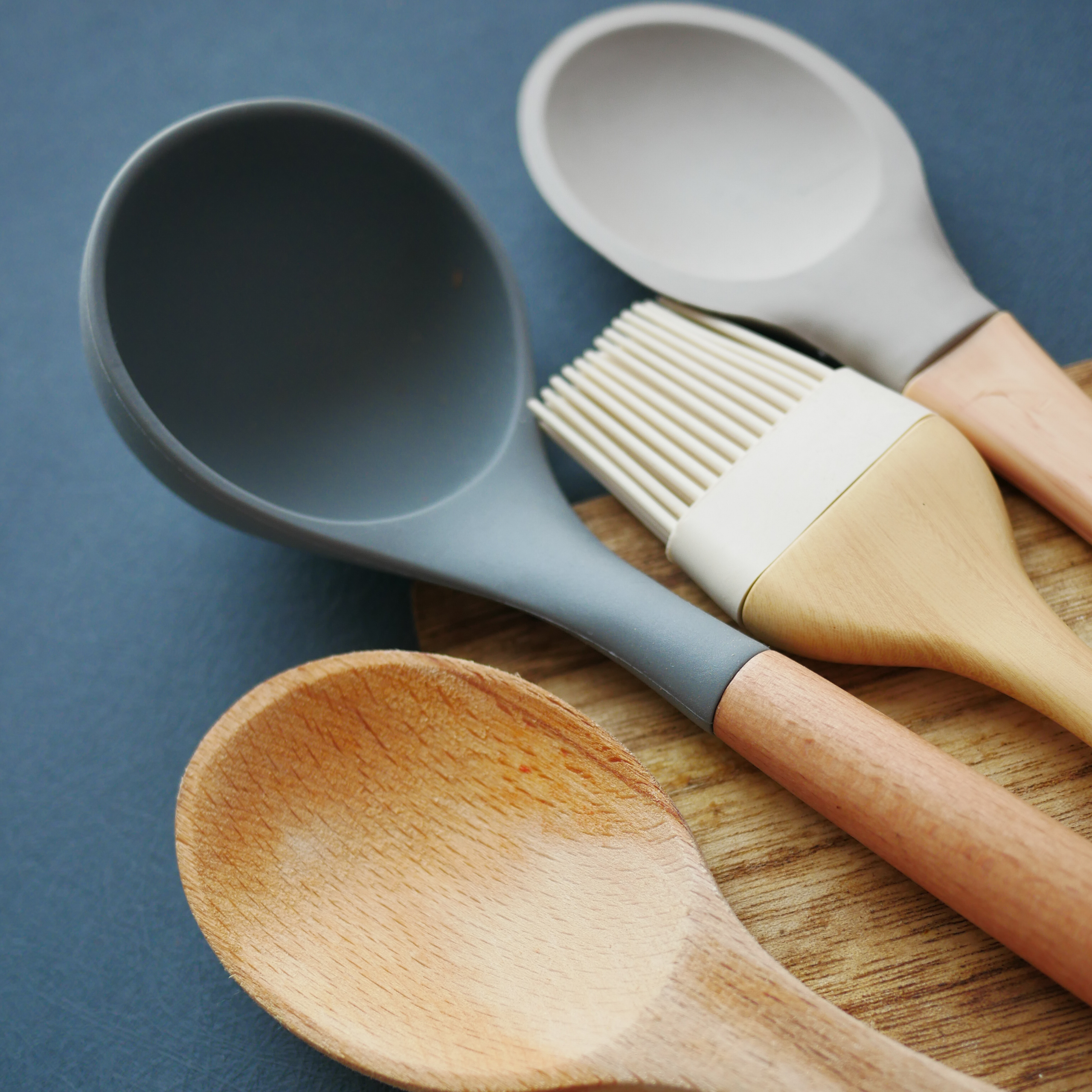
A neat arrangement of wooden cooking spoons, a gray ladle, pastry brush, and white spatula on a blue surface, evoking a calm, practical kitchen.
Don’t settle for which one you see and grab first.

Leveling up your cooking skills isn’t about having every possible tool and gadget in your kitchen. It’s about knowing exactly when to use each one and why.

Of all of the cooking utensils in the modern Filipino kitchen, the silicone spatula and the wooden spoon are two of the most ubiquitous.

Wooden spoons have been kitchen staples for centuries, and it’s not hard to understand why. Their very material offers structural integrity that some modern materials simply cannot match. On the other side of the spectrum, silicone spatulas revolutionized home cooking by bridging the gap between flexible rubber spatulas and heat-resistant cooking utensils.

Choosing between using a silicone spatula or a wooden spoon shouldn’t be a matter of which one you reach for first. Each one excels under certain temperature thresholds,with particular textures, and alongside different types of cookware. 

Here’s a quick rundown of when to reach for your silicone spatula and wooden spoon:

Scraping, Flipping, & Folding: Silicone Spatula

The soft, conformable edge of a silicone spatula contours perfectly to curved pots, pans, mixing bowls and food processor jars, leaving virtually zero leftover food behind. They also work well with flipping pancakes or folding delicate batters.
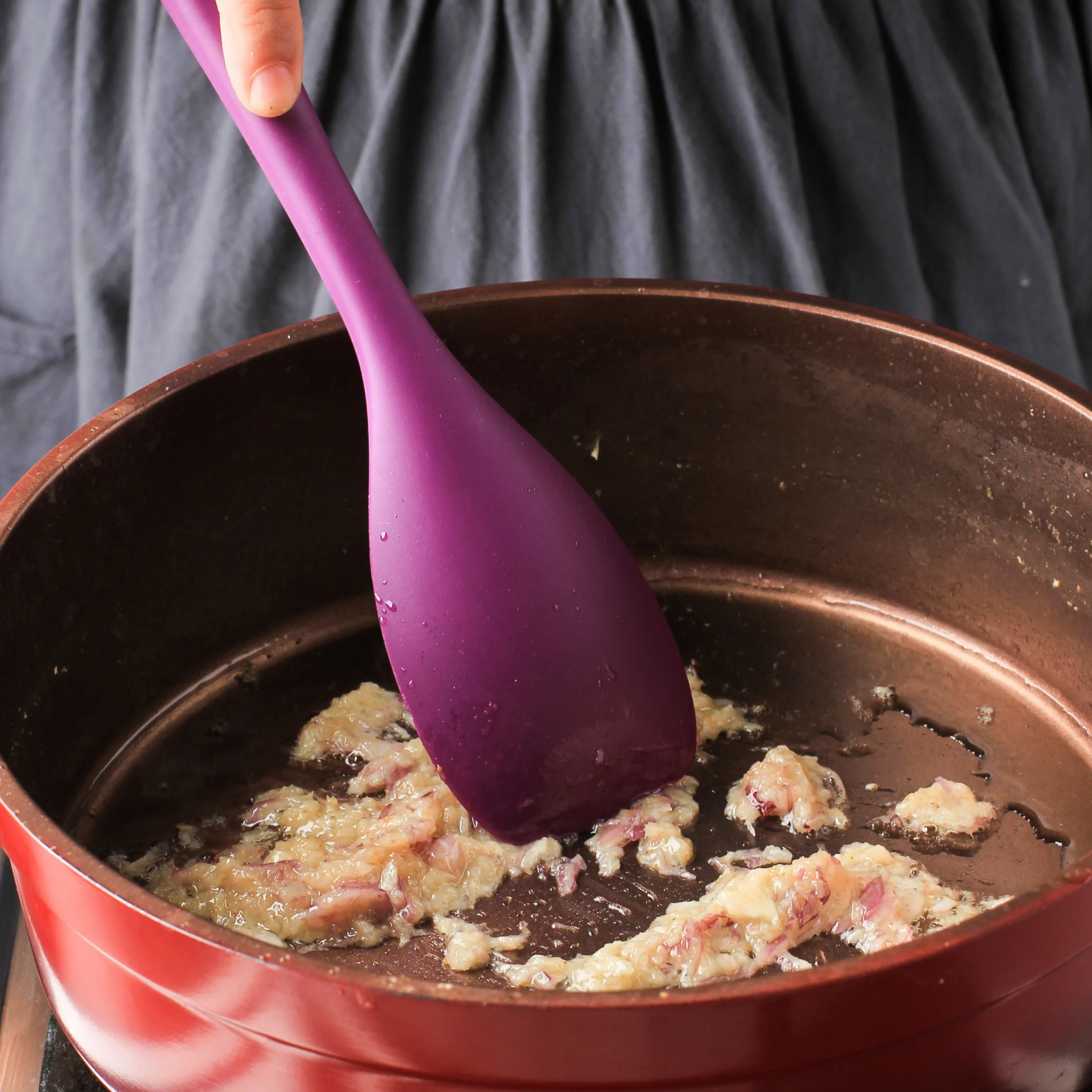
A hand stirs chopped onions and bacon in a red frying pan with a purple spatula, suggesting a warm, hands-on cooking scene.
A silicone spatula can bend to whatever whim is needed for the recipe.

Stirring Thicker Stews, Sauces, and Batters: Wooden Spoon

Kneading stiff doughs, stirring thick monggo, or mixing dense cookie doughs requires leverage. A wooden spoon won’t easily bend or snap under such heavy resistance, making it perfect for the job.
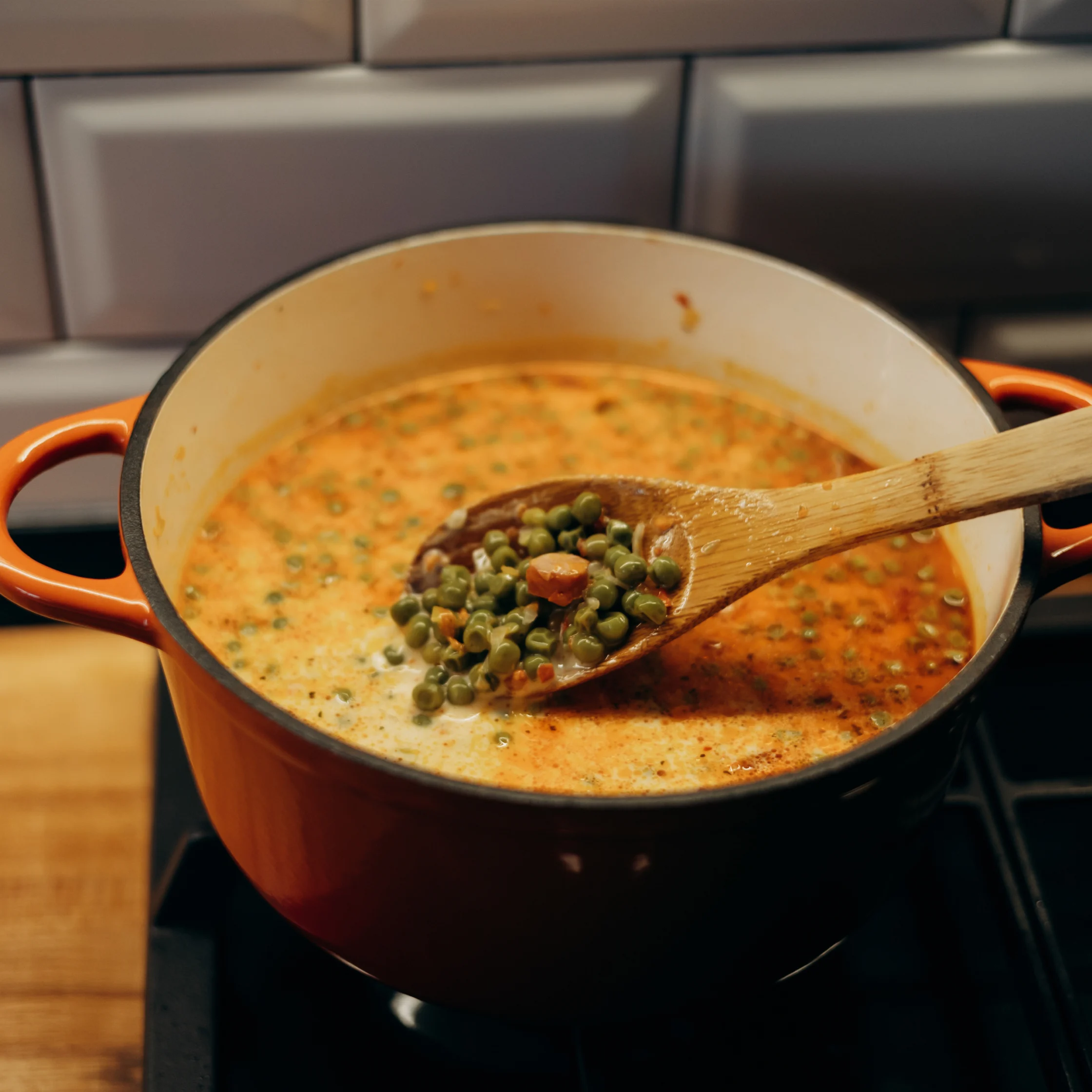
A wooden spoon lifts green peas and diced vegetables from a creamy orange soup simmering in an orange Dutch oven on the stove, creating a warm, cozy kitchen mood.
A wooden spoon is good for stirring any thick stew or sauce.

Baking & Handling More Delicate Foods: Silicone Spatula

There are many baking techniques that work best with a silicone spatula. When incorporating whipped egg whites into dry ingredients for a sans rival or folding flour into a sponge cake, silicone slides gently along container walls to preserve aeration.

Making pastry cream, lemon curd, or caramel requires continuous scraping of the pot’s bottom corners to prevent scorching. The silicone spatula’s flat edge covers maximum surface area.

Moreover, for soft-scrambled eggs or delicate omelets in a non-stick skillet, a silicone spatula gently lifts and folds curds without scratching delicate pan surfaces.
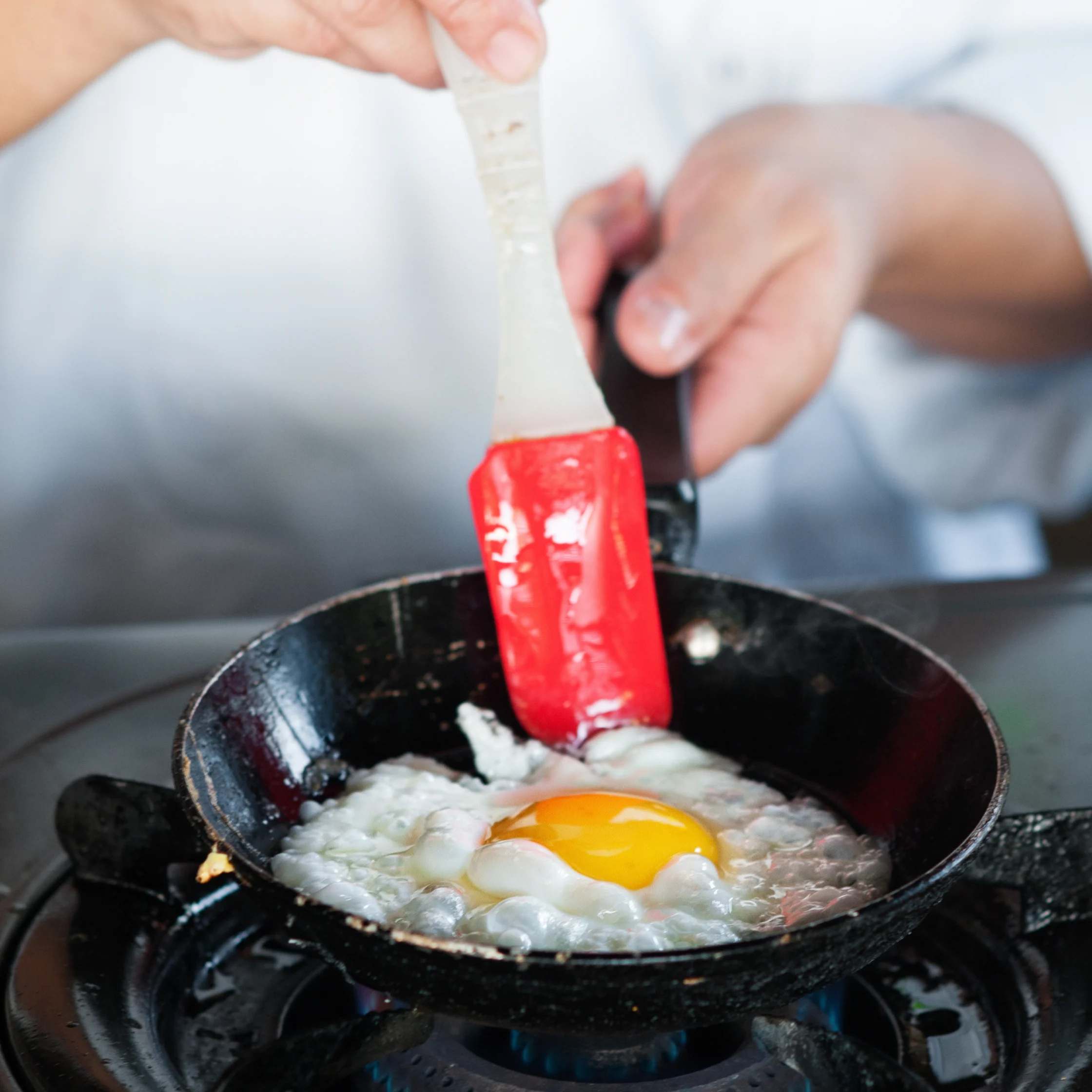
A cook uses a red spatula to gently lift a sunny-side-up egg in a black frying pan over a gas flame, creating a warm, homey kitchen scene.
Delicate foods are best handled with a silicone spatula.

Deglazing, Scraping Food, & Sautéing Over High Heat: Wooden Spoon

When you pour wine or stock into a hot pan to lift caramelized brown bits (also called fond), a sturdy wooden spoon provides the firmness required to scrape the bottom clean without damaging stainless steel or enameled cast iron.

Generally speaking, a wooden spoon is a poor conductor of heat. But in cooking, this is actually a good thing. It can easily tolerate intense pan heat without melting or releasing fumes. You will often see home cooks use their wooden spoon whenever they are sautéing garlic and onion. You can even leave it resting in a simmering pot of sopas or any broth for hours without the handle getting too hot to touch.
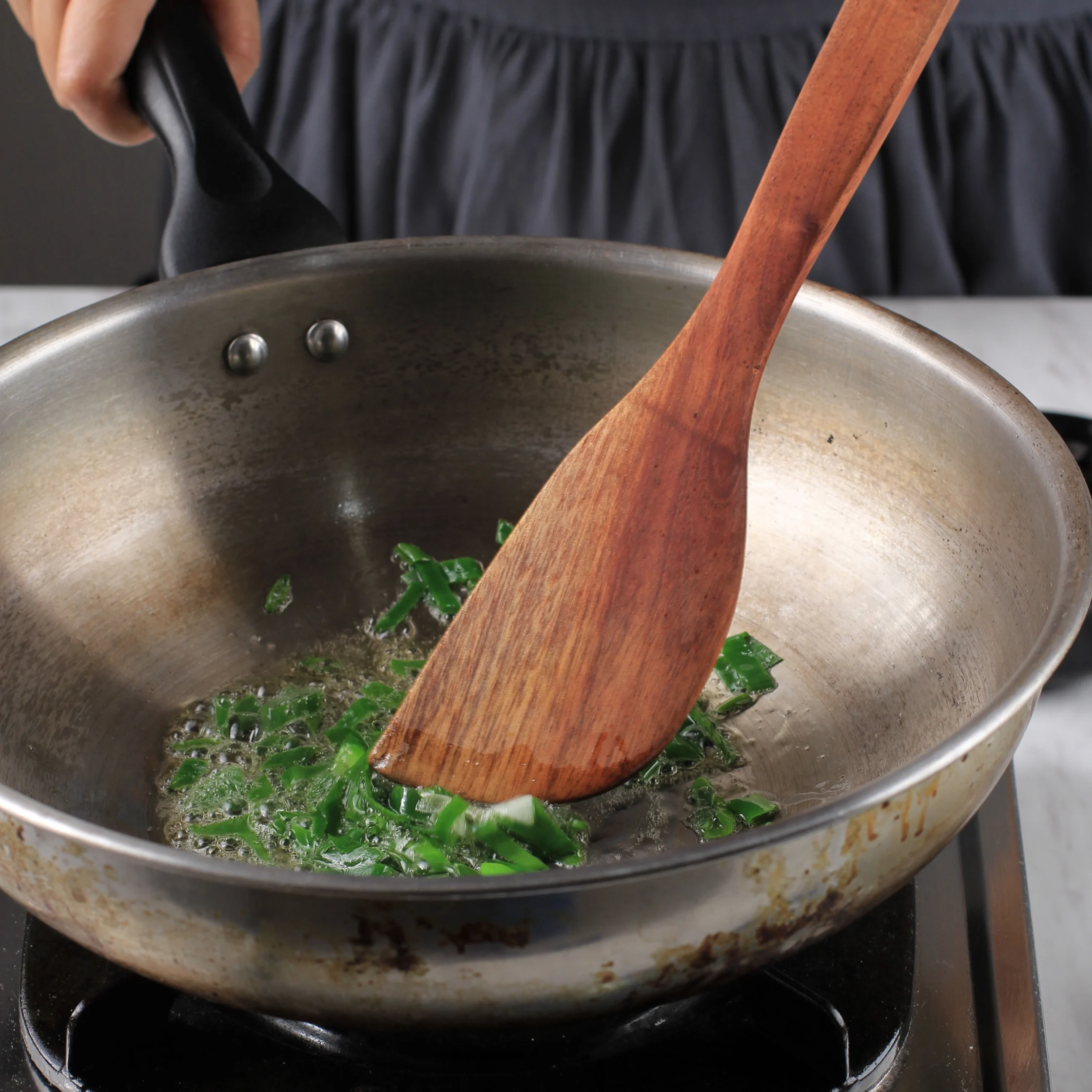
A cook stirs chopped green herbs in a well-used metal pan on a stovetop with a wooden spatula; a warm, hands-on kitchen scene.
To deglaze a stainless steel or cast iron pan, it’s better to use a wooden spoon.

Using Nonstick Cookware: Both!

The prevailing wisdom is that silicone spatulas are the ultimate companion for non-stick pots and pans, and for good reason. Their compatibility comes down to their flexible edges that glide smoothly along the surface and can bend to fit the pan’s curves.

However, a wooden spoon is still entirely safe for non-stick cooking. For long-simmered stews or slow-sautéed sauces, the wood offers great control and won’t chip or scratch modern coatings. Just reserve your silicone spatula for tasks that require sweeping curved corners or delicate folding, and reach for your wooden spoon when you need firm leverage to stir dense dishes without damaging your pan.
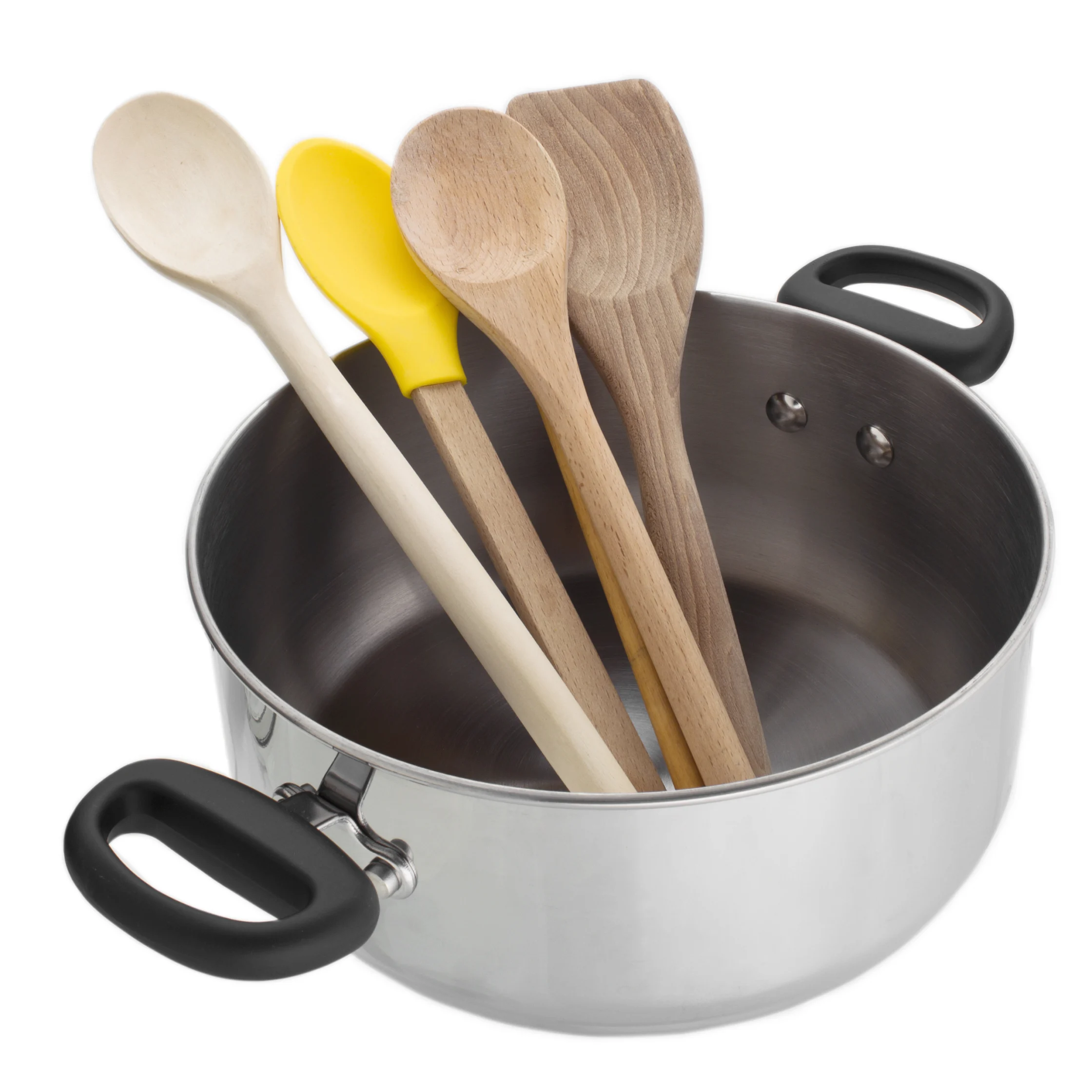
A stainless-steel stockpot with black handles holds four wooden and two silicone cooking utensils, arranged upright against a clean white background.
Both work well with nonstick. It all depends on what you need to do.

Differentiating the use cases for silicone spatulas and wooden spoons is more than splitting hairs. Knowing when it’s appropriate to bring out either is just one more way to flex your cooking muscles.

Imagine yourself seamlessly following a recipe without having to pause and second-guess which tool to reach for. Your mind is in sync with your hands, either grabbing the silicone spatula when it’s time to fold a delicate batter or picking up the wooden spoon to stir a rich, thick sauce. 

This version of yourself is entirely within reach. The first step is simply studying and understanding their strengths and getting back to the stove.

author avatar
Laura Mendoza Writer
Laura admits that she is a slow eater. She prefers to take her time with the food she likes to eat and the stories she wishes to write. Having graduated with a Creative Writing degree, she comes from a background in writing fiction and poetry. Because of this, she has set herself on a creative mission to explore and delve into what other modes and channels exist for stories and narratives to be told, expressed, and shared with others. For Laura, food as a medium is an exciting proposition. Behind every dish, every ingredient, and every cooking technique, there lies a history worth discussing, a human being worth listening to, a lived experience worth gleaning from. As a means to satiate her appetite for learning about and understanding new and known things, she aims to be the kind of food writer who is approachable, reliable, and personable to readers.

Frequently Asked Questions

Yes, especially if you are making any long-simmered stews or slow-sautéed sauces.

Do opt for a silicone spatula if need to do anything that requires sweeping curved corners or delicate folding.

author avatar
Laura Mendoza Writer
Laura admits that she is a slow eater. She prefers to take her time with the food she likes to eat and the stories she wishes to write. Having graduated with a Creative Writing degree, she comes from a background in writing fiction and poetry. Because of this, she has set herself on a creative mission to explore and delve into what other modes and channels exist for stories and narratives to be told, expressed, and shared with others. For Laura, food as a medium is an exciting proposition. Behind every dish, every ingredient, and every cooking technique, there lies a history worth discussing, a human being worth listening to, a lived experience worth gleaning from. As a means to satiate her appetite for learning about and understanding new and known things, she aims to be the kind of food writer who is approachable, reliable, and personable to readers.

It is because of its soft, conformable edge that contours perfectly to curved pots, pans, mixing bowls and food processor jars. This also makes flipping and folding more delicate food much easier.

author avatar
Laura Mendoza Writer
Laura admits that she is a slow eater. She prefers to take her time with the food she likes to eat and the stories she wishes to write. Having graduated with a Creative Writing degree, she comes from a background in writing fiction and poetry. Because of this, she has set herself on a creative mission to explore and delve into what other modes and channels exist for stories and narratives to be told, expressed, and shared with others. For Laura, food as a medium is an exciting proposition. Behind every dish, every ingredient, and every cooking technique, there lies a history worth discussing, a human being worth listening to, a lived experience worth gleaning from. As a means to satiate her appetite for learning about and understanding new and known things, she aims to be the kind of food writer who is approachable, reliable, and personable to readers.

It all depends on what you need to do.

If you need to knead any kind of stiff or dense dough, use a wooden spoon.

But if you’re incorporating wet and dry ingredients, it’s better to use a silicone spatula.

author avatar
Laura Mendoza Writer
Laura admits that she is a slow eater. She prefers to take her time with the food she likes to eat and the stories she wishes to write. Having graduated with a Creative Writing degree, she comes from a background in writing fiction and poetry. Because of this, she has set herself on a creative mission to explore and delve into what other modes and channels exist for stories and narratives to be told, expressed, and shared with others. For Laura, food as a medium is an exciting proposition. Behind every dish, every ingredient, and every cooking technique, there lies a history worth discussing, a human being worth listening to, a lived experience worth gleaning from. As a means to satiate her appetite for learning about and understanding new and known things, she aims to be the kind of food writer who is approachable, reliable, and personable to readers.

Using a wooden spoon would be best for this as its firm enough to scrape the bottom of your pan clean without damaging it.

author avatar
Laura Mendoza Writer
Laura admits that she is a slow eater. She prefers to take her time with the food she likes to eat and the stories she wishes to write. Having graduated with a Creative Writing degree, she comes from a background in writing fiction and poetry. Because of this, she has set herself on a creative mission to explore and delve into what other modes and channels exist for stories and narratives to be told, expressed, and shared with others. For Laura, food as a medium is an exciting proposition. Behind every dish, every ingredient, and every cooking technique, there lies a history worth discussing, a human being worth listening to, a lived experience worth gleaning from. As a means to satiate her appetite for learning about and understanding new and known things, she aims to be the kind of food writer who is approachable, reliable, and personable to readers.

One is not better than the other. Its usefulness will entirely depend on what you may need them for and which one would be better fit to do the task.
author avatar
Laura Mendoza Writer
Laura admits that she is a slow eater. She prefers to take her time with the food she likes to eat and the stories she wishes to write. Having graduated with a Creative Writing degree, she comes from a background in writing fiction and poetry. Because of this, she has set herself on a creative mission to explore and delve into what other modes and channels exist for stories and narratives to be told, expressed, and shared with others. For Laura, food as a medium is an exciting proposition. Behind every dish, every ingredient, and every cooking technique, there lies a history worth discussing, a human being worth listening to, a lived experience worth gleaning from. As a means to satiate her appetite for learning about and understanding new and known things, she aims to be the kind of food writer who is approachable, reliable, and personable to readers.
Smiling woman with glasses tilted at an angle, wearing a blue top, against a light background.

Laura Mendoza

Writer

Laura admits that she is a slow eater. She prefers to take her time with the food she likes to eat and the stories she wishes to write. Having graduated with a Creative Writing degree, she comes from a background in writing fiction and poetry. Because of this, she has set herself on a creative mission to explore and delve into what other modes and channels exist for stories and narratives to be told, expressed, and shared with others. For Laura, food as a medium is an exciting proposition. Behind every dish, every ingredient, and every cooking technique, there lies a history worth discussing, a human being worth listening to, a lived experience worth gleaning from. As a means to satiate her appetite for learning about and understanding new and known things, she aims to be the kind of food writer who is approachable, reliable, and personable to readers.

0 0 votes
Total of Ratings
guest
Rating
Ratings for Article
0 Comments
Oldest
Newest Most Voted

To provide a customized ad experience, we need to know if you are of legal age in your region.

By making a selection, you agree to our Terms & Conditions.