Advertisement

7 Regional Dishes from Ilocos Sur Worth Searching For

Beyond Vigan empanada, bagnet, and longganisa, discover the lesser-known dishes of Ilocos Sur that showcase the province’s resourceful cooking and love for bold, distinctly Ilocano flavors.

There’s more to Ilocus Sur cuisine than bagnet, Ilocos empanada, and Vigan longganisa [PHOTO COURTESY OF Culture with Travel]

Characterized by rugged terrain, backyards rich in vegetables, and the industrious nature of many Ilocanos, Ilocos Sur’s food is marked by resourcefulness, simplicity, and real, unmasked flavors. It is further defined by their affinity for salty and bitter flavors and, well, bagoong as seasoning. These lesser-known dishes not only reinforce these claims but also prove that there’s much more to Ilocos Sur than their viral empanada.

There’s more to Ilocos Sur than fried food,

This northern province holds a wide array of dishes that personify their culture, apart from the famous bagnet and Vigan longganisa.

1. Baradibud

Having easy access to backyard vegetable harvests, having a vegetable stew or soup should come as no surprise. An iteration of the traditional dinengdeng, this dish, which is also known as buridibod, is a stew with a sweet potato broth flavored with fish bagoong. As with many other Ilocano dishes, this is flexible and accommodates what’s fresh and in season. 
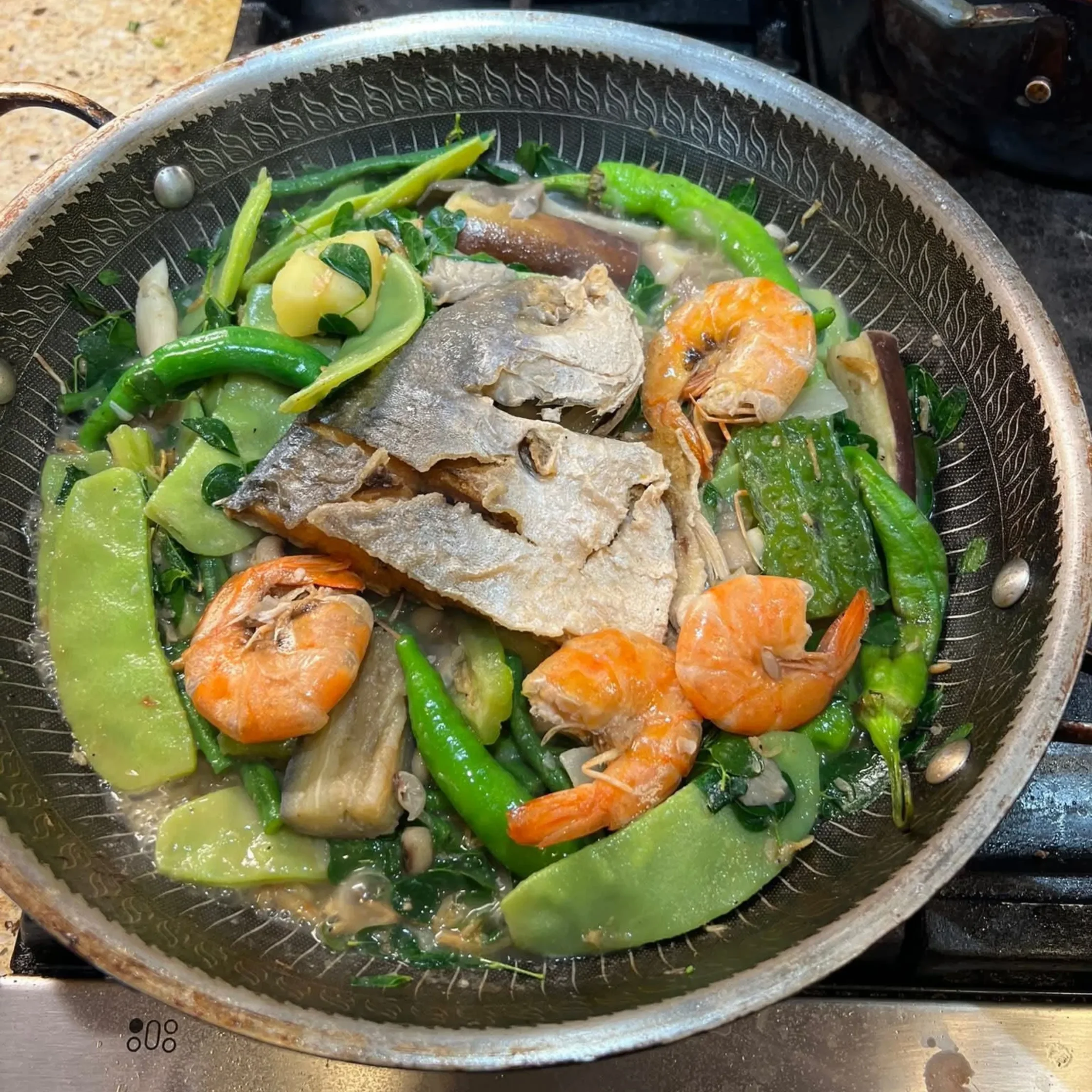
green vegetables with shrimp cooked in a dark grey pan on a stove
What you put in your baradibud can vary on what vegetables are in season! [PHOTO COURTESY OF Filipino Cooking More Official Facebook]

2. Poque Poque

The spelling differs—there’s poki-poki as well as puqui-puqui. But what remains the same is its composition: native eggplant that’s been broiled, chopped then sautéed with tomatoes, onions and eggs. It’s like tortang talong but not quite as the egg, in this case, is already incorporated in the mixture.
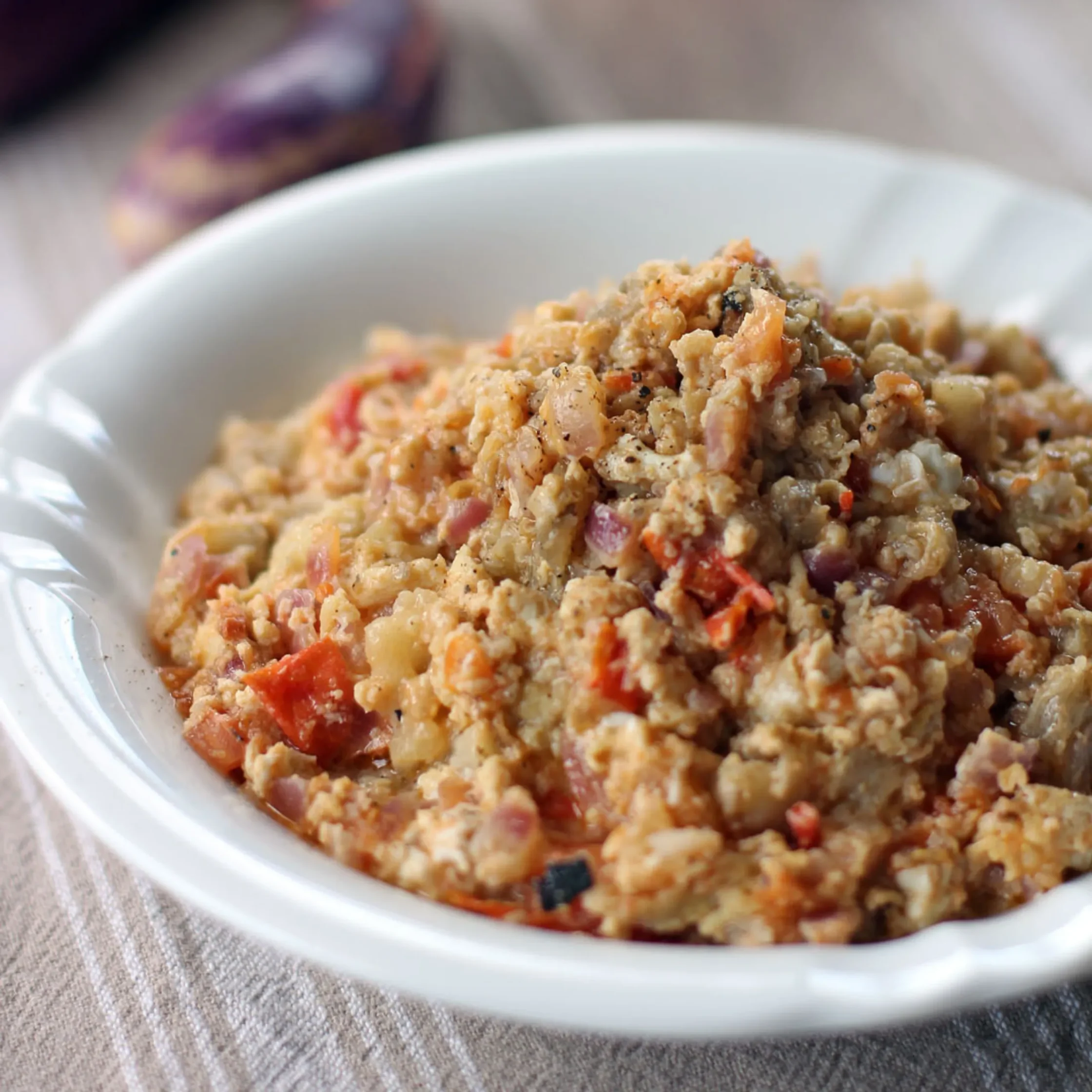
Close-up of a crumbly, baked mixture with visible red peppers in a white bowl on a striped tablecloth.
Poque poque isn’t exactly like the tortang talong you are familiar with. [PHOTO COURTESY OF Ang Sarap]

3. Tortang Ipon

It’s similar to okoy in the sense that it is a shrimp fritter. But the components make the difference. This torta doesn’t use glutinous rice flour, nor does it have chopped vegetables like sweet potato, squash and bean sprouts. Instead, it mixes ipon (tiny fish similar to dulong, which becomes available at the coast of Caoayan during cold months), onions, tomatoes and egg—that’s it. 
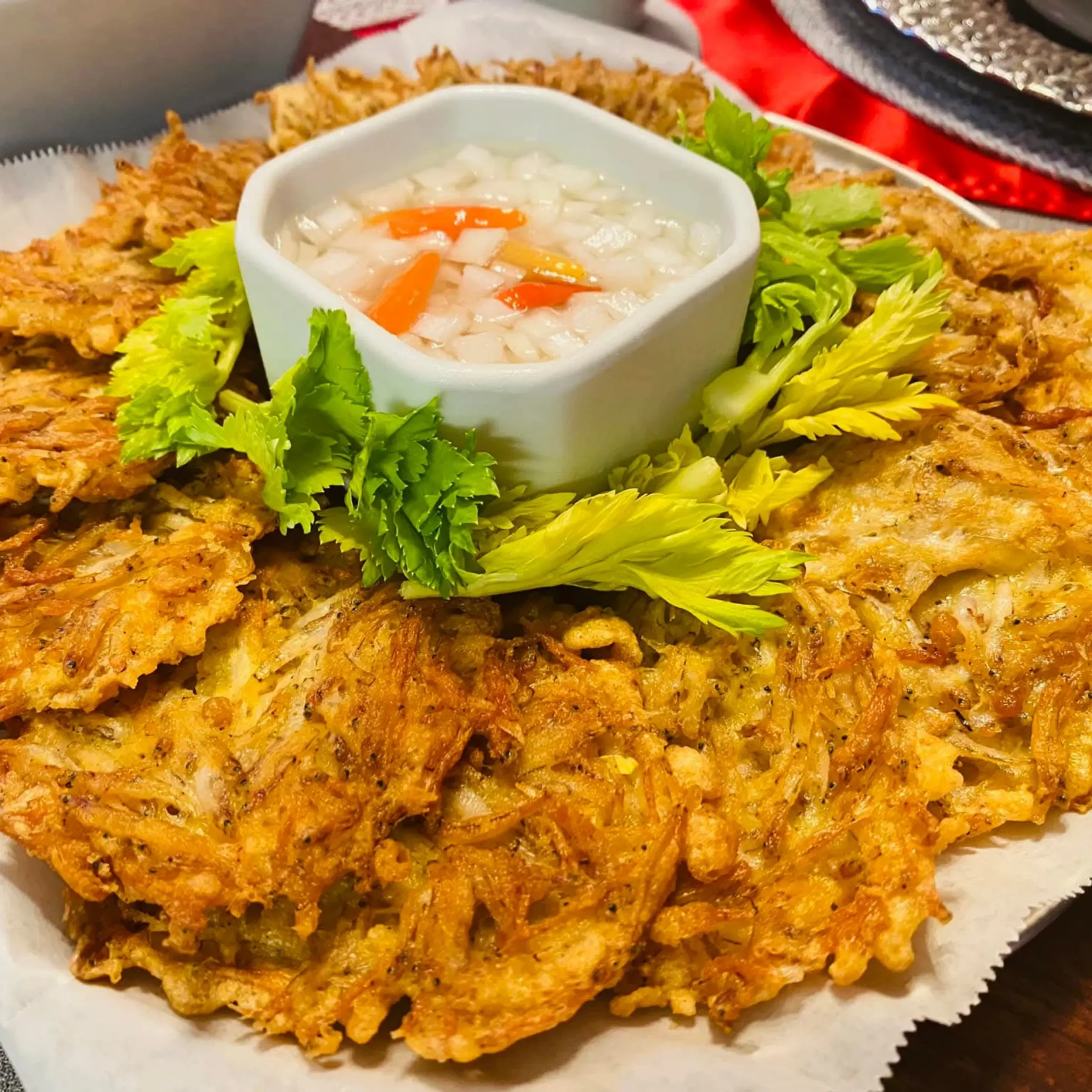
small white bowl with carrots and radish in vinegar surrounded by lettuve garnish with fried food on a plate
To make tortang ipon, all you need are ipon, onions, tomatoes and egg. [PHOTO COURTESY OF Kinipelas Grapes Foodtograhy on Facebook]

4. Warek Warek

The dinakdakan, aka cooked kilawin, is slightly cooked pork face and liver that’s tossed in vinegar and spices. When pork brain that has been boiled in vinegar, drained, mashed then added to a dinakdakan, then it becomes warek-warek.
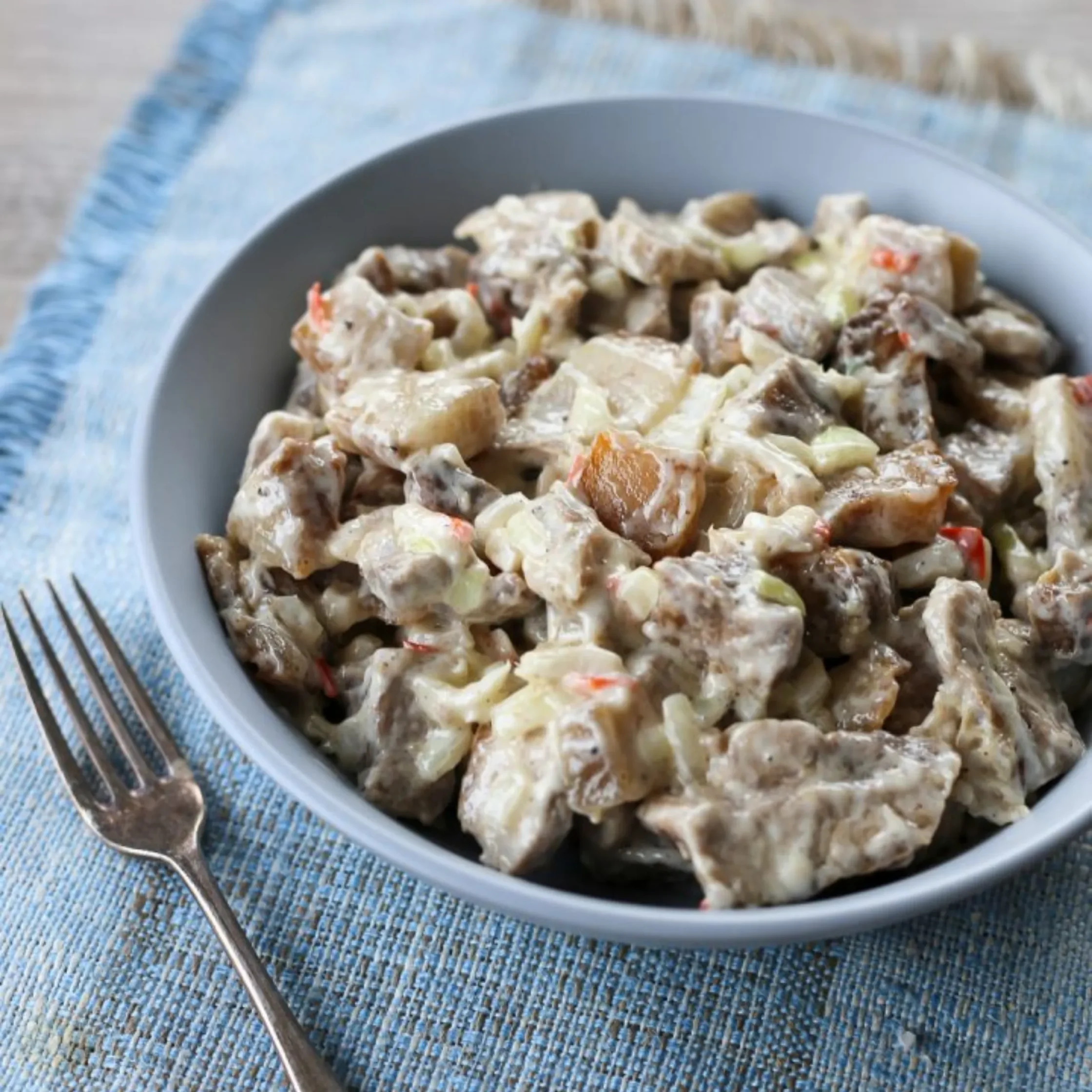
In making warek warek, the pork head and brain are to be cooked by the vinegar. [PHOTO COURTESY OF Ang Sarap]

5. Ladek

It’s your straightforward sisig—just pork face, head scraps and innards and nothing else to season it. The meat parts are broiled until tender then chopped to bits and cooked in oil until It becomes chewy, much like a pork floss.
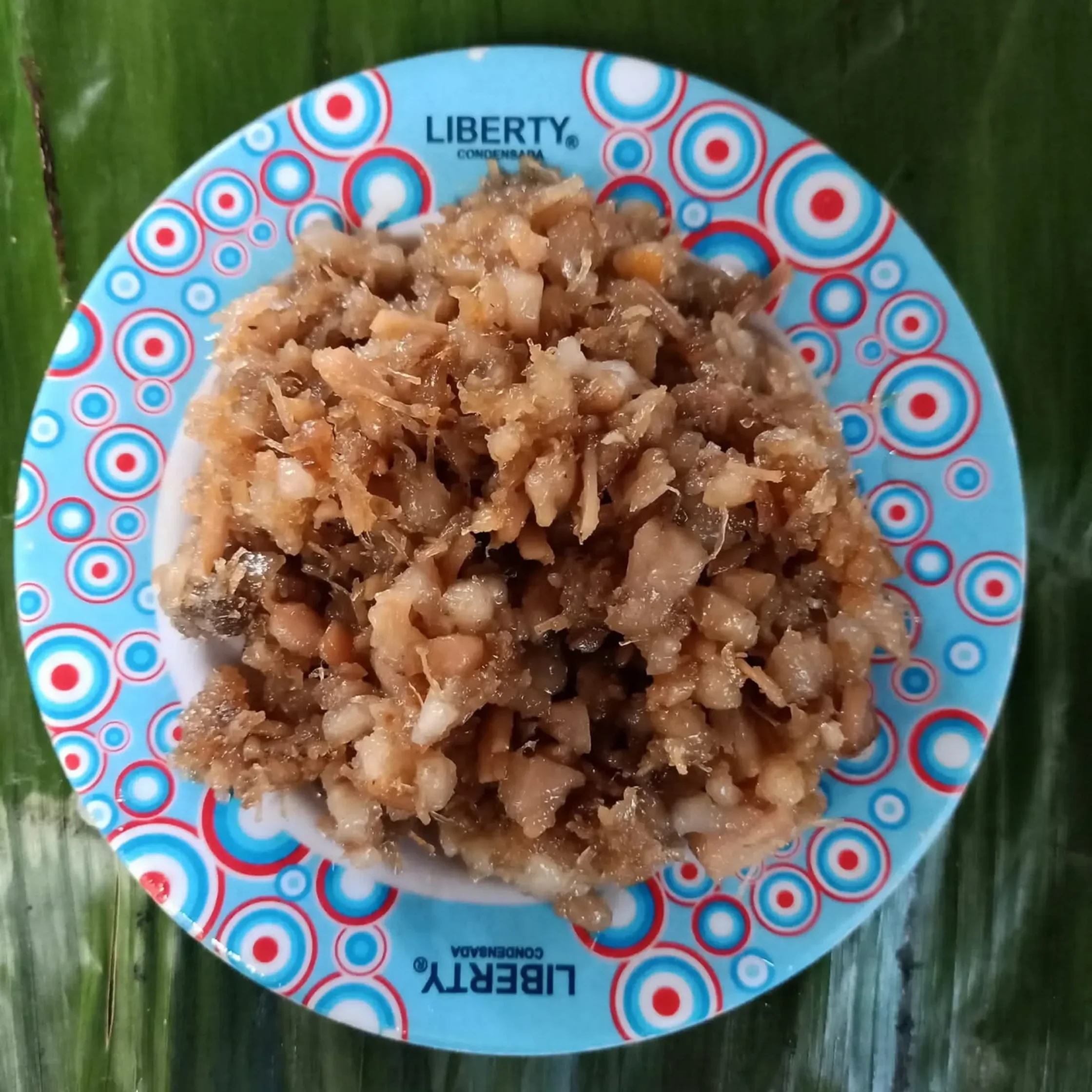
a cooked meat dish on a blue bowl with red circles places on a banana leaf
Ladek is a local specialty to Bantay, a town in Ilocos Sur. [PHOTO COURTESY OF Traditional Ladek Official Facebook]

6. Imbaliktad

It’s either you love it or you hate it. Here, beef meat and innards are cooked in bitter juice from the digestive tract of grass-eating animals like cows and goats. Sometimes, they add liver to make the dish even richer.
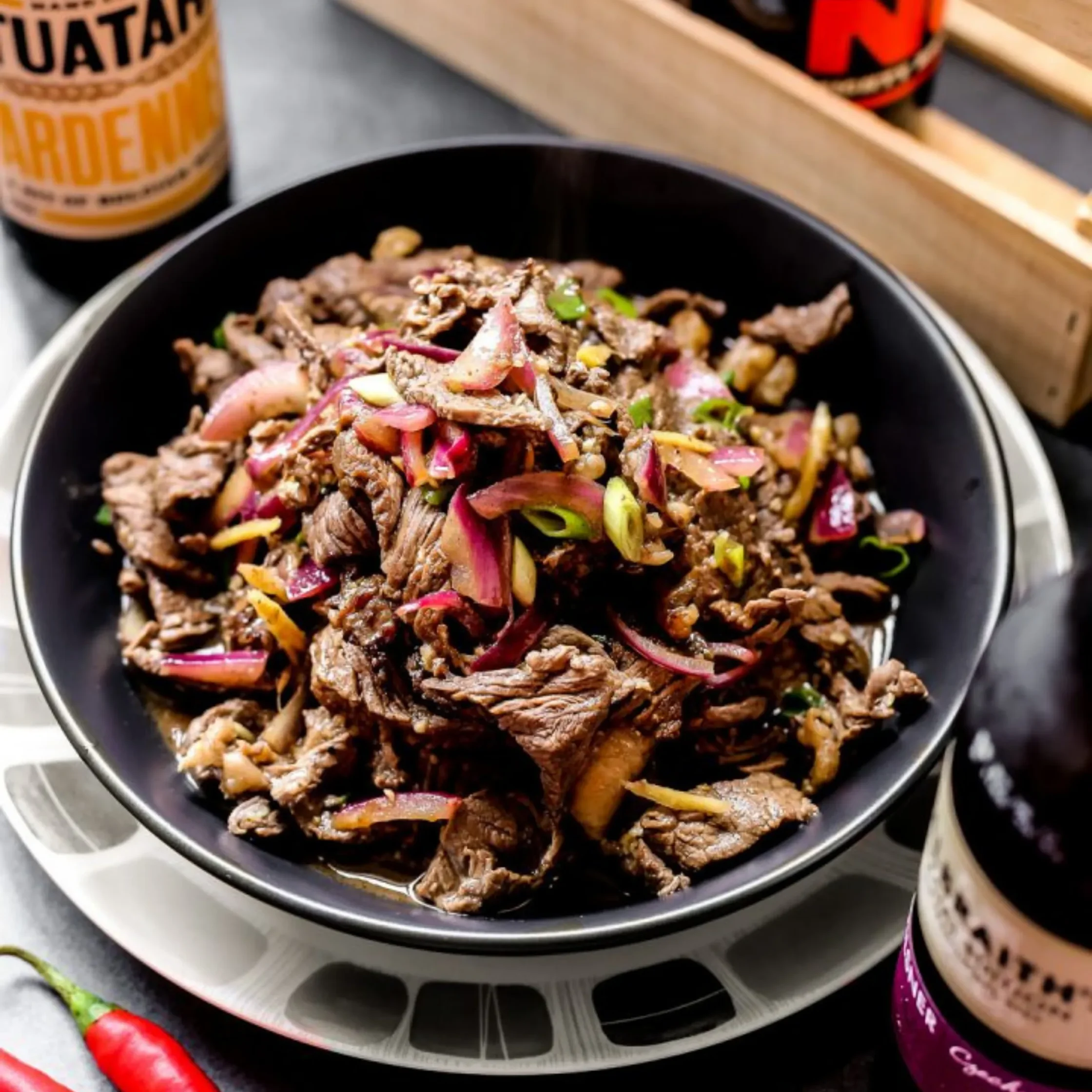
Dishes like imbaliktad and warek warek are great examples of the use of offal cuts in Ilocano cuisine. [PHOTO COURTESY OF Ang Sarap]

7. Pipian

It’s a chicken stew that’s largely influenced by Mexican flavors. Whereas the Mexican pipian uses roasted ground pumpkin seeds to thicken the sauce, the local dish uses ground rice flour. It also has the epazote leaves, aka pasote, an herb that most likely ended up in the country due to the Manila-Acapulco trade.
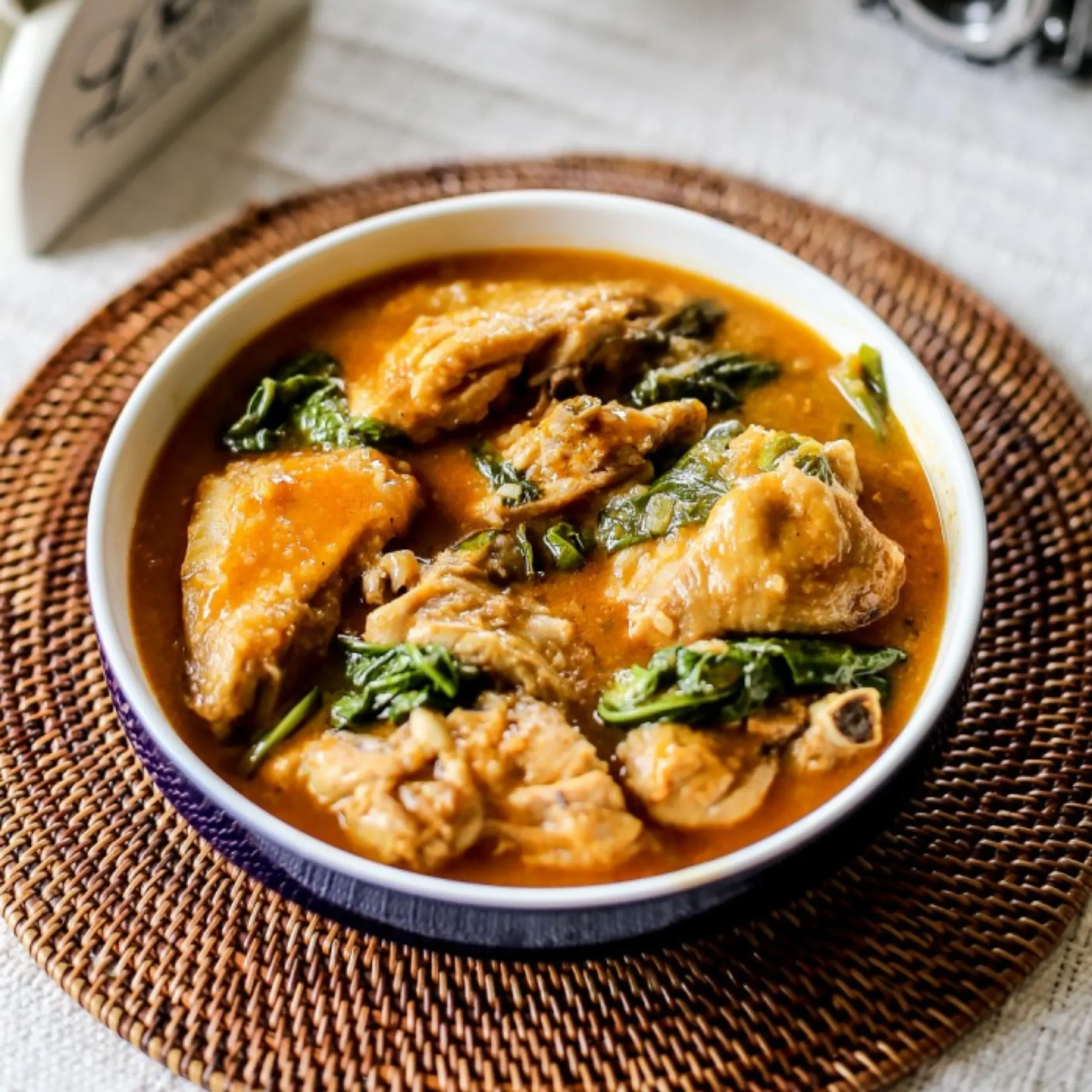

The origins of Ilocano pipian can be traces back to the Galleon Trade era. [PHOTO COURTESY OF Ang Sarap]
author avatar
Angelo Comsti Chief of Editorial Content

Frequently Asked Questions

Province of Ilocos Sur is located in the northwestern coast of Luzon in the Ilocos Region or Region I.

author avatar
Angelo Comsti Chief of Editorial Content

Food from Ilocos Sur is dictated by their resourcefulness, simplicity, and salty and bitter flavors.

author avatar
Angelo Comsti Chief of Editorial Content

The foods from Ilocos Sur that are much more well-known all throughout the Philippines include bagnet and Vigan longganisa.

author avatar
Angelo Comsti Chief of Editorial Content

There are many less well-known dishes that still reinforce what ingredients and flavor profiles you can expect from Ilocos Sur cuisine. These include baradibud, tortang ipon, imbaliktad, and pipian.

author avatar
Angelo Comsti Chief of Editorial Content
angelo comsti delish ph editor in chief

Angelo Comsti

Chief of Editorial Content

Angelo Comsti has had his finger in many pies—quite literally. Over the years, he has built a multifaceted career around his passion for food, seamlessly moving between writing, styling, consulting, recipe development, and hospitality. A respected food writer and editor, he has spent years documenting the stories behind Filipino cuisine, championing local ingredients, regional food traditions, and the people who shape the country's culinary landscape. Beyond publishing, Angelo works as a food and prop stylist, restaurant consultant, and recipe developer for both corporate clients and independent food businesses. He has also hosted television, radio, and live culinary events, bringing his expertise and enthusiasm for food to wider audiences. Today, he serves as the Chief of Editorial Content of Delish Philippines, where he leads the magazine's editorial vision and storytelling. Outside the newsroom, Angelo is also a restaurateur and the author of several bestselling cookbooks, further cementing his place in the Philippine food industry. Whether he's crafting a feature, developing a new dish, styling a magazine cover, or helping build a restaurant concept, Angelo remains driven by one goal: telling meaningful stories through food and celebrating the richness and diversity of Filipino cuisine.

0 0 votes
Total of Ratings
guest
Rating
Ratings for Article
0 Comments
Oldest
Newest Most Voted

To provide a customized ad experience, we need to know if you are of legal age in your region.

By making a selection, you agree to our Terms & Conditions.