

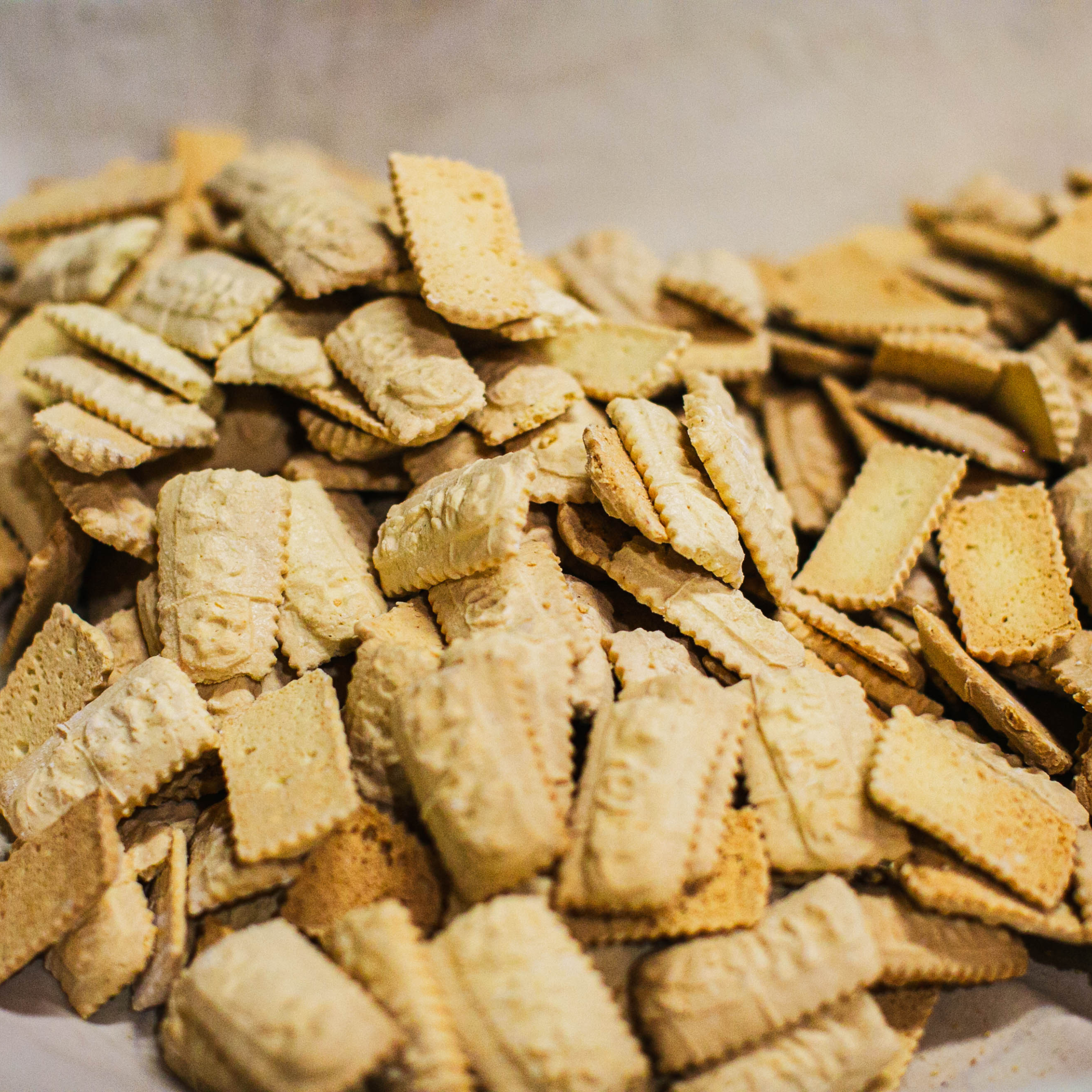
A toasty scent wafted in the garden as we entered the bakery in the backyard of Lourdes Luz. Minasa biscuits were baking in the oven.
Luz, who had just turned 90 this year, was one of the first to produce them commercially. She remembered how she and her friends would go to the old houses of Bustos and help elders make minasa during the town’s fiesta, the feast day of the Santo Niño. “Not everyone ate and made minasa,” she said softly, in Filipino. “Only the town’s wealthy clans had the means.”
Why Minasa Biscuits Have Unique Patterns
Minasa is a dry biscuit traditionally made with sago (arrowroot) starch, which takes three days to extract from the plant. On its surface are patterns of flowers, leaves, and vines made with wooden molds called trohel. During the Spanish colonial period, these were carved by carpenters for affluent families, which most likely explains the patterns’ resemblance to the Baroque ornamentation in the town’s many bahay na bato (Spanish-era stone houses).
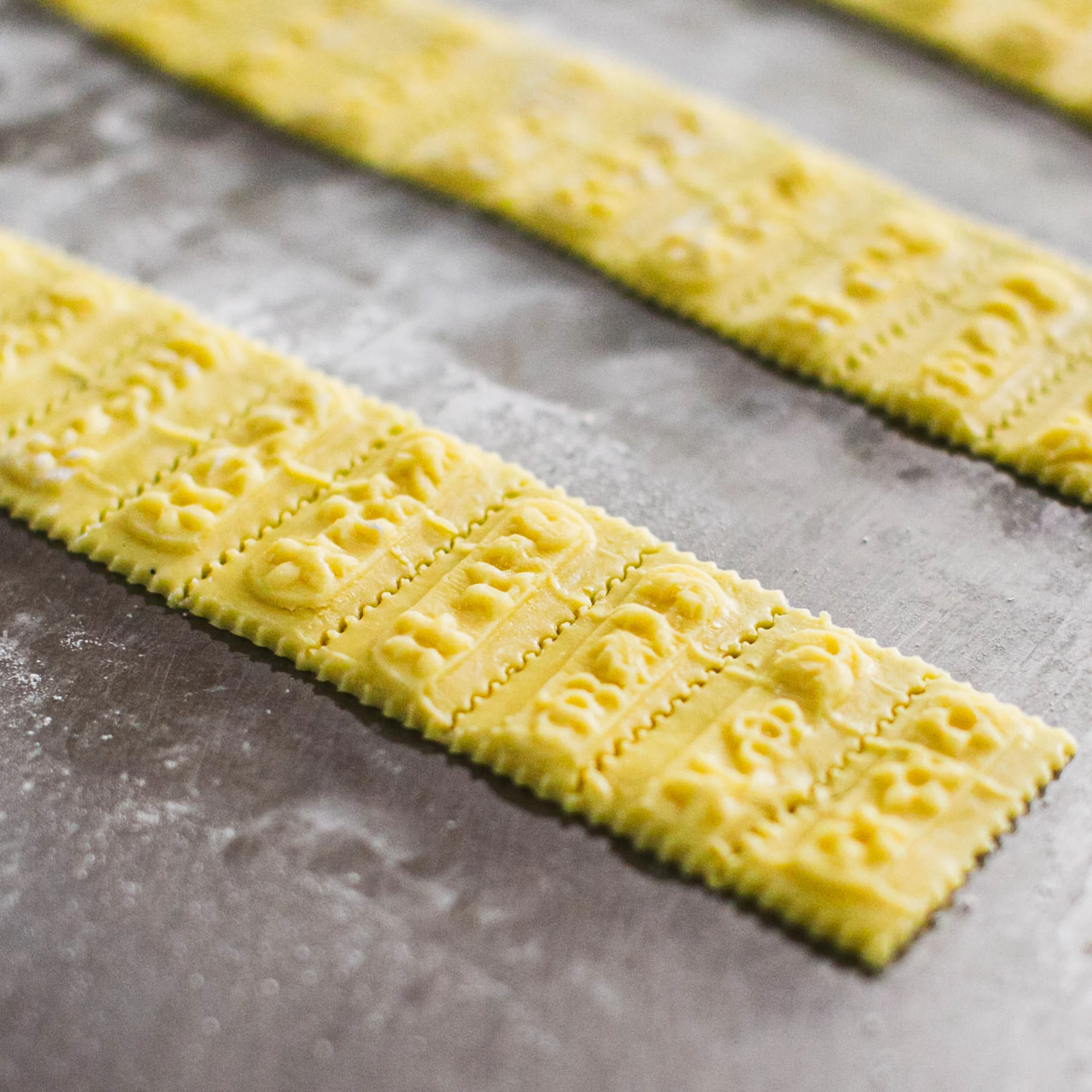
Nowadays, cassava starch is used as a substitute for sago starch because sago no longer grows in town. It is mixed with flour, egg yolks, sugar, margarine, and coconut milk, then kneaded—minasa literally meaning “kneaded dough”—molded, and cut into rectangles with a fluted pastry cutter. In the past, shapes varied from ovals to hexagons, with the baker cutting around the molded designs. Luz motioned to a large bibingka oven and said that she used to bake the biscuits in it, heated by firewood from above and below.
Minasa’s Rise as a Bustos Home Business
Eventually, minasa became a special meryenda among common households eaten with hot chocolate. In the early nineties, when she was still an elementary teacher, Luz sold jars of minasa at her niece Fe’s sari-sari store during one fiesta. It clicked, and many households soon followed suit. Currently, there are seven active minasa businesses in Bustos. Despite the competition, Luz feels thankful that she has helped many through her business.
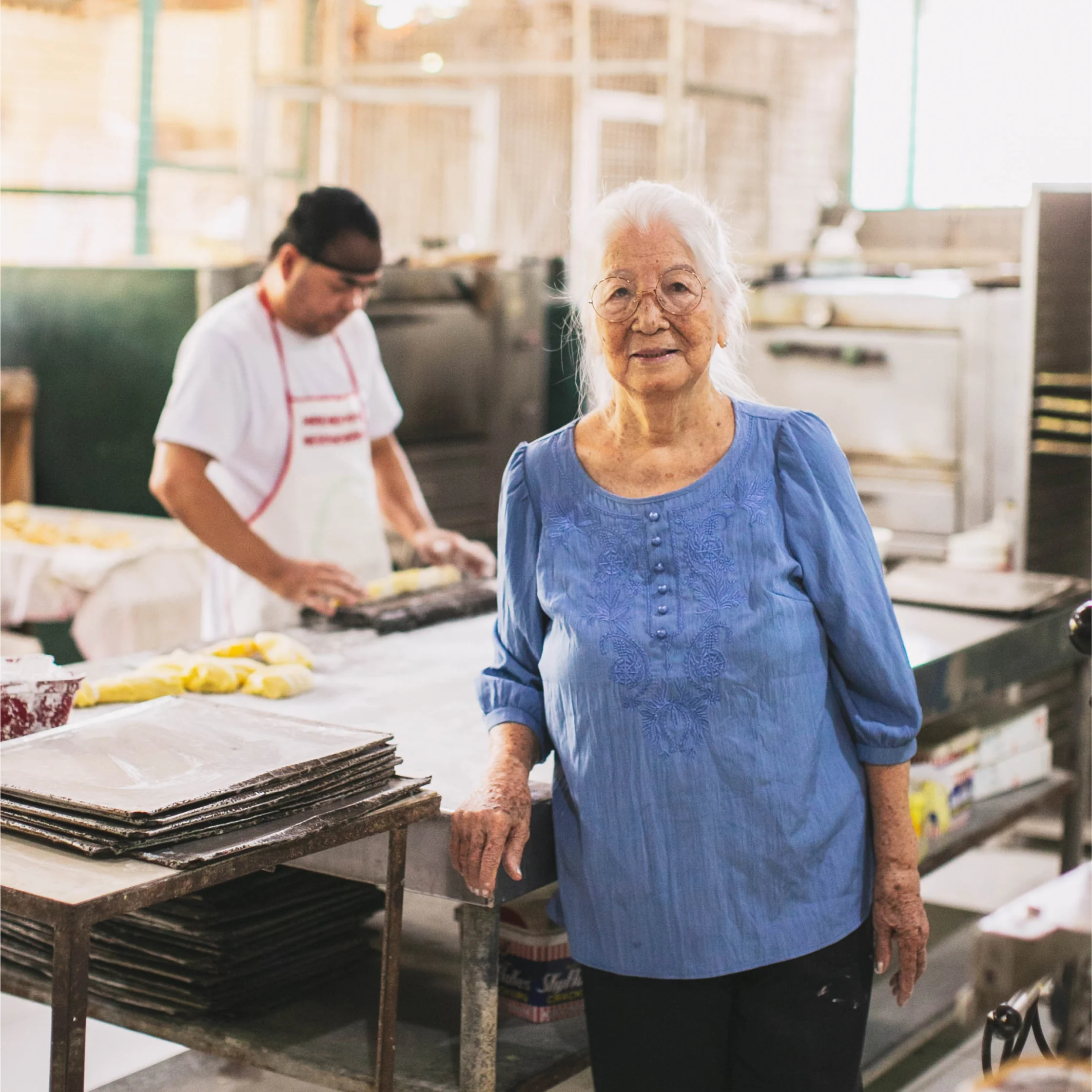
A fresh batch of minasa arrived from the oven. “Halika, kain kayo! (Come, eat!),” Luz said. The biscuit, warm as in the olden days, crumbled and melted in the mouth. “Life is simple, but through the minasa, we get by.”
Fe’s Minasa, Barquillos and Lengua de Gato, 16 BMA Avenue, Poblacion, Bustos, Bulacan.

Frequently Asked Questions
Minasa is a traditional dry biscuit associated with Bustos, Bulacan. It is traditionally made with sago starch and decorated with intricate designs using wooden molds called trohel.
Minasa literally refers to kneaded dough, reflecting how the dough is prepared before it is molded and cut.
Traditional minasa is made with sago starch. Today, cassava starch is used as a substitute, along with flour, egg yolks, sugar, margarine, and coconut milk.
A trohel is a wooden mold traditionally used to create the decorative patterns on minasa, including flowers, leaves, and vines.
Lourdes Luz is a Bustos resident who helped commercially produce minasa. She began selling jars of the biscuit in the early 1990s and has helped keep the local tradition alive.