Advertisement

Kamayan: Why Filipinos Still Love Eating With Their Hands

We love our spoons and forks, but bare-handed eating holds a special place in the Filipino heart.

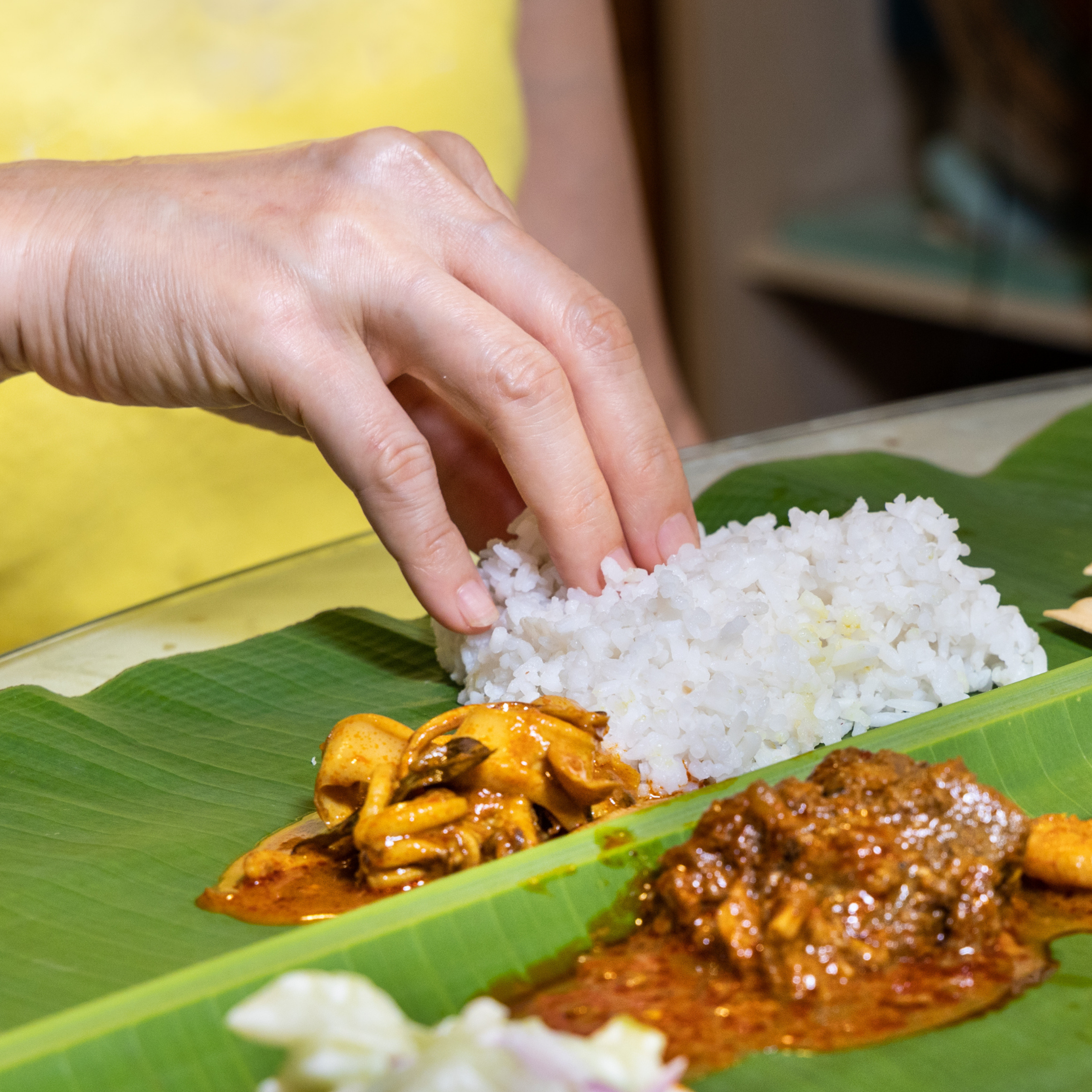
A hand gathers white rice beside spicy curry on a green banana leaf, showing a traditional South Asian meal eaten by hand in a casual setting.
Filipinos don’t need a spoon, fork, or knife to enjoy a good meal!

The kamayan feast is a feast in every sense of the word. Visually it is a treat with the abundance of viands laid out over rice, their vivid colors and varied shapes and textures popping out of the backdrop of banana leaves. But the best part is when the spread is formally opened to diners, who reach for, pick up, and eventually consume their viands of choice with the most personal of tools: the hands.

This practice of eating with the bare hands is called pagkakamay in Tagalog, kinamot in Visayan languages, and kammut in Tuwali—or more generally kamayan, which is as much a way of eating as it is a deeply rooted Filipino tradition. 

From Fingers to Fork and Spoon

Filipinos have long been using their hands to eat—using the fingers was the standard way of eating in parts of Southeast Asia where chopsticks hadn’t quite taken off. This way of eating persisted until the Spanish arrived in the 16th century. In colonizing the Philippines, they left behind numerous influences—among them, eating with cutlery as opposed to the “barbaric” old tradition of eating with the hands.

The practice of using cutlery has since stayed with Filipinos, and many meals today—especially those held in public spaces—are consumed in this manner, especially in large urban cities like Metro Manila. What might be distinct to the Philippines (not entirely unique to the country, but a departure from the West’s fork and knife) is that it’s spoons and forks that are considered the essential utensils on the table, with knives called for only in selected instances.
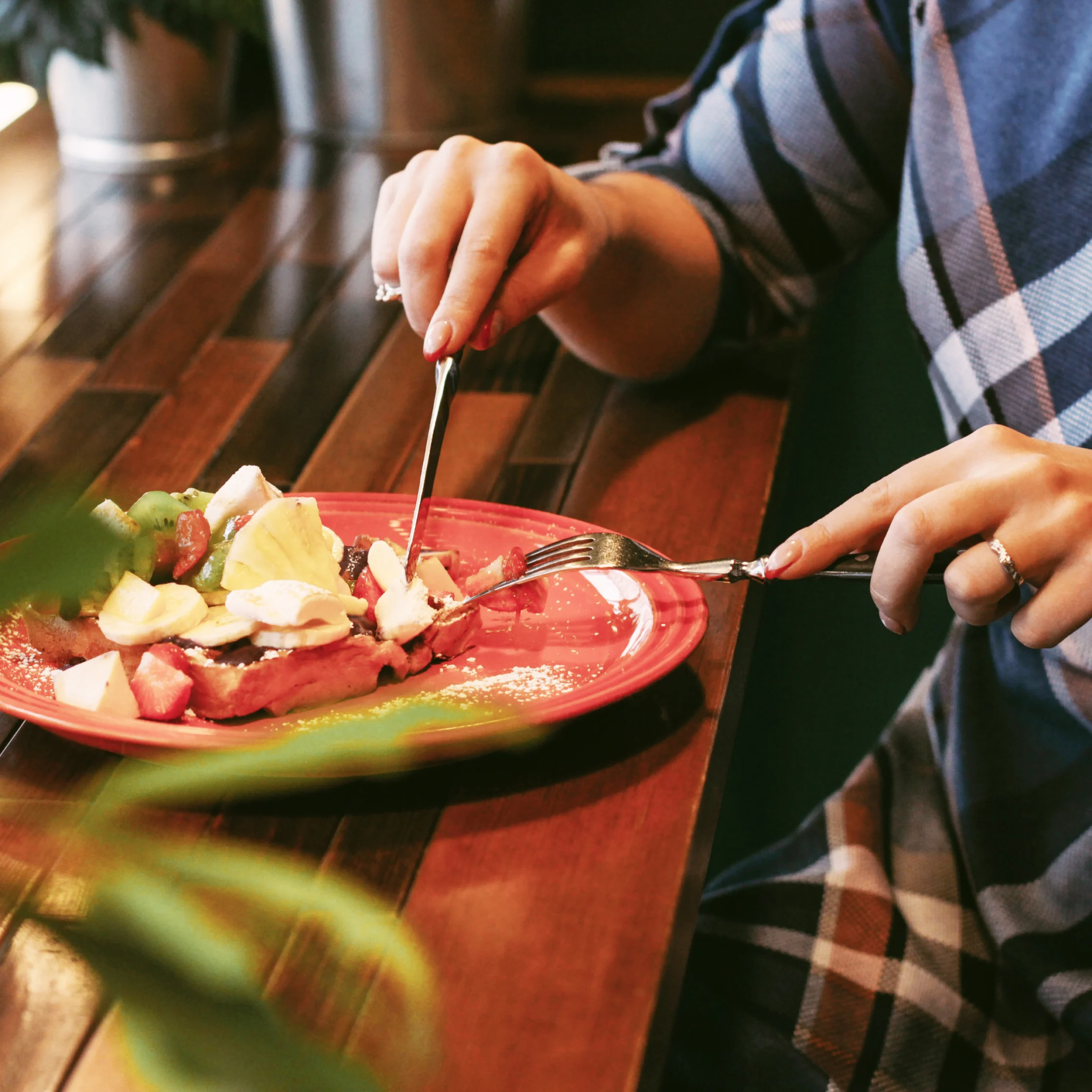
A diner in a plaid shirt cuts food on a red plate at a wooden table, with warm sunlight creating a relaxed, cozy dining atmosphere.
Nowadays, spoons and forks are considered the essential utensils.

And Yet, We Eat With Our Hands

Even with the prevalence of metal utensils across the Filipino households, eateries, and formal dining establishments, we Filipinos still eat with our hands on numerous occasions.

Says Doreen Fernandez: “Today, Western implements and serving conventions are generally used, although many [like] peasants, workers, and provincial folk still use their hands—as do people of many classes, when feasting in the rural areas and savoring native food in the native way.”

There are meals and situations in the Filipino life that welcome or even benefit from the kamayan manner of eating, and using the hands makes for an intimate and tactile dining experience that can’t be matched by the use of spoons, fork, or knives.
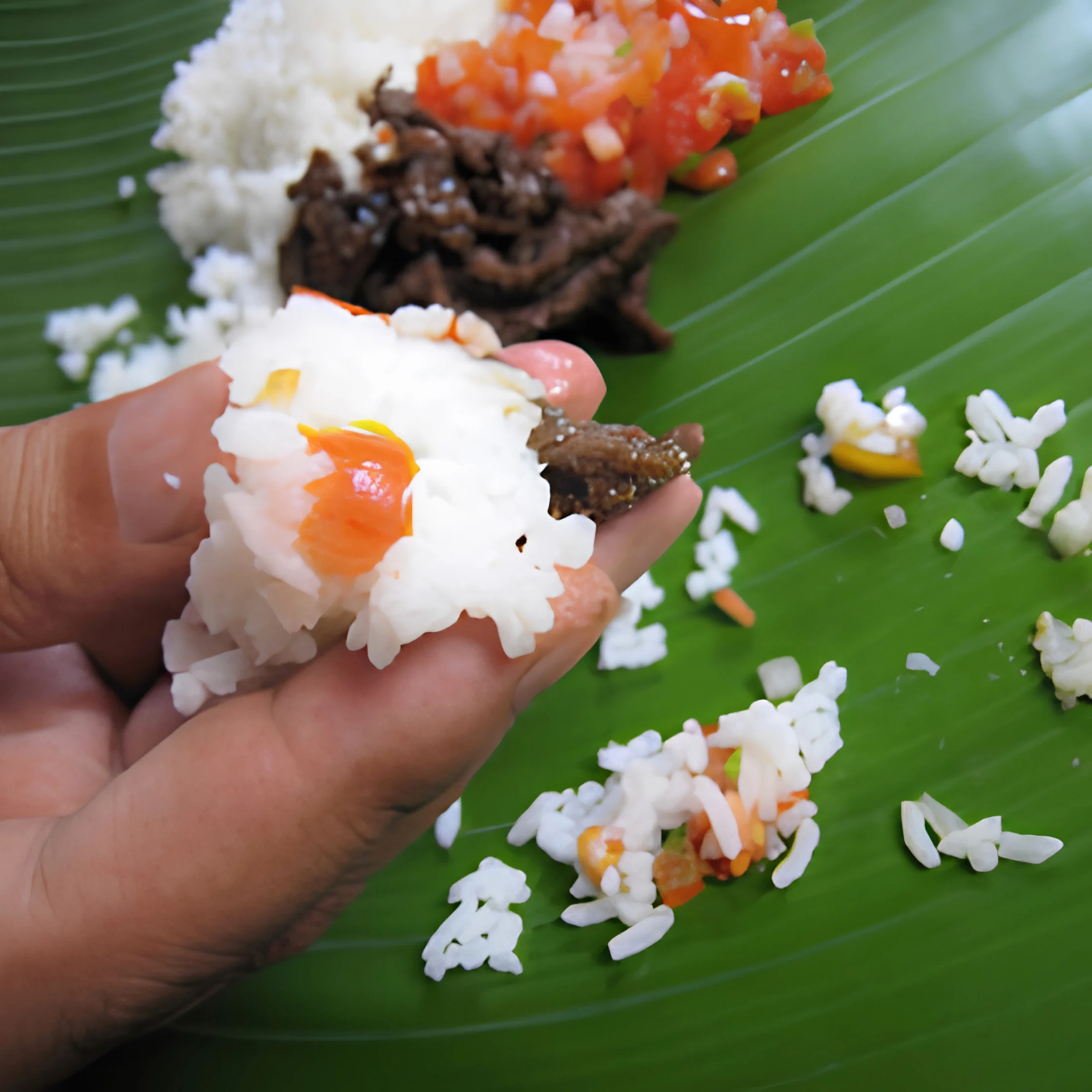
A hand holds white rice topped with tomato salsa and browned meat over a green banana leaf, with more food and scattered rice behind it.
Kamayan feels more intimate than using spoons, forks, and knives will ever be. [PHOTO COURTESY OF Market Manila]

How Kamayan Heightens the Dining Experience

Certain foods are far more satisfying when consumed using the hands. Think: fried chicken and fish, the meat of which the fingers can aid in making “himay” from the bone; shell-on seafood like shrimps and crabs (assisted with metal tools to remove harder parts of the shell in the case of the latter); and many tropical fruits that entail skinning and de-seeding, like lanzones and rambutan.

The fingers being directly, voluntarily controllable means they’re an easy tool to wield and maneuver—a helpful feature when you’re trying to get every last edible bit from the food’s supporting shell.

There, too, is the added sensory dimension from feeling the food in your hands—a direct way of getting up-close and personal with the textures and temperatures found in these dishes and ingredients. The inviting warmth of the stew liquids, the meat fibers yielding as they’re smushed into the rice, the softened skins of cooked-down vegetables, the dribbling down of the meat and seafood juices down your fingers (and licking it clean after).

Much of the pleasure of eating, after all, is in how it engages the different senses: sight, smell, sounds, tastes, and—as eating with the fingers more directly engages—touch.

Whether in grand kamayan feasts or everyday meals, the more skilled of kamayan eaters are successfully able to use one hand to press viands onto a bed of rice, roll it into a rice pouch of sorts with their fingers, pick up and dip the pouch into the sawsawan as desired, then bring it close to the mouth and push the food in with the thumb.
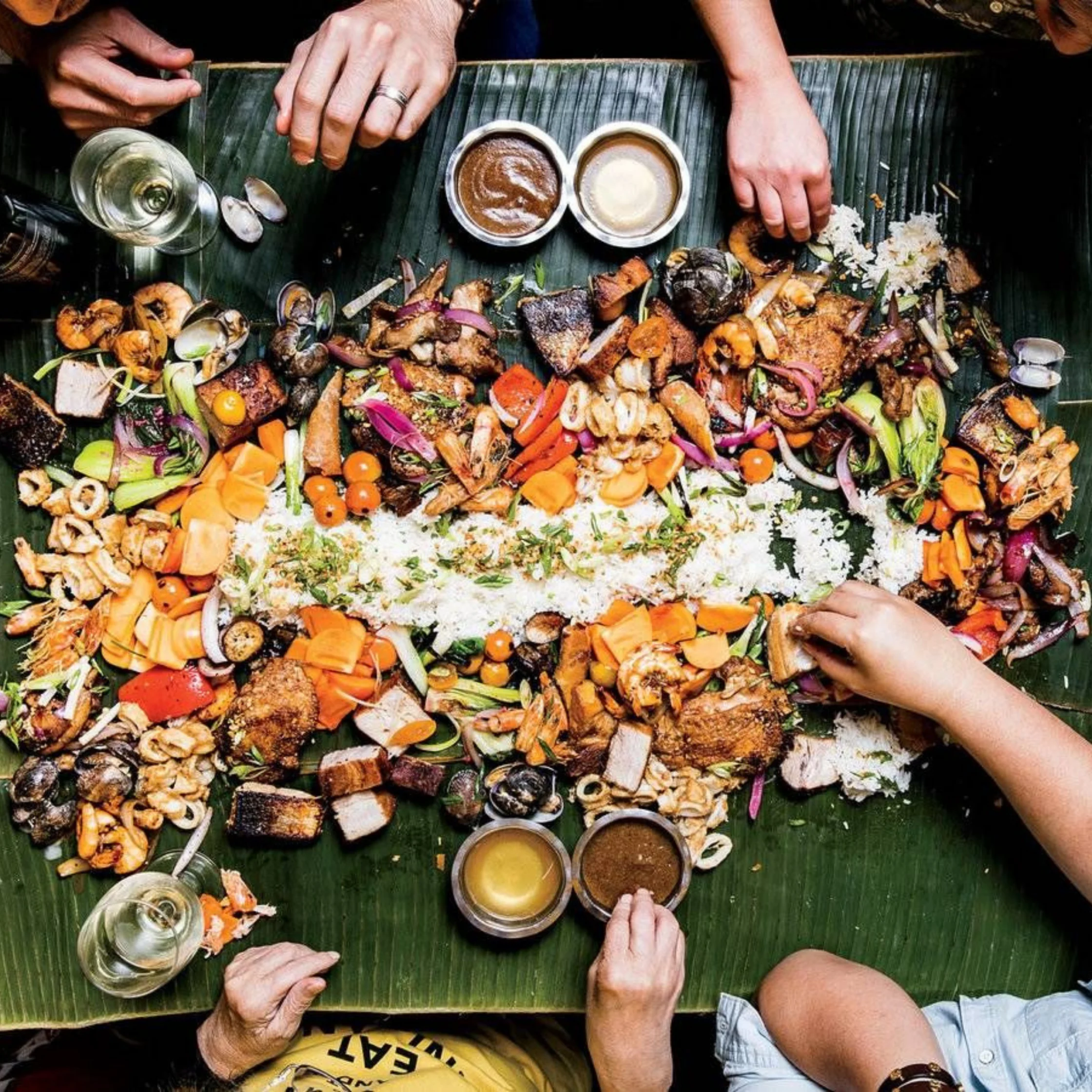
Overhead view of hands sharing a colorful seafood feast with grilled vegetables, rice, and dipping sauces on a banana leaf, creating a lively communal mood.
Some foods feel much better eaten with your hands. [PHOTO COURTESY OF House of the Phiippines]

Eating With the Hands Brings People Together

If the aforementioned kamayan feasts and boodle fights are anything to go by, eating with the hands also has a way of fostering camaraderie and community. It could be the coupling of sharing the food on the spread with fellow diners on the table, and the shared act of consuming the food in the same way using the bare hands and fingers. 

The phenomenon can be observed even in smaller settings—say, a meal at home with the family. Eating with the bare hands is, in a sense, a vulnerable act that entails trust to overcome—and in giving this trust, bayanihan or a sense of community is formed and group ties, strengthened. We embrace these outcomes as community bonds are of high value in Filipino culture; sharing a meal eaten with the hands certainly is a delicious way of spending time with loved ones.

On a broader scale, eating with the hands is a way of upholding tradition—of honoring the age-old practices that fed our forefathers. Although the use of cutlery has become practically ingrained in the modern Filipino life, going back to the precolonial ways of eating (even if on occasion) helps keep an important part of the local culture alive.

And given the country’s long history of colonization and ongoing fight for freedom, kamayan-style dining can also be viewed through the lens of resistance. After all, one culture’s so-called “barbaric” is another culture’s delicious.
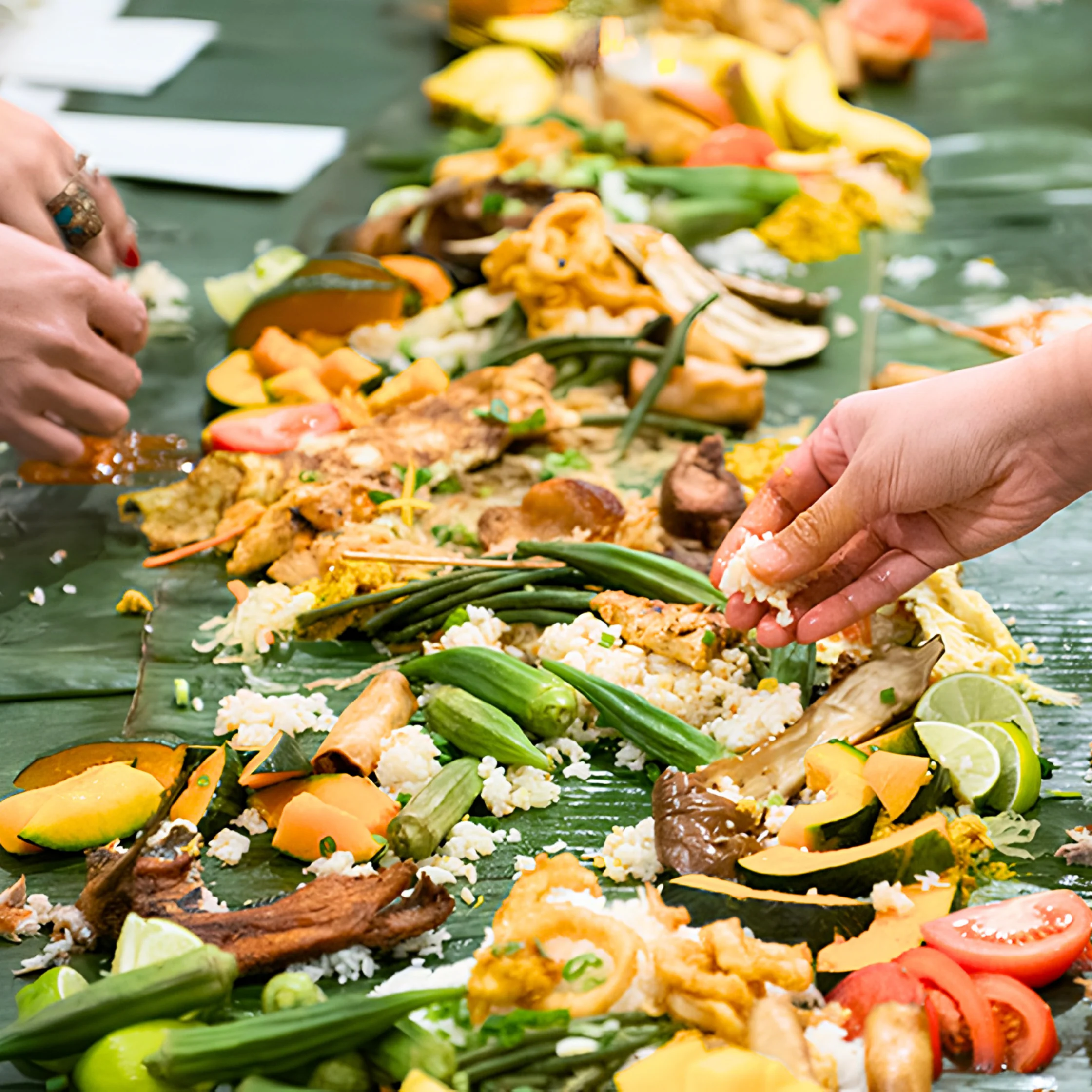

Hands arrange a colorful communal feast of rice, grilled vegetables, squash, peppers, and herbs across banana leaves, creating a warm, festive mood.
Eating with your hands is not only a way of upholding an old tradition, but connect with the people you’re eating with. [PHOTO COURTESY OF Caroline Garcia]
author avatar
Patricia Baes
Trish thinks too much about everything—truth, existence, and what to have for dinner. Her early love of experimenting in the kitchen, coupled with a desire to better her relationship with food, led her down the rabbit hole of food media and writing. After graduating with a Psychology degree from UP Diliman, she sharpened her writing skills (and expanded her appetite) at a couple of food websites, where she covered cooking, restaurants, food history, and culture, and ate her way through Manila’s pulsating dining scene as staff writer and eventually as the publication’s food editor. Food, for Trish, is as much a source of pleasure and fuel as it is an outlet for creativity; a medium through which stories can be passed on; and a way to connect with others. And putting her musings into words lets her narrow the gap between her food geekery and background in the social sciences.

Frequently Asked Questions

​Kamayan is the deeply rooted Filipino tradition of eating meals using your bare hands.

author avatar
Patricia Baes
Trish thinks too much about everything—truth, existence, and what to have for dinner. Her early love of experimenting in the kitchen, coupled with a desire to better her relationship with food, led her down the rabbit hole of food media and writing. After graduating with a Psychology degree from UP Diliman, she sharpened her writing skills (and expanded her appetite) at a couple of food websites, where she covered cooking, restaurants, food history, and culture, and ate her way through Manila’s pulsating dining scene as staff writer and eventually as the publication’s food editor. Food, for Trish, is as much a source of pleasure and fuel as it is an outlet for creativity; a medium through which stories can be passed on; and a way to connect with others. And putting her musings into words lets her narrow the gap between her food geekery and background in the social sciences.

​Before Spanish colonization in the 16th century, using your hands to eat was the standard across the region. The Spanish introduced metal cutlery and framed the indigenous tradition of eating with hands as “barbaric.” Over time, cutlery became the norm—especially in urban areas like Metro Manila—though Filipinos specifically adopted the spoon and fork rather than the Western fork and knife.

author avatar
Patricia Baes
Trish thinks too much about everything—truth, existence, and what to have for dinner. Her early love of experimenting in the kitchen, coupled with a desire to better her relationship with food, led her down the rabbit hole of food media and writing. After graduating with a Psychology degree from UP Diliman, she sharpened her writing skills (and expanded her appetite) at a couple of food websites, where she covered cooking, restaurants, food history, and culture, and ate her way through Manila’s pulsating dining scene as staff writer and eventually as the publication’s food editor. Food, for Trish, is as much a source of pleasure and fuel as it is an outlet for creativity; a medium through which stories can be passed on; and a way to connect with others. And putting her musings into words lets her narrow the gap between her food geekery and background in the social sciences.

It adds touch to the visual, olfactory, and gustatory aspects of dining. Diners directly experience the textures and temperatures of the food—such as warm stews or yielding meat fibers. Practically, skilled kamayan eaters use one hand to gather viands into a rice pouch, dip it in sauce or sawsawan, and push the food into their mouth using their thumb.

author avatar
Patricia Baes
Trish thinks too much about everything—truth, existence, and what to have for dinner. Her early love of experimenting in the kitchen, coupled with a desire to better her relationship with food, led her down the rabbit hole of food media and writing. After graduating with a Psychology degree from UP Diliman, she sharpened her writing skills (and expanded her appetite) at a couple of food websites, where she covered cooking, restaurants, food history, and culture, and ate her way through Manila’s pulsating dining scene as staff writer and eventually as the publication’s food editor. Food, for Trish, is as much a source of pleasure and fuel as it is an outlet for creativity; a medium through which stories can be passed on; and a way to connect with others. And putting her musings into words lets her narrow the gap between her food geekery and background in the social sciences.

Eating with your bare hands is a vulnerable, egalitarian act that relies on mutual trust, fostering a spirit of bayanihan and strengthening social bonds among diners. On a broader societal level, practicing kamayan serves as a subtle act of cultural resistance, reclaiming a traditional custom once dismissed by colonizers.

author avatar
Patricia Baes
Trish thinks too much about everything—truth, existence, and what to have for dinner. Her early love of experimenting in the kitchen, coupled with a desire to better her relationship with food, led her down the rabbit hole of food media and writing. After graduating with a Psychology degree from UP Diliman, she sharpened her writing skills (and expanded her appetite) at a couple of food websites, where she covered cooking, restaurants, food history, and culture, and ate her way through Manila’s pulsating dining scene as staff writer and eventually as the publication’s food editor. Food, for Trish, is as much a source of pleasure and fuel as it is an outlet for creativity; a medium through which stories can be passed on; and a way to connect with others. And putting her musings into words lets her narrow the gap between her food geekery and background in the social sciences.

Kamayan persists because it offers an intimate, highly tactile dining experience that cutlery cannot match. It remains common during rural feasts, family gatherings, and when eating traditional Filipino dishes. For many, it is also a way to honor precolonial traditions and preserve cultural heritage.


author avatar
Patricia Baes
Trish thinks too much about everything—truth, existence, and what to have for dinner. Her early love of experimenting in the kitchen, coupled with a desire to better her relationship with food, led her down the rabbit hole of food media and writing. After graduating with a Psychology degree from UP Diliman, she sharpened her writing skills (and expanded her appetite) at a couple of food websites, where she covered cooking, restaurants, food history, and culture, and ate her way through Manila’s pulsating dining scene as staff writer and eventually as the publication’s food editor. Food, for Trish, is as much a source of pleasure and fuel as it is an outlet for creativity; a medium through which stories can be passed on; and a way to connect with others. And putting her musings into words lets her narrow the gap between her food geekery and background in the social sciences.
patricia baes delish contributing writer

Patricia Baes

Author

Trish thinks too much about everything—truth, existence, and what to have for dinner. Her early love of experimenting in the kitchen, coupled with a desire to better her relationship with food, led her down the rabbit hole of food media and writing. After graduating with a Psychology degree from UP Diliman, she sharpened her writing skills (and expanded her appetite) at a couple of food websites, where she covered cooking, restaurants, food history, and culture, and ate her way through Manila’s pulsating dining scene as staff writer and eventually as the publication’s food editor. Food, for Trish, is as much a source of pleasure and fuel as it is an outlet for creativity; a medium through which stories can be passed on; and a way to connect with others. And putting her musings into words lets her narrow the gap between her food geekery and background in the social sciences.

0 0 votes
Total of Ratings
guest
Rating
Ratings for Article
0 Comments
Oldest
Newest Most Voted

To provide a customized ad experience, we need to know if you are of legal age in your region.

By making a selection, you agree to our Terms & Conditions.