

Filipino cuisine has a long history and is a melting pot of multiple influences—particularly Malay, Spanish, Chinese, Mexican, and American. This is no arbitrary assortment, but the natural product of the Philippines’ indigenous roots, coupled with the country’s history galleon trade and the years of colonization that took place in the country.
This history reflects itself in the food Filipinos continue to eat on a daily basis. These are just some of the popular Filipino dishes with fascinating backstories—and fantastic flavors that have formed as a result.
Kinilaw
Described by Doreen Fernandez as the “water and land meeting in an instant of delicate freshness,” it’s one of the most ancient Filipino dishes dating back more than a thousand years, even pre-dating Hispanic times.
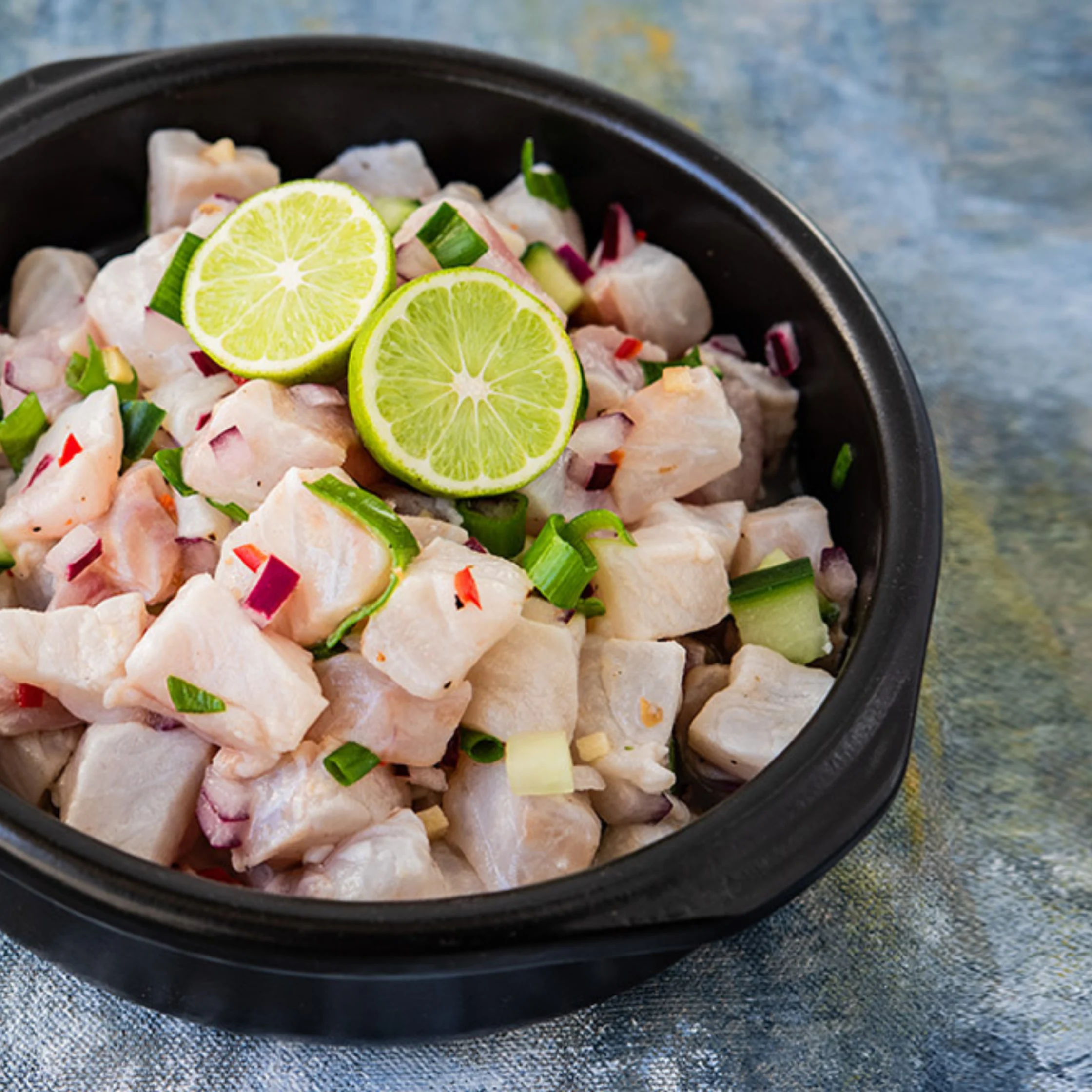
There’s also a connection to another Filipino classic, adobo—and, as you’ll see later, certain variations of sisig—with vinegar serving as a core ingredient in all three. In his 1613 Tagalog-Spanish dictionary Vocabulario de la Lengua Tagala, Franciscan missionary Pedro de San Buenaventura listed what he called “adobo de los naturales” (“adobo of the natives,” adobo in Spain being a dish of a protein immersed in an acidic element, like vinegar) to describe “quilao” (kilaw).
“Quilo” or “quilao” is also listed in the 1754 edition of Tagalog-Spanish dictionary Vocabulario de la Lengua Tagala by Ivan de Noceda and Pedro de San Lucar, as either pork or fish soaked in vinegar.
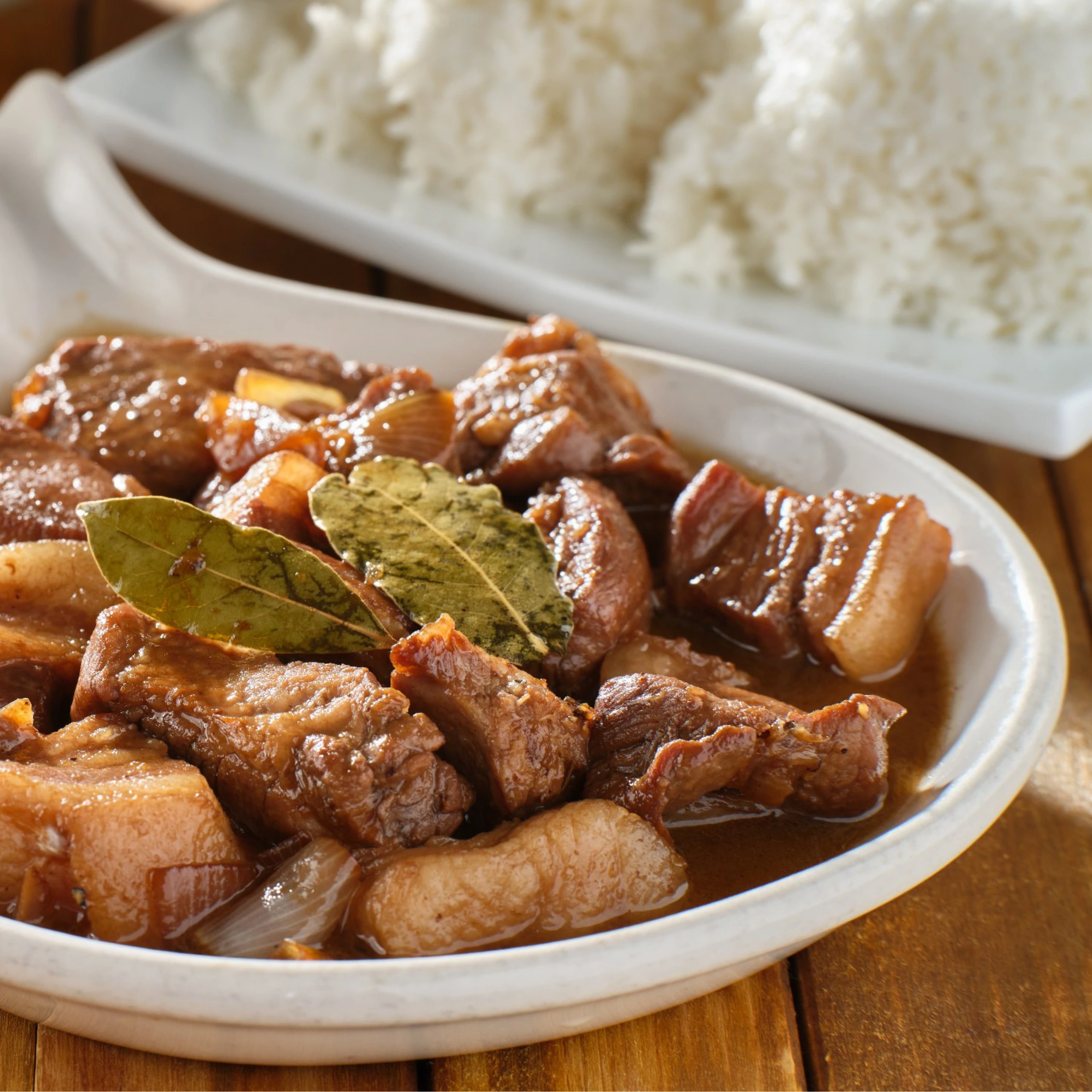
Adobo
Say “Filipino food” and we’d bet adobo is one of the very quintessential dishes that would come to mind. The name has roots in the French “adouber,” or “to dress a knight in armor,” later adapted into the Spanish “adobar,” or “to marinate.”
The first written account of what might be Filipino adobo comes from Franciscan missionary Pedro de San Buenaventura, who listed the aforementioned “adobo de los naturales” (“adobo of the natives”) in his 1613 Tagalog-Spanish dictionary, Vocabulario de la Lengua Tagala.
But it could well have been around long before the Spanish arrived. The adobo cooking method, which involves marinating in vinegar, is consistent with the way people in tropical climates would preserve their food.
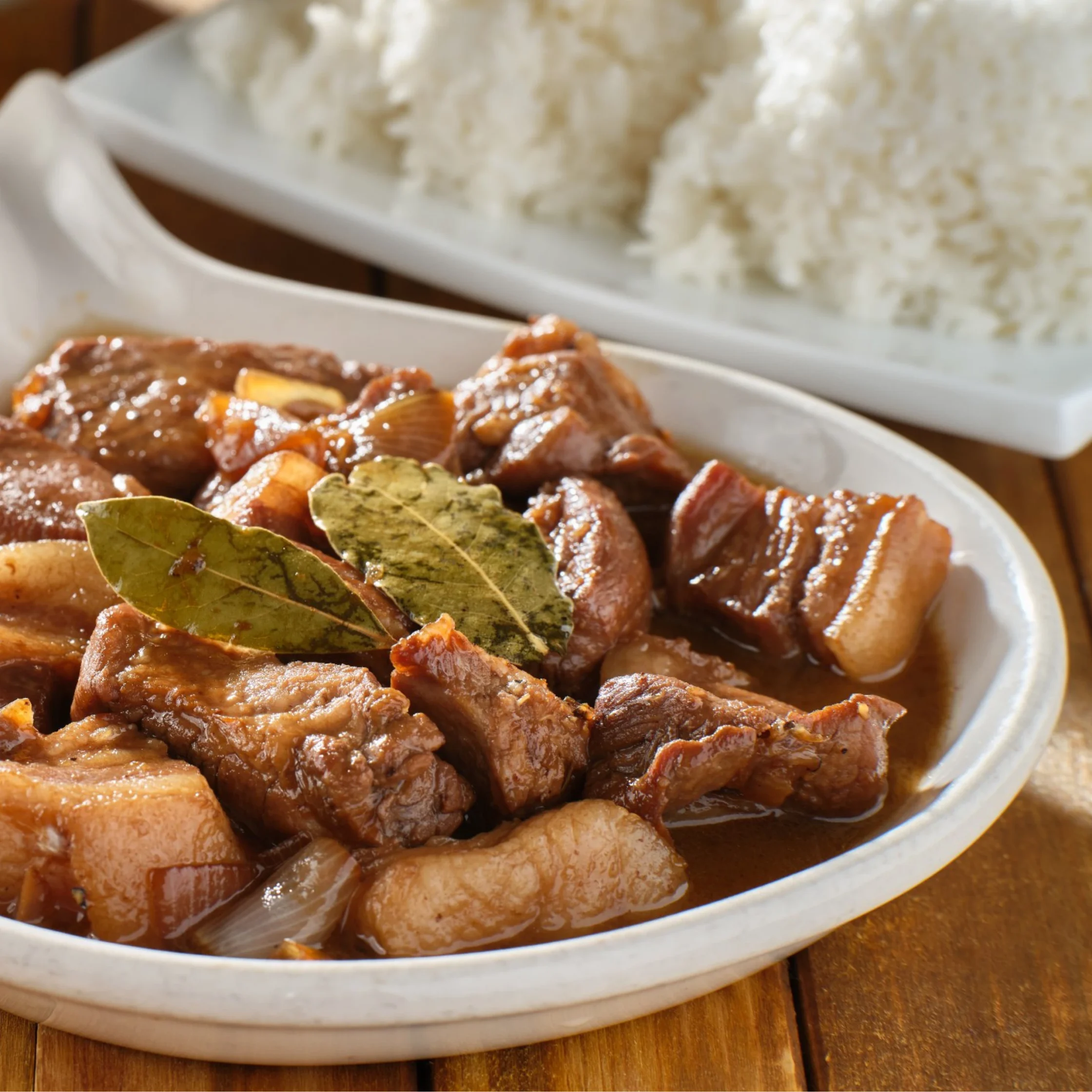
That it predates the Spanish colonial period is also supported by how adobo’s primary ingredients were already present in the country even before Magellan arrived, according to food historian Raymond Sokolov. Either way, as the original, pre-Hispanic name of the dish wasn’t recorded, the Spanish name stuck.
Filipino adobo shares a name with Spanish, Mexican, and Puerto Rican adobo, which also involve vinegar (or some acid), but is very much distinct. Numerous variations exist, particularly between regions; most popular in Metro Manila is the version with soy sauce and vinegar. But Filipinos had long been using vinegar even before soy sauce was introduced via the Chinese.
It’s believed that the original adobo was actually the stripped-down white version that made use of vinegar, garlic, and peppercorns.
Tiyula Itum
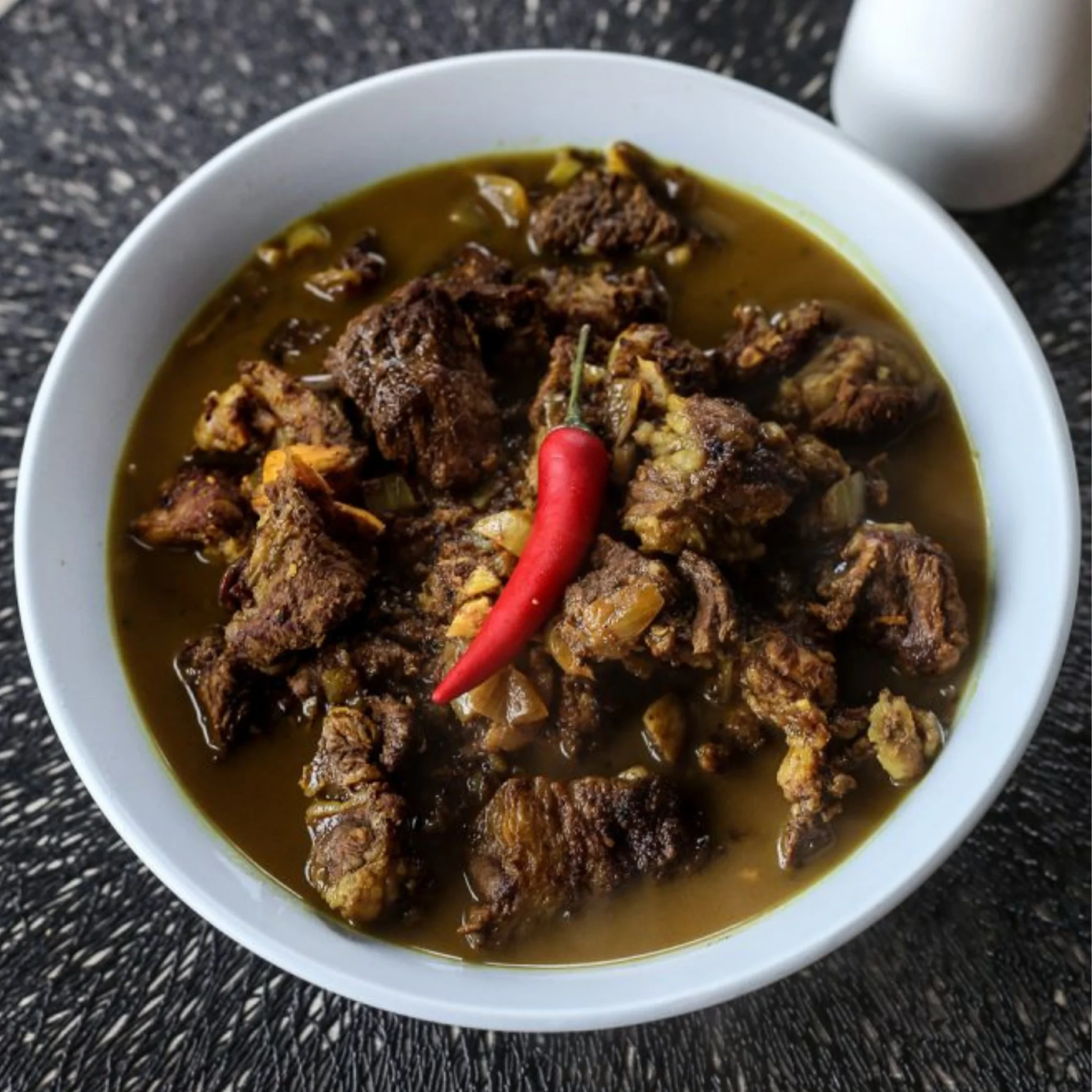
From the appearance alone it’s hard not to be mesmerized by tiyula itum, the Tausug soup of beef or goat with a distinct black hue from the use of piypis itum or pamapa itum, a Tausug black spice paste with various aromatics and siyunug lahing (blackened coconut).
The dish is considered to be fit for royals and originates from Southern Mindanao (particularly Sulu, Tawi-tawi, Basilan, and Zamboanga), where it was classically served at Muslim weddings, Hari Raya festivities, Ramadan gatherings, and other special occasions.
Siyunug lahing is a pre-colonial tradition prepared by burning the coconut over coals or a gas stove until the outer layer is blackened. Cooked into the soup, it imparts a tantalizing aroma that’s at once smoky yet soothing.
Lechon
What’s a fiesta without a glistening roast pig at the center of the table? The word lechon has Spanish origins, stemming from “leche” or suckling pigs fed with their mothers’ milk. But Filipinos seem to have been roasting pigs even before the Spanish came in our shores, as indicated by Pigafetta’s mentions of roast pork in his chronicles of his journey to the Philippines in 1521.
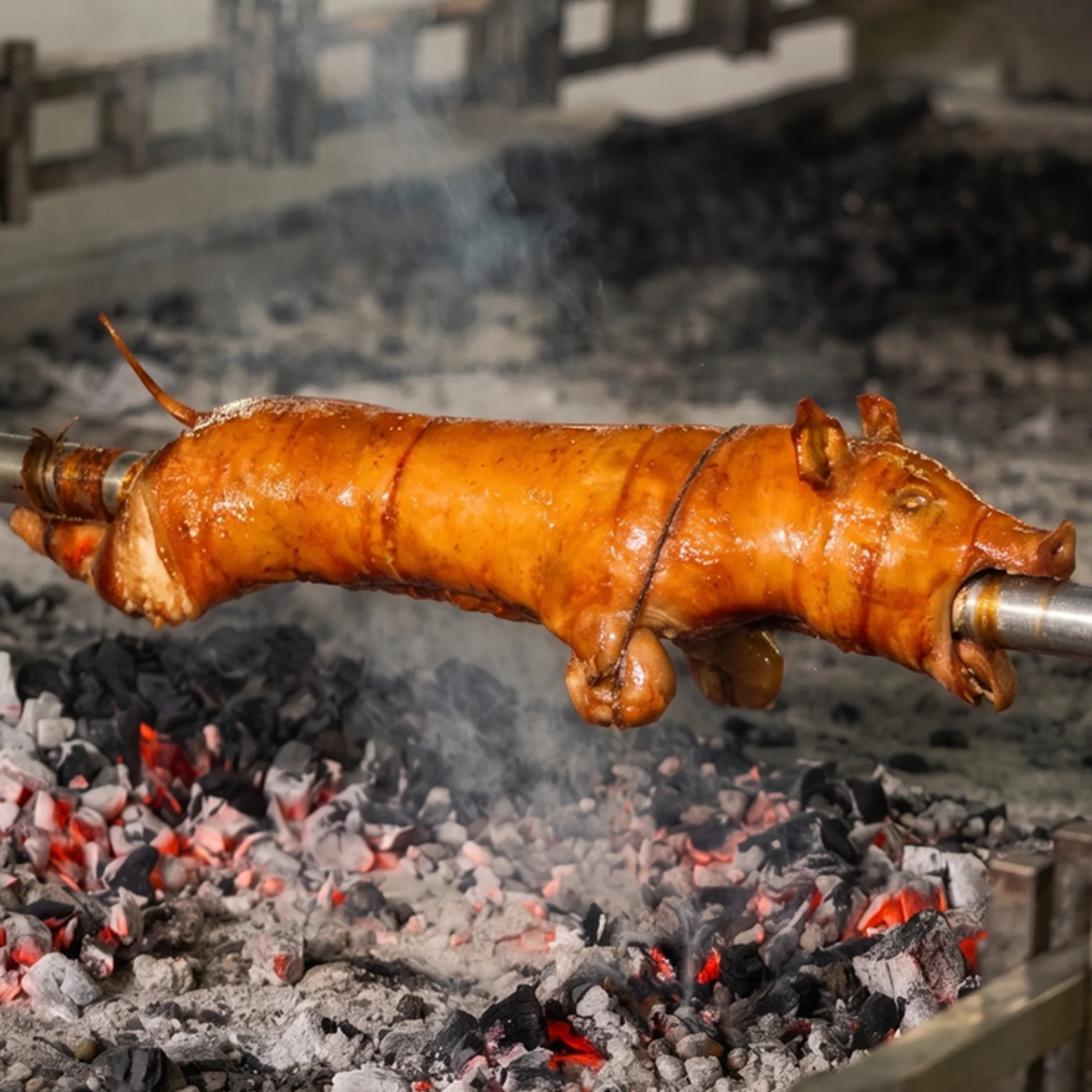
It’s unknown whether the pigs were roasted on a spit the way most lechon are today, but spit-roasted pig is also found in the cuisines of fellow Austronesian cultures, with Hawaii’s kalua and Indonesia’s babi guling. Pigafetta also talked of a babaylan ritual that entailed dancing around a bound hog while chanting praise for the sun, then slaughtering the animal.
Pancit
One of the biggest, most delicious ways the Chinese made an impact on Filipino cuisine can be tasted in the noodle dish of pancit. The term didn’t originally refer to noodles, medical anthropologist Michael L. Tan once said, but stemmed from the Hokkien “pien sit” (essentially “cooked food”) which were sold by pancitero, or Chinese food vendors, to working women in cigar factories.
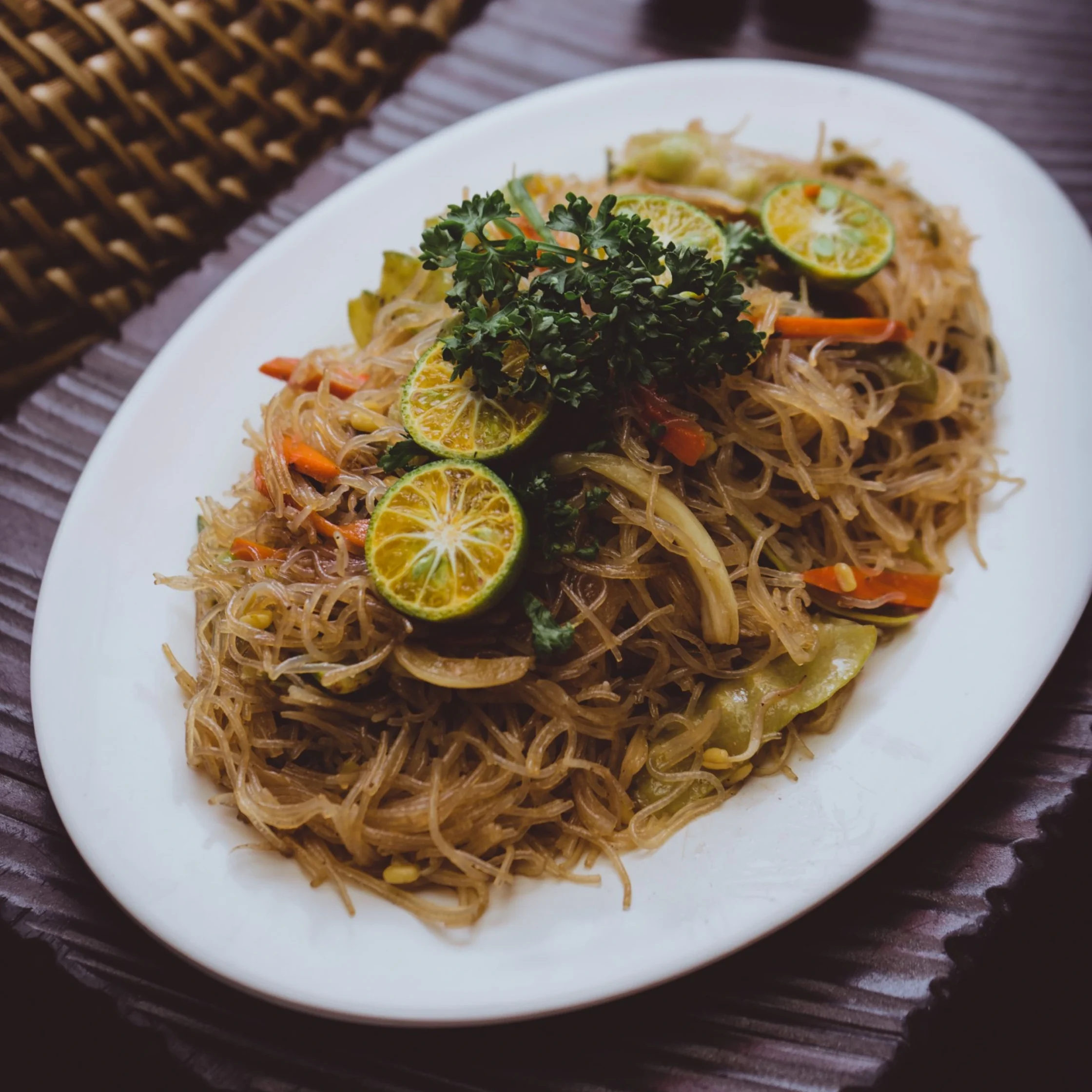
The 19th century watercolor piece “Vistas de las yslas Filipinas y trages de sus abitantes” by Jose Honorato Lozano gives us a clue what was sold by these pancitero—a dish of thick noodles made with a rice and wheat paste, stewed with pork and various ‘gulay,’ sold at three-quarters of a coin, according to the caption which is originally in Spanish. The pancitero eventually settled into more permanent spaces which came to be known as panciteria, where people could dine for comida China (Chinese food).
As time went on, the term pancit came to be used exclusively for noodles, as an uncooked ingredient or as the name of the dishes it’s cooked into. Variations of the noodles eventually sprung (pancit bihon, Canton, miki, sotanghon, and so on), whose names can also refer to the cooked dishes that use them.
Pancit dishes can also be named and categorized by the cooking method applied to them, or the way they’re designed to be eaten: pancit guisado, pansit habhab, and so on.
Sisig
Sisig plays an integral part in Kapampangan cuisine that the Angeles government (separate from Pampanga) issued Ordinance No. 405 in 2017, calling “sizzling sisig babi” an Intangible Cultural Heritage. One might trace its roots to the dish of “sising” listed in Fray Diego Bergano’s 1732 Kapampangan-Spanish dictionary, Bocabulario de Pampango en Romance and Diccionario de Romance en Pampango.
This “sising,” however, was defined not as the pork dish we know of today, but a salad of green papaya eaten with chili.
The more current iteration of the dish is often tied to Aling Lucing Cunanan, who was one of the owners of the cluster of hawker stands along Glaciano Valdez street in Angeles in the 1970s. She would take burnt pork ears, face, and jowl, chop them up, soak them in vinegar, and serve this as pulutan to drinkers (among them, U.S. servicemen) stationed at Clark Air Base.
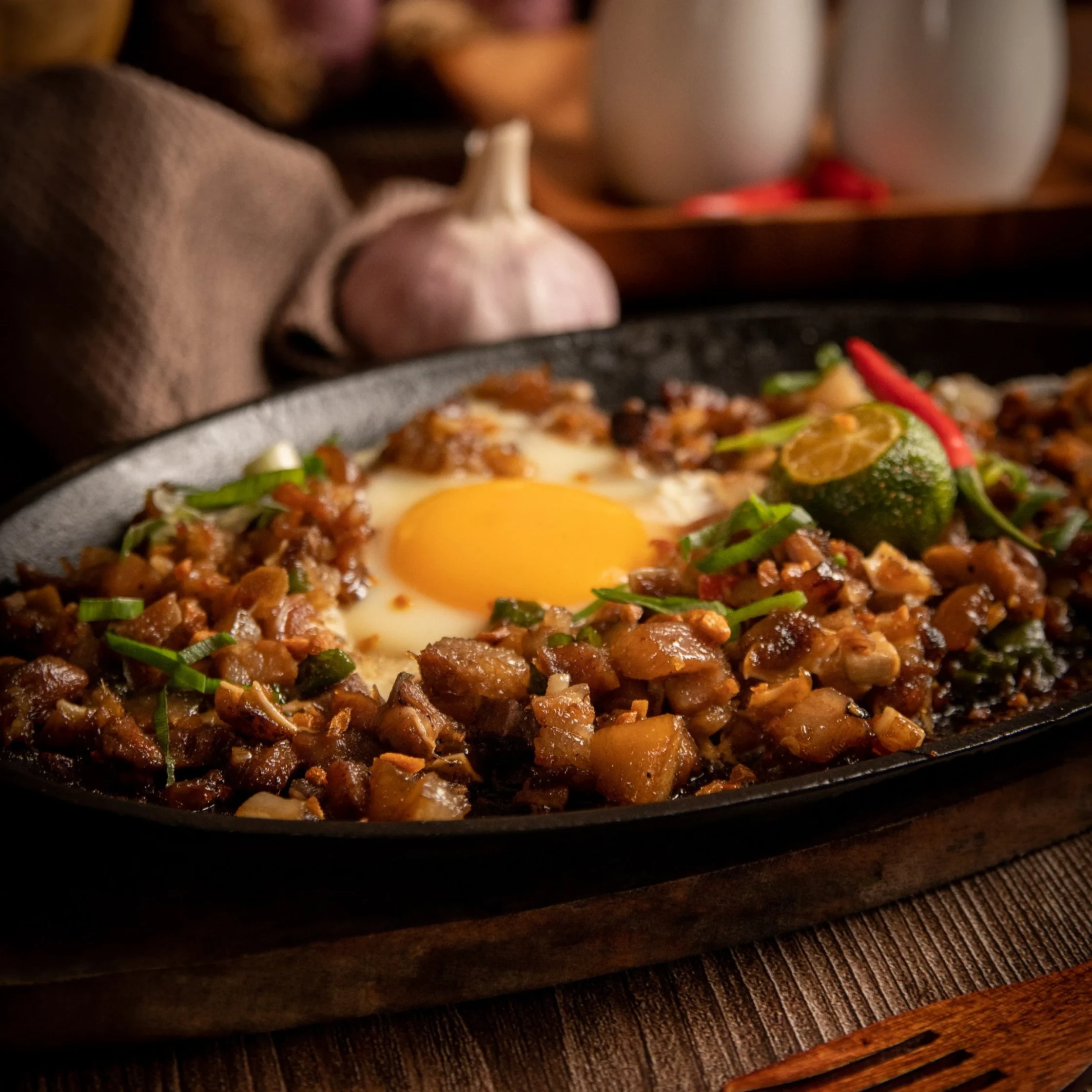
There are other accounts that point to the existence of sisig—or some variation of it—even earlier than Aling Lucing’s famous take, and even outside Pampanga.
Bukidnon has sisig matwa (a.k.a. sisig matanda or quilo babi), which was enjoyed as early as the 1930s. This rendition is comprised of boiled pig maskara, onion, and cucumber at times, soaked in vinegar; some variations would include red chili, black pepper, and soy sauce.
Interestingly, the “quilo” from sisig matwa’s alternate name, quilo babi, is also listed in Fray Diego Bergano’s 1732 Kapampangan-Spanish dictionary, where it is defined as a young deer, cub, or whelp eaten as minced meat and cooked rare.
The term “sisig” also appears in the 1754 edition of Tagalog-Spanish dictionary Vocabulario de la Lengua Tagala by Ivan de Noceda and Pedro de San Lucar, though here it refers to a brine for soaking vegetables in vinegar. The term “quilo” (also spelled “quilao”) is there as well, referring either pork or fish soaked in vinegar, a description that applies to sisig matwa.
Crispy Pata
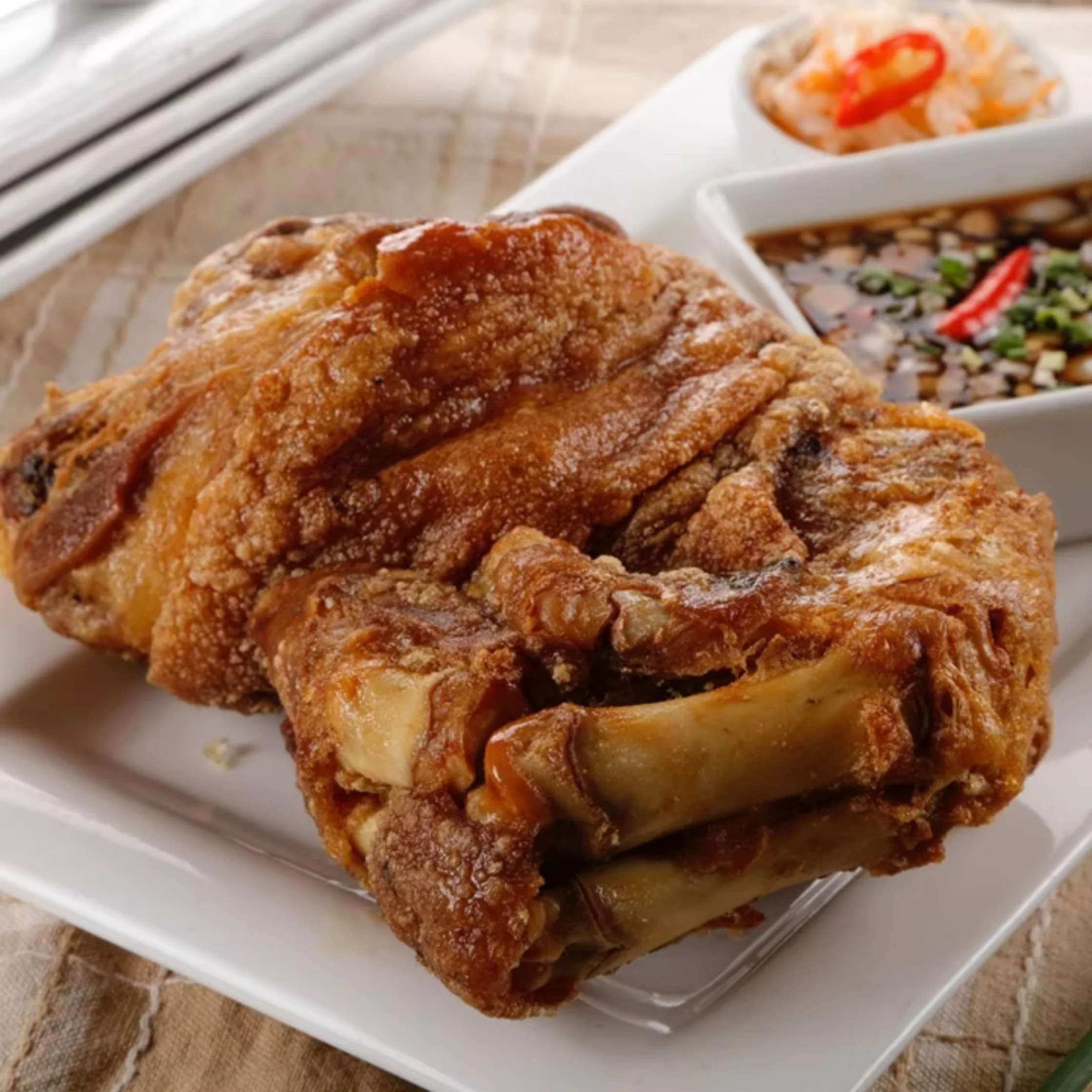
Crispy on the outside and unctuous on the inside, crispy pata was the creation of Rodolfo Ongpauco, son of Barrio Fiesta’s Sixta “Mama Chit” Evangelista Ongpauco.
Rodolfo added a new dish to the Filipino restaurant’s menu: Crispy Pata, made with pork knuckles that were laying around in the restaurant kitchen, deep-fried to a crisp. The dish is now a staple at Filipino restaurants across the nation, frequently ordered as a sidekick to beer.

Frequently Asked Questions
Filipino cuisine is a melting pot shaped by indigenous Malay roots, ancient regional trade, and centuries of global influence. Pre-colonial Filipinos developed native cooking methods like marinating in vinegar (kinilaw) and spit-roasting over charcoal (lechon). Over time, these indigenous dishes blended with culinary contributions from Chinese traders (who introduced noodles, leading to pancit), Spanish colonizers, and Mexican galleon trade routes.
Filipino adobo is native to the Philippines and predates Spanish arrival. Early Filipinos used vinegar, garlic, and salt as a natural food preservation method in the tropical climate. When Spanish colonizers observed the dish, they called it “adobo de los naturales” (“adobo of the natives”) because the process mirrored Spanish marinades. Unlike Spanish or Mexican adobo, original Filipino adobo was a clear, white dish made with local vinegar before soy sauce was introduced via Chinese trade.
Tiyula Itum is a traditional Tausug beef or goat soup originating from Southern Mindanao, particularly Sulu and neighboring provinces. Its signature dark color and rich, smoky aroma come from siyunug lahing—grated coconut roasted over coals until completely blackened—which is ground into a spice paste called piypis itum. Traditionally served at royal gatherings, weddings, and religious festivals, it is one of the most distinct ancestral dishes in Filipino cuisine.
While early references from the 1700s describe sisig as a sour salad made of green papaya or vegetables in vinegar, modern sizzling sisig was popularized in the 1970s by Lucia “Aling Lucing” Cunanan in Angeles City, Pampanga. She transformed discarded pig ears, cheeks, and snout from nearby Clark Air Base into a beloved, chopped, vinegar-soaked dish served as pulutan (beer food). In 2017, Angeles City officially declared sizzling sisig an Intangible Cultural Heritage.
Pancit was introduced to the Philippines by Chinese traders and workers known as panciteros. The name originates from the Hokkien term “pien sit,” which initially referred to prepared meals sold to factory workers. Over time, the term shifted specifically to noodle dishes and evolved into nationwide regional varieties like pancit bihon, Canton, habhab, and guisado, served in dedicated restaurants called panciterias.