

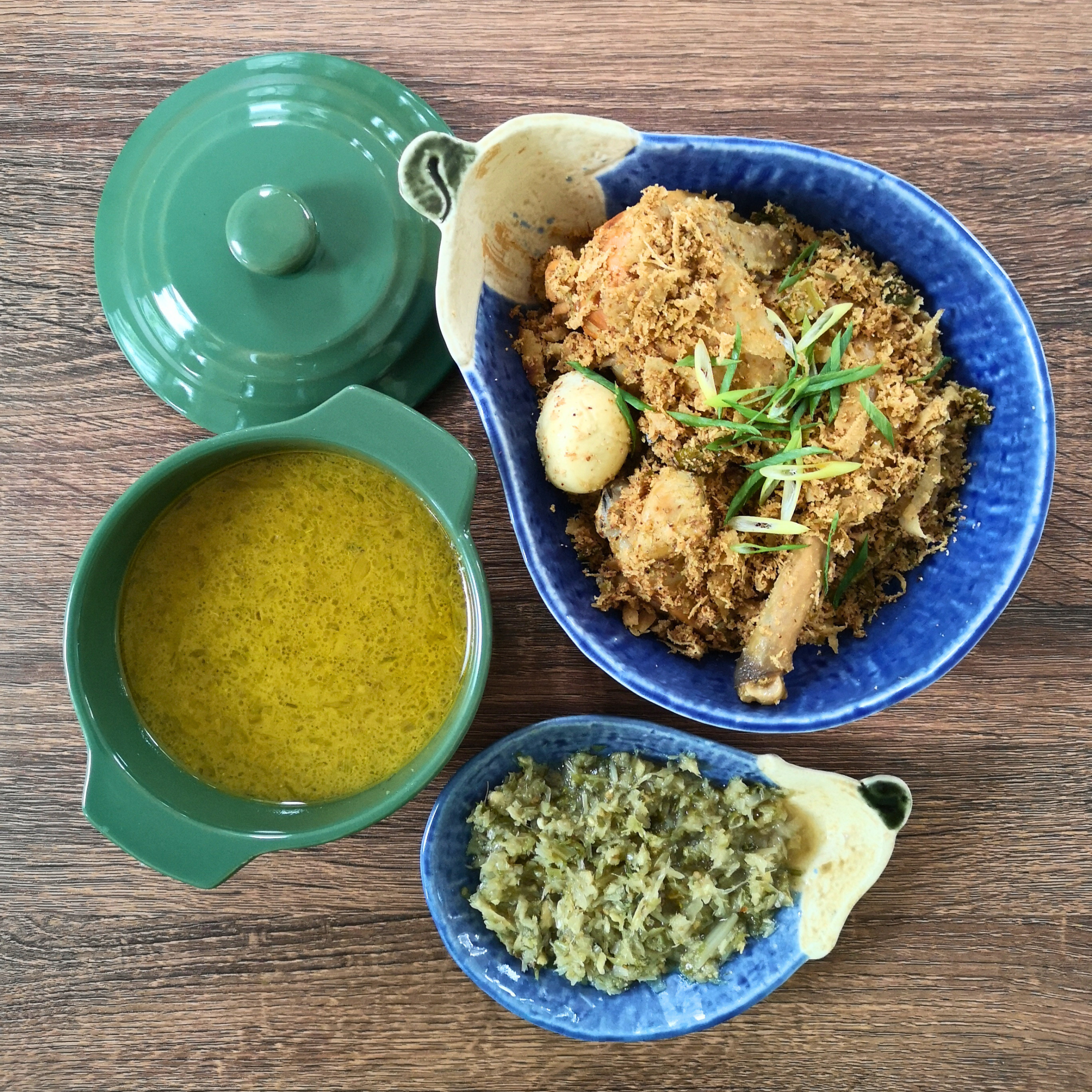
I grew up in a multicultural home and moved around a lot. Everything somehow made sense, but at the same time, parts of me always felt like they belonged somewhere else.
I was born in Marawi, but we never really lived there or near Lake Lanao. I’d be in Surigao, missing that familiar scent of kalawag (turmeric) simmering in coconut milk. It’s the heart of Maranao cooking. It’s what gives dishes that kiyawagan glow: vibrant yellow, earthy, and deeply rich. Still, manuk na piaparan (Chicken with Shredded Coconut) was always a constant whenever we were in Iligan.
The Flavor of Maranao Cooking Starts With Palapa
Like most Maranao dishes, it starts with palapa, a spicy mix of pounded sakurab (native scallions grown mainly in the Lanao provinces), ginger, and chili. Sakurab grows well in the highlands around the lake, and it’s not easy to replace. It has a sharper, more intense flavor that defines dishes like palapa. Because it’s local and seasonal, it also shaped how it’s used: pounded with chili and aromatics, not just for taste but to make it last and carry that flavor across meals.
It can be used raw or cooked into dishes, or served on the side to bring everything to life. Making palapa is a task on its own. And since using a food processor is practically taboo, you almost always end up with that spicy juice getting into your eyes or worse, on your hands, leaving you no choice but to soak them in cold water until the sting fades.
The Slow, Hands-On Art of Grating Coconut
The next thing is to grate the coconut with the traditional kaguran. My mother and her sister had their own unique methods for this dish, yet they were united on one key point: nothing beats a traditional coconut grater for achieving that superior, nuanced texture. There’s no shortcut to it. Just rhythm, pressure, and repetition. It’s a slow process, and you feel it in your arms after a while, but that’s exactly what gives meaning to this dish. The coconut is not simply something you tuck in later; it means constructing it from the very beginning. Freshly grated then lightly toasted, it becomes the base for everything that follows in both the richness and the body of the dish, the papar in piaparan.
From there, the cooking unfolds: the aromatics are prepared, the palapa is ready, and the meat of choice is slowly brought into the mixture, allowing each layer of flavor to develop over time.
A Dish Shaped by What the Land Provides
The proteins involved were by choice but largely more of availability: haluan (mudfish) or tilapia as abundant from the lake area; chicken as plucked from one’s backyard flock; carabeef for Kanduri (celebrations), or simply just the papar on rice with palapa.
The meal ends, but the kalawag lingers. That last spoonful, the savory papar and spiced chicken, feels like swallowing mine and its history. It is heavy, rich, and grounding. The humming warmth of palapa stays on my palate while the scent of toasted coconut clings to my clothes. Home, for me, is wherever the piaparan is cooking.

Frequently Asked Questions
Manuk na piaparan is a traditional Maranao dish made with chicken, freshly grated coconut, palapa, and kalawag (turmeric). The coconut is lightly toasted to create the rich, savory papar that forms the foundation of the dish.
It is rich, savory, earthy, and spicy, with the heat of palapa, the earthy flavor of turmeric, and the deep richness of toasted coconut.
Palapa is a Maranao condiment made primarily from pounded sakurab (native scallions), ginger, and chili. It can be served raw, cooked into dishes, or enjoyed alongside food.
Kalawag is turmeric, an important ingredient in Maranao cooking. It gives dishes like manuk na piaparan their distinctive vibrant yellow color as well as an earthy flavor.
A kaguran is a traditional coconut grater used to grate fresh coconut by hand. For piaparan, the freshly grated coconut is lightly toasted and becomes an important part of the dish’s texture and flavor.
The name refers to the preparation centered around papar, the rich toasted coconut component that gives the dish much of its body and character.