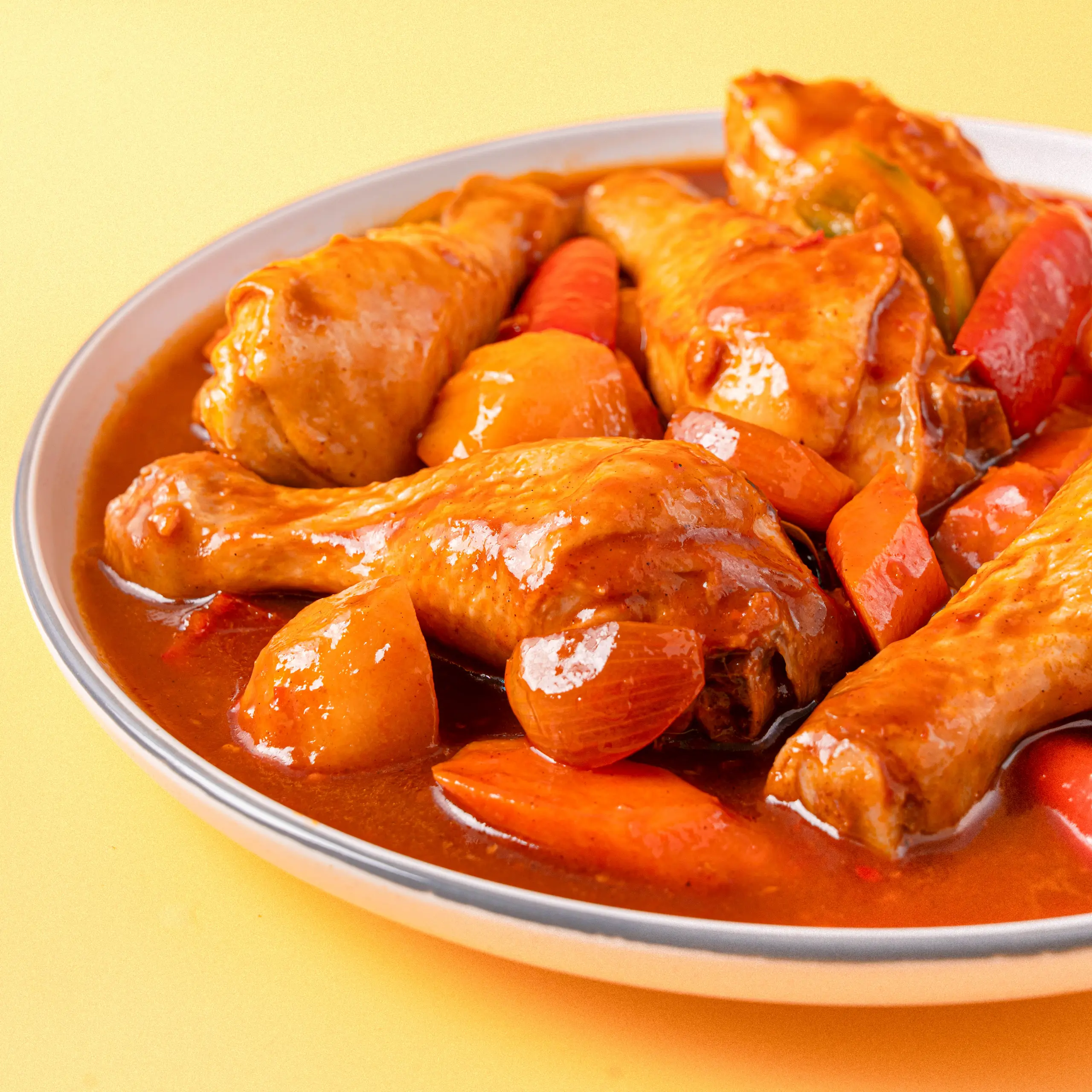


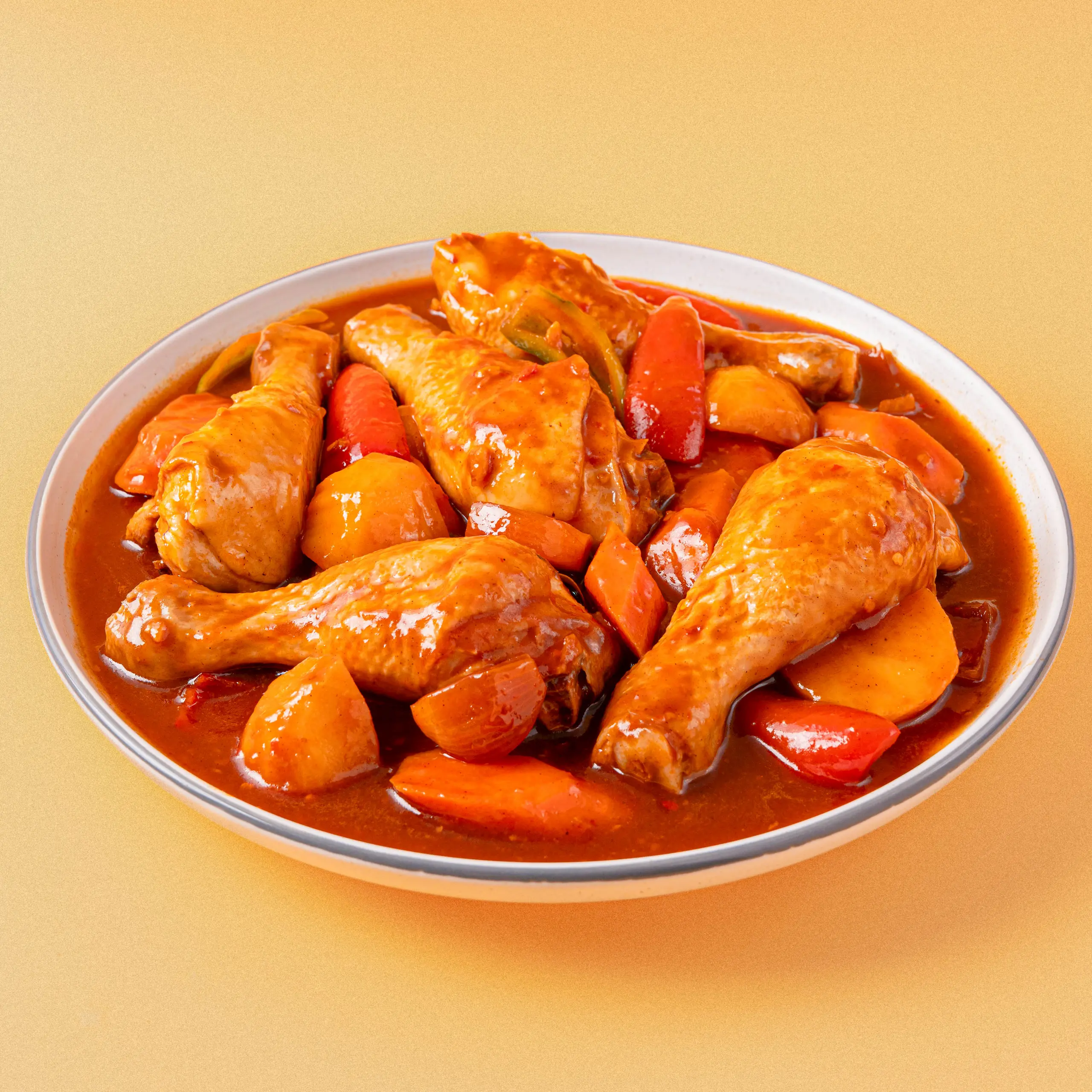
Chicken Afritada is one of those Filipino dishes that feels like home cooking at its best. It is hearty, colorful, savory, and comforting without being overly complicated. Tender pieces of chicken are slowly cooked in a rich tomato-based sauce together with potatoes, carrots, bell peppers, and peas. The result is a warm and satisfying dish that tastes even better when spooned over freshly cooked rice.
For many Filipino families, afritada is the kind of meal that can appear on an ordinary dinner table but still feels special enough for gatherings. Its familiar combination of tomato sauce, vegetables, and tender meat makes it easy to enjoy, while the balance of salty, slightly sweet, and savory flavors gives it the unmistakable character of Filipino home cooking.
What makes this particular version interesting is the combination of soy sauce and fish sauce with tomato sauce and brown sugar. The tomato provides acidity and richness, while soy sauce and fish sauce add layers of umami. Brown sugar gently rounds out the acidity and saltiness, creating a sauce that is flavorful without being overwhelmingly sweet. Chili flakes can also provide a little warmth for those who enjoy a subtle spicy kick.
Afritada is also an excellent example of how Filipino cuisine has taken outside culinary influences and made them its own. Tomato-based stews became part of Philippine cooking through historical cultural exchanges, but Filipino cooks adapted the concept using familiar ingredients, seasonings, and cooking methods. Over time, dishes such as afritada became firmly established in Filipino households.
History and Cultural Background
The name afritada is generally associated with the Spanish word fritada, which relates to frying. The dish reflects the long Spanish influence on Philippine cuisine, particularly in the use of sautéing or frying meat and aromatics before simmering them in a flavorful sauce.
However, Filipino afritada is not simply a Spanish dish reproduced in the Philippines. Filipino cooks transformed the concept according to local tastes and available ingredients. Tomato sauce became an important component, while potatoes, carrots, bell peppers, peas, soy sauce, and fish sauce became common additions in many Filipino versions.
This process of adaptation is a recurring feature of Philippine cuisine. Many dishes have names or techniques influenced by other cultures, but their Filipino versions developed their own identities through generations of home cooking.
Chicken afritada is particularly popular because chicken is accessible and cooks relatively quickly compared with tougher meats. Drumsticks are especially suitable because they remain moist and flavorful during simmering.
The vegetables also contribute to the character of the dish. Potatoes absorb the tomato-based sauce, carrots add a mild sweetness, bell peppers contribute fragrance and color, and peas provide small bursts of sweetness and texture.
Like many Filipino stews, afritada is often served with rice. The sauce is arguably one of the best parts of the meal because it can soak into the rice, making every spoonful flavorful.
There is no single universally correct version of afritada. Some households use chicken, others pork or other meats, and recipes differ in the amount of tomato sauce, vegetables, sweetness, and seasoning. Some versions are mild, while others include chili. This flexibility is one of the reasons the dish has remained so popular.
Understanding the Ingredients
Chicken drumsticks
Chicken drumsticks are ideal for a slow-simmered dish like afritada because the meat and connective tissues can remain juicy and flavorful during cooking. Bone-in chicken also contributes additional flavor to the sauce as it simmers. You can use other chicken cuts, but cooking time will need to be adjusted. Boneless breast, for example, cooks more quickly and can become dry if simmered for too long.
Potato
Potatoes are a classic partner for Filipino tomato-based stews. They absorb the sauce while cooking and become soft and satisfying. You can cut them into cubes, wedges, or slices depending on your preference. Medium-sized pieces are generally easier to cook evenly.
Carrot
Carrots contribute natural sweetness, color, and a pleasant tender texture. They also help balance the acidity of the tomato sauce without requiring excessive sugar.
Garlic
Garlic forms part of the aromatic foundation of the dish. When gently sautéed in oil, it develops a fragrant and slightly nutty flavor that gives the sauce greater depth.
Onion
Onion provides sweetness and body to the sauce. Properly sautéing it before adding the liquid ingredients helps develop a richer flavor.
Soy sauce
Soy sauce adds saltiness and umami. It also gives the chicken a deeper color and helps create a more savory sauce.
Fish sauce
Fish sauce adds another layer of fermented umami. Although its aroma can be strong when first added, it becomes much more integrated as the dish simmers. Using both soy sauce and fish sauce gives the afritada a more complex savory profile.
Tomato sauce
Tomato sauce is the main liquid and flavor base. It provides acidity, sweetness, color, and richness. The tomato flavor becomes more rounded as it simmers with the chicken, aromatics, and seasonings.
Tomato paste
Tomato paste intensifies the tomato flavor and gives the sauce a thicker consistency. Because it is concentrated, even 1½ tablespoons can make a noticeable difference.
Bay leaves
Bay leaves provide a subtle herbal aroma. They are not meant to dominate the dish, but they add depth during simmering. Remember to remove them before serving.
Bell peppers
Red and green bell peppers contribute color, aroma, and mild sweetness. The red pepper is generally sweeter, while the green pepper provides a slightly more vegetal flavor.
Brown sugar
Brown sugar balances the acidity of the tomatoes and rounds out the savory seasonings. The goal is not to make afritada taste like a dessert. A small amount should simply create a more balanced sauce.
Peas
Peas add color, sweetness, and texture. They also make the finished dish look more vibrant. Frozen peas are convenient because they can be added near the end of cooking.
Chili flakes
Chili flakes are optional for people who prefer a little heat. They should complement the tomato sauce rather than overpower the dish.
Recipe Tips
- Brown the chicken first. This adds a deeper roasted flavor to the finished dish.
- Do not rush the tomato sauce. Gentle simmering gives the flavors time to blend.
- Fry the potatoes lightly. This helps them remain intact during simmering.
- Do not overcook the bell peppers. Adding them later preserves their color and texture.
- Add peas near the end. This keeps them from becoming dull and mushy.
- Taste before adding salt. Soy sauce and fish sauce can provide plenty of sodium.
- Adjust the sweetness. Different brands of tomato sauce have different levels of acidity and sweetness.
- Use chicken with the bone in when possible. Bone-in pieces can contribute additional flavor to the sauce.
- Do not boil the chicken aggressively. A gentle simmer produces more tender meat.
- Keep the sauce slightly loose. It will thicken as it cools and is especially good when mixed with rice.
- Use fresh garlic and onion. They form the aromatic foundation of the dish.
- Let it rest before serving. Even a few minutes can make the flavors feel more cohesive.
- Make extra sauce. The tomato gravy is excellent over steamed rice.
Ingredient Substitutions
Chicken
Chicken thighs, wings, or whole chicken pieces can be used instead of drumsticks. Chicken thighs are particularly good if you want meat that remains juicy during a longer simmer.
Potato
Sweet potato can be used for a sweeter variation, although the flavor will be noticeably different. You can also omit potatoes and increase the other vegetables.
Carrot
If carrots are unavailable, you can use other mildly sweet vegetables such as squash.
Tomato sauce
Crushed tomatoes can be used instead of tomato sauce. If the crushed tomatoes are particularly acidic, you may need to adjust the sugar slightly.
Fresh ripe tomatoes can also be cooked down into a sauce, although this requires additional preparation.
Tomato paste
If tomato paste is unavailable, use a little extra tomato sauce and allow the dish to simmer longer so the sauce can reduce.
Fish sauce
Fish sauce can be replaced with additional soy sauce, although the finished dish will lose some of its characteristic fermented umami. For a vegetarian variation, mushroom seasoning or another plant-based umami seasoning can be used.
Soy sauce
You can use regular soy sauce, light soy sauce, or a reduced-sodium version. If using reduced-sodium soy sauce, taste the finished sauce before deciding whether additional fish sauce is needed.
Brown sugar
White sugar can be used instead, although brown sugar provides a slightly deeper caramel-like flavor. Honey can also be used in a small amount, but it changes the flavor and sweetness of the sauce.
Peas
Green beans, corn, or another vegetable can be used if peas are unavailable.
Bell peppers
You can use only one color of bell pepper, although using both red and green peppers gives the dish its characteristic colorful appearance.
Chili flakes
Simply omit them if you prefer a mild afritada. Fresh chili can also be used if you want a different type of heat.
Knowledge About Chicken Afritada and Filipino Cuisine
Afritada belongs to a group of Filipino dishes that demonstrate how tomato-based stews became part of local cooking and were adapted to Filipino tastes.
The dish is often compared with other Filipino tomato-based preparations such as menudo and mechado, but each has its own traditional characteristics. Afritada generally emphasizes chicken or another meat simmered with tomato sauce and vegetables, while menudo commonly features smaller pieces of meat and liver, and mechado has its own distinctive preparation and flavor profile.
What these dishes share is the Filipino ability to transform relatively simple ingredients into rich, comforting stews.
One of the defining characteristics of Filipino afritada is the use of potatoes and carrots. These vegetables are not merely decorations; they absorb the sauce and become an important part of the meal.
The bell peppers also play an important role. Their fragrance becomes particularly noticeable as they cook in the tomato sauce, while their bright colors make the dish visually appealing.
Another interesting feature of this recipe is the combination of soy sauce and fish sauce. Neither ingredient is necessarily what you would expect in a traditionally Spanish-style tomato stew, but their presence gives the dish a distinctly Filipino character.
This is a good example of how Filipino cuisine developed through layers of cultural influence. Spanish culinary techniques and ingredients were incorporated into local cooking, then combined with Southeast Asian ingredients and Filipino preferences.
Health Benefits and Nutritional Information
Chicken afritada can be part of a balanced meal because it combines protein from chicken with carbohydrates and fiber from vegetables. However, the overall nutritional profile depends heavily on portion size, the amount of oil used, and the amount of rice served alongside it.
Chicken
Chicken provides high-quality protein, which is important for muscle maintenance, tissue repair, and many normal functions in the body. Using skinless chicken can reduce the amount of fat in the dish, while bone-in chicken can provide additional flavor.
Tomatoes
Tomato sauce and tomato paste provide vitamin C, potassium, and the antioxidant lycopene. Lycopene is a naturally occurring carotenoid associated with the red color of tomatoes. Cooking tomatoes can make lycopene more readily available to the body.
Carrots
Carrots provide beta-carotene, which the body can convert into vitamin A. Vitamin A supports normal vision, immune function, and skin health.
Potatoes
Potatoes provide carbohydrates for energy and also contain potassium, vitamin C, and some fiber, particularly when the skin is retained. In this recipe, the potatoes are peeled, so some of the fiber present in the skin is lost.
Bell peppers
Red and green bell peppers contribute vitamin C and various plant compounds. Red peppers tend to be sweeter and more mature than green peppers.
Peas
Peas contribute plant-based protein, fiber, vitamins, and minerals. They also add a little extra substance to the dish.
Garlic and onion
Garlic and onion contribute flavor as well as various plant compounds. They allow the dish to develop complexity without requiring large amounts of added fat.
Soy sauce and fish sauce
These ingredients contribute significant umami and help create the characteristic savory flavor of the dish. However, both can be high in sodium. If you need to limit sodium, use reduced-sodium products and adjust the quantities carefully.
Brown sugar
Brown sugar contributes sweetness and calories but relatively few vitamins or minerals. Its main culinary purpose is to balance the acidity of the tomato sauce.
Oil
Oil is necessary for sautéing and browning, but it increases the calorie and fat content of the meal. Using a moderate amount is generally sufficient.
Making afritada more balanced
A simple way to make the meal more balanced is to serve a reasonable portion of chicken afritada with plenty of vegetables and an appropriate serving of rice. You can also increase the vegetables if you want a dish with more fiber and volume without dramatically increasing the amount of meat.
Final Words
Chicken afritada is a dish that demonstrates why Filipino home cooking is so comforting. It does not depend on complicated techniques or hard-to-find ingredients. Instead, it takes familiar foods—chicken, tomatoes, potatoes, carrots, peppers, peas, garlic, and onion—and patiently cooks them together until their flavors become something greater than the individual ingredients.
The tomato sauce is the heart of the dish. It is savory, slightly sweet, pleasantly tangy, and rich enough to coat every piece of chicken and vegetable. The potatoes soak up that sauce, the carrots contribute natural sweetness, the bell peppers provide aroma and color, and the peas add little bursts of freshness.
What makes afritada especially Filipino is the way the flavors are balanced. Soy sauce and fish sauce bring salty umami, tomato provides acidity, brown sugar softens that acidity, and garlic and onion create the aromatic foundation. It is a combination that might seem unusual when listed ingredient by ingredient, but once everything comes together, it feels completely natural.
It is also a dish that leaves plenty of room for family traditions. Some cooks make their sauce thick and rich, while others prefer it slightly thinner. Some add more potatoes, others increase the bell peppers, and some leave out the chili entirely. These differences do not make one version less authentic; they demonstrate how Filipino recipes continue to live and change in individual kitchens.
Perhaps the best way to enjoy chicken afritada is simply to serve it generously over steaming rice and let the tomato sauce soak into every grain. The meal is warm, colorful, filling, and familiar—the kind of food that can make an ordinary family dinner feel comforting and complete.
Ultimately, chicken afritada is more than a tomato-based chicken stew. It is a reflection of Filipino culinary history, adaptability, and the importance of home cooking. Its combination of cultural influences and local preferences has created a dish that feels distinctly Filipino, and its enduring popularity shows just how powerful simple, well-balanced food can be.