


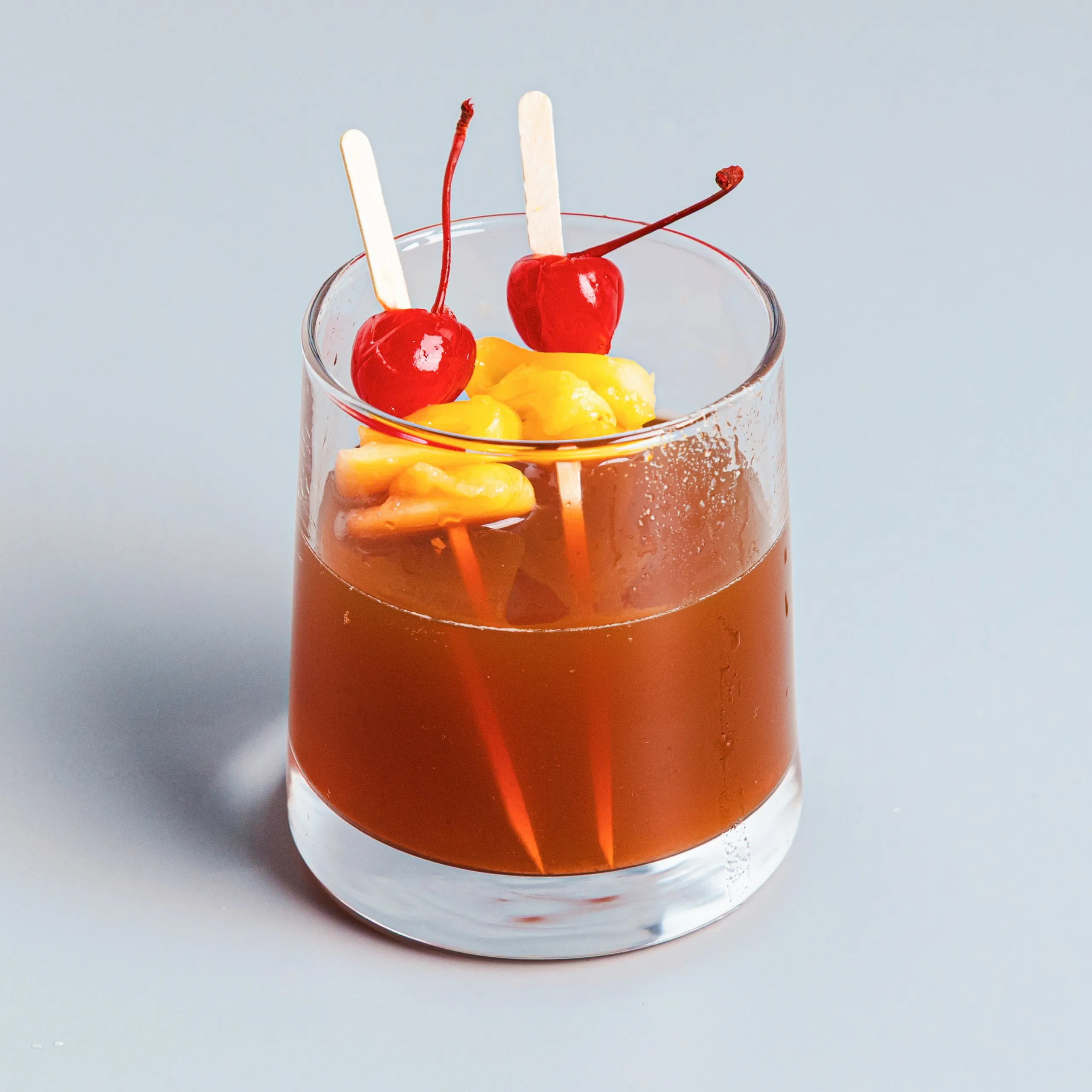
There are some Filipino fruits that immediately bring back memories. For many people, langka—or jackfruit—is one of them. Its sweet, unmistakable aroma can fill an entire kitchen, and once the fruit is opened, its golden-yellow pods are hard to resist. Some people enjoy langka fresh, while others remember it from Filipino desserts, sweet preserves, halo-halo, turon, and other comforting treats.
But langka isn’t limited to desserts.
Its naturally sweet, tropical flavor can also be used creatively in beverages, including cocktails. The Langka Negroni takes this familiar Filipino fruit and places it in an unexpected setting: a classic Italian-inspired cocktail.
At first, the combination might sound unusual. A Negroni is traditionally bitter, herbal, and spirit-forward, while langka is intensely fruity, sweet, and tropical. Yet that contrast is exactly what makes the drink interesting.
The gin brings botanical complexity, Campari provides bitterness and depth, and sweet vermouth adds sweetness and herbal richness. The fresh langka purée then brings everything into a tropical direction, adding a creamy fruit texture and a distinctive aroma.
The result is a cocktail that feels adventurous without completely abandoning the character of a Negroni. It is a meeting of two very different flavor worlds—classic cocktail culture and the familiar taste of a beloved Filipino fruit.
A Brief History of the Negroni
The Negroni is one of the most recognizable classic cocktails associated with Italy. Its traditional formula combines gin, Campari, and sweet vermouth, usually in equal proportions.
The cocktail is commonly linked to Count Camillo Negroni in early 20th-century Italy. According to the popular story, Negroni asked for gin instead of soda water in an Americano, resulting in the drink that eventually became known by his name.
As with many famous culinary origin stories, some historical details have been debated over the years. Nevertheless, the Negroni became firmly established as a classic cocktail and has inspired countless variations.
Bartenders around the world have experimented with different spirits, fortified wines, bitters, fruits, herbs, and other ingredients while keeping the fundamental idea of a bitter, aromatic, spirit-forward cocktail.
The Langka Negroni follows that tradition.
Instead of treating the classic recipe as something that cannot be changed, this variation uses langka to introduce a distinctly tropical and Filipino ingredient.
Getting to Know Langka
Langka, commonly known in English as jackfruit, is a large tropical fruit with a thick, textured exterior and fragrant yellow-orange edible pods inside.
The fruit is notable for its size and aroma. A ripe langka can be intensely fragrant, with a flavor that has been compared to a combination of tropical fruit flavors such as banana, pineapple, mango, and melon.
The texture is also distinctive. The edible pods are soft and somewhat fibrous, making them suitable for eating fresh or incorporating into desserts, drinks, sauces, and purées.
Langka can be used when ripe or unripe, depending on the dish. Young green jackfruit is commonly used in savory preparations, while ripe langka is valued for its sweetness and aroma.
For this cocktail, ripe langka is the appropriate choice because the goal is to capture its naturally sweet and tropical characteristics.
Optional Garnishes
For presentation, you can use:
- A small piece of ripe langka
- A thin citrus peel
- A dehydrated citrus wheel
- A small mint leaf
- A cocktail pick with a langka pod
The garnish doesn’t have to be elaborate. Langka already has a strong visual and aromatic personality, so a simple garnish is often enough.
Understanding the Ingredients
Gin
Gin provides the botanical foundation of the cocktail.
Its juniper and herbal notes can be particularly interesting alongside the tropical sweetness of langka. A classic dry gin will give the drink a recognizable Negroni character.
If you use a more citrus-forward gin, the fruitiness can become more pronounced.
Campari
Campari contributes the characteristic bitterness and deep red color associated with a Negroni.
The bitterness is important because it prevents the cocktail from becoming overly sweet despite the presence of ripe langka.
This contrast between bitter and sweet is one of the central ideas behind the drink.
Sweet Vermouth
Sweet vermouth adds sweetness, herbal notes, and complexity.
It acts as a bridge between the gin and Campari while also helping balance the strong tropical character of the langka.
Because vermouth is an important component rather than a minor addition, its quality and freshness can have a noticeable impact on the finished drink.
Fresh Langka Purée
This is the ingredient that transforms the cocktail.
Fresh ripe langka contributes natural sweetness, tropical aroma, and a thicker texture than ordinary fruit juice.
The purée should be relatively smooth so that it integrates well into the cocktail rather than leaving large pieces of fruit behind.
Ice
Ice performs two important jobs: cooling and dilution.
When the cocktail is stirred with ice, a small amount of water enters the mixture. This softens the alcohol and allows the flavors to come together.
Good ice is therefore part of the recipe rather than simply a way to make the drink cold.
How to Make Fresh Langka Purée
Before preparing the cocktail, the langka should be turned into a smooth purée.
Start by separating the edible yellow pods from the thick outer fruit and removing the seeds.
Place the ripe langka flesh into a blender or food processor.
Blend until relatively smooth.
If the purée is too thick to blend easily, add a very small amount of water. Avoid adding too much because excess water can dilute the cocktail.
For an especially smooth cocktail, pass the purée through a fine-mesh strainer.
You want approximately 40 ml of finished purée for the recipe.
If the langka is naturally very sweet and thick, you can adjust its consistency with a small amount of water or citrus juice.
Recipe Tips
Choose Ripe Langka
For this recipe, ripe langka is essential.
The fruit should have a strong, pleasant aroma and golden-yellow edible pods.
Unripe jackfruit will not provide the same sweetness or tropical fragrance.
Don’t Make the Purée Too Thick
Very thick purée can make the cocktail heavy and difficult to strain.
If necessary, thin it slightly with water or a little fresh citrus juice.
Use only enough liquid to create a smooth, pourable consistency.
Balance the Sweetness
Langka can be naturally quite sweet.
Before mixing, taste the purée.
If it is extremely sweet, avoid adding additional sweetener.
If the fruit is less sweet than expected, a tiny amount of simple syrup can be used to adjust the final drink.
Keep the Cocktail Cold
A Negroni-style drink benefits greatly from proper chilling.
Use plenty of ice during stirring and serve it over fresh ice.
Don’t Forget the Bitter Element
It can be tempting to increase the amount of langka because it tastes so good on its own.
However, too much fruit can overwhelm the gin, Campari, and vermouth.
The goal is balance rather than making the drink taste like straight langka juice.
Ingredient Substitutions
No Fresh Langka?
Frozen ripe langka can be a practical substitute.
Allow it to thaw completely before blending.
Canned ripe jackfruit may also work, but check whether it has been packed in syrup. If it has, drain it thoroughly because the additional sugar can make the cocktail excessively sweet.
No Gin?
There isn’t a perfect substitute because gin is a defining component of a Negroni.
However, vodka can be used for a simpler and more neutral variation. The result will be less botanical.
Different Sweet Vermouth
You can use another sweet vermouth, although the flavor will vary depending on its sweetness, herbs, spices, and bitterness.
Alternative Bitter Aperitif
If Campari is unavailable, another bitter red aperitif can be experimented with.
However, substitutions can significantly change the drink’s bitterness, sweetness, and overall character.
Ways to Customize the Langka Negroni
More Tropical
Add a small amount of fresh pineapple juice alongside the langka purée.
This creates a more obviously tropical cocktail but also makes the drink sweeter and less traditional.
More Citrus-Forward
Add a small amount of fresh calamansi or orange juice.
The acidity can brighten the rich sweetness of the langka.
More Bitter
For someone who enjoys classic Negronis, slightly increasing the bitter component can emphasize the drink’s traditional character.
Lighter Version
Add a small splash of chilled soda water after stirring.
This turns the drink into a longer, lighter cocktail while retaining its major flavors.
Knowledge About the Food and Drink
One of the most interesting characteristics of langka is its versatility.
The ripe fruit is naturally suited to sweet preparations, while young jackfruit can take on savory flavors and is used in a variety of cuisines.
Ripe langka also has a powerful aroma, which is why a relatively small amount can make a noticeable difference in a recipe.
In this cocktail, the fruit isn’t being used simply as decoration. The purée contributes sweetness, aroma, body, and flavor.
There is also an important culinary principle at work: contrast.
A drink made entirely from sweet ingredients can become tiring after a few sips. The bitterness of Campari provides contrast to the sweetness of the fruit.
Gin adds herbal and botanical notes, while vermouth adds another layer of sweetness and spice.
The result demonstrates how contrasting flavors can make one another more noticeable.
Health Benefits and Nutrition Notes
Langka is a fruit that naturally contains carbohydrates, dietary fiber, vitamin C, and other nutrients.
However, the Langka Negroni itself should not be considered a health beverage.
The amount of fruit used in the cocktail provides some nutritional components, but the drink also contains alcohol from gin, Campari, and vermouth.
Alcohol carries health risks, and those risks are not eliminated by adding fruit.
For this reason, the cocktail is best viewed as an occasional beverage rather than a source of nutrition.
If you want the flavor of langka without alcohol, the same ripe fruit can be used in a smoothie, juice, dessert, or alcohol-free tropical drink.
How to Store the Ingredients Properly
Whole Langka
If you have an intact whole jackfruit, store it according to its ripeness and condition.
Once cut, the fruit should be refrigerated in a clean, covered container.
Because ripe langka has a strong aroma, a tightly sealed container is helpful to prevent its smell from transferring to other foods.
Langka Purée
Fresh purée should be stored in a clean, airtight container and refrigerated.
Use it promptly for the best flavor and quality.
For longer storage, freeze measured portions in a freezer-safe container or ice cube tray.
Portioning the purée before freezing makes it easier to take out only what you need.
Gin
Keep the bottle tightly closed and store it in a cool location away from direct sunlight and excessive heat.
Campari
Keep the bottle properly sealed and store it according to the manufacturer’s recommendations.
Sweet Vermouth
Sweet vermouth is wine-based, so it requires more attention after opening than distilled spirits.
Refrigeration is generally recommended after opening to help preserve its flavor and freshness. Follow the storage instructions on your particular bottle.
Can You Prepare the Cocktail in Advance?
You can prepare the fruit purée ahead of time, which can make serving considerably easier.
For a gathering, portion the purée into individual amounts and refrigerate it until needed.
You can also pre-measure the gin, Campari, and vermouth.
However, it is preferable to stir the final cocktail with ice shortly before serving. This gives you better control over chilling and dilution.
Freshly prepared cocktails will also generally have a brighter aroma and fresher fruit character.
Common Mistakes to Avoid
- Using unripe jackfruit
- Leaving seeds in the purée
- Making the purée excessively thick
- Using too much langka
- Adding unnecessary sugar to already-sweet fruit
- Using old sweet vermouth
- Not chilling the cocktail sufficiently
- Using the same melting ice for both stirring and serving
- Forgetting that fruit sweetness varies from one langka to another
- Overcomplicating the garnish
Final Words
The Langka Negroni is a playful way to look at both Filipino fruit and classic cocktails.
Langka is usually associated with sweet Filipino favorites, but its rich tropical aroma makes it surprisingly interesting in a more sophisticated drink. When combined with gin, Campari, and sweet vermouth, its sweetness becomes part of a larger flavor conversation rather than standing alone.
The bitterness of Campari keeps the fruit from becoming overly sweet. Gin provides botanical depth, vermouth contributes sweetness and complexity, and the langka brings the tropical personality that makes this variation memorable.
What makes the drink particularly appealing is its sense of contrast. It takes something familiar from the Filipino kitchen and puts it into an entirely different culinary context.
Whether you’re making one for yourself or serving it to guests, the Langka Negroni is a reminder that great recipes don’t always come from following tradition exactly. Sometimes, they come from taking something classic, adding an ingredient that feels like home, and seeing what happens.
Enjoy it slowly, serve it well chilled, and let the unmistakable aroma of ripe langka do the talking.