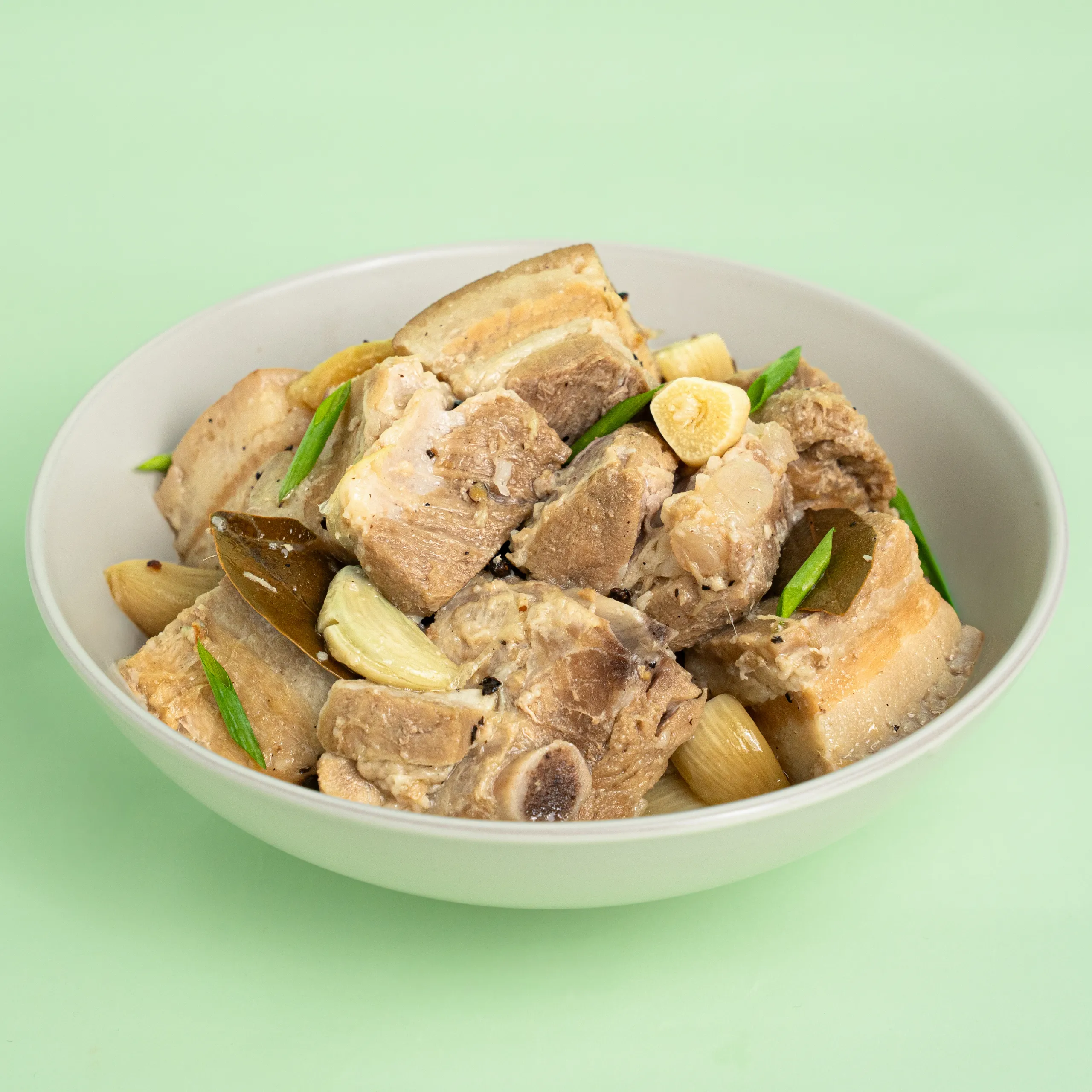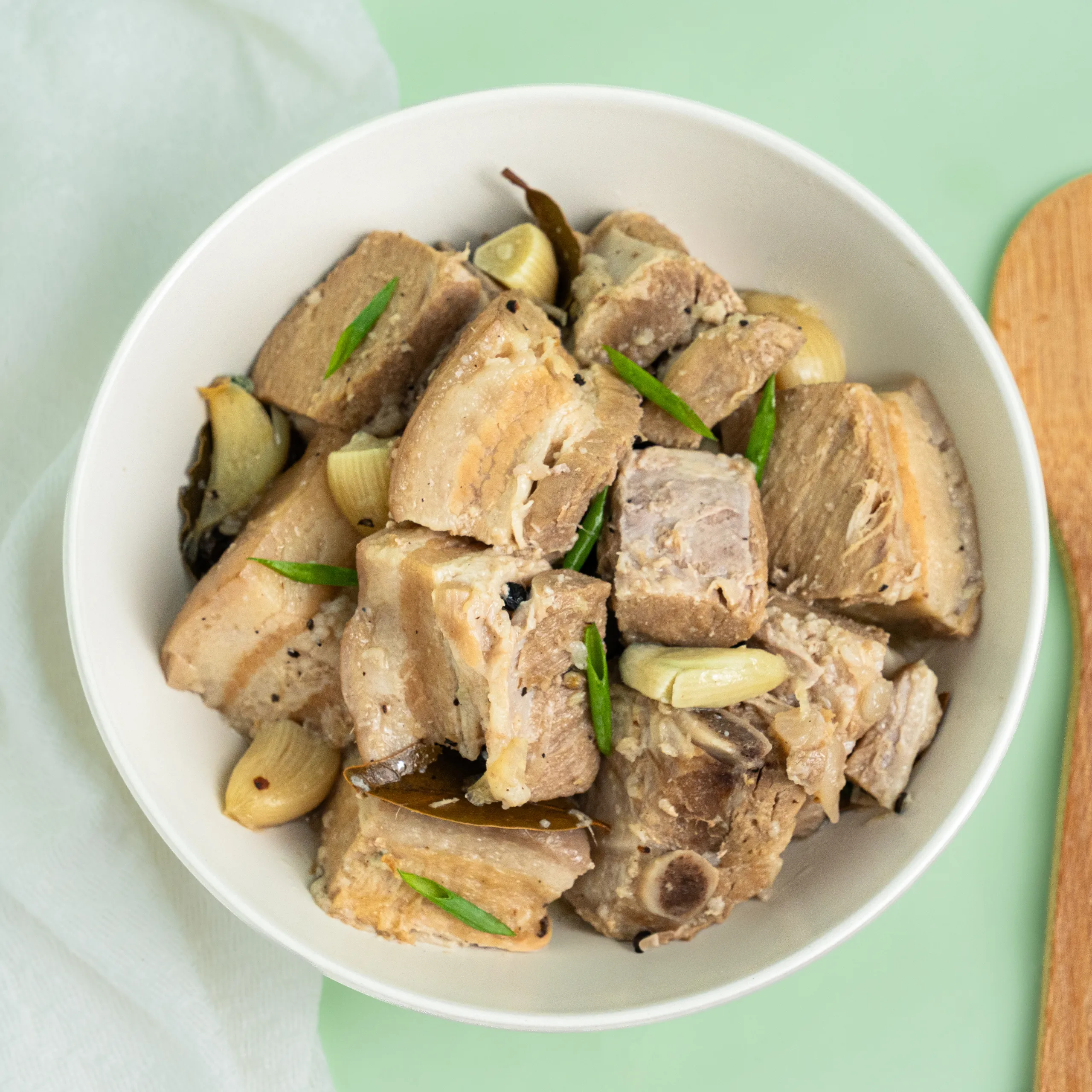
There are Filipino dishes that feel like special-occasion food, and then there are dishes that simply feel like home. Adobo sa Puti belongs to the second kind.
It is humble, comforting, and wonderfully uncomplicated. At its heart, this dish is made with pork simmered slowly in vinegar, water, garlic, bay leaves, black pepper, and salt. Unlike the darker, soy-sauce-based adobo that many people know, Adobo sa Puti gets its name from its lighter appearance. The word puti means “white” in Filipino, referring to the absence of soy sauce and the pale, vinegar-based sauce.
What makes this dish special is how a handful of everyday ingredients can create such a satisfying meal. The vinegar gives the pork a sharp, bright flavor, while garlic adds warmth and aroma. As the pork cooks, the flavors become deeper and more rounded. A little oil helps brown the meat and gives the finished dish a richer mouthfeel.
For many Filipino families, adobo is more than just a recipe. It is a dish that can be adjusted according to what is available in the kitchen. Some families prefer their adobo very sour, while others mellow the vinegar with more water or allow the pork to fry until slightly crisp. Some add tomatoes, onions, or other seasonings, while others insist that the simplest version is the best.
This version of Adobo sa Puti keeps things straightforward while allowing plenty of room for personal touches.
A Brief History of Adobo
Adobo is one of the most recognizable dishes associated with Filipino cuisine, but its story is much older and more interesting than simply being a “traditional Filipino recipe.”
Before refrigeration became common, people needed practical ways to preserve meat and other foods. Vinegar was especially useful because its acidity helped create an environment that discouraged the growth of many microorganisms. Cooking meat in vinegar, salt, and other aromatics was therefore both flavorful and practical.
When Spanish colonizers arrived in the Philippines, they encountered Filipino cooking methods involving meat cooked or preserved in vinegar. They used the Spanish term “adobo,” which refers broadly to a method of marinating or seasoning food. The name eventually became associated with the Filipino dishes we now know as adobo.
Filipino adobo developed into many regional and household variations. There is chicken adobo, pork adobo, mixed pork-and-chicken adobo, seafood versions, vegetable adobo, and countless family recipes that differ in their proportions and cooking methods.
Adobo sa Puti is particularly interesting because it highlights the vinegar and garlic flavors without relying on soy sauce for color and additional saltiness. It is a reminder that Filipino adobo does not have to be dark brown. In fact, the darker version familiar to many people is only one interpretation of a much broader culinary tradition.
Choosing the Pork
For a flavorful and tender adobo, pork cuts with a little fat work particularly well. Pork shoulder, pork belly, or a combination of lean and fatty pieces can all be used.
Pork shoulder is a good choice if you want meat that becomes tender without being excessively fatty. Pork belly produces a richer and more indulgent adobo because the fat slowly renders during cooking.
If using very lean pork, be careful not to overcook it. Lean meat can become dry even when the sauce itself is flavorful.
Recipe Tips for Better Adobo sa Puti
1. Do not be afraid of the vinegar
The vinegar may smell very strong at the beginning. That is normal. As it cooks, its sharpness becomes less aggressive and blends with the pork and garlic.
2. Use good-quality garlic
Garlic is one of the major flavors in this dish, so it deserves attention. Fresh garlic gives the best aroma.
3. Let the pork simmer gently
A hard, rapid boil can make the outside of the meat tough before the inside becomes tender. A gentle simmer gives the connective tissues time to break down.
4. Give the sauce time to reduce
One of the secrets to good adobo is patience. The sauce becomes more concentrated and flavorful as excess liquid evaporates.
5. Taste at the end
Vinegar varies in strength from brand to brand, and pork can vary in fat and flavor. Instead of following the salt measurement blindly, taste the finished sauce and adjust it.
6. Rest the adobo before serving
If you have time, let the cooked adobo rest for about 10–15 minutes before serving. This gives the flavors a chance to settle.
Some people even find adobo more flavorful after it has been refrigerated overnight and reheated the next day.
Ingredient Substitutions
The beauty of Filipino home cooking is that recipes are often flexible.
Pork
You can substitute pork with:
- Chicken
- Pork belly
- Pork shoulder
- Pork ribs
- A mixture of pork cuts
Chicken will generally cook faster than pork, so adjust the cooking time accordingly.
White Vinegar
White cane vinegar is a common choice, but other mild vinegars can be used.
Possible alternatives include:
- Cane vinegar
- Coconut vinegar
- Rice vinegar
Keep in mind that different vinegars have different levels of acidity and flavor. Coconut vinegar, for example, can provide a slightly more rounded taste.
Rock Salt
Regular table salt or fine sea salt can be substituted. Since the crystal sizes differ, add the salt gradually and taste as you go.
Black Pepper
Freshly cracked black pepper gives a stronger aroma than pre-ground pepper. If you enjoy a peppery adobo, you can increase the amount slightly.
Tomatoes
The tomato is optional. It can add a mild sweetness and a little acidity to the dish.
If you do not have tomatoes, simply leave them out.
Spring Onion
Spring onion is mainly for freshness and presentation. You can replace it with chopped green onions, cilantro, or simply omit the garnish.
What Makes Adobo sa Puti Different?
The most obvious difference is its color.
Many versions of Filipino adobo use soy sauce, which gives the dish a dark brown color and contributes additional saltiness and umami. Adobo sa Puti does not depend on soy sauce, allowing the natural color of the pork and the pale vinegar-based sauce to remain visible.
This also changes the flavor experience.
Instead of soy sauce taking a prominent role, the vinegar and garlic become much more noticeable. The result can taste brighter, sharper, and more rustic.
It is a good example of how removing one ingredient can completely change the personality of a familiar dish.
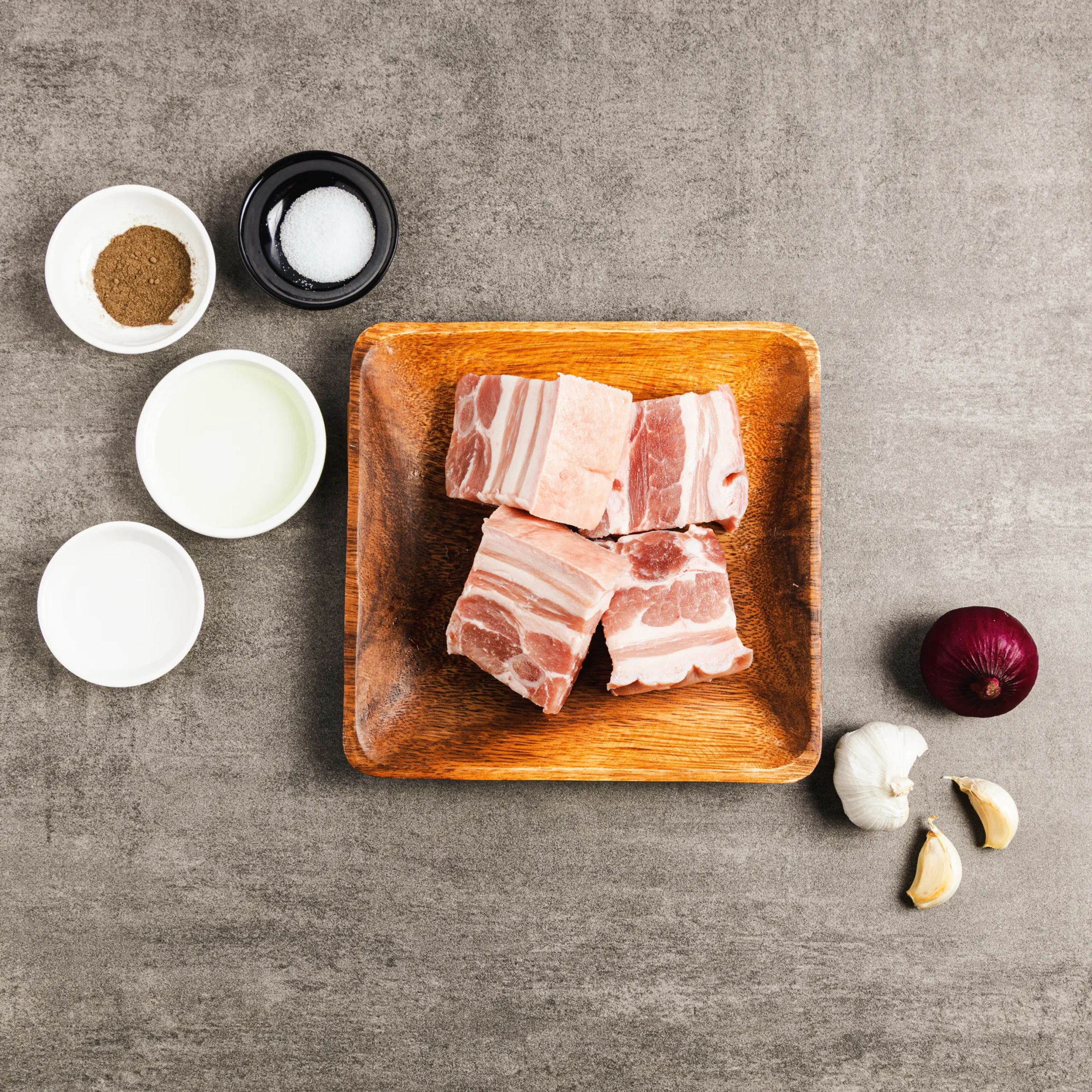
The Role of Each Ingredient
Pork
Pork provides the main protein and savory flavor. Fatty portions also contribute richness to the sauce.
Vinegar
Vinegar provides the characteristic tang of adobo. It also helps balance the richness of pork.
Garlic
Garlic gives the dish its unmistakable Filipino character. As it cooks, its sharp raw flavor becomes sweeter and more mellow.
Bay Leaves
Bay leaves contribute a subtle herbal aroma. They should generally be removed before eating.
Black Pepper
Pepper adds warmth and mild spice, helping balance the acidity of the vinegar.
Salt
Salt brings all the flavors together. Because vinegar is naturally sharp, the right amount of salt is particularly important for creating balance.
Tomato
Tomato is optional but can contribute mild sweetness, acidity, and freshness.
Oil
Oil helps brown the pork and garlic while also adding richness to the finished dish.
Spring Onion
Spring onion adds freshness and a bright green contrast to the pale-colored adobo.
Health Benefits and Nutritional Considerations
Adobo sa Puti can be part of a balanced meal, especially when served with vegetables and a reasonable portion of rice.
Protein
Pork is a good source of protein, which is important for maintaining muscles and supporting normal body functions.
Garlic
Garlic contains various naturally occurring sulfur compounds and antioxidant compounds. It has long been valued as part of traditional diets around the world.
Vinegar
Vinegar adds plenty of flavor without adding much energy, which can make it useful for creating flavorful dishes without relying entirely on additional fats or sugar.
Portion Matters
The nutritional profile of adobo depends heavily on the cut of pork used. Pork belly, for example, contains considerably more fat than leaner cuts.
If you want a lighter version, choose a leaner cut of pork and trim visible excess fat.
Balance the Plate
A simple way to make the meal more balanced is to serve Adobo sa Puti with:
- Steamed vegetables
- Fresh tomatoes and cucumber
- Blanched greens
- Stir-fried vegetables
- A moderate serving of rice
Keep in mind that the dish can still be relatively high in sodium depending on how much salt is used, so people watching their sodium intake may want to reduce the added salt.
How to Store Adobo sa Puti Properly
Adobo is particularly convenient for meal preparation because it keeps well when handled and stored properly.
Allow the cooked dish to cool somewhat, but do not leave it sitting at room temperature for an extended period.
Transfer the adobo into a clean, covered container and refrigerate it promptly.
In the refrigerator
For best quality and food safety, keep cooked adobo refrigerated and use it within 3–4 days.
In the freezer
If you want to keep it longer, portion the adobo into airtight, freezer-safe containers.
Freezing it in individual portions makes reheating easier and prevents you from repeatedly thawing and reheating the entire batch.
For best quality, use frozen cooked pork within a few months.
Reheating
Reheat the adobo thoroughly on the stovetop or in the microwave.
If the sauce has become very thick after refrigeration, add a small splash of water while reheating.
Avoid repeatedly cooling and reheating the same batch. Instead, heat only the portion you plan to eat.
How to Serve Adobo sa Puti
The classic partner is, of course, steamed white rice.
The rice absorbs the tangy, savory sauce and helps balance the strong flavors of the adobo.
For a fuller meal, serve it alongside:
- Atchara or pickled vegetables
- Sliced cucumber
- Fresh tomatoes
- Steamed kangkong
- Stir-fried vegetables
- Ensalada-style vegetables
- Fried egg
For breakfast, leftover adobo can even be served with garlic fried rice and a fried egg. This transforms yesterday’s dinner into a completely new and satisfying meal.
Final Words
Adobo sa Puti is a beautiful example of how Filipino cooking does not need a long list of ingredients to produce a memorable meal.
Pork, vinegar, garlic, pepper, bay leaves, salt, and a little patience are enough to create something deeply comforting. Its strength comes from balance: the richness of the pork against the sharpness of vinegar, the warmth of garlic against the freshness of spring onion, and the concentrated sauce against a bowl of plain steamed rice.
It is also a dish that invites you to make it your own. You can choose a fattier cut for richness or a leaner cut for a lighter meal. You can make it more garlicky, more tangy, or more peppery. You can add tomatoes, fry the pork at the end, or simply keep it wonderfully simple.
Perhaps that is one of the reasons adobo has remained such an important part of Filipino food culture. It is practical enough for an ordinary weekday meal, flavorful enough to serve to guests, and flexible enough to reflect the preferences of every household.
In the end, Adobo sa Puti is not just pork cooked in vinegar. It is a dish built around simplicity, patience, and the familiar flavors that make a meal feel like home.
Serve it hot, spoon the sauce generously over rice, and enjoy it the way Filipino comfort food is meant to be enjoyed—with family, friends, and a little extra rice.