

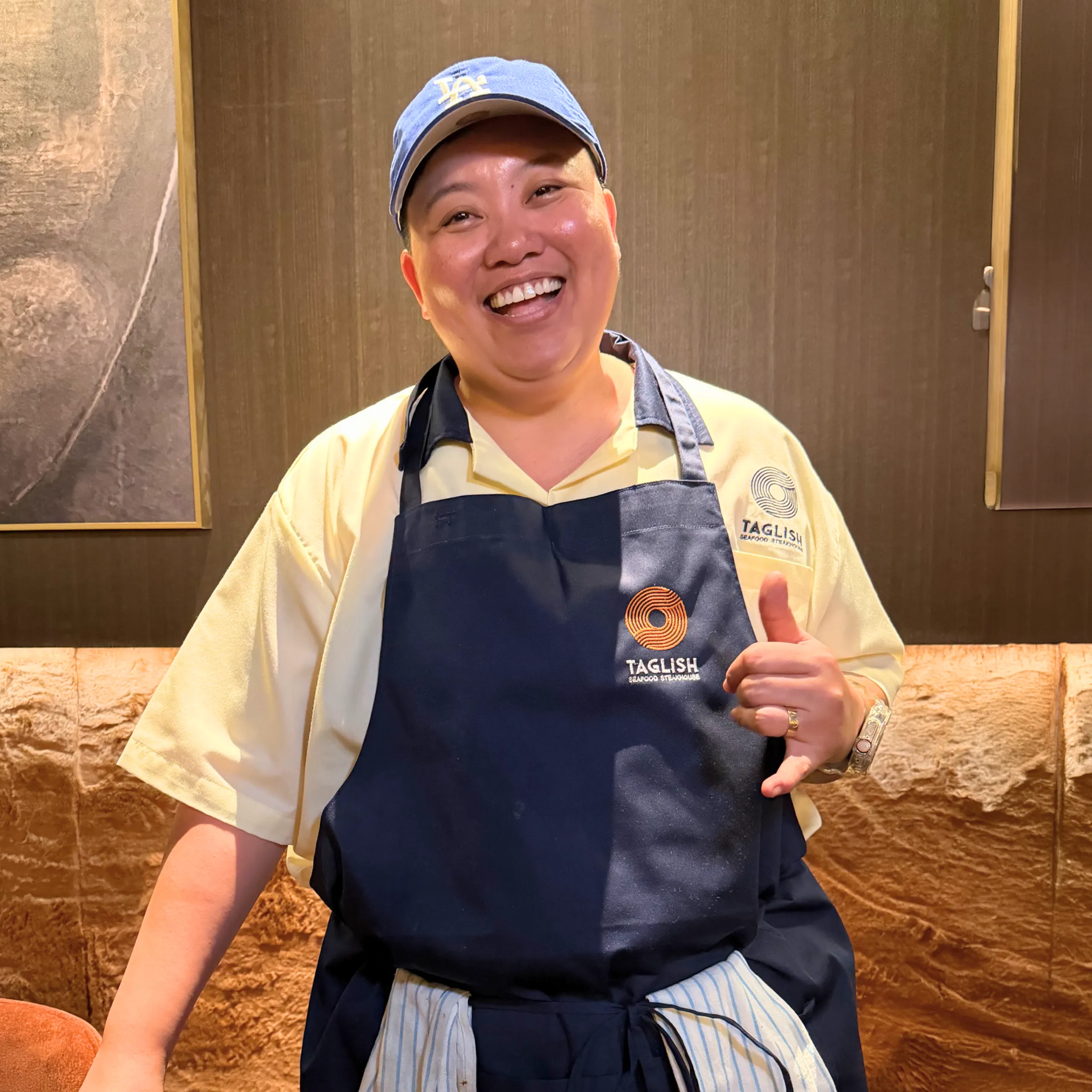
Chef Frances Tariga doesn’t spend much time talking about reclaiming ingredients or redefining local food. She doesn’t position the restaurant as a statement, nor does she seem particularly interested in where it fits within the larger conversation about Filipino cuisine. For someone who’s spent more than two decades cooking everywhere—from royal residences in the UAE to some of New York’s busiest professional kitchens, there’s remarkably little performance in the way she talks about cooking.
Instead, she talks the way she cooks: quickly, instinctively, with one story tumbling into the next. She’ll answer a question, remember another detail halfway through, interrupt herself to tell that story instead, then somehow arrive exactly where she intended all along. It’s energetic without feeling rushed, the conversational equivalent of a cook who knows where everything is without looking.
Her rhythm carries into the food. We were served a preview of what was to become a 48-item lineup.
Familiar Yet Unexpected
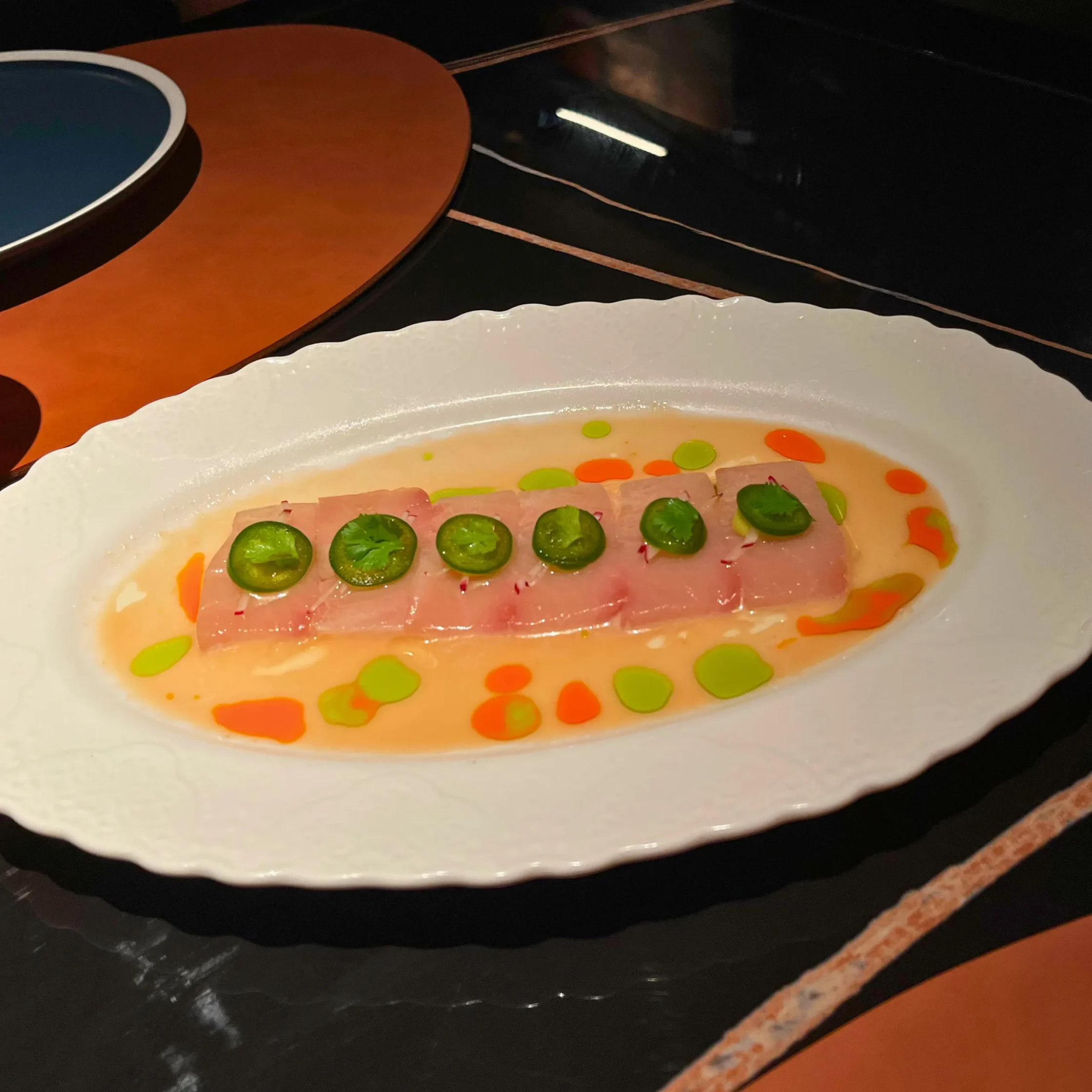
The Hamachi Kilaw arrives first, dressed with citrus milk, avocado, and jalapeño. It’s recognizably kilaw, but the acidity is softer, rounded out by the richness of the avocado before the pepper leaves a slow heat behind. Nothing on the plate announces itself as a twist. It just works.
There’s nowhere to hide in a dish like this. Knife work, balance, restraint—everything is exposed. It’s the kind of opening that someone with chef Frances’ background would choose. Here, I met the sushi master first.
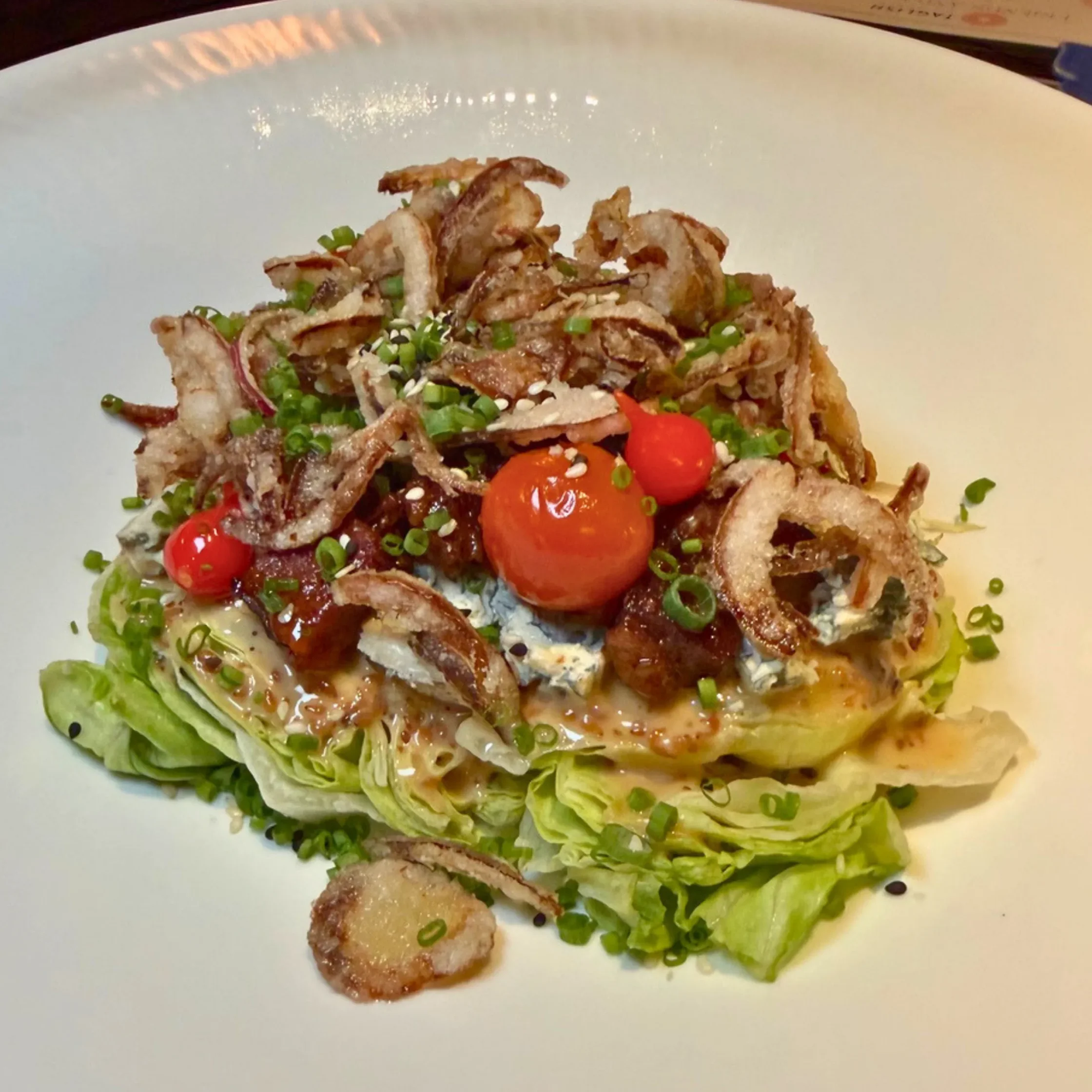
The Crack Salad, I’m told, is a staff favorite, and after one bite, it’s easy to see why. Fourme d’Ambert, tocino bacon, and teardrop peppers sound like ingredients competing for attention, but the creamy blue cheese dressing was the perfect glue. Rich without becoming heavy, it pulls everything together while leaving enough to keep you curious yet still satisfied.
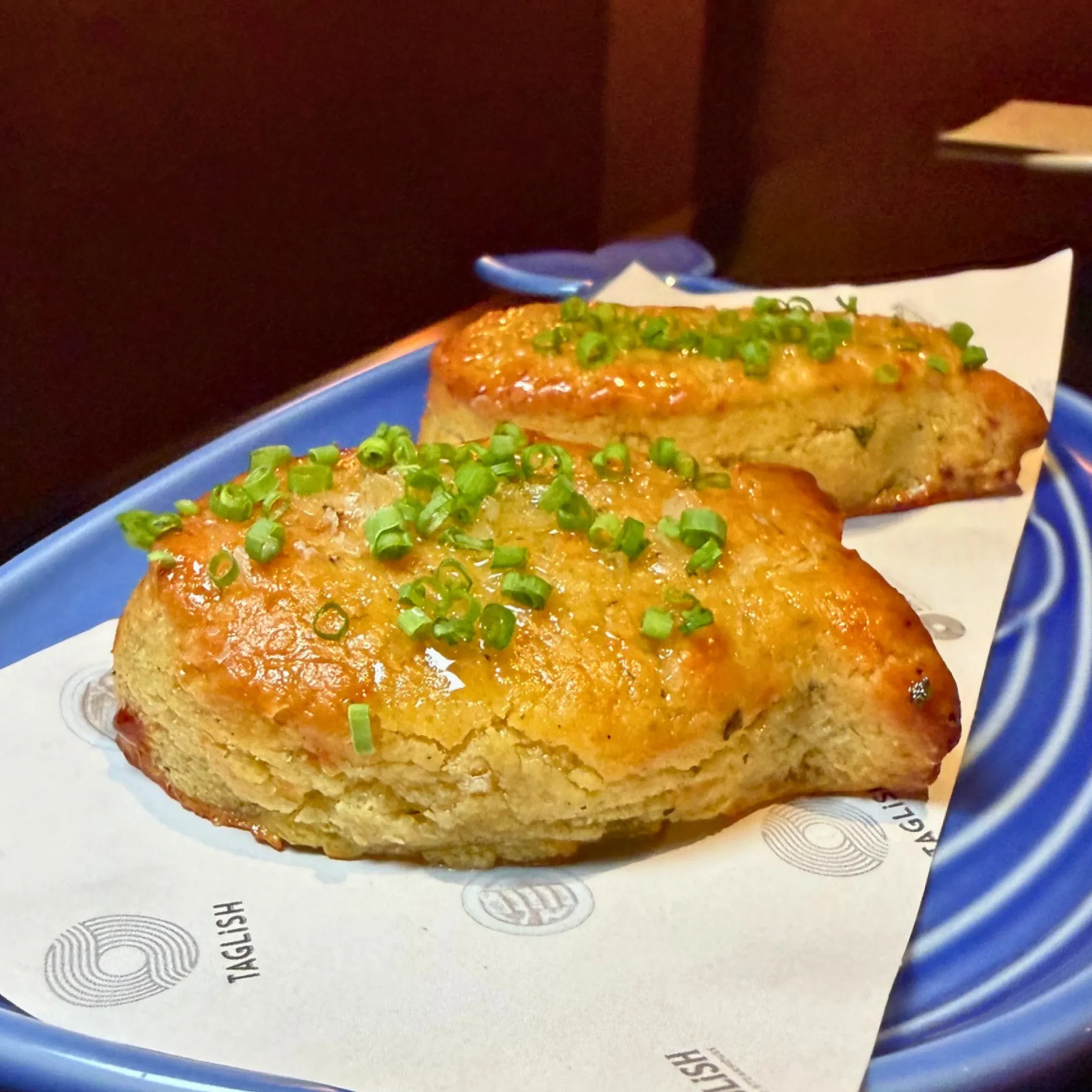
At that point, I was already getting excited to see the rest of the dishes, and the Goldfish Cheddar biscuit was the perfect thing to ground me. When I saw the fish-shaped biscuits, I was reminded that Chef Frances doesn’t take herself too seriously, and that I can relax and have fun as I meet her through this menu. Warm from the oven, it’s brushed with hot honey and finished with chives and Maldon salt. And between you and me? I was already sold.
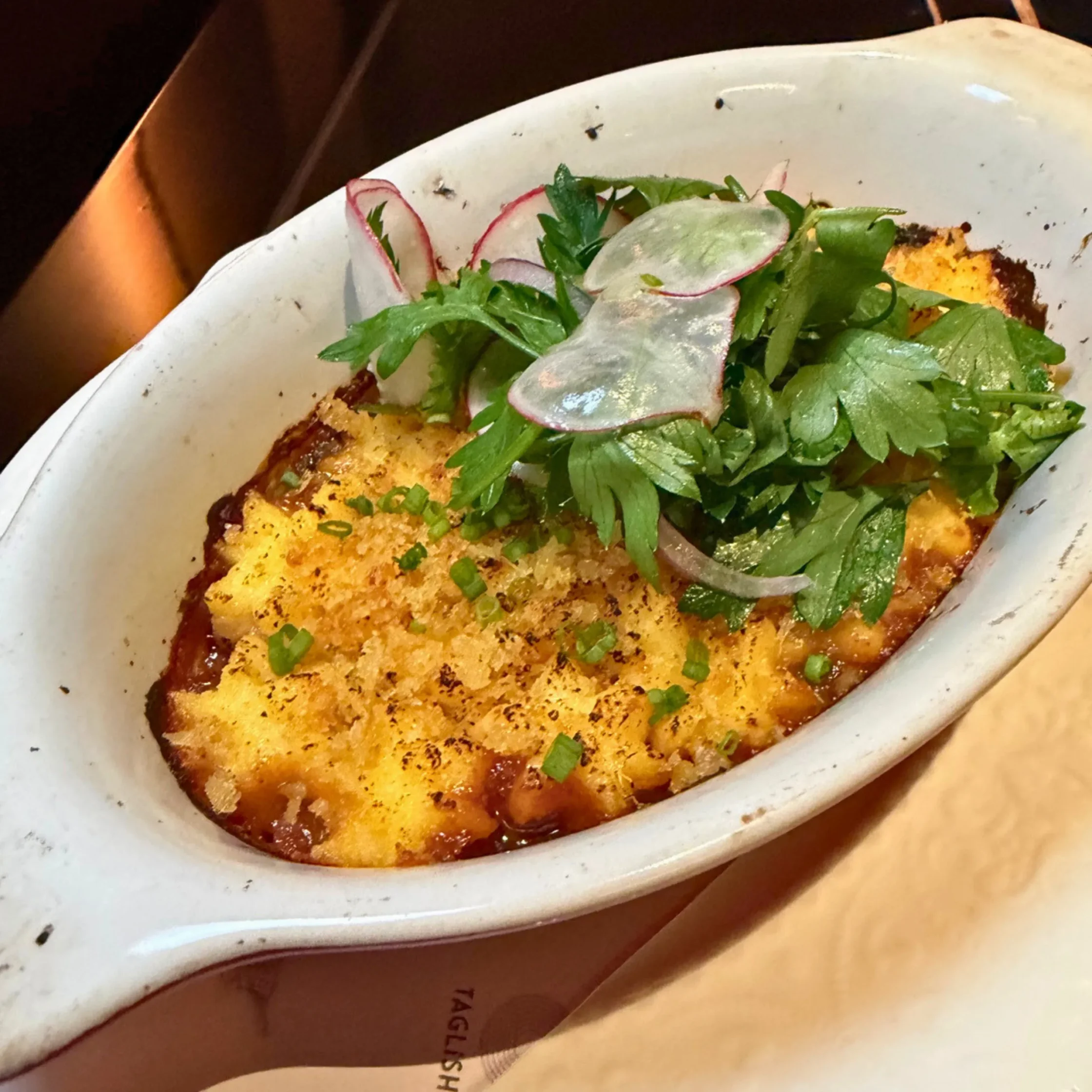
Then there’s the Oxtail Humba Pot pie.
It’s one of those dishes that makes perfect sense when you think of it. The richness of humba settles naturally into whipped polenta, while charred leeks linger to keep it from becoming too heavy. The idea sounds playful. The execution is anything but. It feels less like a mash-up than a recipe that somehow existed before anyone thought to write it down. This was the first hint of a familiar Filipino dish and it didn’t feel forced.
Why Taglish Never Over-explains Its Food
By the time the mains arrive, a pattern begins to emerge.
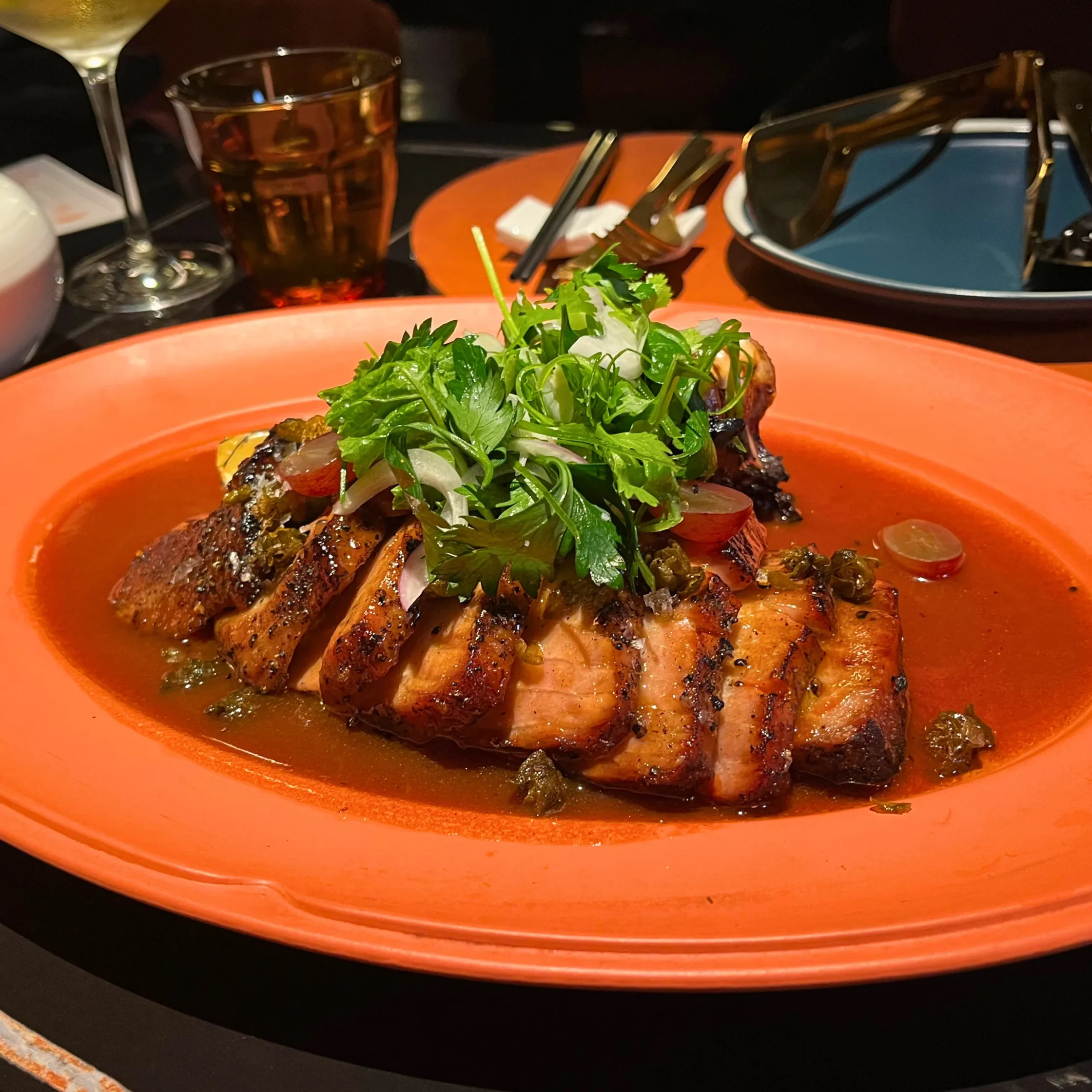
Sashimi-grade, and dry-aged for two days—the Gensan Tuna Porterhouse is presented with the confidence usually reserved for a prime cut of beef. The tamarind brown butter introduces another layer of sweet-smoky depth while capers cut through each indulgent bite. Across the table, the Grilled Sulu Pugita arrives with pili gremolata and calamansi sofrito. The octopus is smoky and tender, and the condiment both familiar and unfamiliar at once. Neither dish pauses to announce the influences behind it, and the menu never asks you to admire the combinations.
It assumes you’ll be too busy eating them.
That was true of the food and, as it turned out, of chef Frances herself. She never once talked about elevating Filipino ingredients or modernizing local cuisine. Pili belonged in a gremolata because it tasted right there. Calamansi ended up in a sofrito for the same reason.
What surprised me the most was the whipped gabi. I had to take a second look to make sure it wasn’t pommes purée. Looking back, I wish I’d asked more questions. How was it so light? So creamy? It was meant to support whatever sat on top of it, but I honestly forgot what it had been served with. And when I told chef Frances that it was probably my favorite from the whole menu, she didn’t ask what I liked about it. She didn’t tell me how long it took to perfect or what technique made it possible. She just laughed and said, “I know, right?” like it was never a question for her.
The Defining Factor
In many ways, that’s what Taglish is.
It’s not two things trying to be one. She’s not trying to prove that Filipino ingredients deserve a place in contemporary cooking, and she doesn’t seem so interested in making that case anymore. She proceeds as though it’s always been that way.
For over two decades, she has cooked in kitchens that demanded precision and discipline at the highest level. Those experiences are impossible to separate from the restaurant. You can see them in the way the tuna is handled, in the consistency of the sauces, in the restraint that keeps even the richest dishes from tipping into excess. She isn’t borrowing from one cuisine to improve another. The techniques she’s learned and the ingredients she grew up with no longer arrive as separate ideas. Nobody who grew up speaking Taglish stops to decide whether a sentence belongs to English or Filipino—you reach for the word that says exactly what you mean. Chef Frances cooks the same way, and I was curious where that instinct came from.
Our conversation drifts away from restaurants altogether, and she tells me about her father.
Specifically, about Sunday kare-kare.
When he cooked it, she knew they were having a good day. She laughs before admitting that those meals usually followed a lucky streak at gambling, but what stayed with her wasn’t the reason the pot was on the stove. It was the feeling of standing beside him, chopping vegetables while he cooked. Before there were professional kitchens, awards, and television cameras, there was that small Sunday ritual in their kitchen where she was simply a daughter helping her dad cook.
She later tells me that therapy helped her return to her memories with a different understanding, and listening to her, I couldn’t help thinking back to everything that had led her here. Not because this suddenly revealed a hidden meaning, but because they began to make sense in a different way. Maybe that’s why nothing I’d eaten ever felt like it was trying to prove a point.
Calling it fusion would feel incomplete, not because the influences aren’t there, but because the word suggests they’re still separate pieces being stitched together. At Taglish, they don’t arrive in neat categories. A French technique, an Italian condiment, and an ingredient from General Santos can exist on the same plate without needing an explanation.
That’s simply how chef Frances thinks about food now.
Taglish Feels Like Chef Frances Tariga’s Most Personal Restaurant Yet
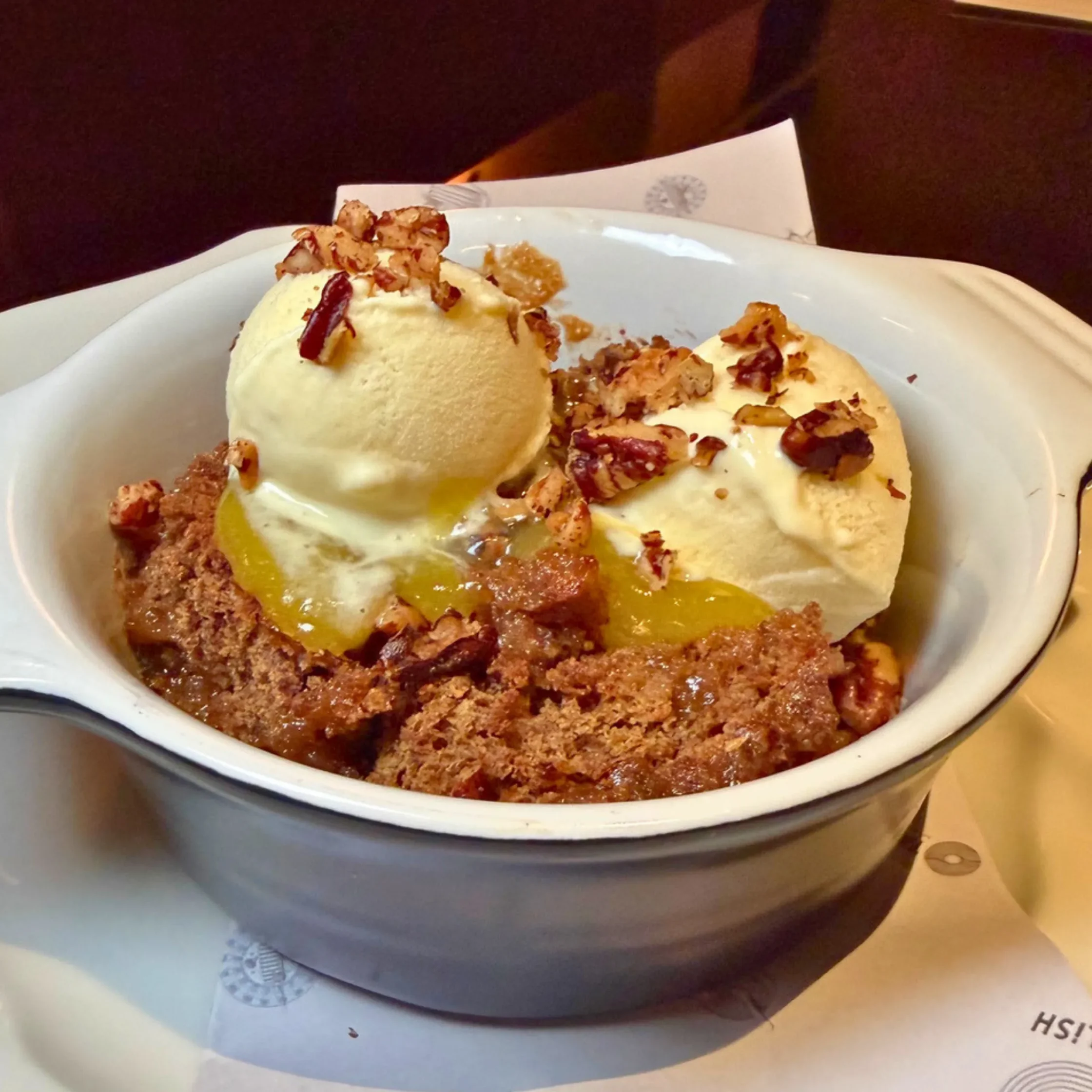
The meal ends with Sticky Langka pudding paired with an in-house langka ice cream that I wished I could take home. If they ever sell pints, I’d be first in line.
Chef Frances never once suggested she was changing Filipino food. And she doesn’t seem concerned with that at all.
That’s what makes Taglish worth visiting. You forget how many influences each plate brings together, and you see what happens when a chef stops thinking of those influences as separate.
It feels like the work of someone who has spent twenty-five years collecting techniques, memories, and experiences from wherever life took her—and has finally reached a point where they no longer need introducing.
Before dinner, I thought chef Frances Tariga moved through the world powered by ambition. I realized I had been looking at her backwards. I had mistaken fluency for restlessness.
She’s still outspoken. Still fast. Still the kind of person whose thoughts seem to arrive three at a time. But now I would argue that what looks a lot like momentum is actually ease.
That ease is everywhere at Taglish. It’s in opening with a delicate Hamachi Kilaw, in a whipped gabi that needs no explanation, and in a menu that doesn’t try to justify the languages it speaks.
Nothing on the menu feels like it’s asking where it belongs.
Neither does she.
Taglish is located at 4th Floor, Levanto Building, 389 Jupiter Street, bel-air, Makati.

Frequently Asked Questions
The restaurant will be on soft-opening in the beginning of August.
Taglish is located at 4th Floor, Levanto Building, 389 Jupiter Street, bl-air, Makati.
Chef Frances Tariga is a prominent Filipino celebrity chef, restaurateur, and reality television veteran who has gained international acclaim for championing Filipino flavors on the global culinary stage. Born and raised in Manila, Philippines, she has spent over two decades working in elite kitchens worldwide. She is best known as the chef and founder of Tadhana.
Taglish is an à la carte seafood steakhouse concept in Makati created by internationally acclaimed Filipino chef Frances Tariga.
Taglish’s menu includes Hamachi Kilaw, Crack Salad, Oxtail Humba Pot Pie, Gensan Tuna Porterhouse, Grilled Sulu Pugita, whipped gabi, and Sticky Langka pudding, blending Filipino ingredients with chef Frances Tariga’s international training.