Advertisement

Philippine Sawsawan: 7 Dipping Sauces Every Pinoy Pantry Needs

Discover how suka, patis, bagoong, and lechon sarsa transform rich, fatty viands into perfectly balanced culinary masterpieces.

Filipino sawsawan is a whole culture on its own. Find out which ones make up the core group of iconic sawsawans! [PHOTO COURTESY OF Riverten Kitchen]

The great Doreen Fernandez likened sawsawan as a means of fine-tuning the taste of the dish to the preferences of the diner. A splash here and dab there does wonders to magnify the saltiness, sourness, sweetness, umami, and/or hear of whatever it’s applied to.

It makes sense, considering Filipino cuisine embraces adaptability and personalization—features that are brought to fruition in the way Filipinos season their viands to taste with their sawsawan (or sawsawan mix) of choice.

No dining table in the Philippines is complete without a collection of condiments ready to be mixed and matched. These are just some of the members of the sawsawan-sphere you’ll likely find in the Pinoy pantry.

Toyo

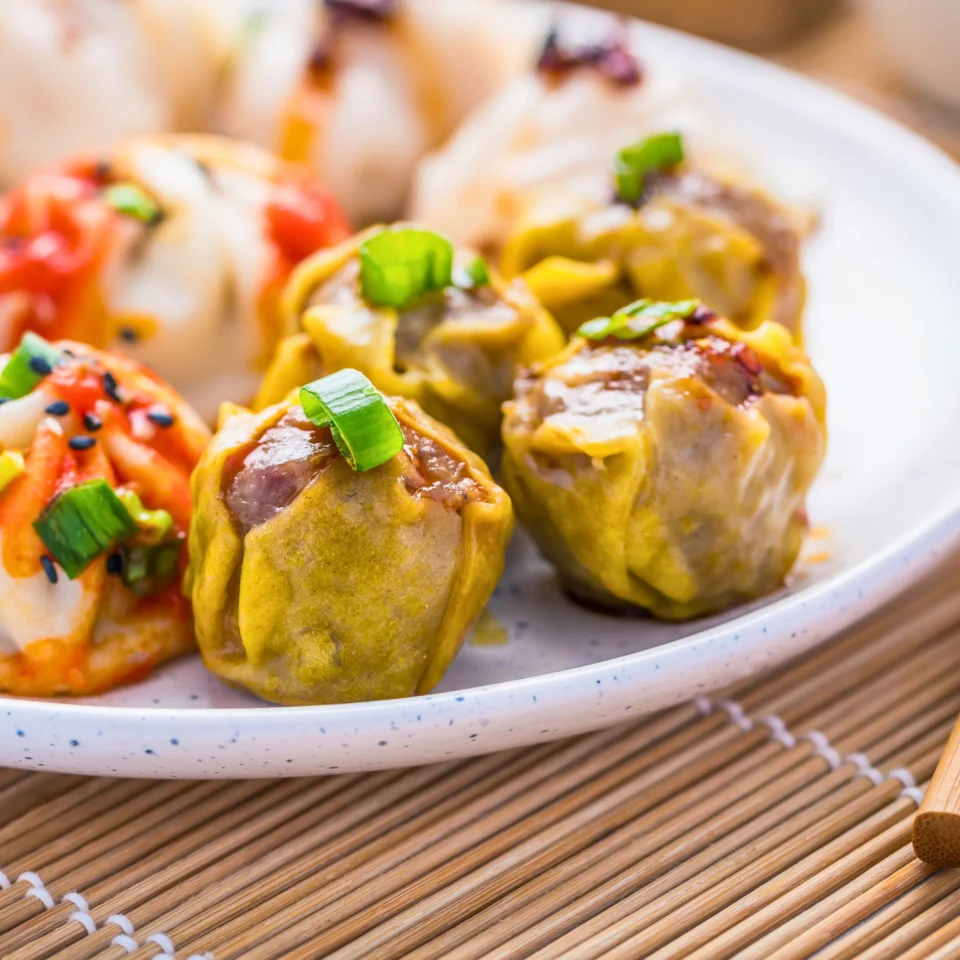
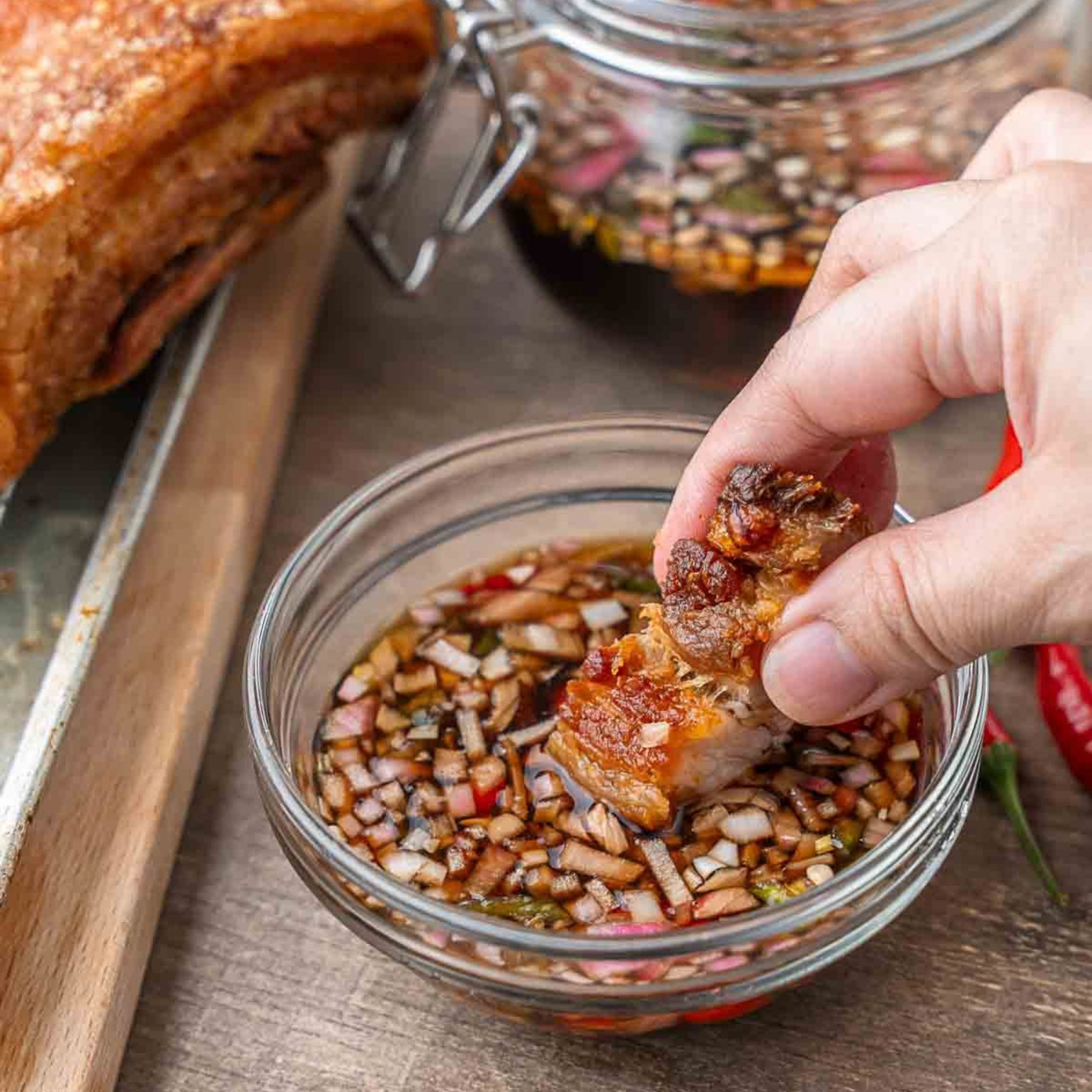
Filipino soy sauce has a sharper, saltier taste than other versions (e.g. Japanese or Chinese), with a thinner, more watery consistency. It’s an indispensable ingredient in dishes like bistek, but it’s also fantastic as a dipping sauce for everything from siomai to liempo to fried fish, either plain or jazzed up with suka, calamansi (to form what’s called toyomansi), and/or sili.
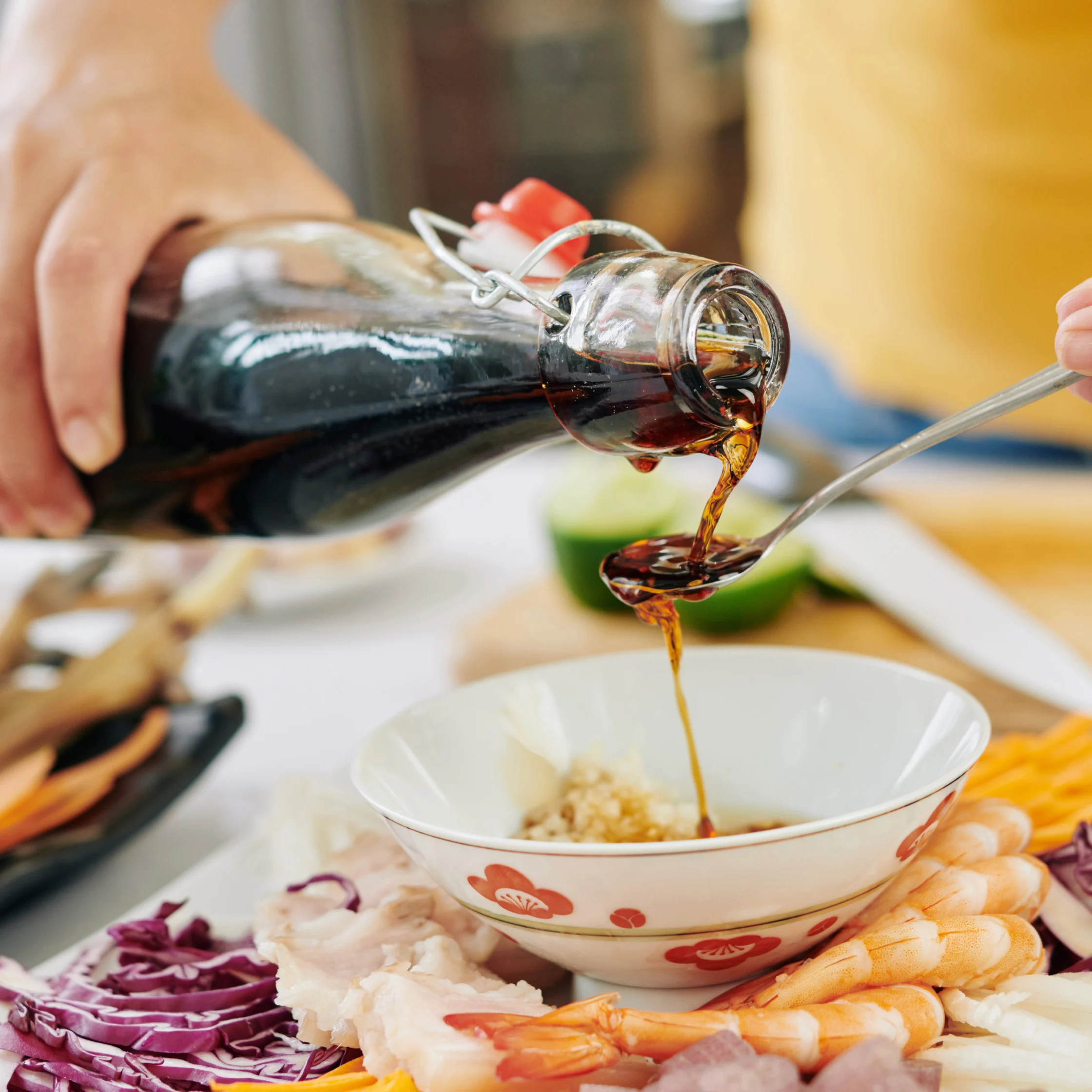
A hand pours dark soy sauce from a glass bottle into a spoon over a bowl of minced garlic, amid shrimp and sliced vegetables; warm, appetizing kitchen scene.
The usual suspect for a lot of Pinoy dishes like adobo, Toyo is the original day-one.

Suka

Vinegar is a whole domain in itself with countless variants from different parts of the Philippines, but Filipinos are bound to have at least one variety in their pantry. Some of the more common variants are sukang puti (a.k.a. sukang maasim or white vinegar, made either from sugarcane or acetic acid); cane vinegar (also made of sugarcane, though vinegar sold as “cane” is typically brown); sukang tuba or coconut vinegar; and sukang sasa a.k.a. nipa palm vinegar. There are seasoned vinegars, too, like Visayas’ sinamak and and Iligan City’s sukang pinakurat. Whether taken on their own or mixed with other sawsawan, vinegars provide brightness and acidity to the sawsawan plate—they’re particularly fantastic for providing much-needed tangy contrast to fatty foods.
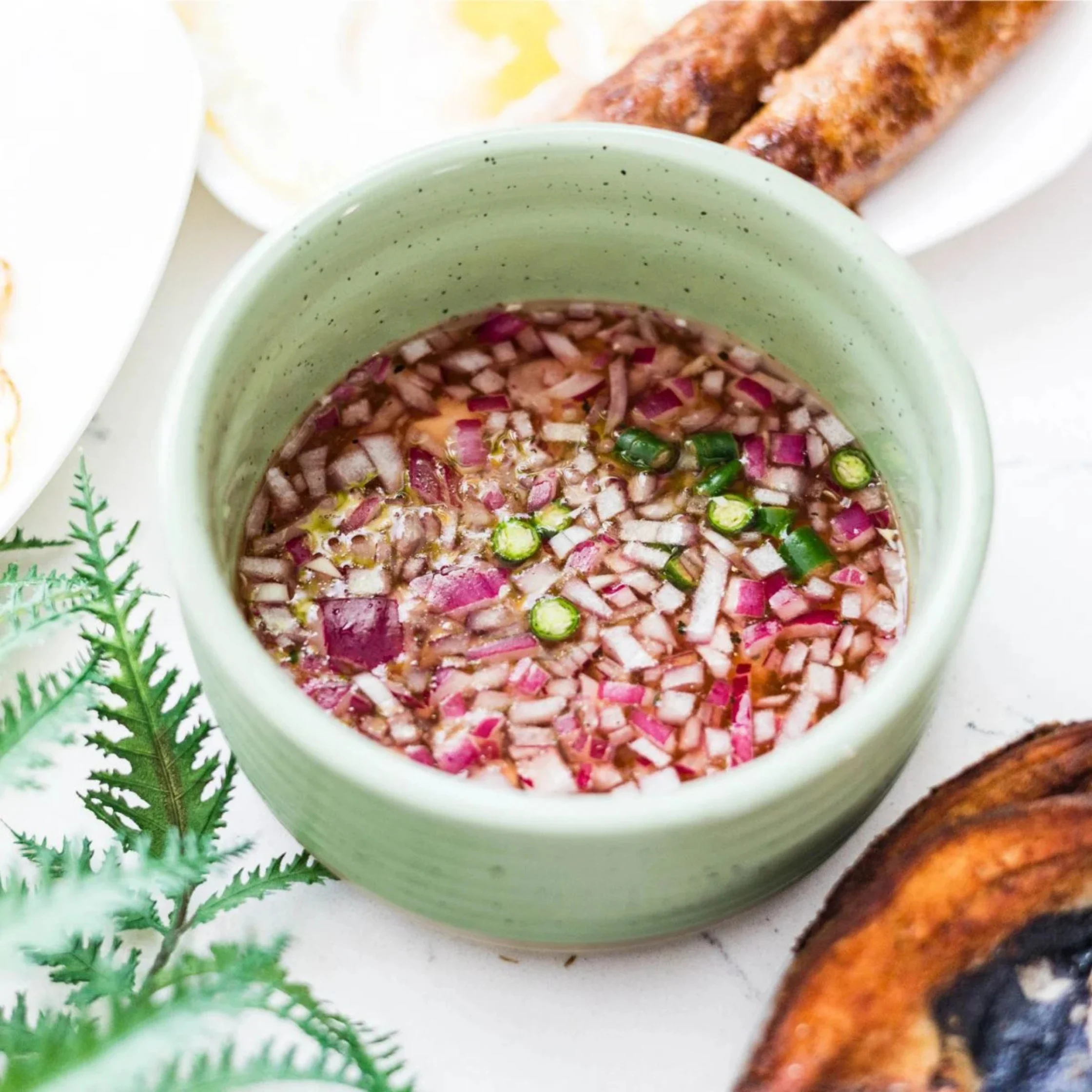
A pale green bowl holds tangy dipping sauce with chopped red onion and green chilies, beside golden-brown grilled fish on a white table. The scene feels fresh and appetizing.
There isn’t a Pinoy pantry that’s without suka. If there is, it’s because the bottle’s been used up and they’re due for a refill! [PHOTO COURTESY OF Deliciously Rushed]

Patis

Patis or fish sauce gives not just saltiness, but also a depth of flavor that’s hard to beat. Made with fermented fish, this well-loved condiment is pungent and salty, and it shines on its own or in the backdrop, as its umami-rich profile heightens the taste of whatever it is that it seasons. 
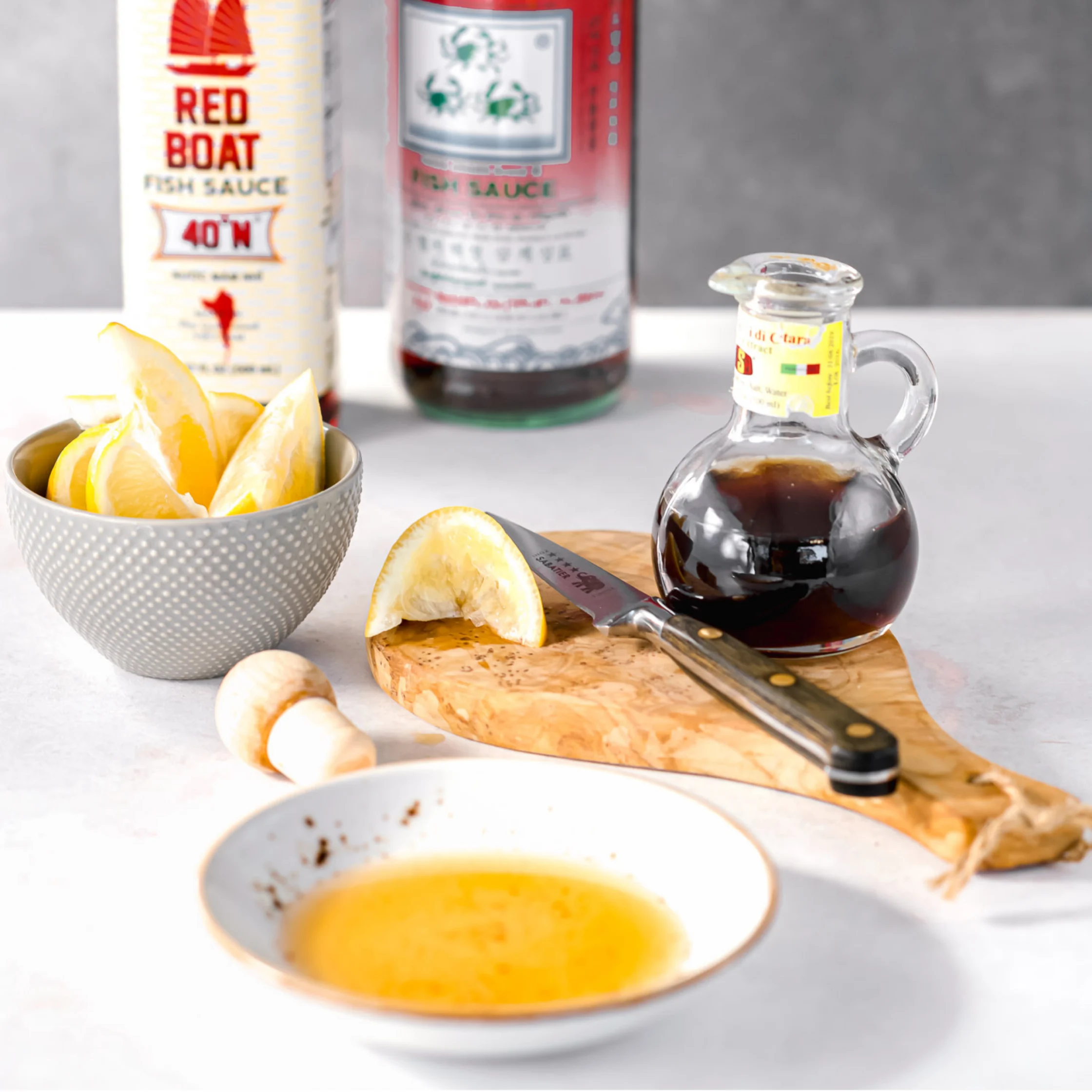
A wooden board holds a halved lemon and knife beside bowls of lemon wedges and golden dipping sauce, with a glass jug of dark soy sauce and Red Boat fish sauce behind. The bright kitchen still life feels fresh and inviting.
Patis is the silent one that’s usually in a lot of things but in droplets and spoonfuls just to lift the flavor. [PHOTO COURTESY OF Lemons and Achovies]

Calamansi

These tiny citrus fruits that are native to the Philippines also bring brightness to the party—but a more aromatic, slightly floral sort of brightness compared to, say, vinegar. A squeeze of calamansi does wonders to balance the heft of dishes like pancit Malabon or sisig; it’s also particularly wonderful with toyo and/or patis.
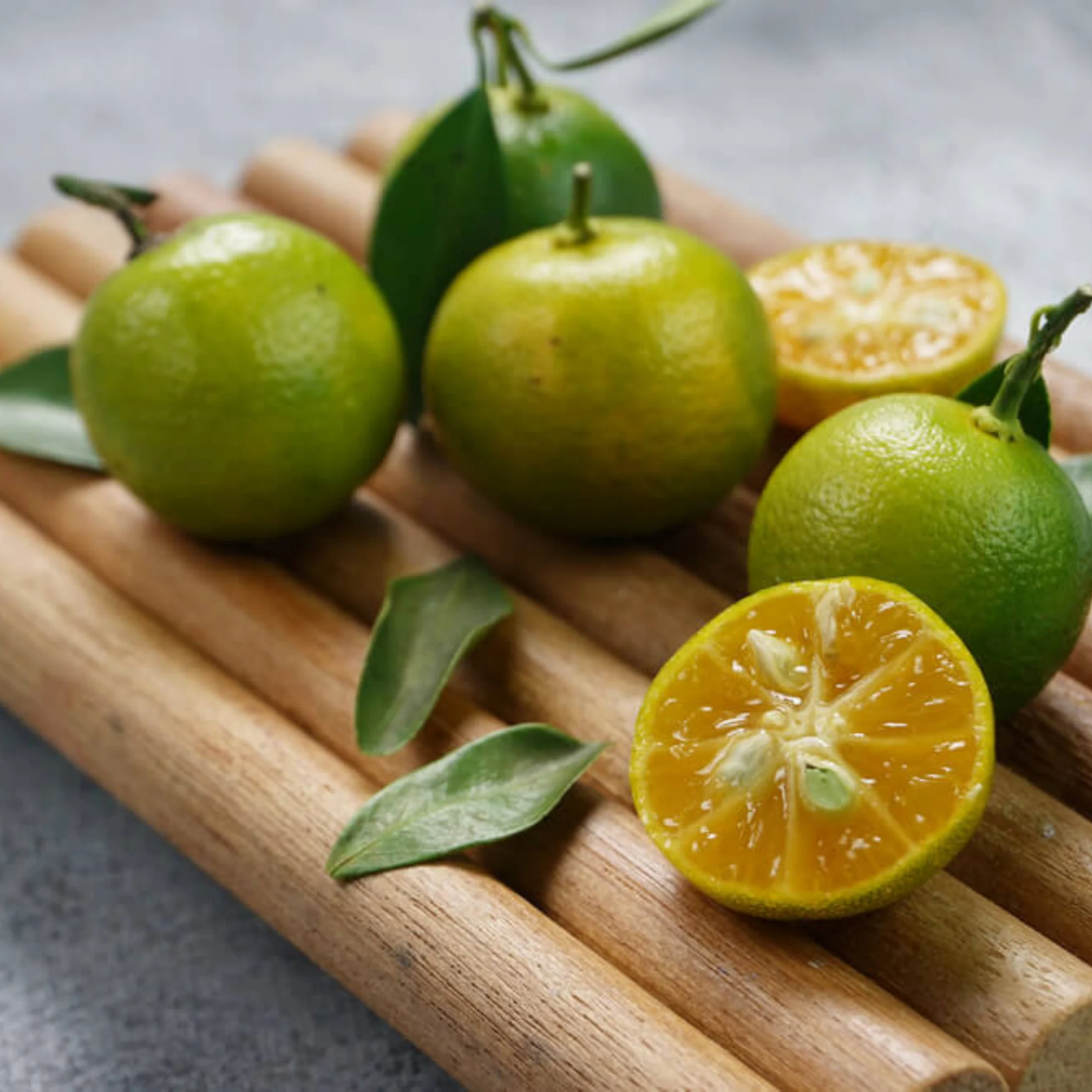
Green and yellow citrus fruits, whole and halved to reveal juicy, golden flesh, rest with fresh leaves on a wooden board, evoking a bright, natural feel.
When you need to bring a punch that’s distinctly Filipino, Calamansi is your go-to. Its convenient size makes it easy to grab.

Sili

For those who like to bring on the heat, there’s chili, which can be cut and added to any sawsawan saucer for a kick. One of the common variants in the Philippines is the small, long, red type typically referred to as “labuyo,” but true siling labuyo is shorter (and sadly rarer in commercial markets).
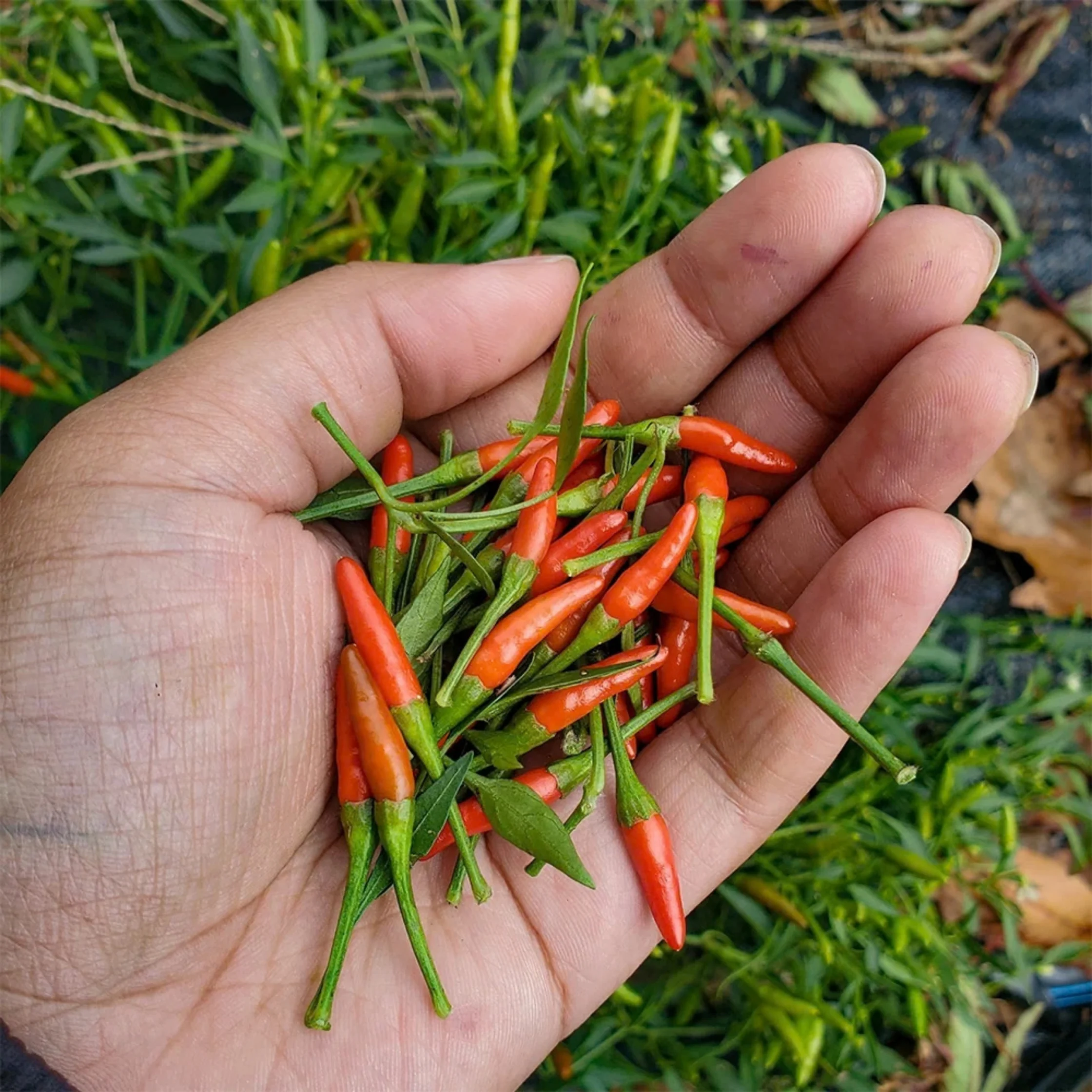
An open hand holds freshly picked slender red chilies mixed with green stems and leaves, against a garden of lush grass; a vivid harvest close-up.
Get you a sawsawan that’s full of bright red sili. That’s how I know my sinugba is gonna need more than one cup of rice. [PHOTO COURTESY OF Truelove Seeds Official Website]

Bagoong

Bagoong is a condiment made with fermented seafood—in Metro Manila, the fermented shrimp version (bagoong alamang) is common and readily available pre-sauteed at supermarkets and local markets. Elsewhere, there are bagoong variations utilizing other treasures of the sea: bagoong isda (fish), bagoong sisi (oysters), and so on.
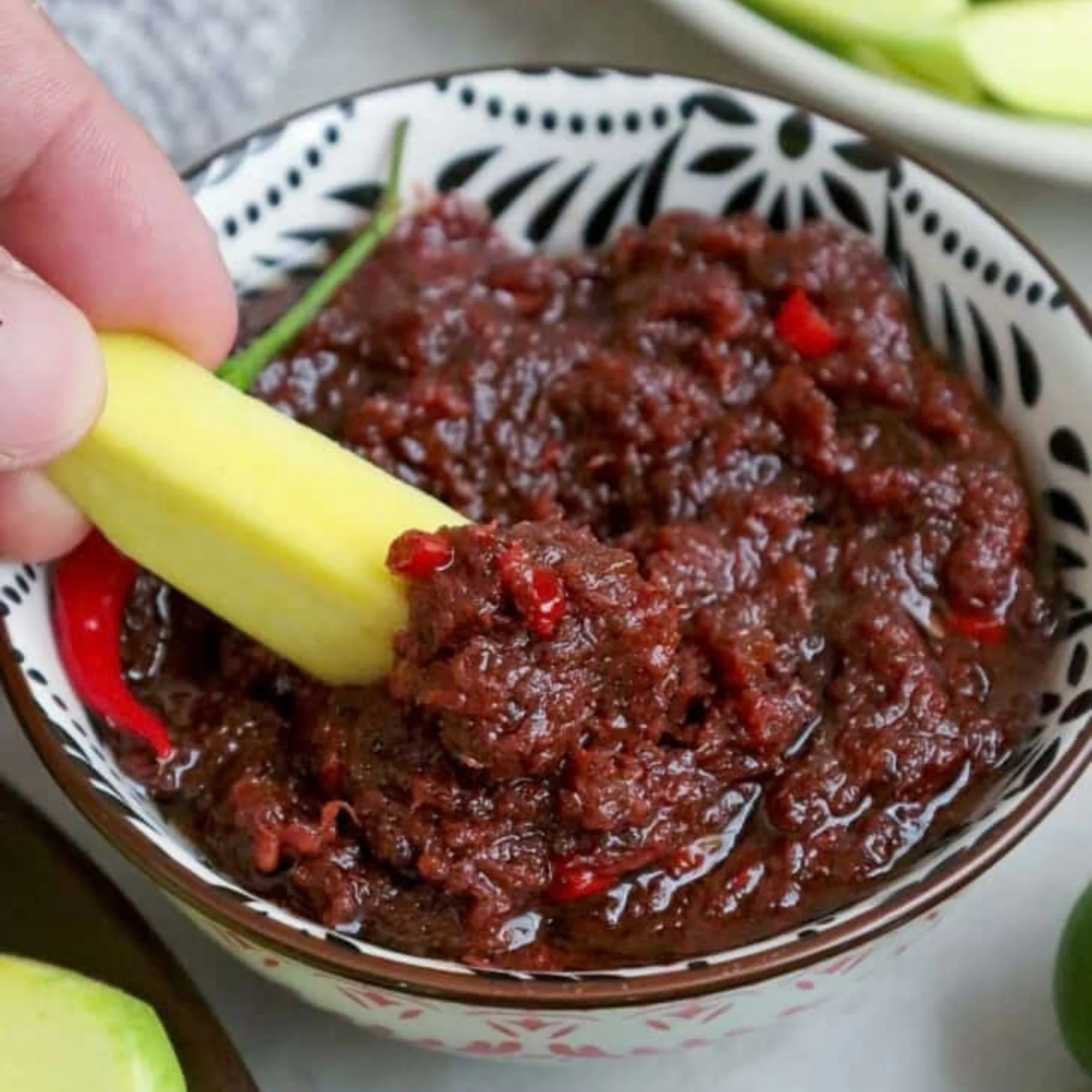
A hand dips a yellow vegetable stick into chunky dark-red salsa with visible pepper pieces, served in a patterned bowl; the scene feels fresh and appetizing.
Hilaw na mangga and bagoong is a combo you wouldn’t want to miss.  [PHOTO COURTESY OF Kawaling Pinoy]

Banana Ketchup

We Filipinos have adopted the West’s ketchup sauce and made it our own by using the ever-abundant bananas in place of the traditional tomatoes. It was food technologist Maria Orosa who invented banana ketchup during World War II, and our pantries haven’t been the same since. Banana ketchup is particularly fantastic in dishes like Pinoy-style fried chicken, where its sweet, subtly spiced profile compliments the saltiness of the meat.
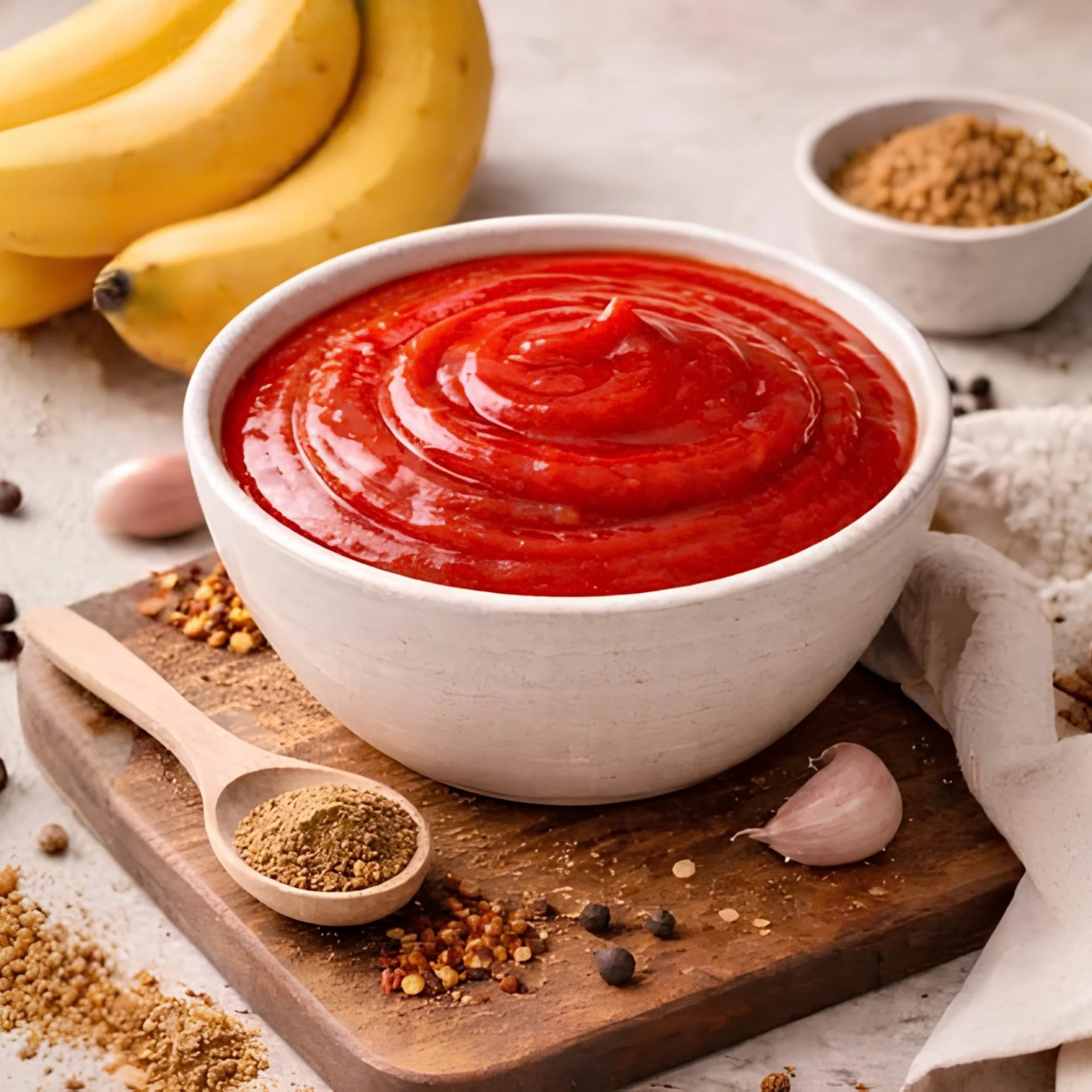
A bowl of glossy red banana ketchup sits on a wooden board with ripe bananas, garlic, spices, and a wooden spoon, creating a warm, appetizing kitchen scene.
Our very own take on the popular condiment, sweetened by bananas. [PHOTO COURTESY OF Shark Ninja Official Website]

Lechon Sarsa

In Luzon, lechon is usually served with lechon sarsa—a greyish-brown condiment of pork liver, vinegar, breadcrumbs, and other aromatics, which come together for a sweet, sour, aromatic whole. Though lechon is its classic partner, many also swear by the surprising harmony between lechon sarsa and fried chicken.
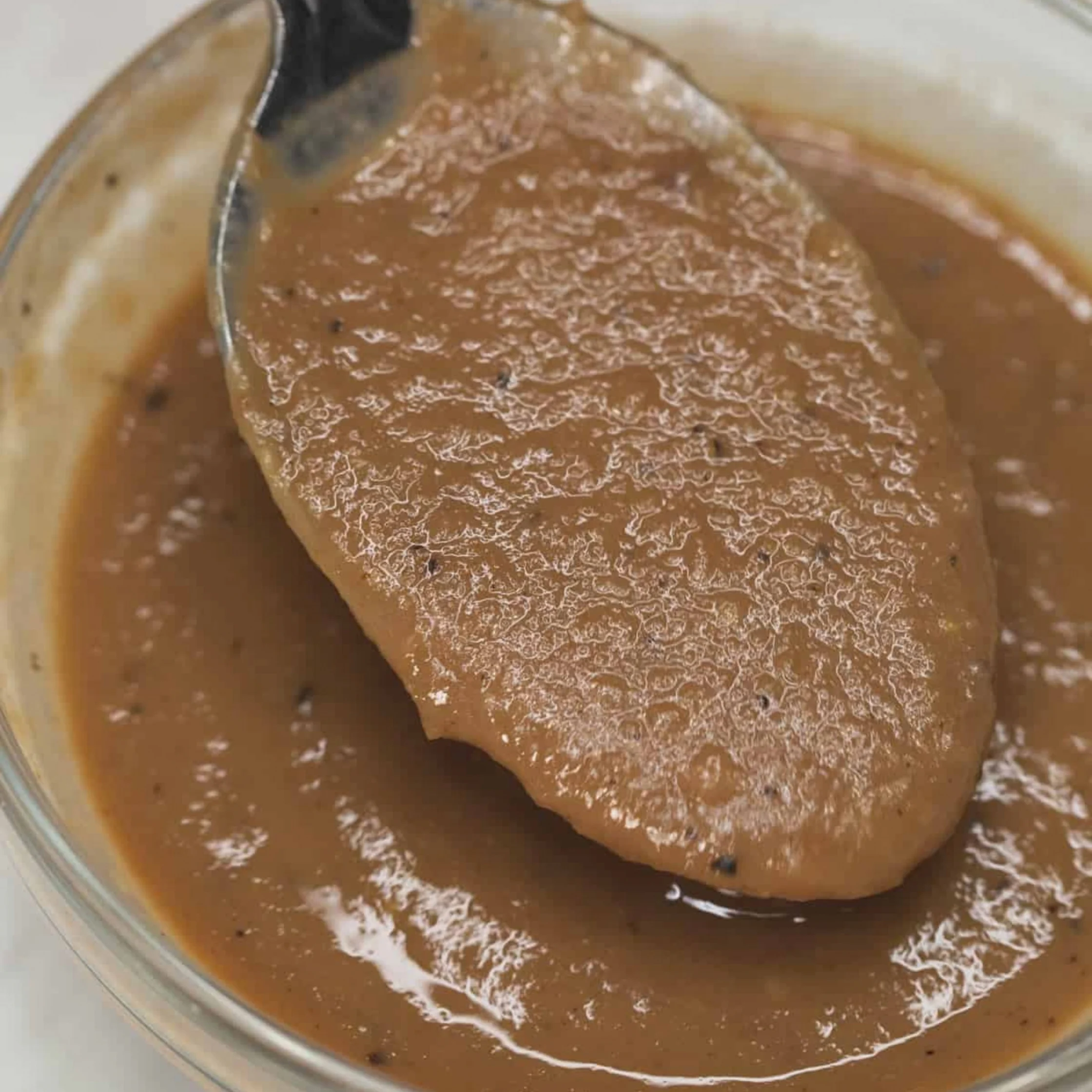

A spoon lifts thick, glossy brown sauce with a slightly grainy texture from a glass bowl; the close-up feels warm and appetizing.
If your pantry doesn’t have Mang Tomas, did you really grow up Filipino? [PHOTO COURTESY OF Recipes by Nora]
author avatar
Patricia Baes
Trish thinks too much about everything—truth, existence, and what to have for dinner. Her early love of experimenting in the kitchen, coupled with a desire to better her relationship with food, led her down the rabbit hole of food media and writing. After graduating with a Psychology degree from UP Diliman, she sharpened her writing skills (and expanded her appetite) at a couple of food websites, where she covered cooking, restaurants, food history, and culture, and ate her way through Manila’s pulsating dining scene as staff writer and eventually as the publication’s food editor. Food, for Trish, is as much a source of pleasure and fuel as it is an outlet for creativity; a medium through which stories can be passed on; and a way to connect with others. And putting her musings into words lets her narrow the gap between her food geekery and background in the social sciences.

Frequently Asked Questions

Sawsawan refers to a wide variety of Philippine dipping sauces and other condiments.

author avatar
Patricia Baes
Trish thinks too much about everything—truth, existence, and what to have for dinner. Her early love of experimenting in the kitchen, coupled with a desire to better her relationship with food, led her down the rabbit hole of food media and writing. After graduating with a Psychology degree from UP Diliman, she sharpened her writing skills (and expanded her appetite) at a couple of food websites, where she covered cooking, restaurants, food history, and culture, and ate her way through Manila’s pulsating dining scene as staff writer and eventually as the publication’s food editor. Food, for Trish, is as much a source of pleasure and fuel as it is an outlet for creativity; a medium through which stories can be passed on; and a way to connect with others. And putting her musings into words lets her narrow the gap between her food geekery and background in the social sciences.

Bagoong is a common Filipino condiment made with fermented seafood. Some of the bagoong variations include bagoong alamang (made with fermented shrimp), bagoong isda, and bagoong sisi (made with oysters).

author avatar
Patricia Baes
Trish thinks too much about everything—truth, existence, and what to have for dinner. Her early love of experimenting in the kitchen, coupled with a desire to better her relationship with food, led her down the rabbit hole of food media and writing. After graduating with a Psychology degree from UP Diliman, she sharpened her writing skills (and expanded her appetite) at a couple of food websites, where she covered cooking, restaurants, food history, and culture, and ate her way through Manila’s pulsating dining scene as staff writer and eventually as the publication’s food editor. Food, for Trish, is as much a source of pleasure and fuel as it is an outlet for creativity; a medium through which stories can be passed on; and a way to connect with others. And putting her musings into words lets her narrow the gap between her food geekery and background in the social sciences.

Lechon sarsa is a greyish-brown condiment of pork liver, vinegar, breadcrumbs, and other aromatics that is often paired with lechon dishes and even fried chicken.

author avatar
Patricia Baes
Trish thinks too much about everything—truth, existence, and what to have for dinner. Her early love of experimenting in the kitchen, coupled with a desire to better her relationship with food, led her down the rabbit hole of food media and writing. After graduating with a Psychology degree from UP Diliman, she sharpened her writing skills (and expanded her appetite) at a couple of food websites, where she covered cooking, restaurants, food history, and culture, and ate her way through Manila’s pulsating dining scene as staff writer and eventually as the publication’s food editor. Food, for Trish, is as much a source of pleasure and fuel as it is an outlet for creativity; a medium through which stories can be passed on; and a way to connect with others. And putting her musings into words lets her narrow the gap between her food geekery and background in the social sciences.

Toyo has a sharper, saltier taste with a thinner, more watery consistency.

author avatar
Patricia Baes
Trish thinks too much about everything—truth, existence, and what to have for dinner. Her early love of experimenting in the kitchen, coupled with a desire to better her relationship with food, led her down the rabbit hole of food media and writing. After graduating with a Psychology degree from UP Diliman, she sharpened her writing skills (and expanded her appetite) at a couple of food websites, where she covered cooking, restaurants, food history, and culture, and ate her way through Manila’s pulsating dining scene as staff writer and eventually as the publication’s food editor. Food, for Trish, is as much a source of pleasure and fuel as it is an outlet for creativity; a medium through which stories can be passed on; and a way to connect with others. And putting her musings into words lets her narrow the gap between her food geekery and background in the social sciences.

There are many variations of suka or vinegar used all around the Philippines. Some of these include sukang puti (white vinegar), cane vinegar, sukang tuba (coconut vinegar), sukang sasa (nipa palm vinegar), sinamak, sukang pinakurat.

author avatar
Patricia Baes
Trish thinks too much about everything—truth, existence, and what to have for dinner. Her early love of experimenting in the kitchen, coupled with a desire to better her relationship with food, led her down the rabbit hole of food media and writing. After graduating with a Psychology degree from UP Diliman, she sharpened her writing skills (and expanded her appetite) at a couple of food websites, where she covered cooking, restaurants, food history, and culture, and ate her way through Manila’s pulsating dining scene as staff writer and eventually as the publication’s food editor. Food, for Trish, is as much a source of pleasure and fuel as it is an outlet for creativity; a medium through which stories can be passed on; and a way to connect with others. And putting her musings into words lets her narrow the gap between her food geekery and background in the social sciences.
patricia baes delish contributing writer

Patricia Baes

Author

Trish thinks too much about everything—truth, existence, and what to have for dinner. Her early love of experimenting in the kitchen, coupled with a desire to better her relationship with food, led her down the rabbit hole of food media and writing. After graduating with a Psychology degree from UP Diliman, she sharpened her writing skills (and expanded her appetite) at a couple of food websites, where she covered cooking, restaurants, food history, and culture, and ate her way through Manila’s pulsating dining scene as staff writer and eventually as the publication’s food editor. Food, for Trish, is as much a source of pleasure and fuel as it is an outlet for creativity; a medium through which stories can be passed on; and a way to connect with others. And putting her musings into words lets her narrow the gap between her food geekery and background in the social sciences.

0 0 votes
Total of Ratings
guest
Rating
Ratings for Article
0 Comments
Oldest
Newest Most Voted

To provide a customized ad experience, we need to know if you are of legal age in your region.

By making a selection, you agree to our Terms & Conditions.