

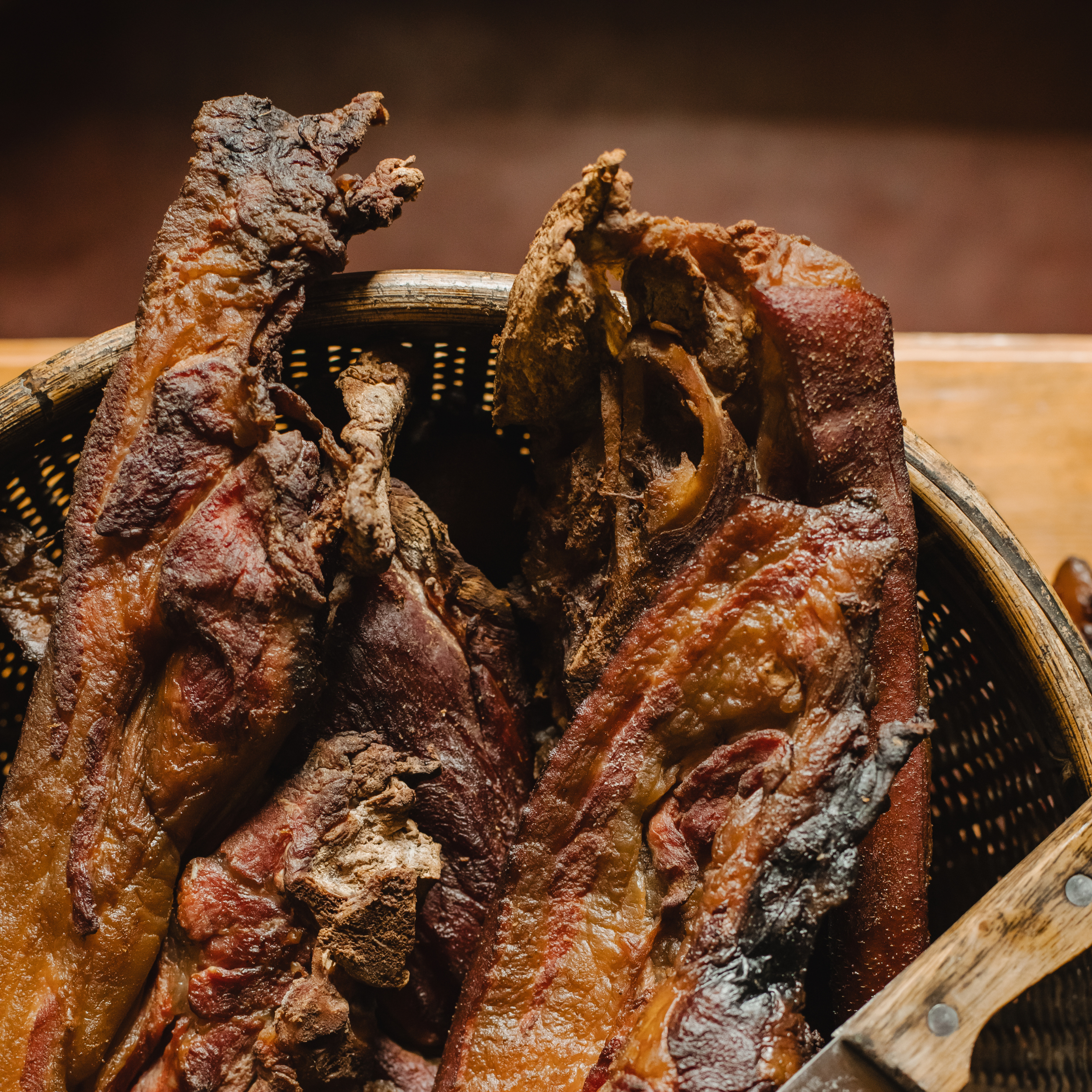
While the Sagada etag seems to be the most popular preserved meat of the Cordilleras, other areas also have noteworthy versions.
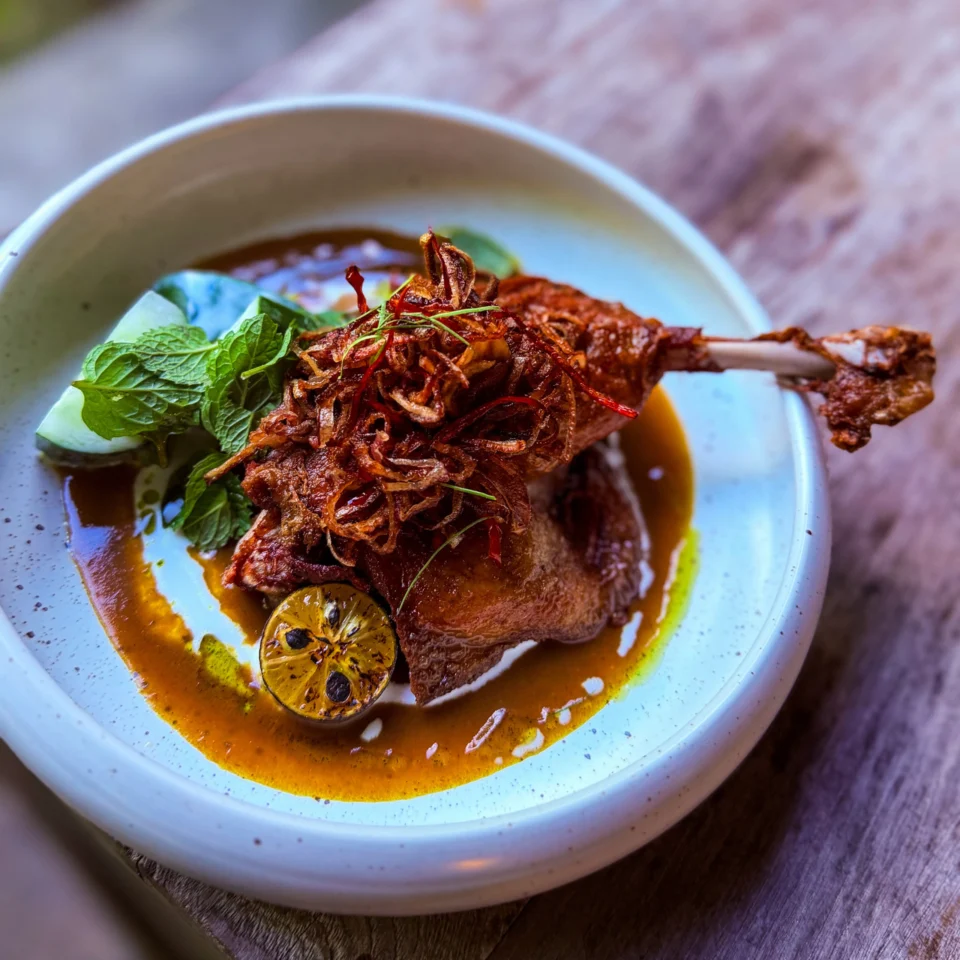
Etag is most similar to the kinuday (Ibaloi) and kiniing (Kankanaey) of Benguet, which is also salted and smoked. Kiniing is often used in Baguio eateries and restaurants to give a unique smoky flavor component to bean soups and vegetable stir-fries. It has also been used in non-Filipino dishes like the kiniing momo dumplings of Himalayan Nepalese Cuisine on Aurora Hill, and the kiniing pasta of Patch Café at Bloomfield Hotel. And, quite surprisingly, “etag” is the term used in Baguio City to refer to non-smoked salt pork. It can really get quite confusing when terms for preserved meat from the Cordilleras change with location.
From Sun-Dried to Fermented: The Cordilleras’ Heritage Meats
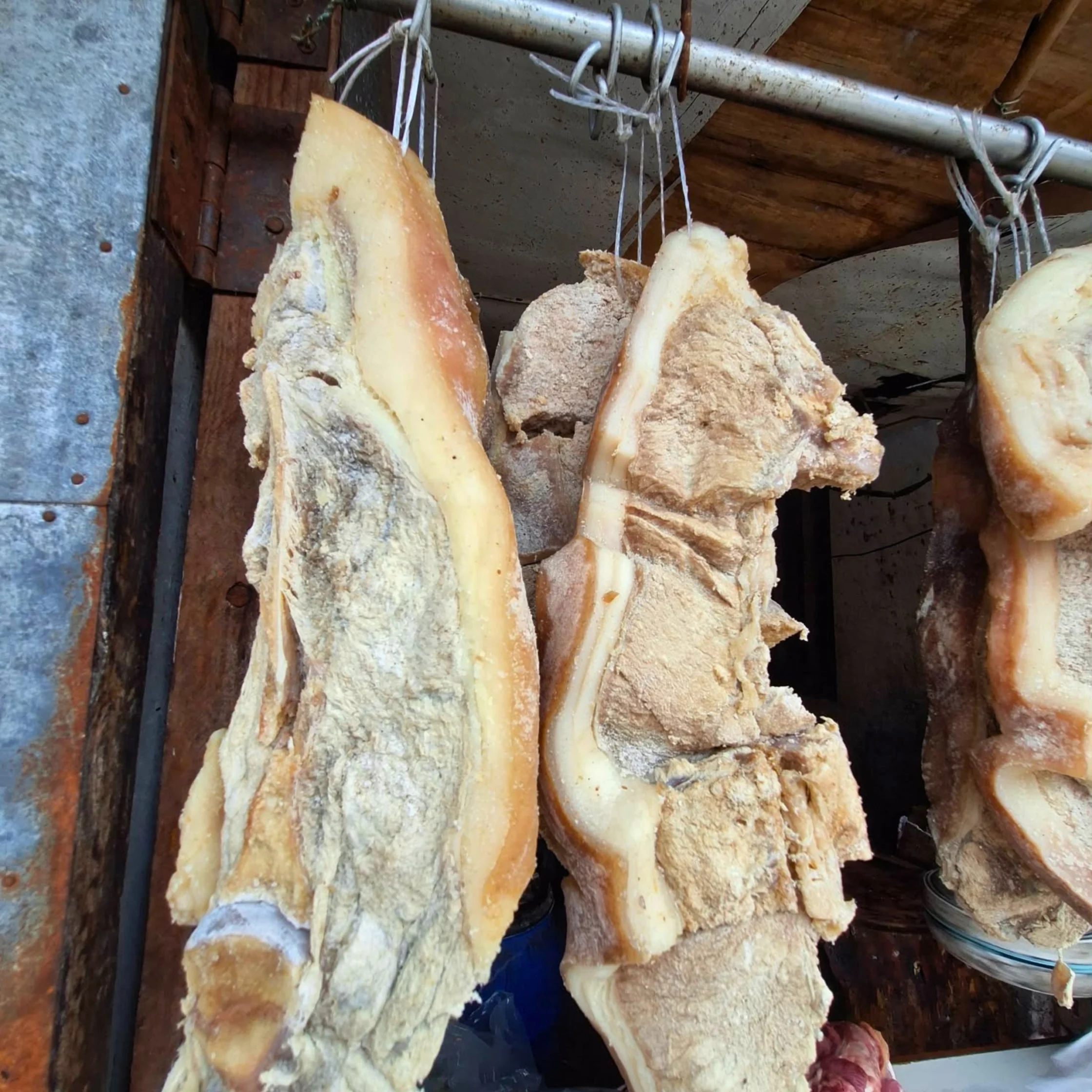
Another non-smoked and sun-dried version can be found in Sagada’s neighboring town of Bontoc. It is called inasinan or inasin, and is sold in streetside stalls, where they hang basking in the sun. Not having the dark roasted flavor from smoking, they have the odor of aged tallow. Also boiled with chicken, beans, or vegetables, inasinan imparts a curious rancid fattiness that can be off-putting for the uninitiated. As such, one is cautioned against putting too much in the pot. Nevertheless, my Ifontok friends eat it with such relish, and say that it perfectly accentuates the singed skin of the native chicken that is simmered for over an hour.
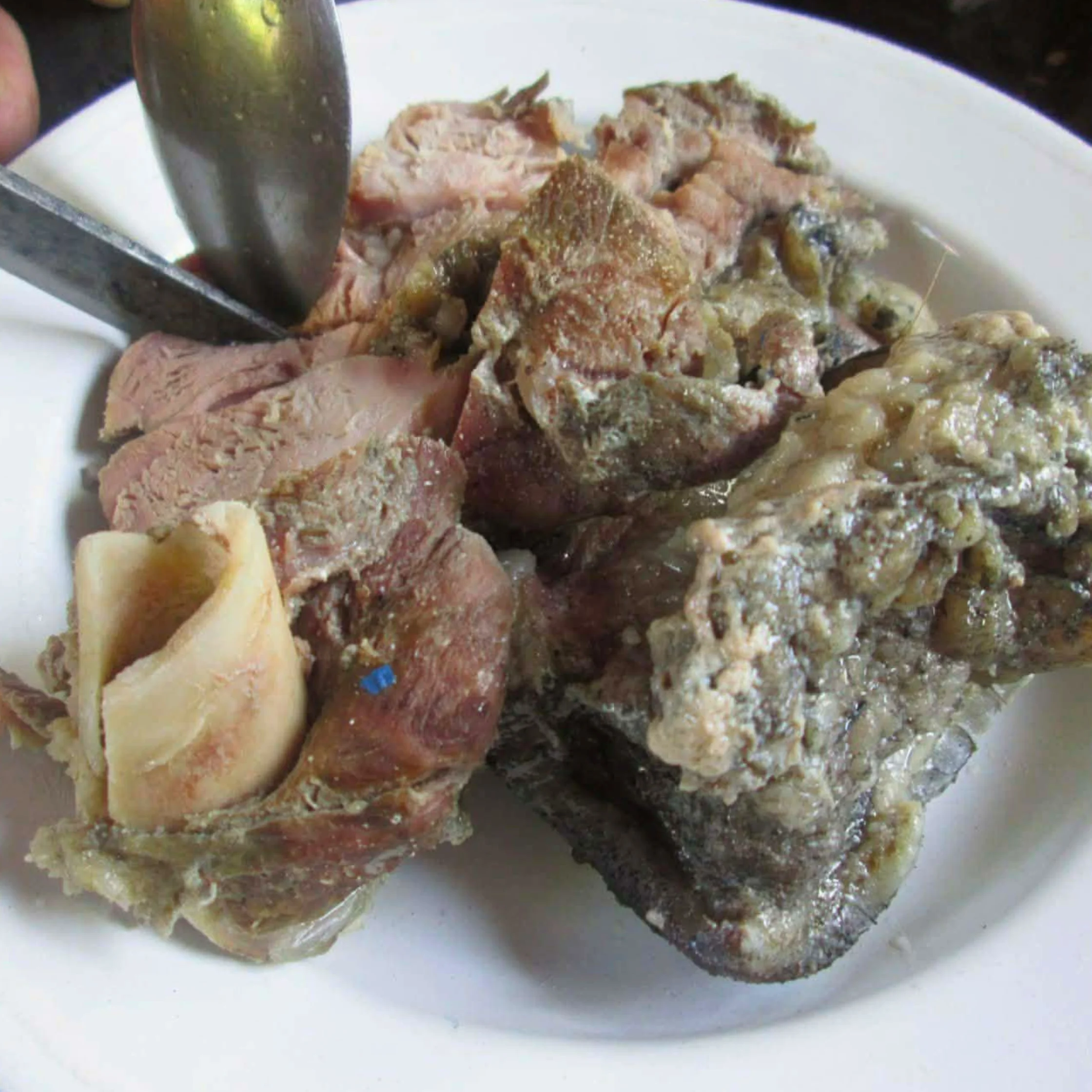
Crossing over the border at Mount Polis, one ventures onto the province of Ifugao, where another unique salt pork preparation can be found. In the small rice terrace village of Batad, I came across pinayt. Unlike the smoked etag or the sun-dried inasinan, this is a wet-fermented salt pork. Traditionally made from the gwanah (shared meat) of community rituals, the preferably fatty meat is salted and sealed in a bamboo culm. It is kept in the rafters, near the hearth, where the warmth hastens the fermentation. After a week or two, the seal is broken, and the odor of mild putrefaction is released. I call it the bagoong of the mountains. It is cooked outdoors with beans, orche (pigeon peas) or balatong (mung beans), and the neighbors will know exactly what will be served for lunch. Once cooked, the pinayt becomes pink and tender, almost falling apart. I would liken it to cooked ham, but with a putrescent punch.
Moving further on into the Ifugao heartland, one finds the pinunnog of Kiangan. Not to be confused with the Ibaloi pinuneg blood sausage found in Benguet, the pinunnog is different in that it does not contain blood. It mainly contains seasoned pork minced meat that is hot-smoked for several hours. I had it for breakfast at the Habiatan Homestay in the town center. It reminded me of a brusque longganisaLongganisaA Filipino sausage with a wide range of regional styles, from the sweet, garlicky hamonado of Pampanga to the tangy, garlicky longganisa of Vigan and Lucban. Usually pan-fried until caramelized,Go to Longganisa Glossary, with the salty and peppery flavor delivered in chewy, smoky chunks. Its fattiness was tempered with a locally made durian vinegar dip.
From Hearth to Haute Cuisine: The Evolution of Sagada’s Etag
Contemporary etag in Sagada has come a long way from its ancient ritual origins. Its current forms reflect the evolving culture and context of Sagada as a globalized tourist town that is immensely proud of its Indigenous roots. What used to only be made in homes and hung over wood fires is now skillfully cured and smoked in fabricated chambers. What was once derided as dirty and maggot-infested now graces many dinner plates in city tables and restaurants. Nevertheless, the classic etag dish, Pinikpikan, can still easily be ordered at certain local restaurants like Pinikpikan Haus, or can be prepared by some tour guides, with the right amount of prodding. However, I think it is Log Cabin Sagada that has fully maximized this smoking tradition and made a great array of new cured meats.
This restaurant, which opened in 1991, first became famous for its Saturday buffet dinner prepared by Aklay, the eccentric French chef who transforms local ingredients into divine gourmet meals. Eventually, second-generation owners Armiro and Alyssa Gulian started producing etag alongside other smoked meats. Pork loins were cured and smoked with alderwood to make the Sagada Forest Ham, and bellies were turned into smoked bacon. They use these charcuterie in their menu, with items like etag pizza drizzled with local hot honey from Besao, or etag pasta with wild chanterelles. Their limited production is snapped up by tourists, or sent by direct bus to Manila.
While people in other places bemoan what they see as the commodification of their traditions, Sagada and its people are hardly saddled by such baggage in the case of etag. By bringing it into the realm of gastronomy while never forgetting its traditional role in Indigenous foodways, etag can be shared with the world and perpetuated.

Frequently Asked Questions
Etag is a traditional preserved pork preparation associated with communities in the Cordilleras, particularly Sagada. It is generally salted and smoked, although terminology and preparation can vary by location.
Kiniing is a salted and smoked pork preparation associated with the Kankanaey of Benguet. It is also used in contemporary Baguio cooking and has appeared in dishes beyond traditional Cordilleran cuisine.
Kinuday is a salted and smoked meat associated with the Ibaloi of Benguet. It is closely related to other Cordilleran preserved pork traditions such as kiniing and etag.
Inasinan, or inasin, is a non-smoked, sun-dried salted pork preparation associated with Bontoc. It can be cooked with chicken, beans, and vegetables.
Pinayt is a wet-fermented salt pork preparation found in Batad, Ifugao. Traditionally, it can be made from shared ritual meat that is salted and fermented in a bamboo container.
Pinunnog is a seasoned minced-pork preparation from Kiangan, Ifugao. It is hot-smoked for several hours and is different from Benguet’s pinuneg blood sausage.
No. Although their names sound similar, they are different preparations. Pinunnog from Kiangan is a smoked minced-pork preparation, while pinuneg is a blood sausage associated with Benguet’s Ibaloi tradition.
Both can involve salted and smoked pork, but their names and specific preparations are associated with different Cordilleran communities. Terminology can also vary depending on the location.
No. Cordilleran meat-preservation traditions include several techniques, including salting, smoking, sun-drying, and fermentation.
Meat preservation developed as a practical way to extend the life of food, but these techniques also became embedded in Indigenous foodways, community rituals, regional identity, and local cuisine.