

In the poblasyon of Santa Maria, the streets are lined with stores selling one product: chicharon.
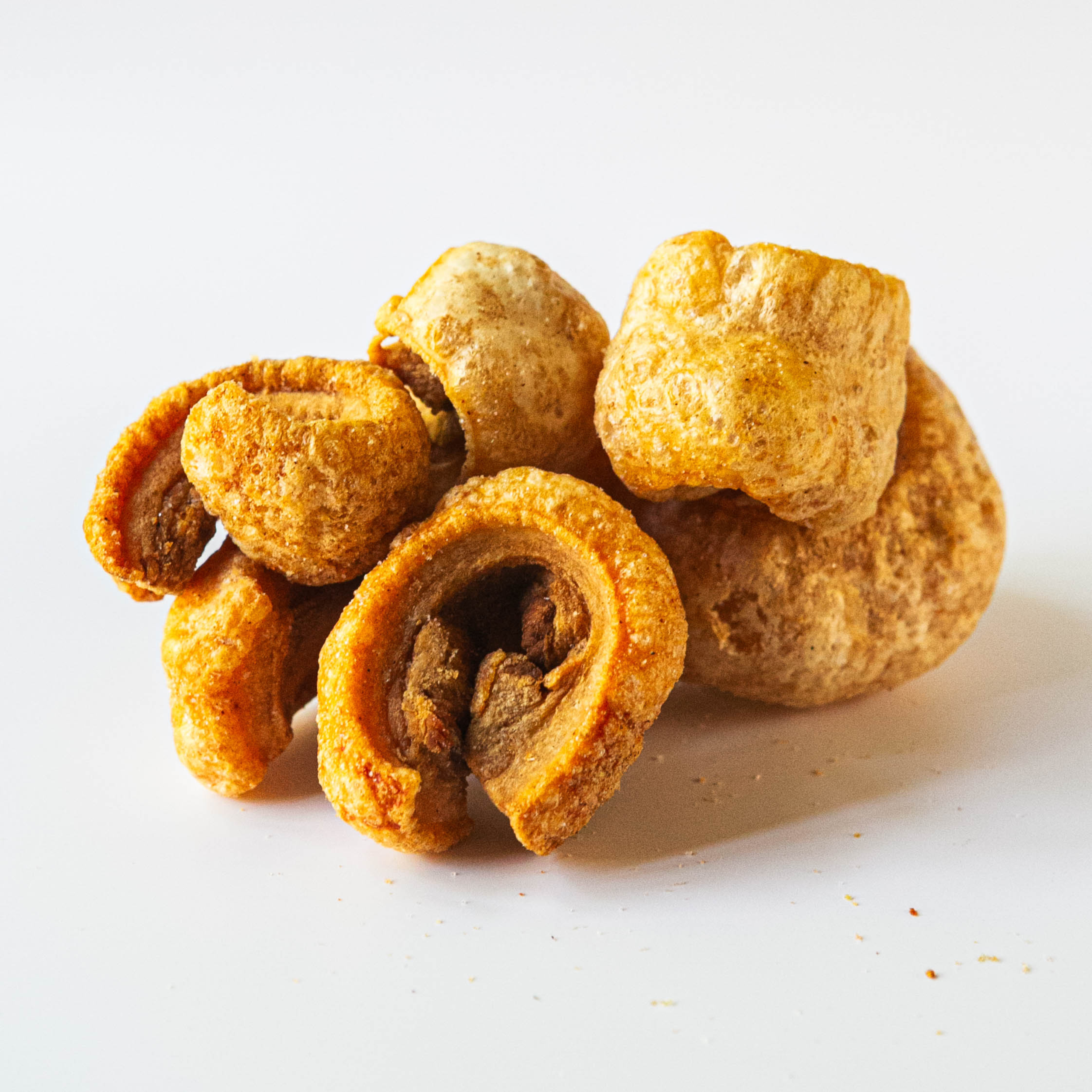
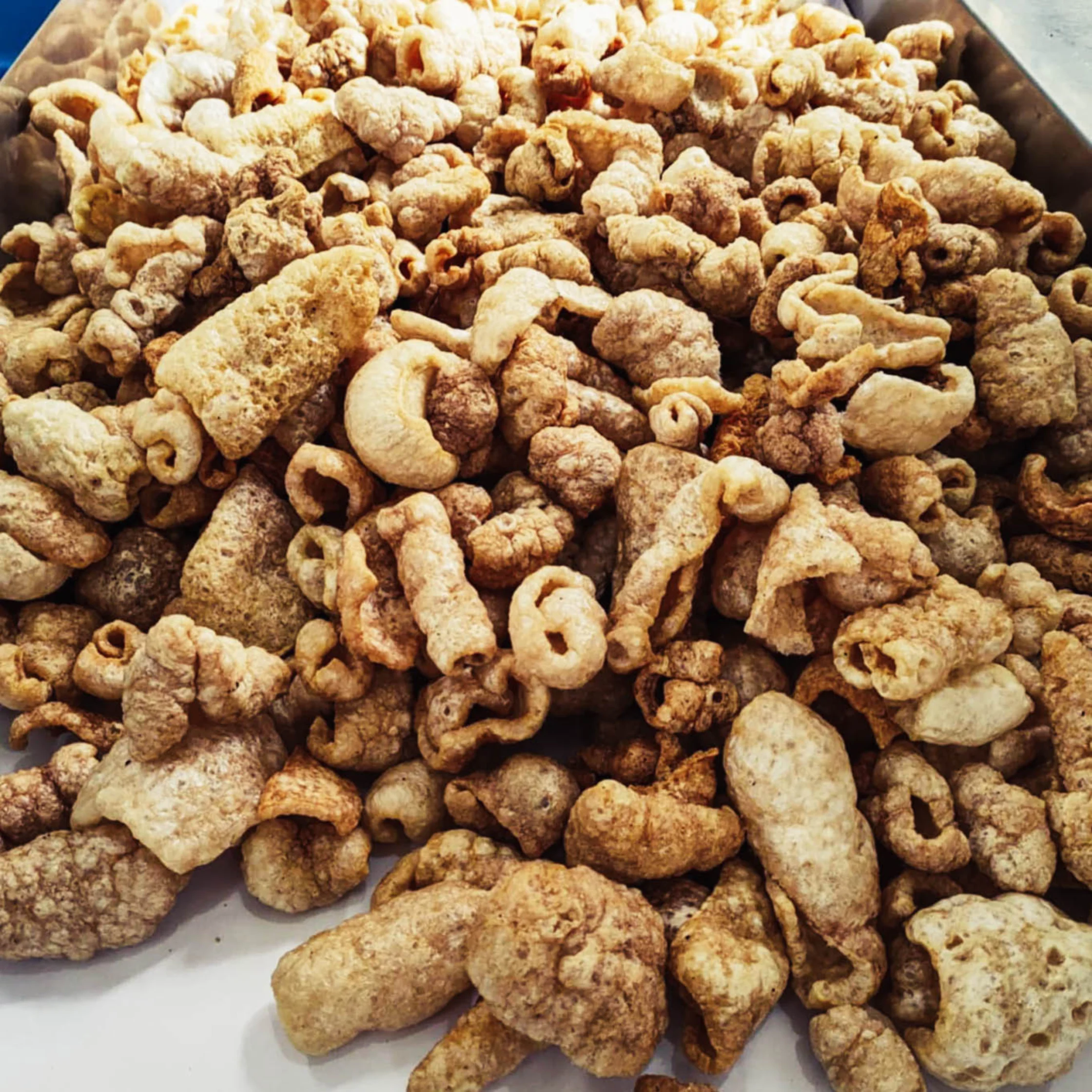
But one travels there not for the ubiquitous small, airy sort. The town’s famed chicharon is larger, more compact, and has layers of meat, fat, and skin fried into a golden-brown piece. The fat, crisp when bitten, drips with liquid fat when chewed, and the crackly meat and skin meld with it. “Your blood pressure,” the person next to you reminds you as he grabs another piece.
The Origin of Santa Maria’s Backfat Chicharon
The part used in this kind of chicharon is from the back of the pig, hence its name: “backfat chicharon.” The man widely believed to have started this kind of chicharon is Primitivo Halili, Jr., known in the town as Ka Pido. “Back then, we used to call it chicharong kawali,” says Roberto Halili, his eldest son, in Filipino. His father started selling the ordinary kind of chicharon in his garage in the 1970s, then tried to make one from liempo (pork belly).
“My father may have been inspired by the famous liempo of Bocaue, whose maker he always came across in the market of Bigaa, now Balagtas, when he bought pork skins in the early morning,” he says. Pido switched to the cheaper backfat and became known for it.
How Obet’s Chicharon Preserves a Family Tradition
Roberto, now 65, took over his father’s business after his father’s death in 1986. (He registered the business using his nickname, Obet.) He still makes chicharon the way he was taught by his father: the chopped meat pieces are fried in a large kawa (vat) for 20 minutes to remove their liquid, then left to rest overnight, and fried again to crisp. According to Roberto, other makers let the pork dry in the sun after the first fry or stock it at room temperature for a week or two to ensure crunchiness.
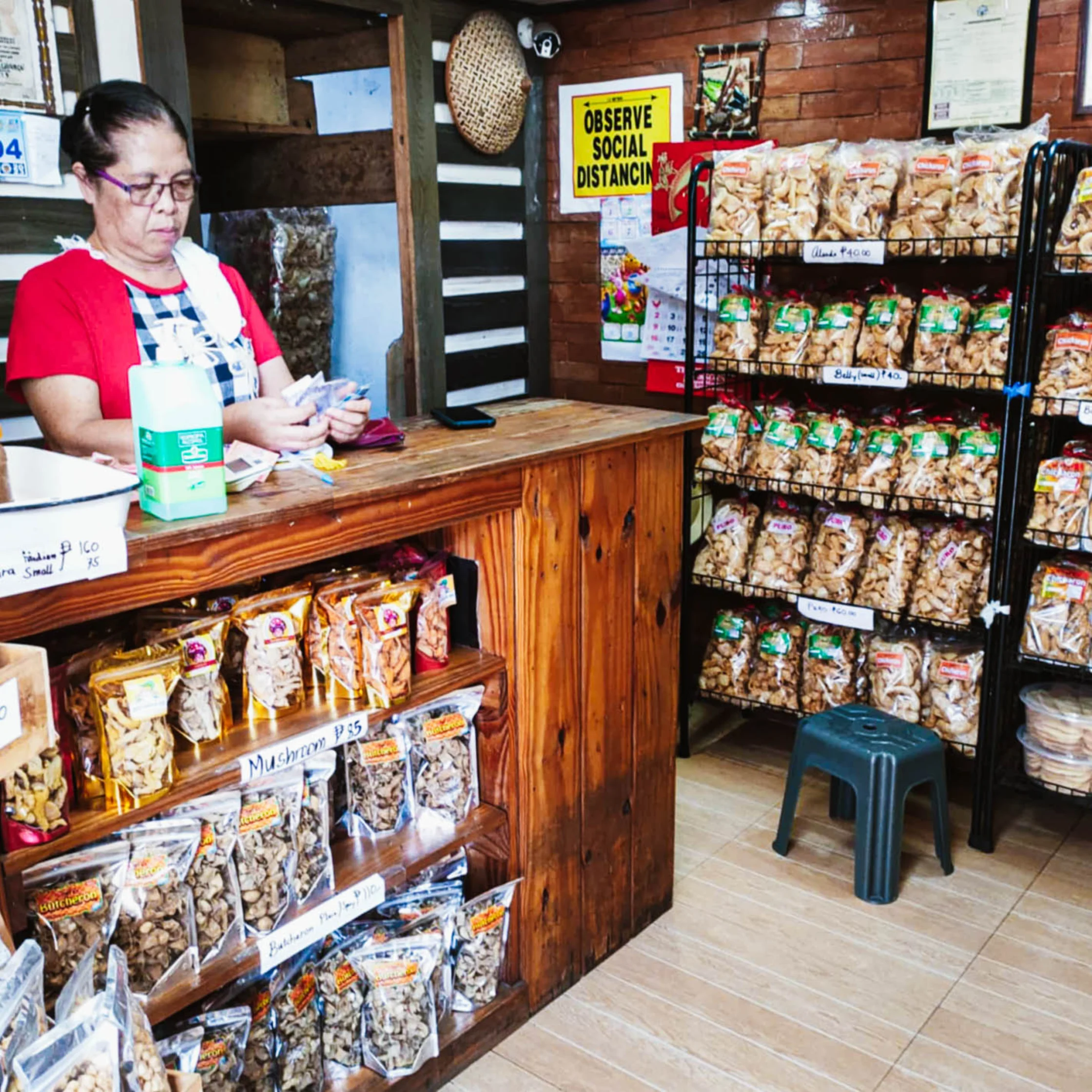
Roberto said that many businesses sprang up in the early 2000s, when makers, faced by a lack of local supply, started using imported pork skins and backfat. As of 2025, there are 16 registered chicharon manufacturers in the town, according to the town’s tourism office. From starting with two kawa, Roberto now has eight in the factory in his backyard. From buying 50 kilos of meat weekly for his father, he now buys a ton of meat monthly for the factory. A festival is held every February in honor of the product.
Obet’s Chicharon, 11 Ricardo Nicolas Street, Santa Maria, Bulacan. 0915-462-7102.
Frequently Asked Questions
Backfat chicharon is a Bulacan specialty made from pork backfat with layers of meat and skin, creating a richer and meatier version of traditional chicharon.
Santa Maria is known for pioneering backfat chicharon, a local delicacy that has become one of the town’s signature products.
The style is widely credited to Primitivo “Ka Pido” Halili Jr., who began producing it in the 1970s.
One of the town’s best-known producers is Obet’s Chicharon, located on Ricardo Nicolas Street in Santa Maria, Bulacan.
The double-frying process removes moisture and creates the signature crispy texture that Santa Maria’s backfat chicharon is known for.