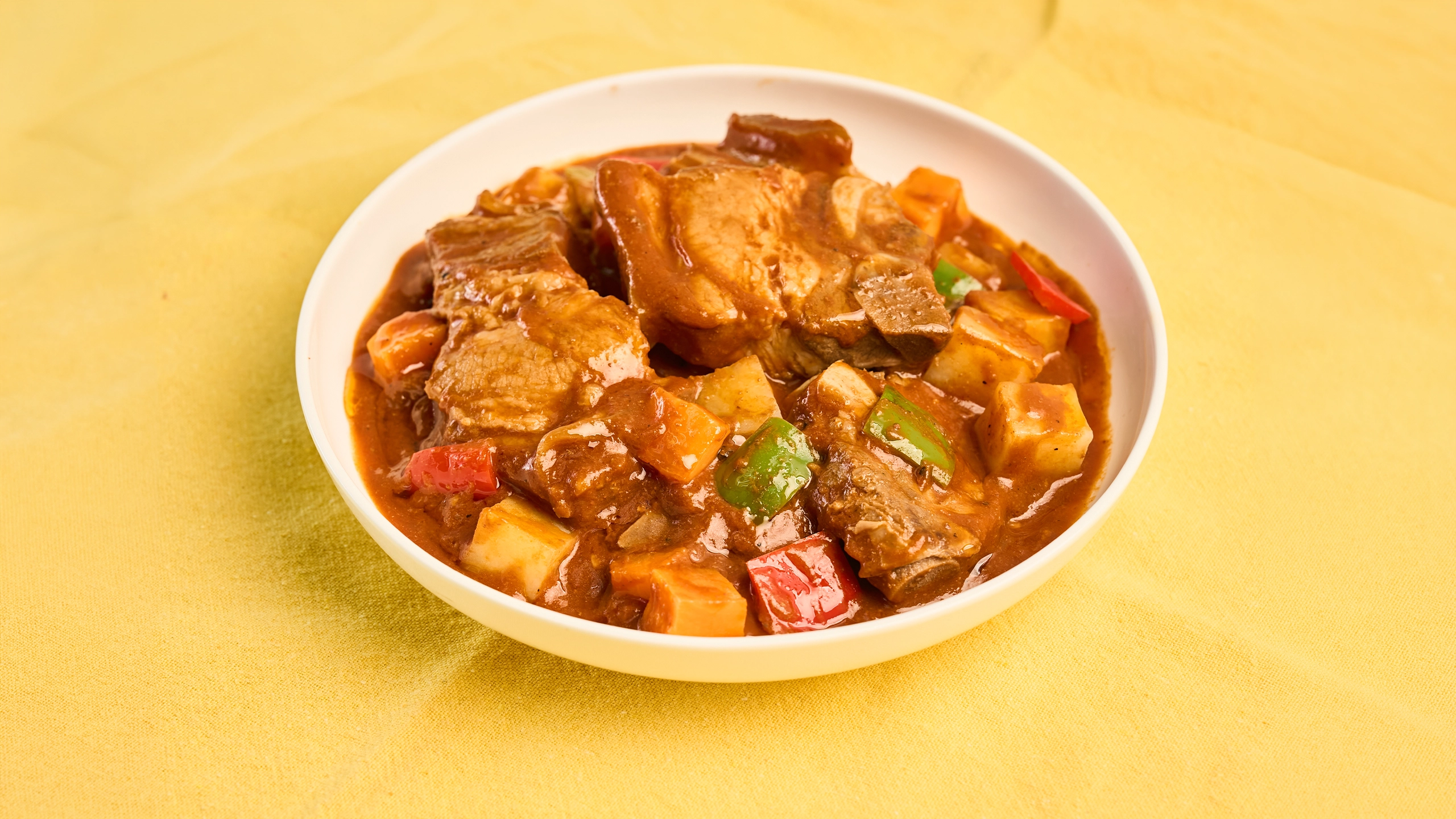
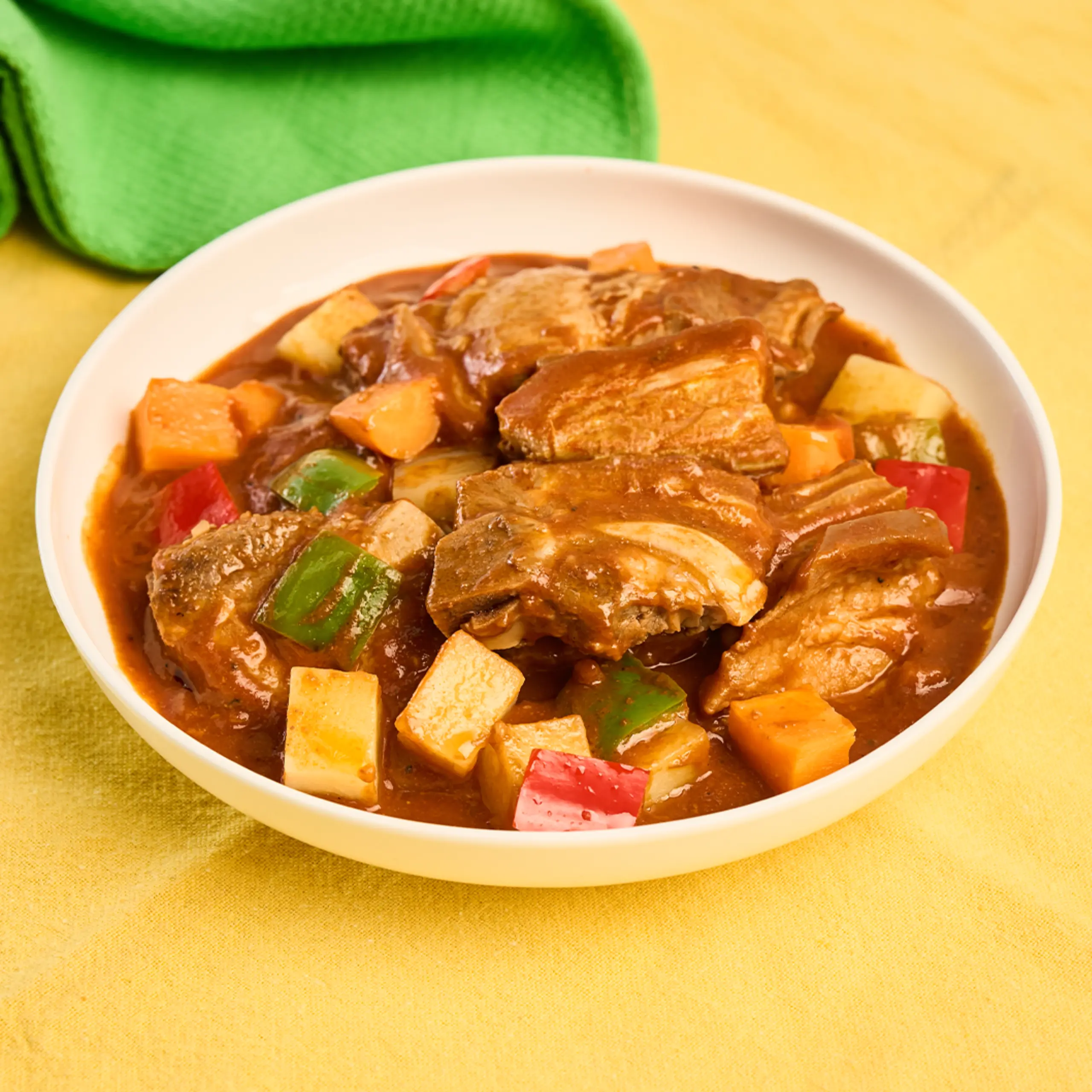
There are some Filipino dishes that feel like they belong at the center of the table, surrounded by steaming rice, good conversation, and people going back for just one more serving. Pork Kaldereta Sa Gata is one of those dishes. Rich, savory, slightly tangy, creamy, and deeply comforting, it brings together several flavors that Filipinos have loved for generations.
This Bulacan-style version takes the familiar kaldereta and gives it a distinctly creamy character by adding coconut milk, or gata. The combination of tomato, liver spread, soy sauce, fish sauce, cheese, and coconut milk creates a sauce that is bold but rounded, while the pork becomes tender and flavorful as it simmers.
Kaldereta is often associated with beef, but pork is a wonderful alternative. Pork liempo has enough fat to keep the meat moist and adds richness to the sauce. When combined with potatoes, carrots, bell peppers, and a generous amount of sauce, it becomes the kind of home-cooked meal that is especially satisfying with freshly cooked white rice.
A Little History Behind Kaldereta
Kaldereta, also spelled caldereta, is one of the Philippines’ well-loved meat stews. Its name is generally connected to the Spanish word caldera, meaning a cauldron or large cooking pot. The dish reflects the long history of Spanish influence on Filipino cuisine.
Over time, however, Filipinos made kaldereta their own. Instead of simply reproducing a Spanish-style stew, different regions and families developed their own versions. Some use beef, while others use goat, pork, or other meats. The sauce may be tomato-based, spicy, creamy, or enriched with liver spread. Potatoes, carrots, bell peppers, olives, cheese, and other ingredients may also find their way into the pot.
That flexibility is part of what makes Filipino cooking special. A dish can have historical influences from somewhere else while still becoming unmistakably Filipino through local ingredients, family traditions, and the way it is served.
In this Bulacan-inspired Pork Kaldereta Sa Gata, coconut milk adds another layer of Filipino character. The gata softens the acidity of the tomato paste and brings a creamy richness that works beautifully with pork.
Why This Version Is Special
What makes this recipe particularly delicious is the way several strong flavors balance one another.
The calamansi juice adds brightness and helps give the pork a subtle tang. Fish sauce and soy sauce contribute saltiness and umami. Tomato paste provides acidity and concentrated tomato flavor, while liver spread gives the sauce a deeper, fuller taste.
Then comes the coconut milk. Its creamy, mildly sweet flavor helps tie everything together.
Finally, the shredded processed cheese melts into the sauce, making it thicker, creamier, and more savory. It may sound unusual to someone unfamiliar with Filipino kaldereta, but cheese is a popular addition to many modern Filipino versions of the dish.
The finished stew should taste rich without being overwhelmingly salty. The sauce should cling to the pork and vegetables, while still being loose enough to spoon generously over rice.
Recipe Tips for Better Kaldereta
Brown the pork properly. Don’t rush this part. Browning creates a deeper savory flavor that you cannot get simply by boiling the meat.
Don’t skip cooking the tomato paste. A few minutes of sautéing helps develop a richer tomato flavor.
Control the water. Start with the recommended amount, but remember that different pots and cooking temperatures cause different amounts of evaporation. Add water gradually if necessary rather than adding too much at once.
Be careful with salt. Because several ingredients are already salty, season toward the end.
Use low heat after adding the gata. Gentle simmering helps keep the coconut milk smooth.
Give the dish time to rest. Kaldereta often tastes even better after sitting for a few minutes because the sauce becomes thicker and the flavors settle together.
Don’t overcook the bell peppers. Adding them toward the end keeps them colorful and gives the dish a fresher flavor.
Ingredient Substitutions
You can adapt this recipe depending on what you have in the kitchen.
Pork liempo
Pork shoulder or pork belly can be used instead. Pork shoulder is a good choice if you want a meatier stew with somewhat less fat.
If using a leaner cut, such as pork loin, be careful not to overcook it because it can become dry.
Calamansi juice
Fresh calamansi is ideal, but lemon juice can work as a substitute. Lime juice is another option.
The flavor will not be exactly the same, but the purpose is similar: adding acidity and brightness.
Coconut milk
For a lighter sauce, you can use a thinner coconut milk. For an especially rich kaldereta, you can use full-fat coconut milk.
Avoid coconut cream unless you specifically want a much richer and thicker sauce.
Liver spread
Liver spread is a classic convenience ingredient in many Filipino kaldereta recipes. If you cannot find it, pâté or finely blended cooked liver can provide a similar depth.
You can also omit it, but the finished sauce will lose some of the distinctive richness associated with kaldereta.
Processed cheese
Cheddar can be used if processed cheese is unavailable. Mild cheddar will blend more easily into the sauce.
For a more traditional home-style Filipino flavor, however, processed cheese works particularly well because it melts smoothly and adds creaminess.
Fish sauce
If you don’t have fish sauce, you can increase the soy sauce slightly. Keep in mind that fish sauce contributes a different kind of umami, so the flavor will change somewhat.
For a vegetarian adaptation, a suitable vegetarian fish-sauce alternative can be used, although the pork and liver spread would also need to be replaced.
Vegetables
Potatoes, carrots, and bell peppers are common and practical choices, but you can also add green peas, mushrooms, or olives depending on your preference.
If adding olives, reduce the amount of other salty seasonings because olives can contribute considerable saltiness.
Understanding the Main Ingredients
Pork liempo
Pork liempo, or pork belly, contains alternating layers of meat and fat. The fat helps keep the meat juicy during long, slow cooking and contributes much of the richness of this particular kaldereta.
Because it is naturally fatty, however, you may want to skim some excess oil from the surface of the stew if the finished dish seems too rich.
Coconut milk
Coconut milk is made from grated coconut flesh and water. It provides fat, creaminess, and a subtle natural sweetness.
In this recipe, it also helps balance the acidity of the tomato paste and the saltiness of the savory ingredients.
Tomato paste
Tomato paste is concentrated tomato. It provides both color and flavor while helping establish the savory, slightly tangy foundation of the sauce.
Liver spread
Liver spread adds richness, umami, and a distinctive depth to kaldereta. Even a relatively small amount can noticeably change the character of the sauce.
Garlic and onion
These two ingredients form the aromatic foundation of countless Filipino dishes. Garlic contributes a strong savory aroma, while onion provides sweetness and depth as it cooks.
Bell peppers
Red and green bell peppers provide sweetness, freshness, color, and a mild peppery aroma. The red pepper tends to be sweeter, while green pepper has a more pronounced vegetal flavor.
Potatoes and carrots
Besides adding nutrition and texture, potatoes and carrots help make the stew feel more substantial. Their natural starches and sugars also complement the rich sauce.
Cheese
Cheese is not an ingredient in every traditional kaldereta, but it has become a familiar addition to many Filipino versions. Here, it contributes saltiness, creaminess, and body.
Health Benefits of the Ingredients
Although kaldereta is best thought of as a hearty comfort food rather than a low-calorie meal, several of its ingredients provide useful nutrients.
Pork provides protein, as well as nutrients such as vitamin B12, zinc, selenium, and other B vitamins. The amount of fat varies depending on the cut, with liempo being particularly rich.
Carrots are an excellent source of beta-carotene, which the body can convert into vitamin A. They also contribute fiber.
Bell peppers provide vitamin C and various antioxidant compounds. Red peppers generally contain more vitamin C and carotenoids than green peppers because they are more mature.
Onions and garlic contain plant compounds that contribute to their characteristic flavors and aromas. Garlic, in particular, contains sulfur-containing compounds that have been widely studied for their potential health effects.
Tomatoes contain lycopene, a carotenoid antioxidant. Tomato products can provide a concentrated source of lycopene.
Coconut milk provides fat and small amounts of minerals, but it is also calorie-dense. Using it in moderation can help maintain the creamy character of the dish without making the entire meal excessively rich.
Potatoes provide carbohydrates, potassium, and some vitamin C, while carrots and peppers add fiber and micronutrients.
Because the recipe also contains fish sauce, soy sauce, liver spread, and cheese, it can be relatively high in sodium. If you’re watching your sodium intake, consider using less fish sauce and soy sauce and relying more on garlic, onion, pepper, calamansi, and other aromatics for flavor.
How to Store Pork Kaldereta Properly
If you have leftovers, let the kaldereta cool slightly and transfer it to a clean, airtight container.
Do not leave cooked pork at room temperature for long periods. Refrigerate leftovers promptly.
For best quality, keep the refrigerator at 4°C (40°F) or below.
When reheating, heat the kaldereta thoroughly until it is steaming hot throughout. If the sauce has thickened considerably in the refrigerator, add a small splash of water before reheating.
A stovetop is excellent for reheating because you can control the heat and stir the sauce as it warms.
Can You Freeze Kaldereta?
Yes. Pork kaldereta can be frozen, especially when you have made a large batch.
Place cooled kaldereta into freezer-safe containers, leaving a little room for expansion. Divide it into meal-sized portions if possible so you only need to thaw what you intend to eat.
For the best quality, use frozen kaldereta within about 2 to 3 months.
Keep in mind that potatoes can sometimes change texture after freezing and thawing. They may become softer or slightly grainy. If you know you intend to freeze the dish, you may choose to add freshly cooked potatoes when reheating instead.
Shelf Life
Properly refrigerated cooked pork kaldereta is generally best consumed within 3 to 4 days.
Frozen kaldereta can remain safe for longer when continuously kept frozen, but its flavor and texture are best when consumed within roughly 2 to 3 months.
When in doubt, don’t taste food simply to determine whether it is safe. If it has been left at room temperature for an extended period, stored improperly, or shows obvious signs of spoilage, it is safer to discard it.
What to Serve with Pork Kaldereta Sa Gata
The obvious partner is steamed white rice.
The rice is more than just a side dish. Its mild flavor and soft texture provide the perfect contrast to the intensely savory, creamy sauce.
You can also serve kaldereta with:
- Garlic rice
- Brown rice
- Steamed vegetables
- Atchara or pickled papaya
- A simple cucumber and tomato salad
- Fresh slices of calamansi on the side
A little acidity is particularly welcome alongside such a rich dish, which is why pickled vegetables or calamansi can make the meal feel more balanced.
Final Thoughts
Pork Kaldereta Sa Gata is the kind of dish that reminds us why Filipino cooking is so enjoyable: it isn’t afraid of bold flavors, and it knows how to bring different ingredients together in one comforting pot.
The pork brings richness, the tomato adds brightness and depth, the liver spread gives the sauce its characteristic savory character, and the coconut milk smooths everything into a creamy, satisfying stew. The melted cheese takes it one step further, giving the sauce a familiar Filipino-style richness that pairs beautifully with rice.
And perhaps the best thing about kaldereta is that it doesn’t have to be perfect to be delicious. You can make it for a family gathering, a weekend lunch, a birthday celebration, or simply because you are craving something warm and satisfying. You can adjust the sauce, change the vegetables, make it spicier, or make it richer depending on your family’s taste.
Let the pork simmer patiently, taste the sauce as you go, and don’t be afraid to make small adjustments. Filipino cooking is often about tasting, sharing, and making a dish your own.
In the end, a good pot of Pork Kaldereta Sa Gata is more than just a recipe. It is a hearty meal meant to be enjoyed slowly, preferably with a plate of hot rice, a spoonful of extra sauce, and people you are happy to feed.