



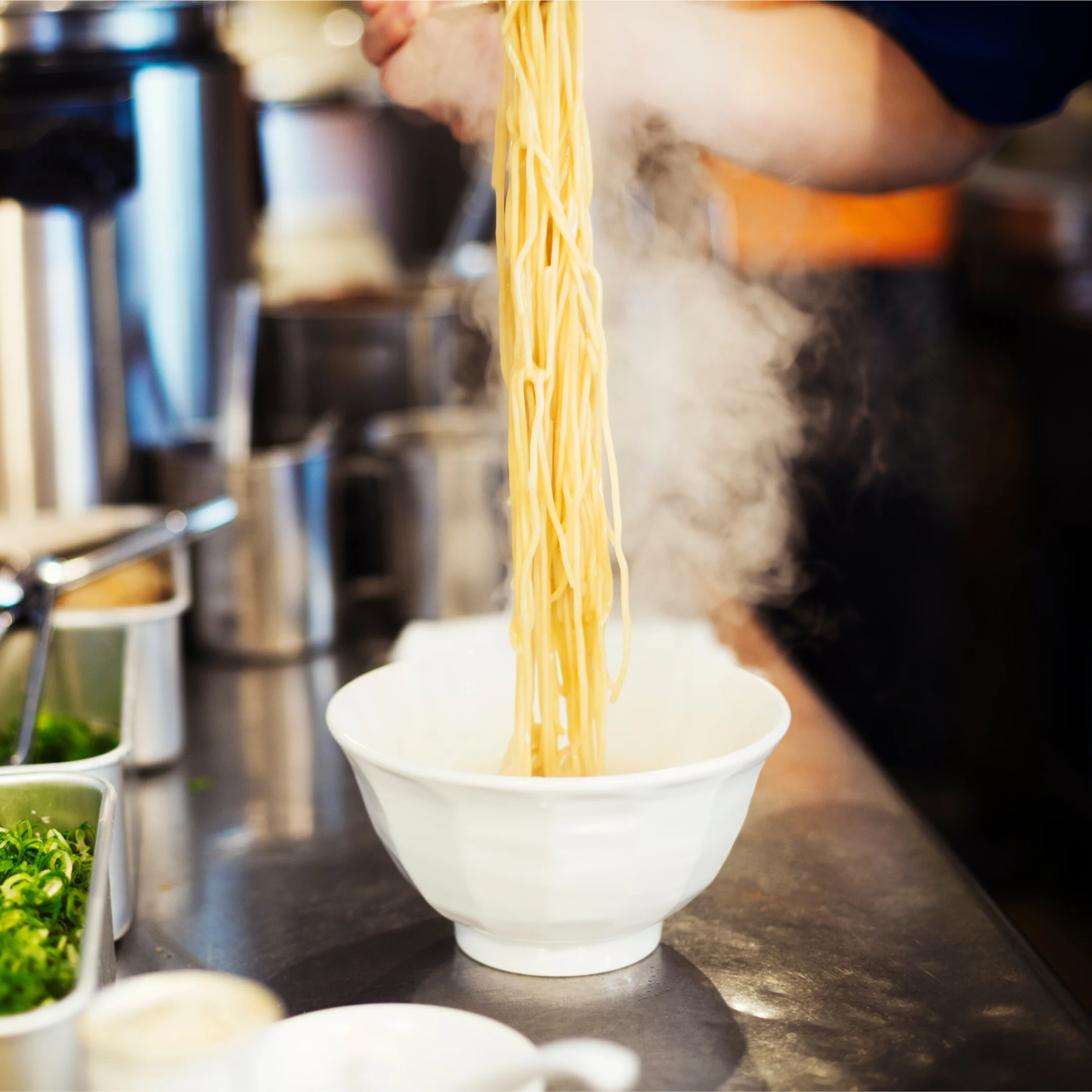
If you ever find yourself stepping into a ramen-ya in Japan, chances are you’d be met with the sight of diners crouched over their tables, making audible slurps and gasps as they go down their bowls with gusto.
In some more niche circles, like among enthusiasts of wine, coffee, and even tea, slurping is done as part of tasting—to “unlock” other flavor profiles so to speak, and fully appreciate the drink being focused on.

Maybe they’re onto something because the science confirms that slurping makes an impact (a positive one, for many people) in the experience of eating or drinking.
Why Slurping Is Considered a Compliment in Japan
Many parts of the West might consider it disrespectful to slurp one’s food (or make any sound while eating, for the matter). But it’s the opposite case in certain parts of Asia, where eating loudly is accepted—if not even considered an expression of praise.
In particular, the Japanese consider slurping to be an unspoken compliment—a sign that the food is so darn delicious, it’s got to be inhaled as soon as humanly possible, lest the noodles get soggy in the warm soup.

The Science Behind Why Slurping Makes Food Taste Better
Whether it’s done by cultural norm or as a method of tasting, slurping your food or drink can affect the experience of consumption in physiological as well as psychological ways.
Participants in a 2017 study in the International Journal of Gastronomy and Food Science found soup to have a more intense flavor when it’s slurped rather than sipped. (The same study found slurping to be associated with higher levels of self-consciousness—though that might be down to the fact that it was conducted with all-British participants.)
There’s merit to the idea, especially when you consider that much of sensation of flavor actually comes from the nose. Slurping helps aerate the liquid in the mouth, breaking it into tiny droplets that get distributed more evenly across the palate. The oxygen enhances the release of volatile compounds, which reach the olfactory receptors thanks to a process called retronasal olfaction. Cue richer, more flavorful sensation.
With hot liquids in particular, the slurping action also helps lower the liquid’s temperature, allowing tasters to taste the food better and better notice smaller flavor details than if the liquid were boiling hot—while keeping possible tongue burns at bay.
The “hwhoop” sound produced by the activity could also affect the perception of—and enjoyment derived from—the food or drink item at hand. Studies specifically examining the slurp sound are limited, but there are related ones to consider. For one, a link has been found between sound and judgments of food texture, particularly for sensations like crispness (as studied in apples and potato chips). It wouldn’t be a stretch to think that these findings could extend to the case of slurping.
Granted, there are folks for whom sounds like slurping triggers a fight-or-flight response—a condition called misophonia. But there, too, is data suggesting that better enjoyment can be had with certain food sounds—like that of chewing, in a 2017 study conducted with elderly Japanese participants (who had actual chewing difficulties).
Experience tells us slurping down certain foods and drinks feels especially sensual, intimate, carnal even—and what are the best dining experiences if not precisely that.

Frequently Asked Questions
Yes, science confirms that slurping makes an impact (a positive one, for many people) in the experience of eating or drinking by helping aerate the liquid in the mouth which intensifies the flavor.
Slurping actually helps lower a liquid’s temperature, making it easy for diners to taste the food better while keeping tongue burns to a minimum.
In Japanese culture, slurping is considered an unspoken compliment, signaling that the food is so delicious that you have to inhale it as soon as humanly possible!
Wine, coffee, and tea tasters slurp to aerate the liquid and spread it evenly across the palate. This pushes volatile aroma compounds toward the olfactory receptors through retronasal olfaction, helping tasters detect more flavor notes in the drink. (38 words)
Possibly. Research links eating sounds, including crispness in foods like apples and potato chips, to how people judge texture and enjoyment. Slurp-specific sound studies are limited, but related findings suggest sound itself may shape how a dish is perceived. (39 words)