Advertisement

Does Cooking with Palayok Really Make a Difference?

The palayok doesn’t have to be a cooking pot exclusive to the pre-colonial Filipino cook. Learning how to use it today gives you a glimpse of how to make some traditional Filipino dishes the “original way".

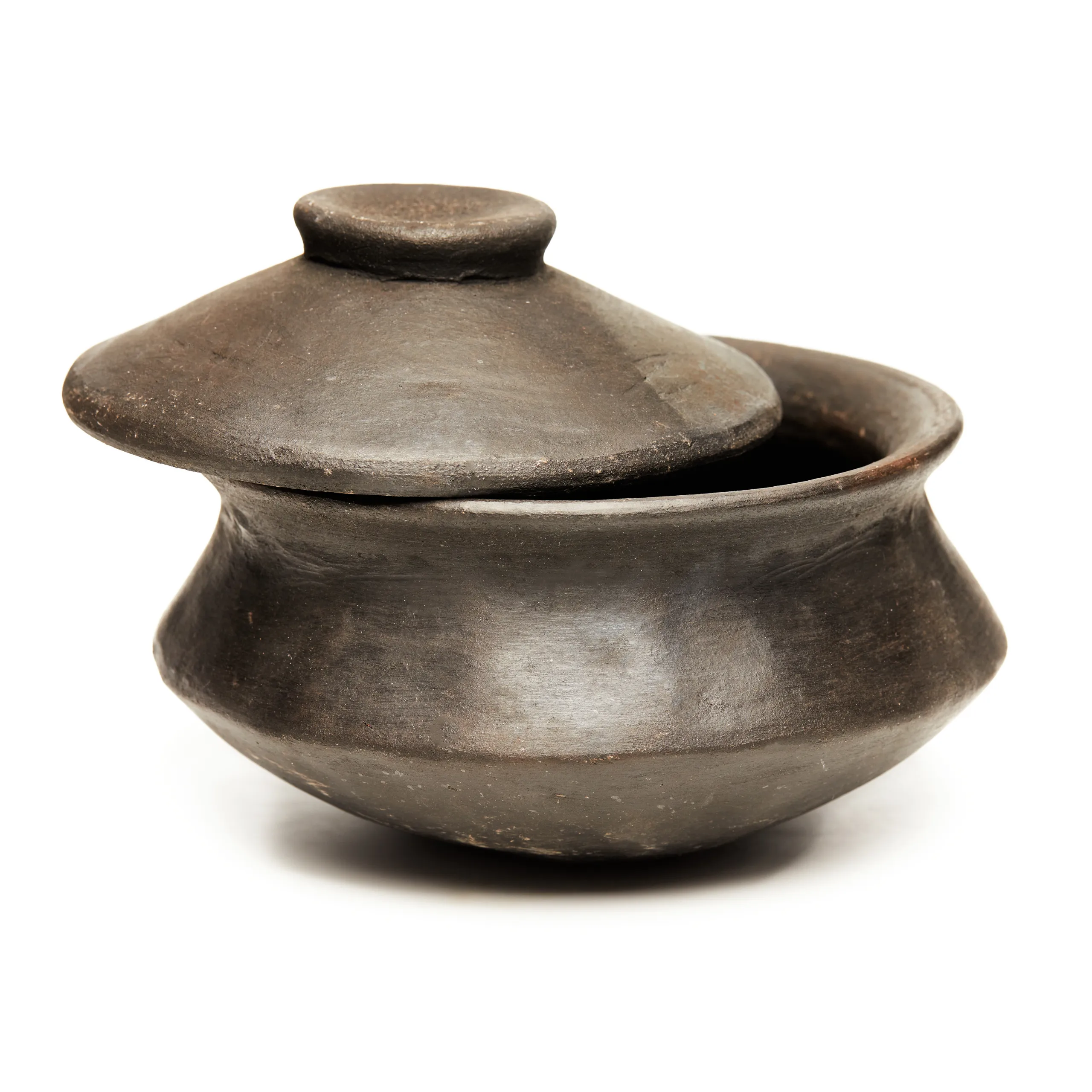
Close-up of a dark ceramic pot lid with a small knob, resting on a matching jar.
The palayok is more than just a museum display or a rustic serving dish.

Whether you know it as a banga, a tayab, a kolun, or the pot that always sits perfectly in a kalan de uling, the palayok, a traditional Filipino unglazed earthen clay pot, is an iconic piece of everyday life in the pre-colonial Philippines. 

But long ago, before it was a ceramic display in a museum and a footnote in our history textbooks, it was the common kitchen tool. And believe it or not, it still can be today.

You have the option to buy your own unglazed palayok in your nearby palengke or even through online shopping, just as long as you know when to use it, how to use it, and why.

What is a Palayok?

I asked my older brother if he knew what a palayok was, and he shared how he played hampas palayok many times as a kid. Though I personally have more experience playing pabitin, I have seen the palayok used a lot at rustic food presentations in Filipino restaurants, its cultural significance today is just as rich—if not richer than its culinary utility. 

Before the rice cooker, the slow cooker, and the sous vide machine, pre-colonial Filipinos used the palayok. It was this round clay pot that comes in different colors (can be black, red, or grey) and sizes, Historically, it was used either as storage or for cooking. Some even used it to ferment their own fish sauce, vinegar, and wine. 
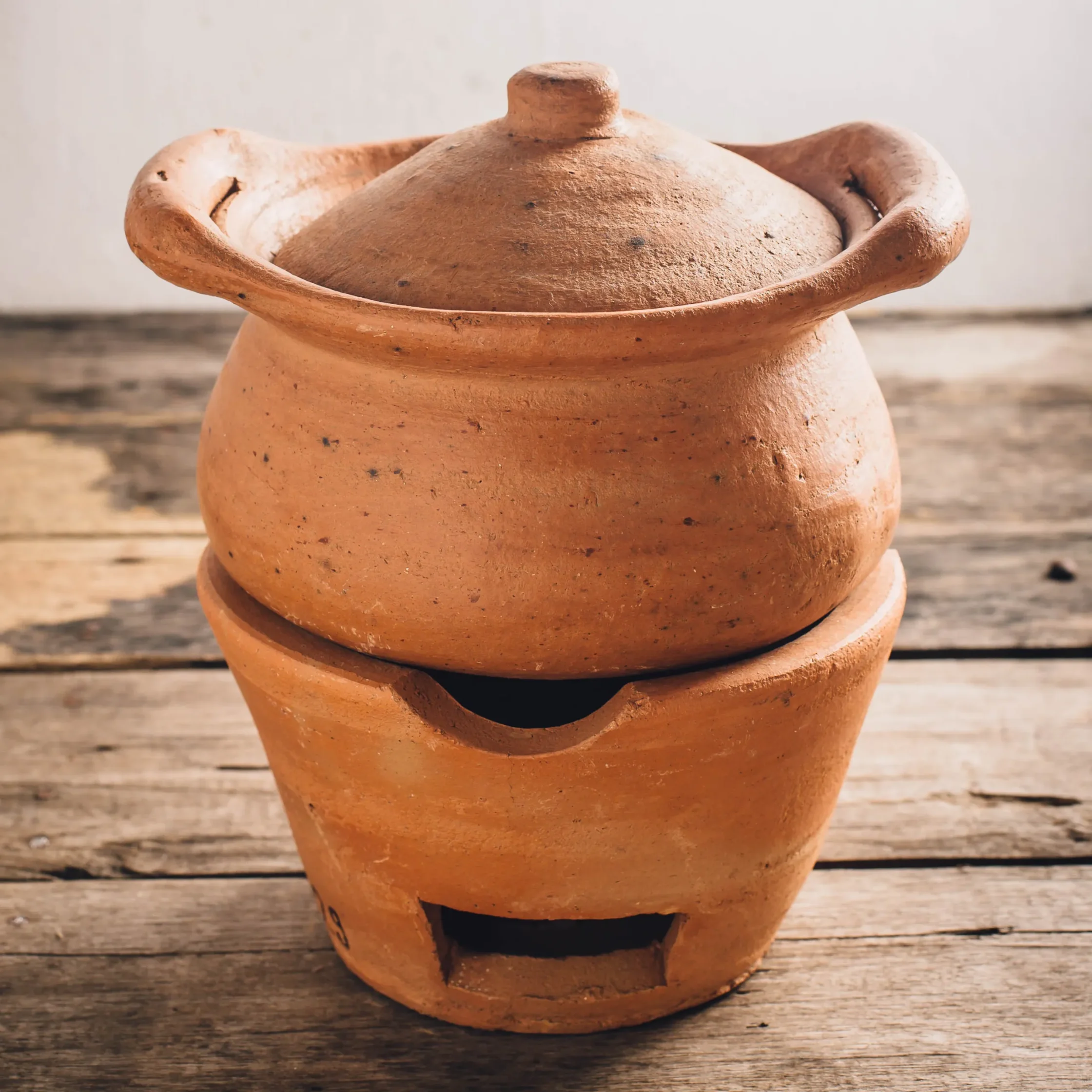
Close-up of a terracotta pot with a rounded lid on a wooden surface.
The palayok can be used not just in cooking, but for storage, fermentation and even wine production.

When purchasing a palayok, make sure it comes with the lid with a circular handle and the pot itself. If they don’t perfectly fit into each other, that’s completely normal! It’s a clear sign that it was handmade. Something worth stressing is that not all clay pots you see are made to be used in the kitchen.

An indication if they are merely decorative is if they smell like soil or wax. Your palayok may look very pretty and aesthetic, but don’t forget, it should ultimately serve a purpose: cooking.

How do you take care of a Palayok?

Before you even try to cook with your palayok, one crucial step is to prepare and strengthen it through a process often called seasoning or tempering.

After rinsing off any initial dust and soaking the pot in room-temperature water for at least an hour, coat the interior and the underside of the lid with a neutral oil or animal fat. Next, fill it three-quarters full with room-temperature water. Place it over low heat for 10 minutes to gradually warm the clay, then raise the heat to medium-low to let it simmer for another 10 minutes before turning off the stove and allowing it to cool completely.

This process helps remove residual clay dust and uses heat to draw the fat into the surface pores, creating a light protective barrier. Pre-soaking also saturates the unglazed terracotta, preventing it from absorbing too much liquid from your dish or cracking from sudden thermal shock when used over high, direct heat.

Overall, this initial prep tempers the clay, seals its pores, and makes your palayok more durable for years of cooking.
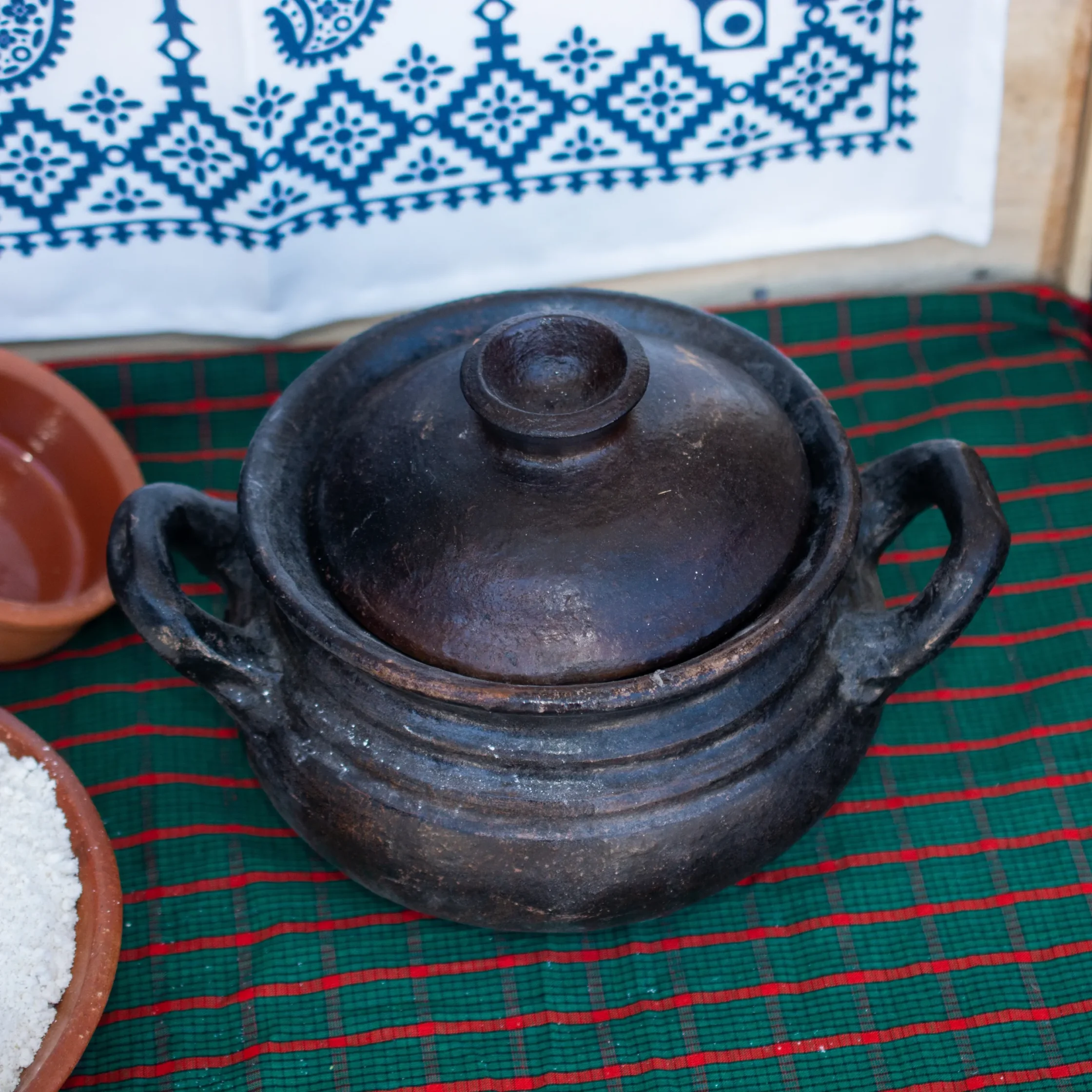
Properly seasoning and cleaning your palayok can ensure its longevity in your ktichen!

In terms of cleaning your palayok, the most important step you should never skip is to wait until the pot is room temperature first. Any sudden temperature changes can cause permanent damage like cracks.

Avoid using any sponge that has absorbed any kind of soap. The safest way to clean your pot is to remove any hardened bits of food by soaking it in room temperature water and scrubbing the inside with coarse salt.

What difference does clay make in cooking?

There exists discourse about how cooking with a palayok “makes no difference.” This, I think, mostly comes from not knowing what the actual advantages of a palayok are and which dishes would benefit from you using it.

It is true that you cannot cook every Filipino dish in a palayok, just like how not all Chinese food is cooked in a wok.

Because clay is naturally porous, the palayok is a very breathable pot, able to exhale all the steam coming out of it. Unlike some glazed pots, the unglazed palayok is also very good at retaining not just the moisture but the flavor of whatever you are cooking in it.

Another pro to cooking in a porous pot is how it’s capable of evenly distributing heat, gradually and uniformly spreading throughout its entire surface. This is because clay is an insulator, and because of its porous structure, it absorbs and traps heat energy instead of passing it right through. While metal pots are conductors, it reacts to heat source quickly, transferring energy straight from the burner to the food, with the big possibility of causing specific spots of the pot garnering more heat than others, or otherwise known as “hot spots.”
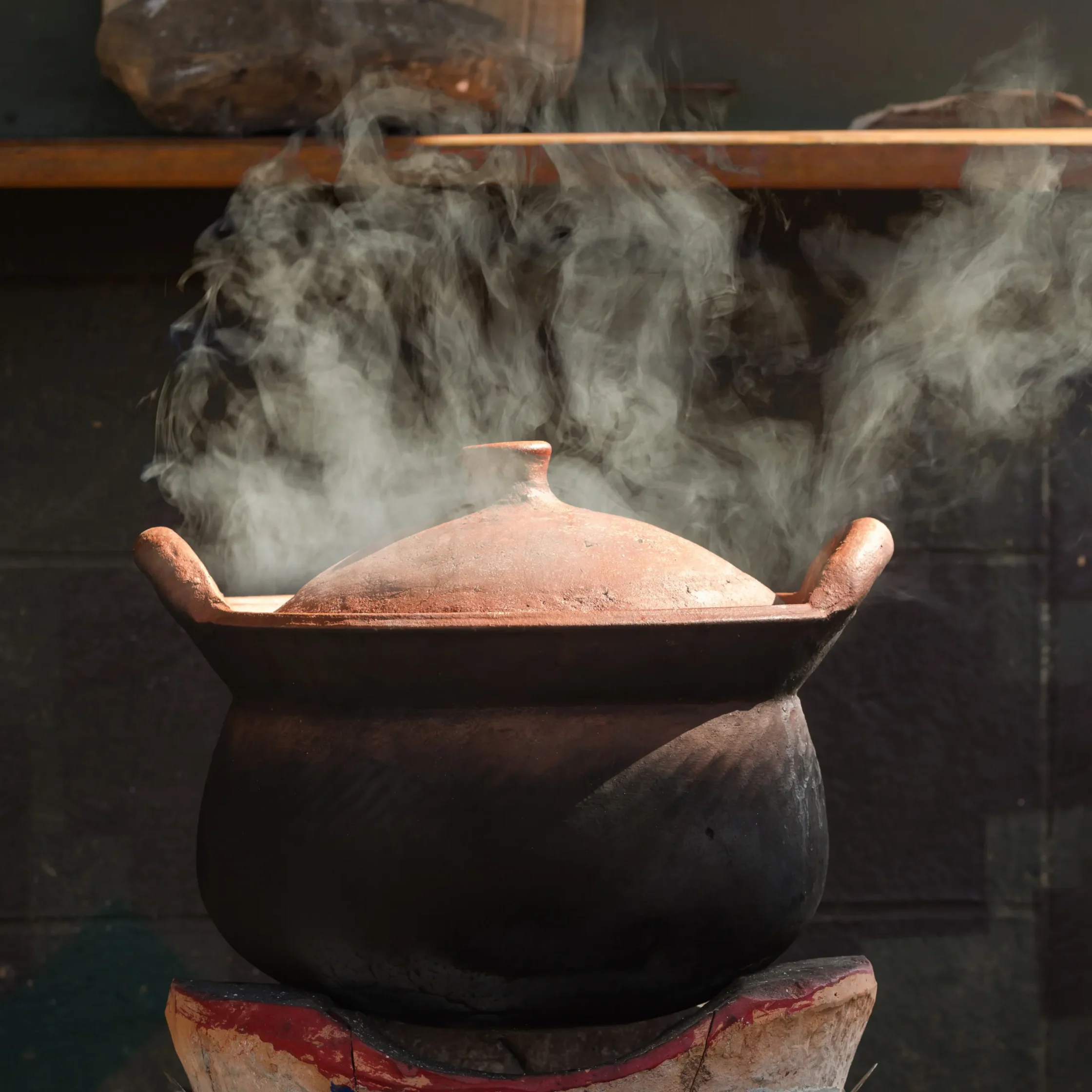
Large rustic clay pot with a red rim, releasing steam in a dim kitchen setting.
The porosity of the palayok is its greatest feature!

When is it best to use a Palayok?

Palayok is at its best when doing any kind of slow cooking. This includes boiling, steaming, and braising, making it for cooking various traditional stews and soups. Some dishes that can be made with these earthenware pots were sinaing na tulingan, pinakbet, sinigang, nilaga, kare-kare, paksiw, and even desserts like bibingka and ginataan.

It is important to take note of the instances wherein you probably shouldn’t be cooking using a palayok. Stick to using your regular metal pot at home if you are gonna do any high heat cooking. Any dish that requires sautéing, searing, or pan frying would not be made well using a palayok.

It is also not recommended to use a palayok if you only have an electric or induction stove available to you. You should only ever use a palayok when cooking with live fire. 
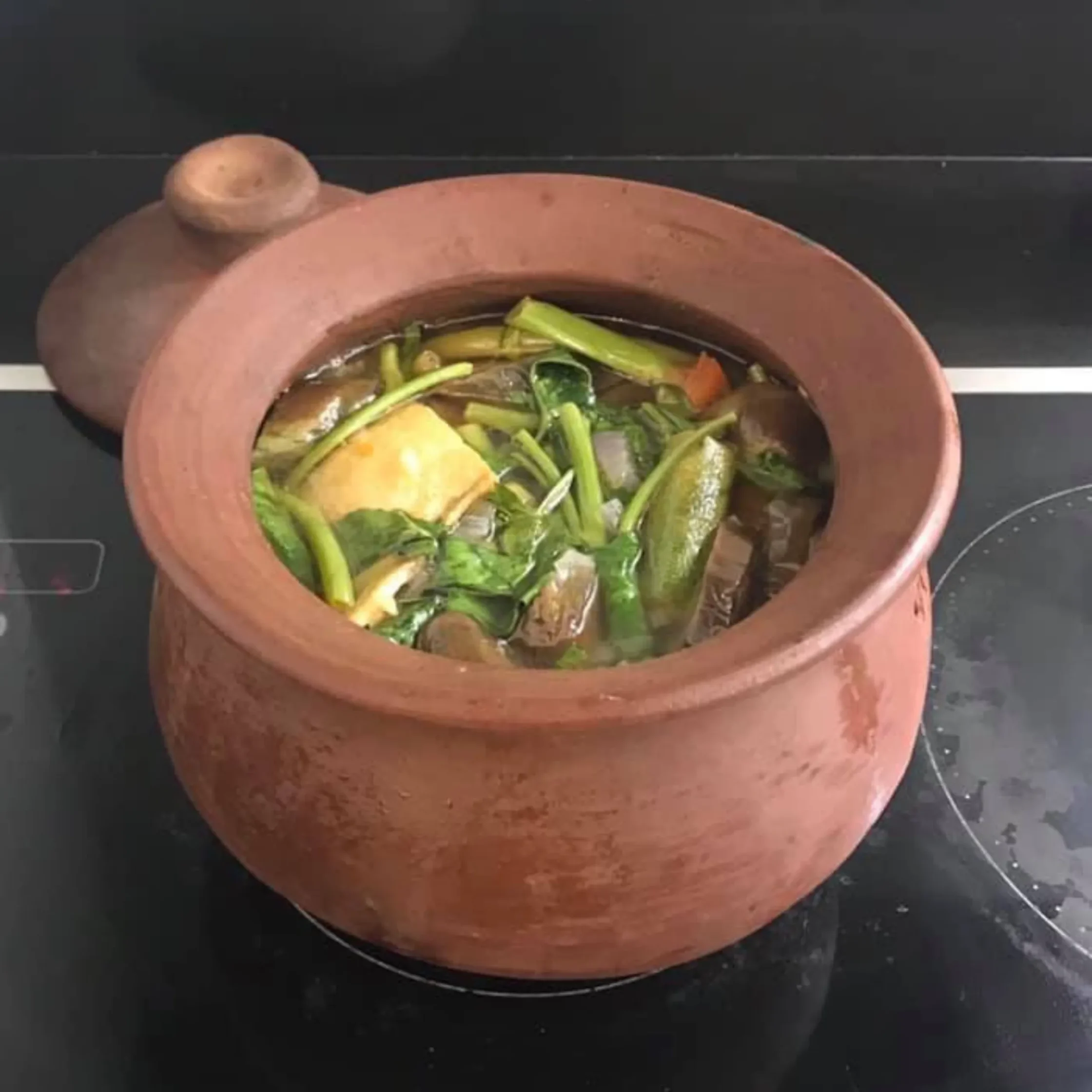
Slow cooking is best with a palayok! [PHOTO COURTESY OF Astig Vegan Official Website]

With the progression of cooking technology through the millenia, traditional Filipino dishes are now being made with shiny cookware, silicon kitchen utensils, and electrical appliances.

While the flavors has been carried over, that doesn’t mean we can’t go back to our ancestral basics. Beyond aesthetic tableware and more than a vessel for the Filipino equivalent of a piñata, rest assured that the palayok still has its place in Filipino kitchens of today.

author avatar
Laura Mendoza Writer
Laura admits that she is a slow eater. She prefers to take her time with the food she likes to eat and the stories she wishes to write. Having graduated with a Creative Writing degree, she comes from a background in writing fiction and poetry. Because of this, she has set herself on a creative mission to explore and delve into what other modes and channels exist for stories and narratives to be told, expressed, and shared with others. For Laura, food as a medium is an exciting proposition. Behind every dish, every ingredient, and every cooking technique, there lies a history worth discussing, a human being worth listening to, a lived experience worth gleaning from. As a means to satiate her appetite for learning about and understanding new and known things, she aims to be the kind of food writer who is approachable, reliable, and personable to readers.

Frequently Asked Questions

A palayok is an ancient earthenware pot that was primarily used for cooking,storing food, and even fermenting.

author avatar
Laura Mendoza Writer
Laura admits that she is a slow eater. She prefers to take her time with the food she likes to eat and the stories she wishes to write. Having graduated with a Creative Writing degree, she comes from a background in writing fiction and poetry. Because of this, she has set herself on a creative mission to explore and delve into what other modes and channels exist for stories and narratives to be told, expressed, and shared with others. For Laura, food as a medium is an exciting proposition. Behind every dish, every ingredient, and every cooking technique, there lies a history worth discussing, a human being worth listening to, a lived experience worth gleaning from. As a means to satiate her appetite for learning about and understanding new and known things, she aims to be the kind of food writer who is approachable, reliable, and personable to readers.

Clay has high porosity, which lends itself to being very good at retaining moisture and flavor, letting out steam while cooking, and an even heat distribution.

author avatar
Laura Mendoza Writer
Laura admits that she is a slow eater. She prefers to take her time with the food she likes to eat and the stories she wishes to write. Having graduated with a Creative Writing degree, she comes from a background in writing fiction and poetry. Because of this, she has set herself on a creative mission to explore and delve into what other modes and channels exist for stories and narratives to be told, expressed, and shared with others. For Laura, food as a medium is an exciting proposition. Behind every dish, every ingredient, and every cooking technique, there lies a history worth discussing, a human being worth listening to, a lived experience worth gleaning from. As a means to satiate her appetite for learning about and understanding new and known things, she aims to be the kind of food writer who is approachable, reliable, and personable to readers.

Any traditional Filipino dishes that involves slow cooking like sinigang, pinkabet, kare-kare, ginataan and bibingka.

Avoid using a palayok if you are making anything that requires high heat cooking or if you aren’t cooking using a live fire.

author avatar
Laura Mendoza Writer
Laura admits that she is a slow eater. She prefers to take her time with the food she likes to eat and the stories she wishes to write. Having graduated with a Creative Writing degree, she comes from a background in writing fiction and poetry. Because of this, she has set herself on a creative mission to explore and delve into what other modes and channels exist for stories and narratives to be told, expressed, and shared with others. For Laura, food as a medium is an exciting proposition. Behind every dish, every ingredient, and every cooking technique, there lies a history worth discussing, a human being worth listening to, a lived experience worth gleaning from. As a means to satiate her appetite for learning about and understanding new and known things, she aims to be the kind of food writer who is approachable, reliable, and personable to readers.

You can find them in the palengke, sometimes in Filipino groceries, and even online. Just make sure you aren’t buying just any kind of clay pot. Make sure to read the label carefully and watch out for any scent of wax or soil.

author avatar
Laura Mendoza Writer
Laura admits that she is a slow eater. She prefers to take her time with the food she likes to eat and the stories she wishes to write. Having graduated with a Creative Writing degree, she comes from a background in writing fiction and poetry. Because of this, she has set herself on a creative mission to explore and delve into what other modes and channels exist for stories and narratives to be told, expressed, and shared with others. For Laura, food as a medium is an exciting proposition. Behind every dish, every ingredient, and every cooking technique, there lies a history worth discussing, a human being worth listening to, a lived experience worth gleaning from. As a means to satiate her appetite for learning about and understanding new and known things, she aims to be the kind of food writer who is approachable, reliable, and personable to readers.

it is not recommended to use a palayok without seasoning it first. This is so that you can remove any dirt that is still on it as well as strengthening it to be able to bare multiple uses.

author avatar
Laura Mendoza Writer
Laura admits that she is a slow eater. She prefers to take her time with the food she likes to eat and the stories she wishes to write. Having graduated with a Creative Writing degree, she comes from a background in writing fiction and poetry. Because of this, she has set herself on a creative mission to explore and delve into what other modes and channels exist for stories and narratives to be told, expressed, and shared with others. For Laura, food as a medium is an exciting proposition. Behind every dish, every ingredient, and every cooking technique, there lies a history worth discussing, a human being worth listening to, a lived experience worth gleaning from. As a means to satiate her appetite for learning about and understanding new and known things, she aims to be the kind of food writer who is approachable, reliable, and personable to readers.
Smiling woman with glasses tilted at an angle, wearing a blue top, against a light background.

Laura Mendoza

Writer

Laura admits that she is a slow eater. She prefers to take her time with the food she likes to eat and the stories she wishes to write. Having graduated with a Creative Writing degree, she comes from a background in writing fiction and poetry. Because of this, she has set herself on a creative mission to explore and delve into what other modes and channels exist for stories and narratives to be told, expressed, and shared with others. For Laura, food as a medium is an exciting proposition. Behind every dish, every ingredient, and every cooking technique, there lies a history worth discussing, a human being worth listening to, a lived experience worth gleaning from. As a means to satiate her appetite for learning about and understanding new and known things, she aims to be the kind of food writer who is approachable, reliable, and personable to readers.

0 0 votes
Total of Ratings
guest
Rating
Ratings for Article
0 Comments
Oldest
Newest Most Voted

To provide a customized ad experience, we need to know if you are of legal age in your region.

By making a selection, you agree to our Terms & Conditions.