

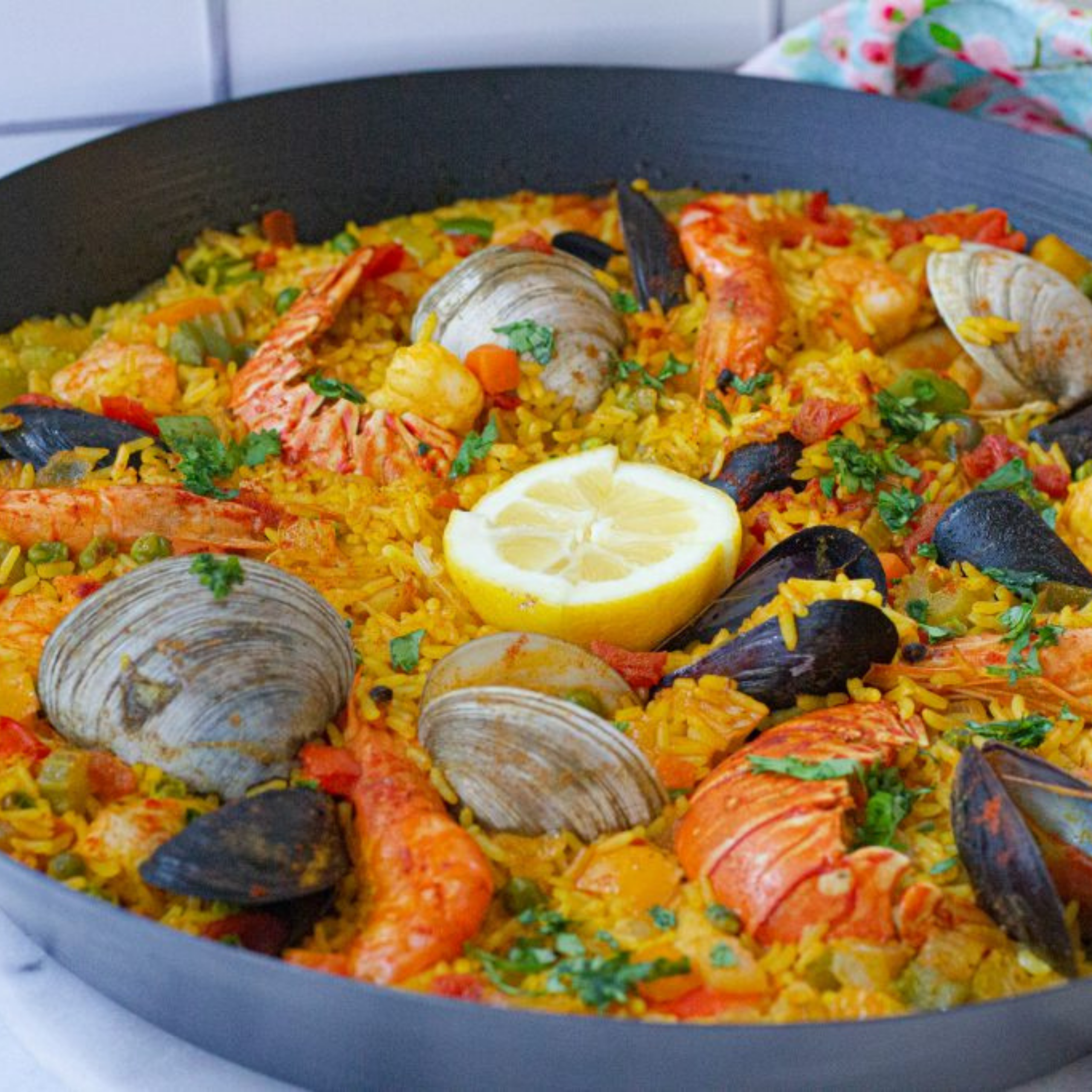
Today, September 20, the world takes a momentary pause from food trends to pay homage to a dish that refuses to be rushed: paella, which in modern Catalan means pan. Timed to match the rice harvest in its spiritual home of Valencia, Spain, World Paella Day is a toast to the food item that sparked so many family arguments over what actually belongs in it.
To some, paella may just be an inviting pan of rice. But to the Spanish and those who religiously cook it, it is a high-stakes balancing act where stirring is strictly forbidden, seafood is secondary, and the ultimate prize is found entirely at the bottom. That prize is the socarrat—the smoky crackling layer of rice that results when broth meets high heat and precise patience.
To celebrate this special day, we rounded up a handful of places where you can sit down and indulge on this all-in-one meal.
1. Paella Bagnet from Pio’s Kitchen
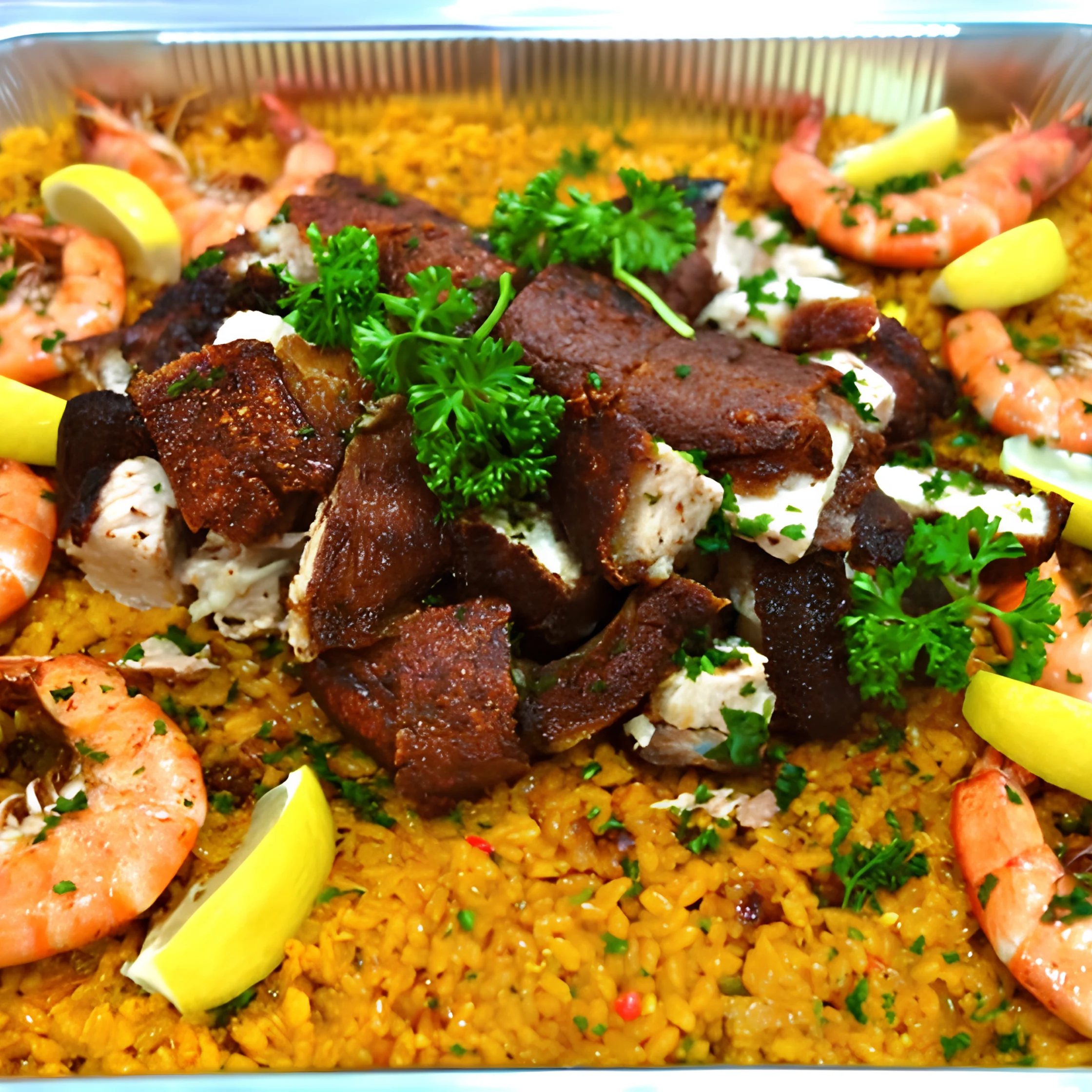
As far as my memory serves me, the very first paella I had in Manila that reminded me so much of the ones I enjoyed in Madrid is found not in a restaurant but at chef Chin Gallegos-Bagis’ home in Quezon City. And what’s great is that it doesn’t come out cooked and ready to be eaten—guests are allowed to participate in the process. Meaning, you have the option to don an apron and help cook your paella. Paella Marisco and Paella Negra are available, but I’d recommend the Paella Bagnet with eggplant chimichurri, which is their satisfying signature.
Pio’s Kitchen is located at 96 Sct. Reyes Street, corner Scout Fuentebella Extension (near Brgy. Laging Handa Hall), Quezon City.
2. Paella Cirkulo from Cirkulo
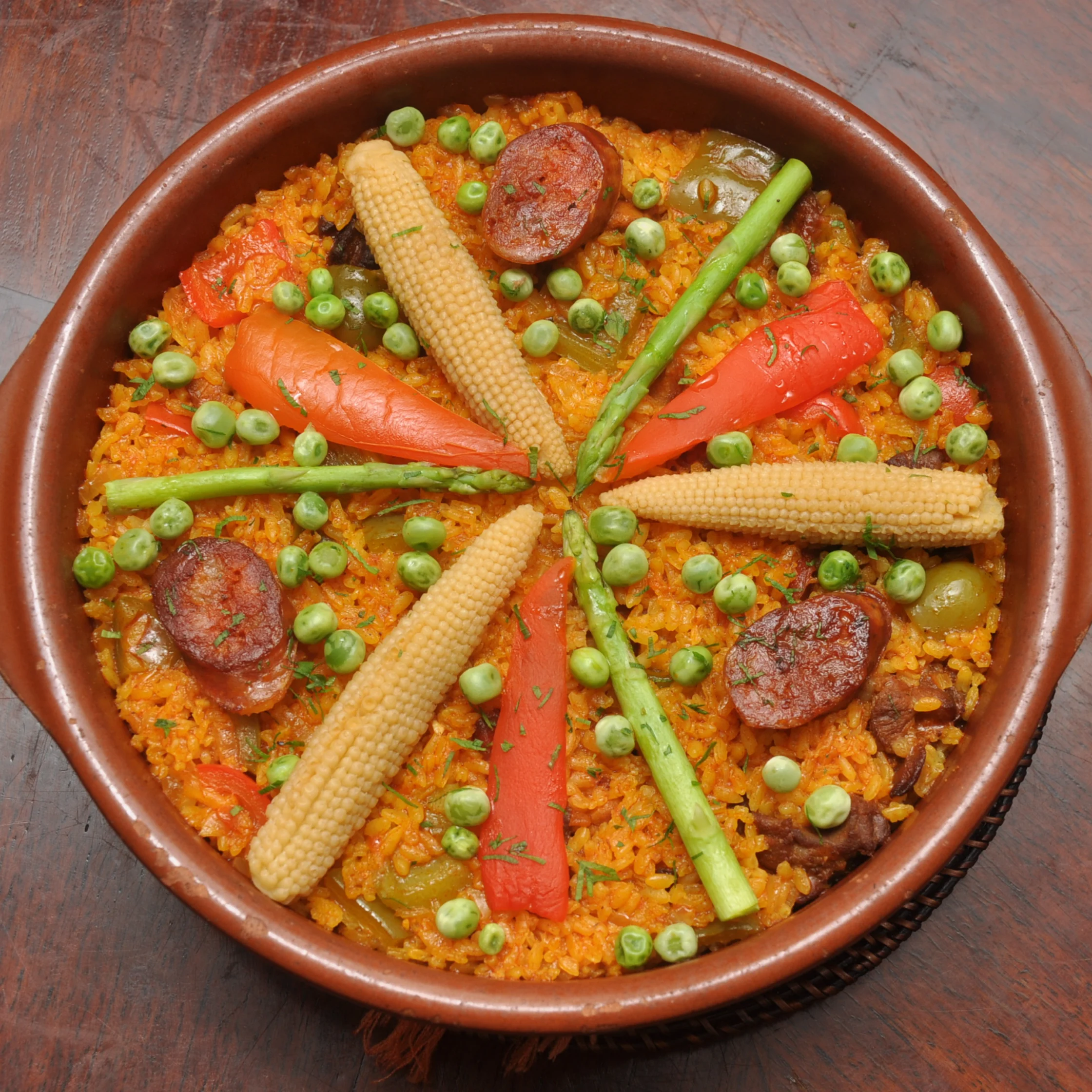
When it comes to my favorite Spanish restaurants in the metro, Cirkulo is almost always the one I drop. Perhaps because they have been around for more than 30 years and their sisig, among many others, remains to be the best in the metro for me. Their paella, of course, is highly recommended too. They carry quite a number—from Paella Iberia Secreto and Paella Montaña (vegetarian) to Paella de Costilla de Vaca (braised ribs with orange gremolata) and Paella Marinera—but the house signature is what I find myself returning to each time. The Paella Cirkulo is made with saffron, duck, pork, chorizo, sweet peppers, and asparagus.
Cirkulo is located at Ground Floor of the MilkyWay Building, 900 Arnaiz Avenue (Pasay Road) corner Paseo de Roxas, San Lorenzo Village, Makati.
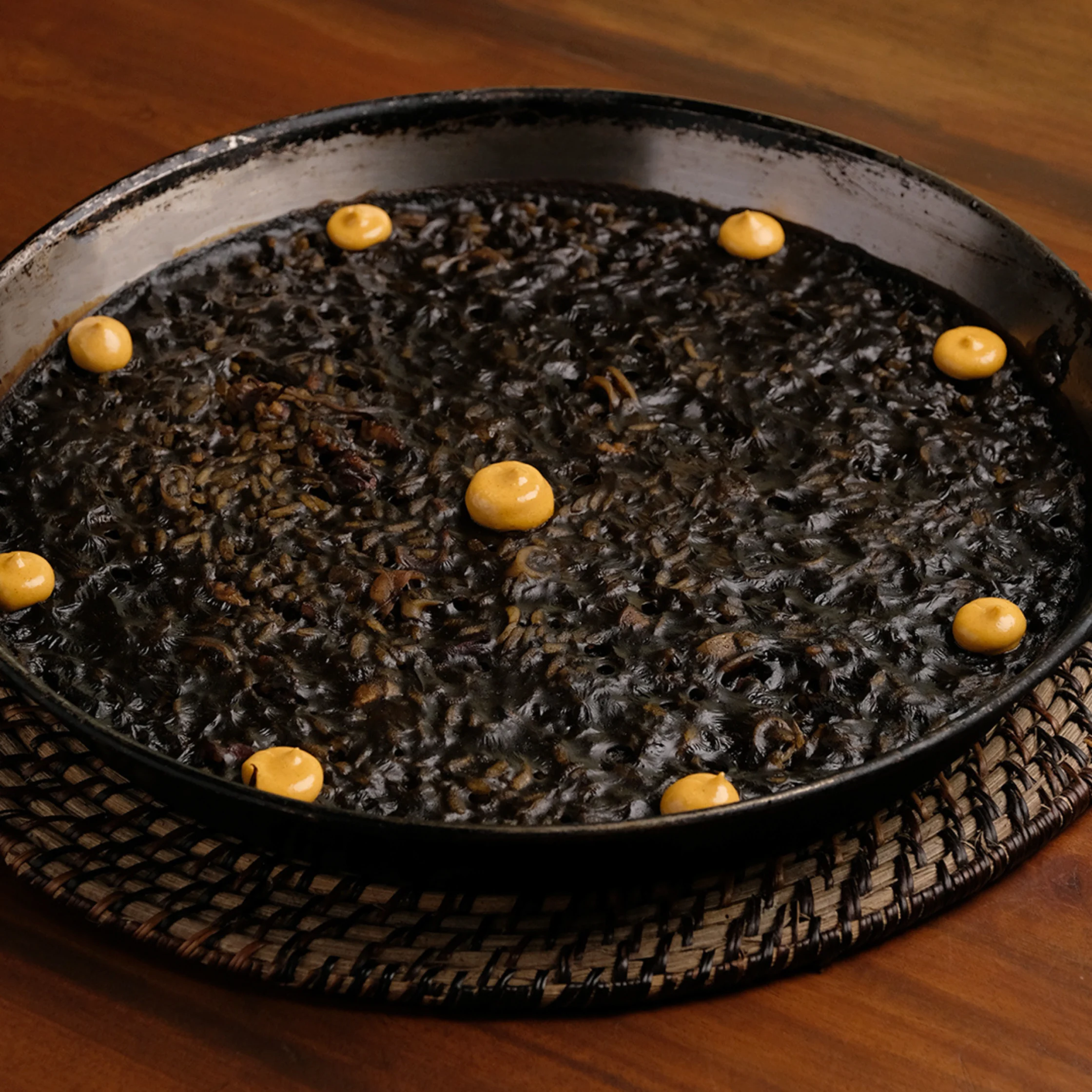
3. Arroz Negro de Pescado from El Born
When it comes to newer Spanish restaurant players, El Born in Mitsukoshi Mall edges out the competition because it offers something more refreshing, skipping the usual cookie-cutter tapas playbook and doubling down on regional Catalan authenticity. Apart from that, a good number of their dishes rely on a charcoal Josper oven, using local Davao coconut husk charcoal to build deep and smoky complexity to their food. Their arroz dishes benefit from that. They’re not exactly paella in the strictest sense, more like a cross between that and a risotto, which is true to their nature and exactly why it’s in this list. The arroz is cooked in the traditional style with crispy burnt edges. Go for the Negro de Pescado, where rich black rice comes with tender squid, cuttlefish, and pancetta.
El Born is located 2/F Mitsukoshi BGC, 8th Avenue, Corner 36th Street, North, Taguig.
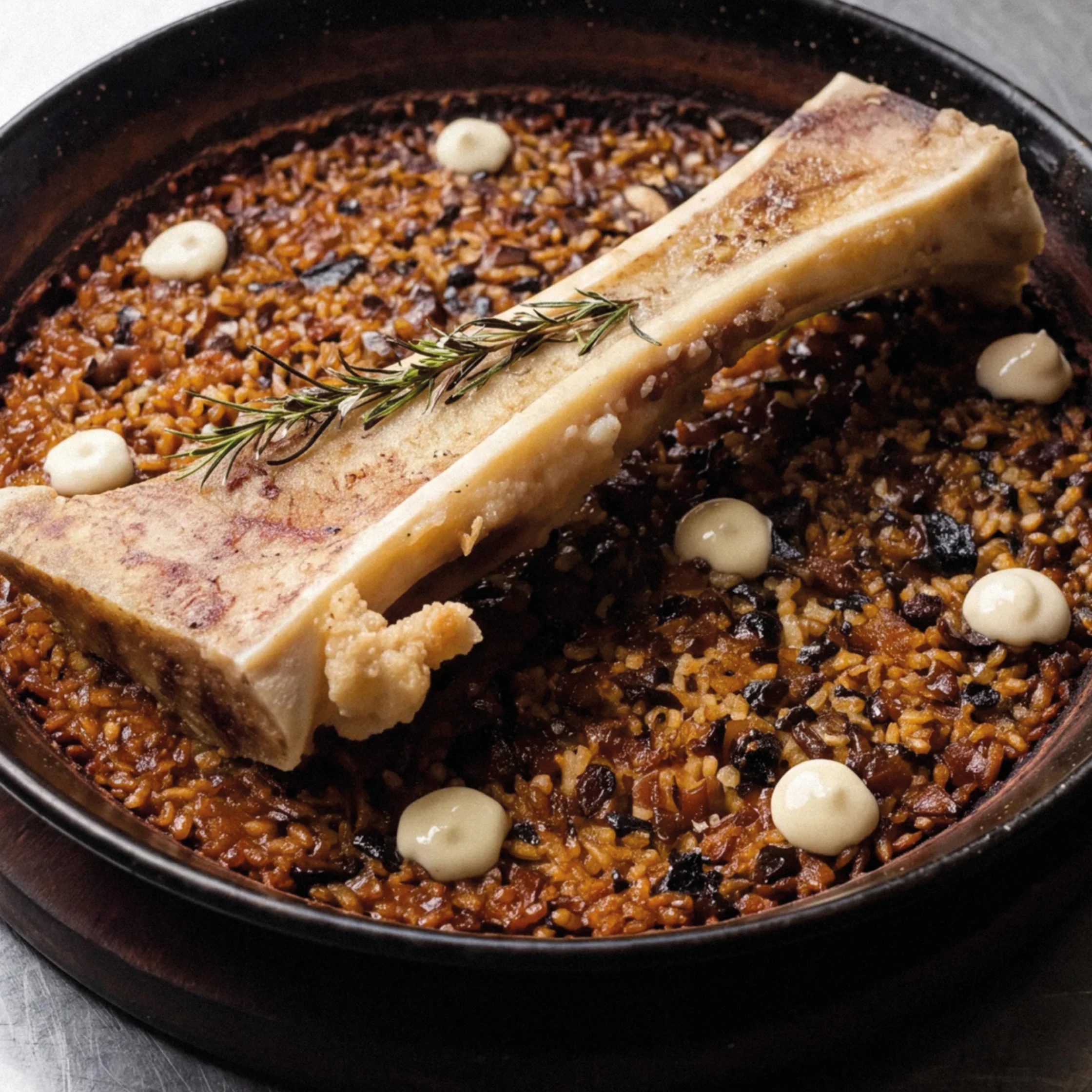
4. Paella Ibérico y Tuétano from Txoko Asador
Grounded in wood-fired cooking and rich rice creations, Txoko Asador offers a distinct taste of Basque and Spanish heritage in the heart of Legazpi Village. From the same group as Goxo and Bar Pintxos, this fine dining destination knows what people want and let them wallow in their indulgence. Take for example, their Paella Campero, it’s a hearty, rustic dish made with chicken, chorizo, and mushrooms—but to give it not just texture but also a dash of umami, crispy chicken in is thrown in. Though that’s tempting, I’d suggest you to order an off-menu item—the Paella Ibérico y Tuétano, which involves a grilled bone marrow and truffle aioli. Enough said.
Txoko Asador is located at 102 Esteban Street, Legazpi Village, Makati.
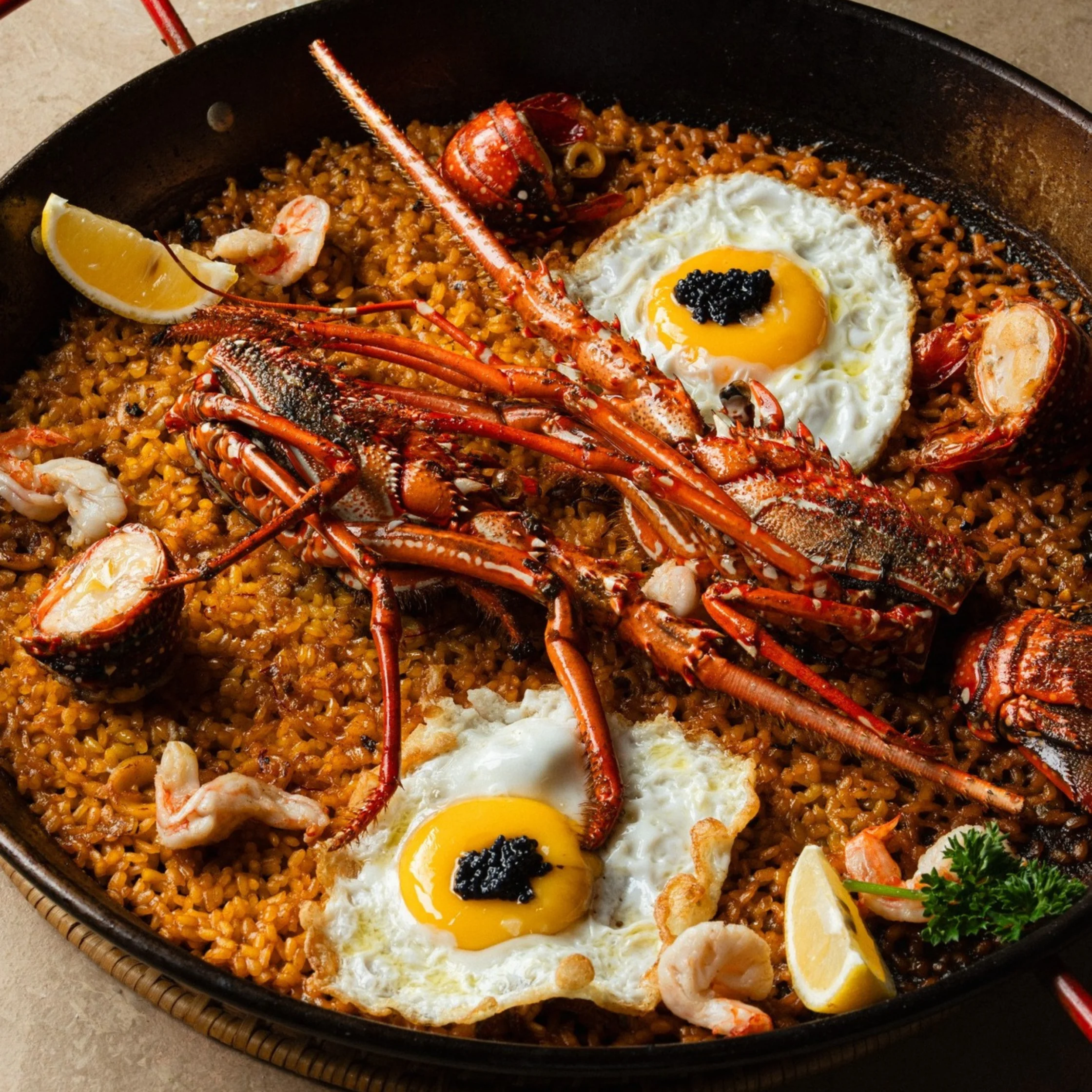
5. Lobster Paella from Brasa Martinez
Completing my short list is a new player but from an old, reliable restaurant group. The surname is a give away—it’s from the same family as Sala, La Taperia and Terraza, and it’s helmed by none other than chef Luis Martinez, the culinary force behind Alma Siargao. Brasa is their latest offspring and what makes it distinct is that it offers charcoal-grilled Spanish fare. Their Bone Marrow Paella—US hanging tender and bone marrow mixed into a beefy, well-seasoned saffron rice base—may be an obvious choice but don’t be so easy to discount the lobster kind, which comes with prawns, herring pearls, and an organic fried egg, and lords over the many seafood paellas in the metro.
Brasa Martinez is located at Ground Floor, Joya Lofts & Towers, Joya Drive, Rockwell Center, Makati.

Frequently Asked Questions
Paella is a traditional Spanish rice dish. The word “paella” in modern Catalan means pan, which speaks to how it’s cooked in a wide and shallow pan. The rice is usually cooked with saffron and olive oil and is traditionally served with vegetables, and either meat or seafood.
World Paella Day is celebrated every 20th of September.
Yes! One recommendation is the Lobster Paella from Brasa Martinez.
Pio’s Kitchen, which is located in 96 Sct. Reyes Street, corner Scout Fuentebella Extension, Quezon City, offers a Paella Bagnet Dish. El Born in GBC also has a unique paella dish called Arroz Negro de Pescado. Txoko Asador offers a distinct taste of Basque and Spanish flavors with their Paella Ibérico y Tuétano.
Based in Makati, Cirkulo served up to four other paella dishes outside of theor house signature Paella Cirkulo. They are Paella Iberia Secreto, Paella Montaña, Paella de Costilla de Vaca, and Paella Marinera.