Advertisement

More Than Just Pancit: 6 Other Uses of the Bilao

How the humble bamboo basket has remained an agricultural tool and modern home essential!

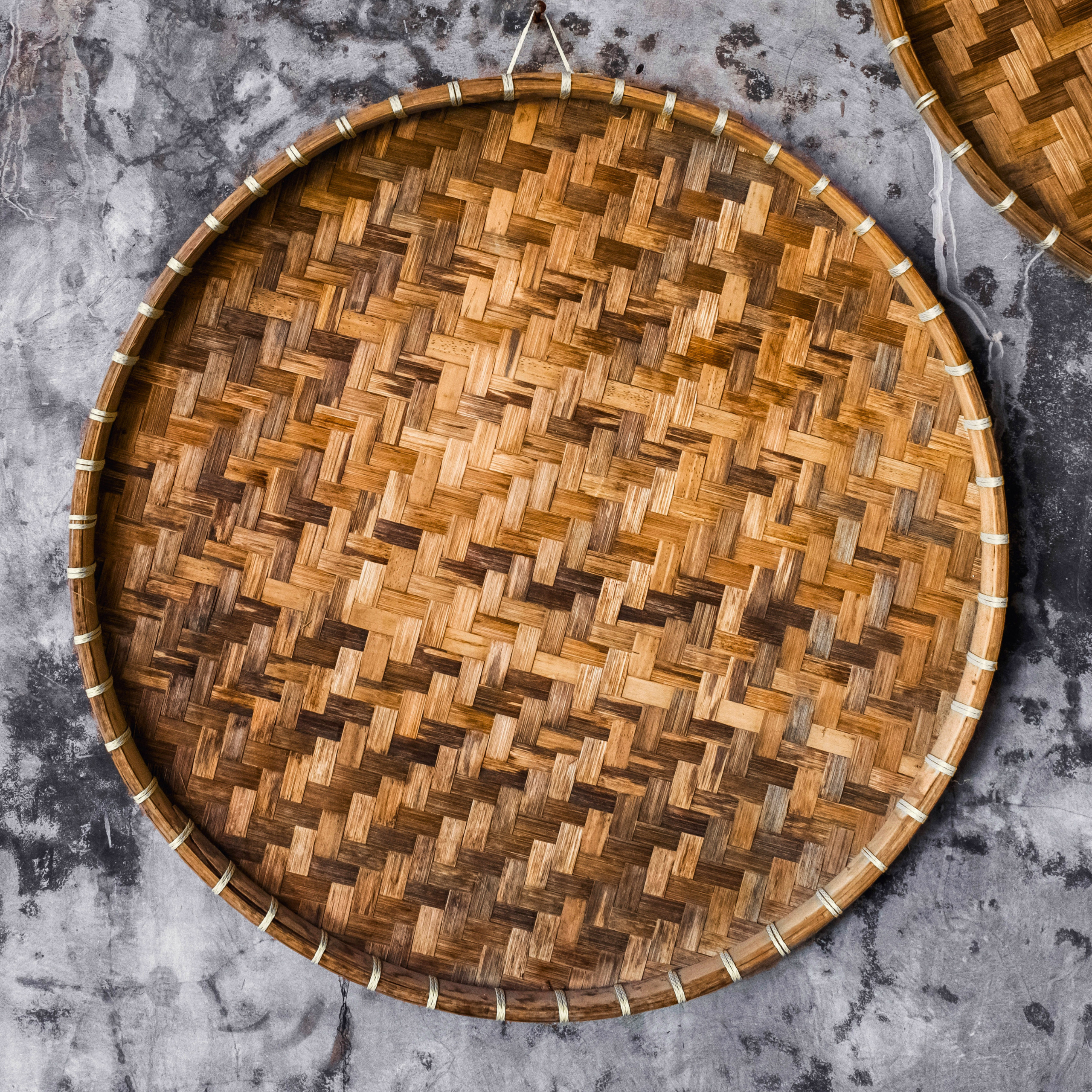
Overhead view of a round, handwoven brown bamboo tray with a herringbone pattern, resting on gray stone; its rustic texture feels warm and artisanal.
The bilao deserves a spot in your home, and it can do more than serve pancit!

While a tray of pancit might be the first thing that comes to mind when you spot a bilao, this round woven basket holds a far deeper place in Filipino history and daily life. 

More than just a container for noodles, the bilao is a versatile piece of our culture, traditionally woven from bamboo or rattan, that embodies simplicity, durability, and generosity.

Beyond serving as the vessel for pancit, here are six other essential uses of the bilao across Filipino homes and traditions.

1. Using Bilao as Decoration

Let’s get the non-food related use out of the way.

The bilao is not only iconic in terms of its use case but also for the way it looks. Even the black plastic version of them replicates the woven texture of the original.

From the kitchen to the living room walls, these woven bamboo baskets have naturally found their way into modern home decor. Interior designers and homeowners frequently use the bilao along with other bamboo paraphernalia as rustic wall accents, adding a more old-timey touch to contemporary homes. 
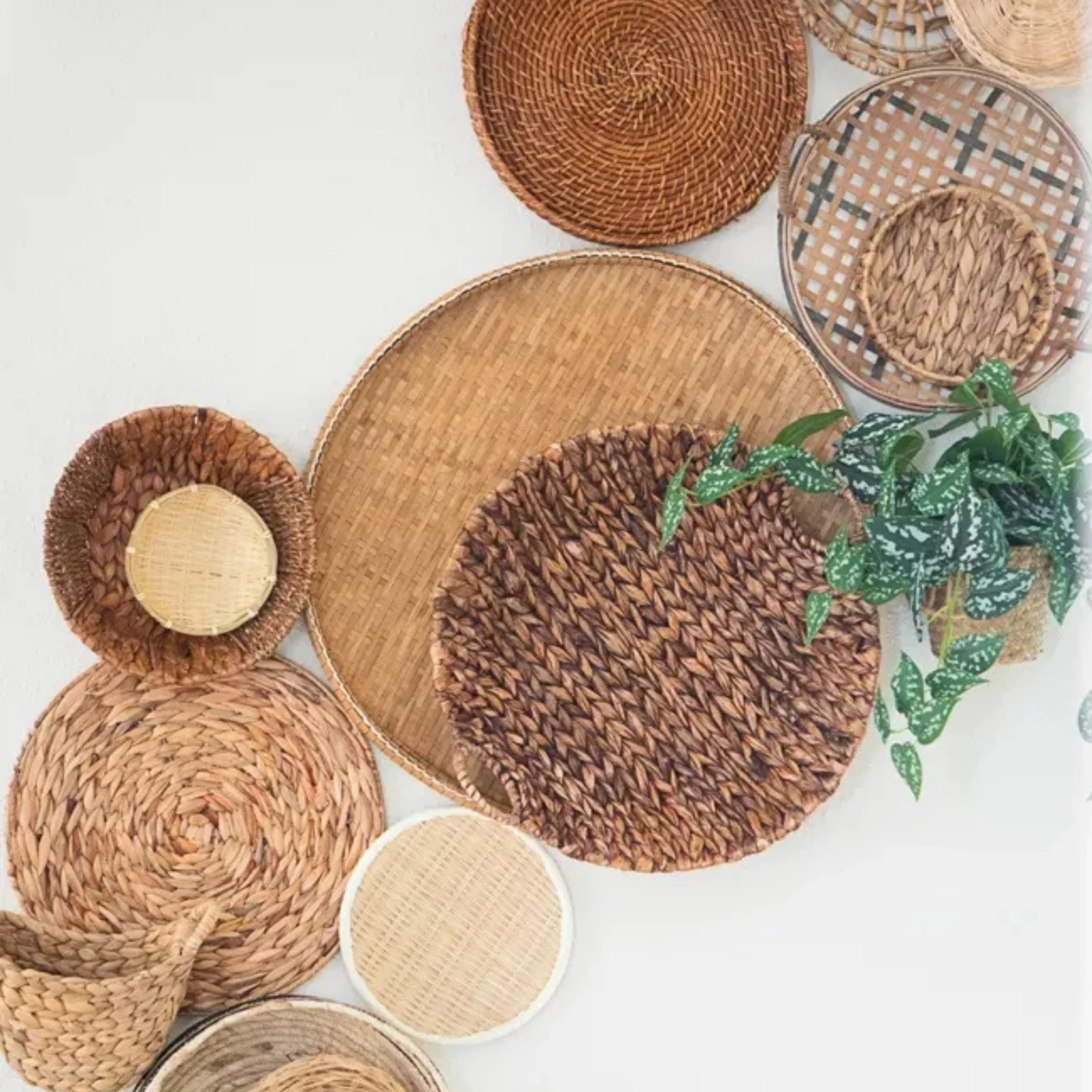
Overhead view of woven baskets and round rattan placemats in natural brown tones, arranged on a white surface beside a leafy green plant; calm, rustic style.
Beyond decor, the bilao can be used to make art! [PHOTO COURTESY OF Yellowstone Valley Woman]

2. Using Bilao to Winnow Rice 

Before it ever touched a dining table, the bilao has played an essential role in agriculture. One of its most traditional and most well-known uses is winnowing rice. Also referred to as pagtatahip, it is the process of an age-old technique of separating rice grains from the chaff, husks, dirt, and small stones.

By placing harvested grains on the flat basket and gently tossing and shaking them, the wind carries away the unwanted stones and other small bits and pieces while the heavier grains settle back onto the tray. It remains a testament to the country’s rich agricultural roots and the lasting influence of ancestors who passed down the craft of basket weaving for their livelihood.
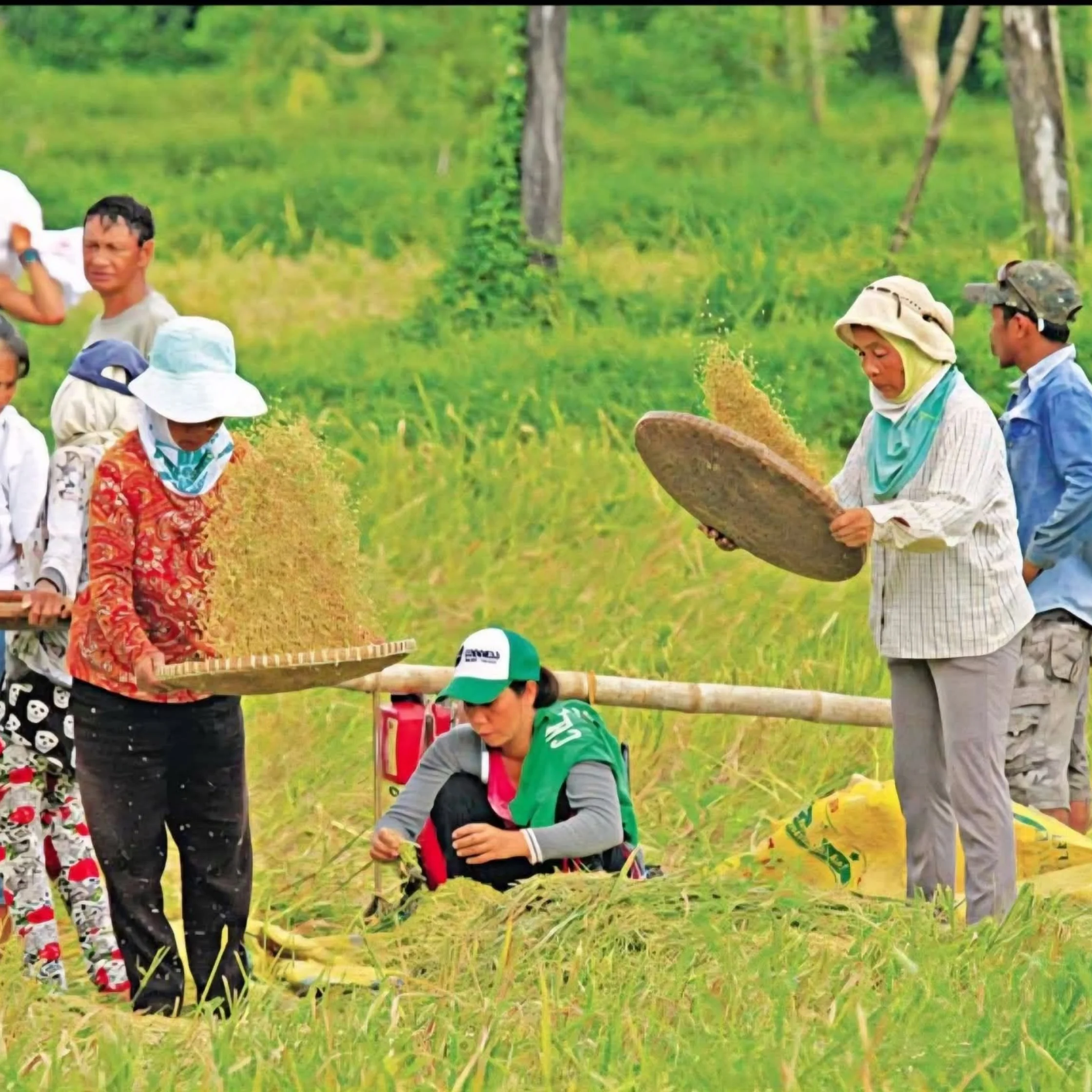
Farm workers thresh rice in a green field, tossing grain from woven trays as others gather the harvest; a focused, collaborative scene of rural labor.
Traditionally, the bilao was designed for winnowing rice known as pagtatahip. [PHOTO COURTESY OF Northern Luzon Post Official Facebook]

3. Using Bilao to Sun-dry

Thanks to its wide surface area and breathable woven structure, the bilao is also an ideal vessel for sun-drying food outdoors. Whether laid out with fish like tuyo, tinapa, or or fruits like batuan and kamias, it allows air to circulate evenly around ingredients while keeping them elevated off the ground under the heat of the sun. 
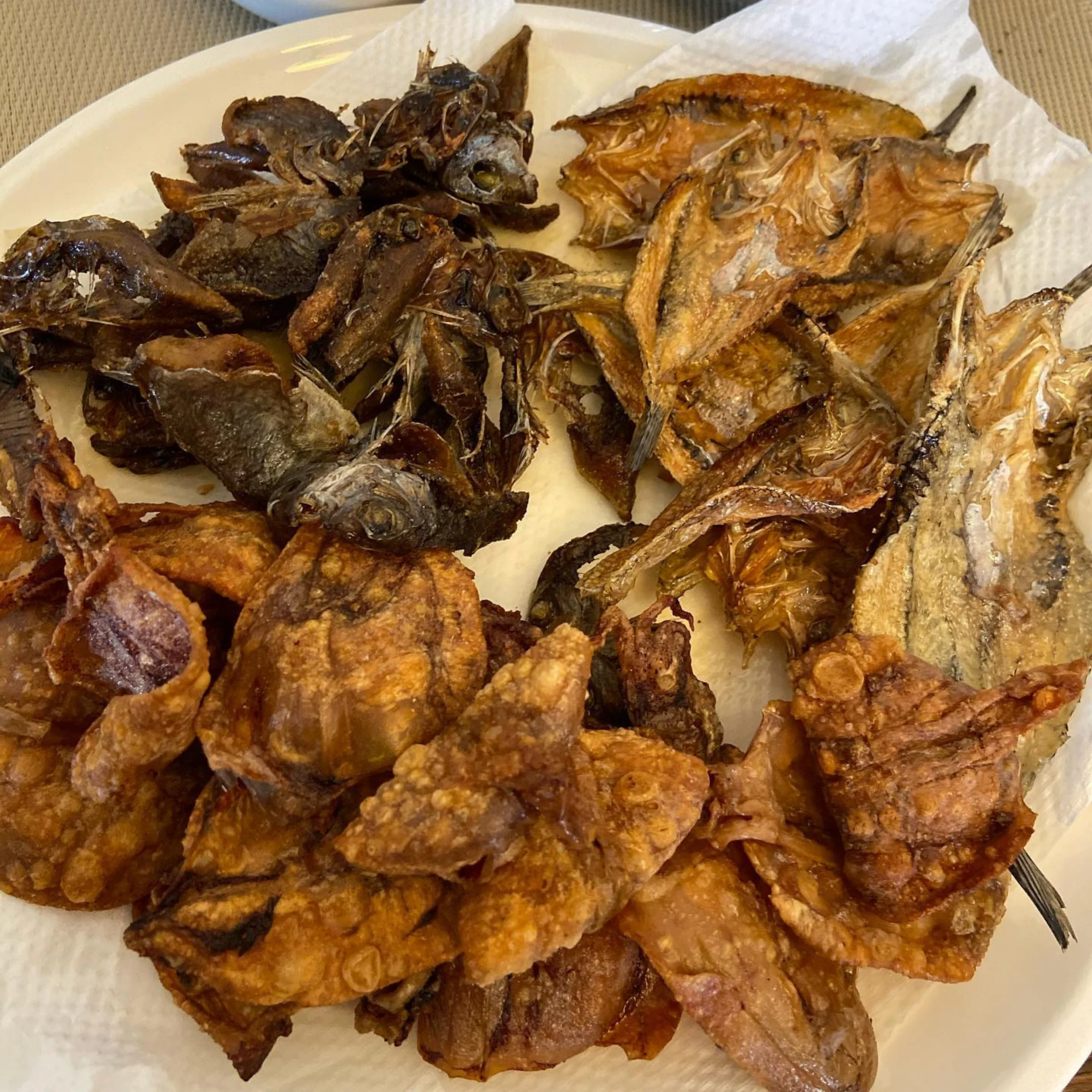
A white plate holds assorted fried and dried fish, from dark whole fish to golden crispy pieces, creating a hearty, rustic meal.
The bilao can also be an ideal vessel for sun-drying food. [PHOTO COURTESY OF Kuya Lord on Instagram]

4. Using Bilao to Serve Kakanin and Other Communal Platters

Nothing says a Filipino gathering quite like a bilao lined with banana leaves. Beyond , it serves as the ultimate tray for kakanin such as sapin-sapin, biko, and puto.

Its flat, broad shape also makes it perfect for communal feast platters from finger foods like lumpia and sliced fruits to staple pulutan like and crispy pata. This way, it highlights the spirit of sharing and hospitality during family celebrations.
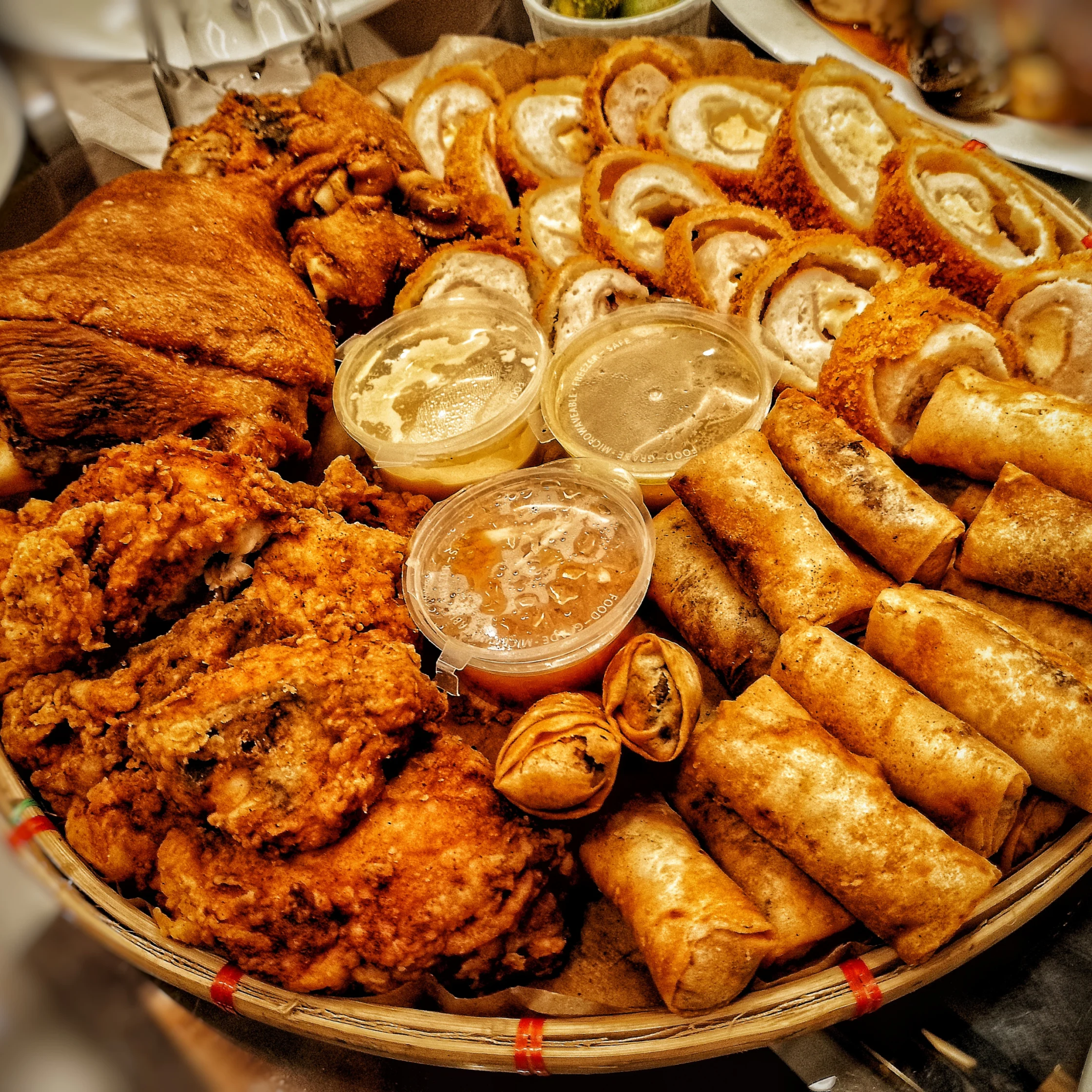
A platter piled with crispy fried chicken, golden spring rolls, sliced savory rolls, and three cups of dipping sauce, creating a hearty, festive spread.
Its shape also makes it perfect for communal feast platters and sharing food with others. [PHOTO COURTESY OF Wikimedia]

5. Using Bilao for Takeout and Food Delivery

Long before modern disposable plastic containers took over, the bilao was already serving as the quintessential Filipino transport container for party foods.

Today, it remains the standard vessel for local restaurants, caterers, and home-based food businesses delivering party-sized meals. When tightly wrapped, a bilao keeps large portions of hot meals intact during transit while preserving heat more or less. Plus, it serves as a ready-to-eat platter the moment it arrives at a celebration, eliminating the need to transfer food onto separate serving dishes.
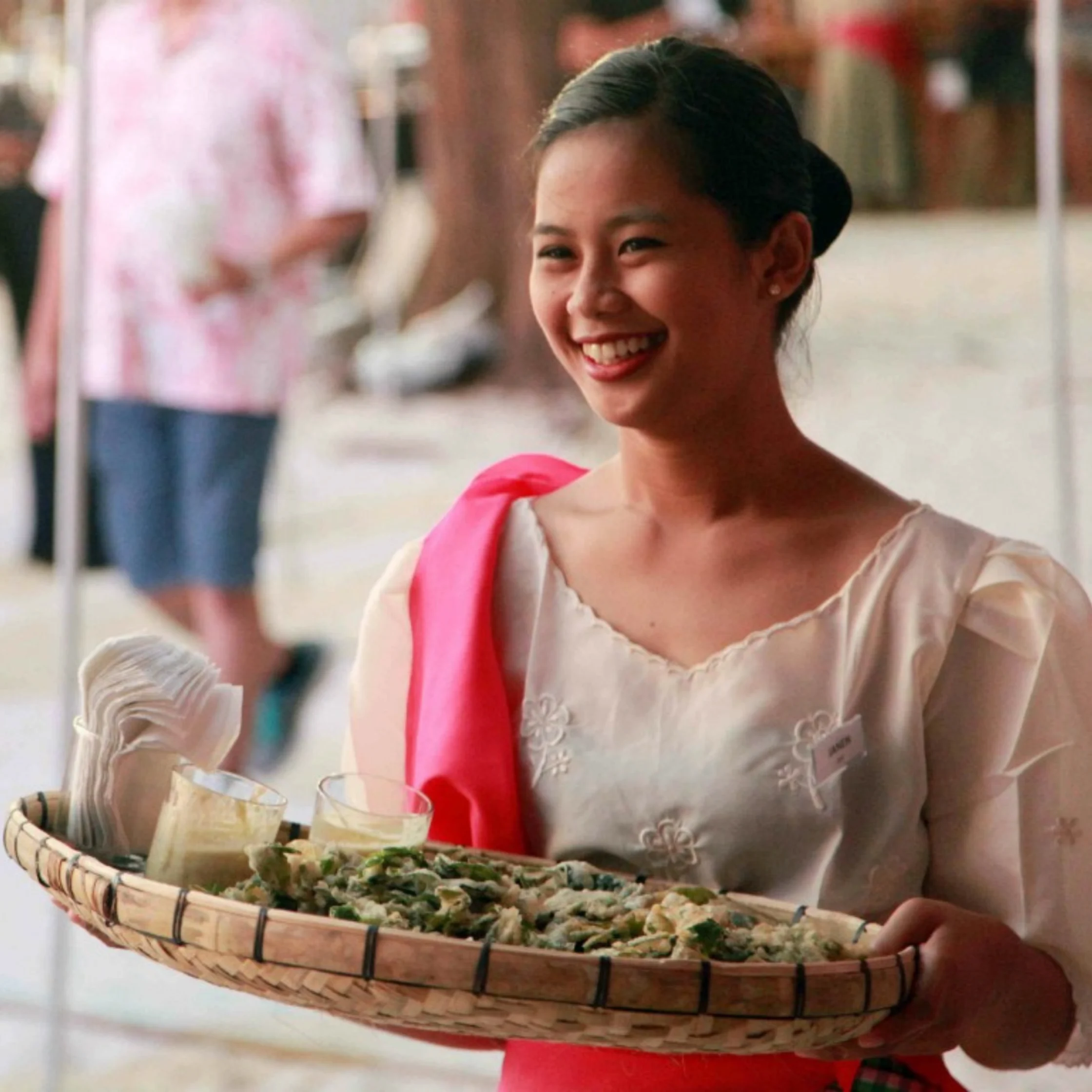
A smiling young woman in traditional white clothing and a bright pink sash holds a woven tray of offerings at an outdoor market, conveying warmth and welcome.
The bilao is easy to carry, making it perfect for food delivery. [PHOTO COURTESY OF About Filipino Food]

6. Using Bilao as a Plate

If you are imagining eating straight from a huge bilao and thinking that looks ridiculous, I mean, why not!

But in all seriousness, for informal communal dining, rustic outdoor meals, or farm harvests, a small-to-medium bilao can double as a sturdy, reusable plate or tray. When lined with fresh banana leaves, it provides an authentic, eco-friendly surface for sharing food with friends and family.
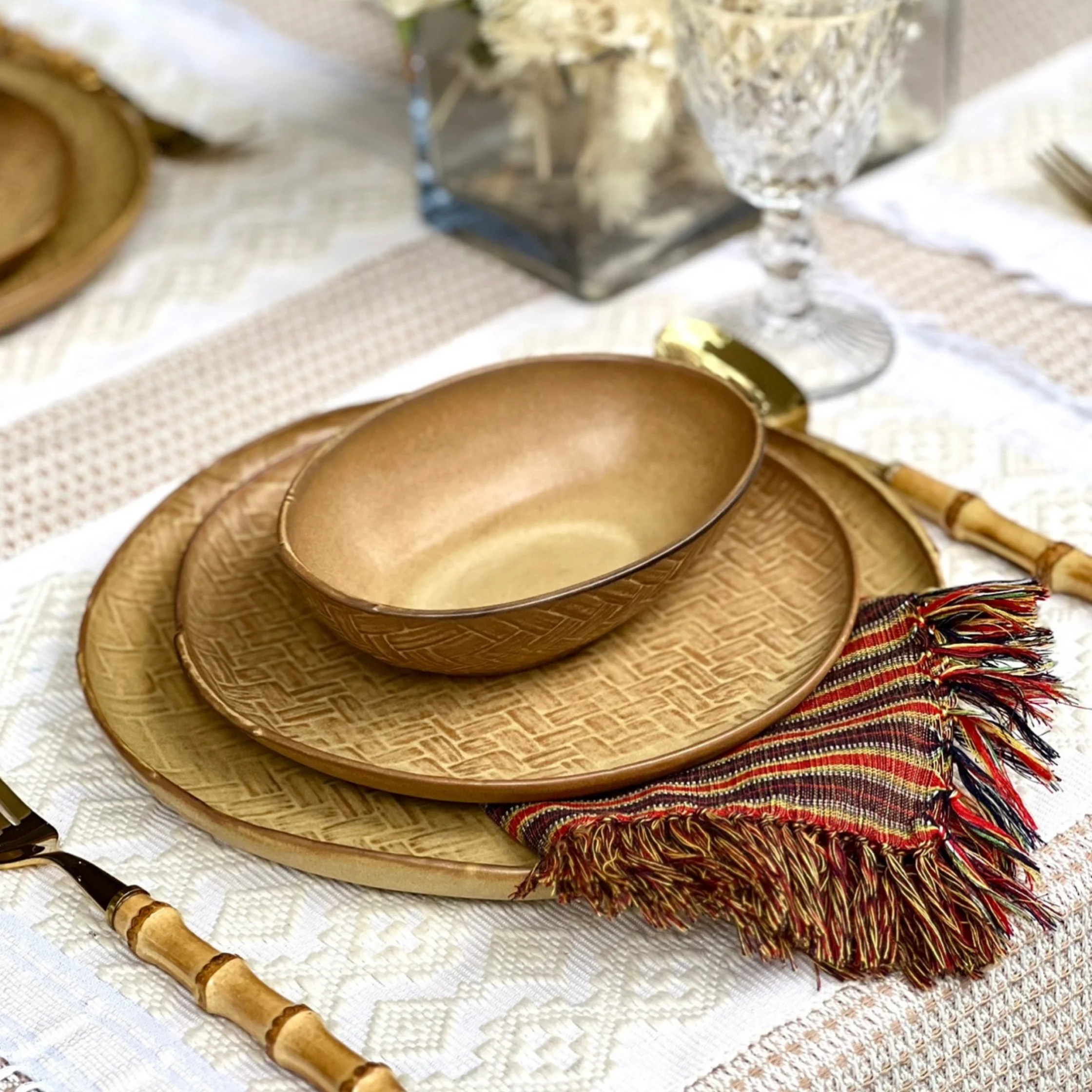
Gold-toned woven placemats and a matching bowl sit on a white patterned tablecloth beside a fringed red-and-gold napkin, creating an elegant, warm tablescape.
A bilao can double as a sturdy, reusable plate or tray. [PHOTO COURTESY OF Casa Juan Manila Official Instagram]

Similar to the palayok or the sandok and siyansi, it’s reassuring to learn that yet another common tool from our past still very much has a place in the Filipino kitchens of today. If anything, the bilao has been repurposed beyond its original one.

I bet there are even more that weren’t included in this short list that are technically possible but just aren’t as widely done. Even just thinking about it myself, people can use the big ones to help carry fresh fruits or vegetables. They can use it as another container to do mise en place with. 

At this point, the only thing between you and making good use of your bilao is your own imagination and creativity!

author avatar
Laura Mendoza Writer
Laura admits that she is a slow eater. She prefers to take her time with the food she likes to eat and the stories she wishes to write. Having graduated with a Creative Writing degree, she comes from a background in writing fiction and poetry. Because of this, she has set herself on a creative mission to explore and delve into what other modes and channels exist for stories and narratives to be told, expressed, and shared with others. For Laura, food as a medium is an exciting proposition. Behind every dish, every ingredient, and every cooking technique, there lies a history worth discussing, a human being worth listening to, a lived experience worth gleaning from. As a means to satiate her appetite for learning about and understanding new and known things, she aims to be the kind of food writer who is approachable, reliable, and personable to readers.

Frequently Asked Questions

A bilao is a traditional, round, flat-woven basket native to the Philippines. Typically hand woven from split bamboo or rattan (and occasionally replicated in plastic today), it is an iconic, versatile tool in Filipino culture used for food preparation, serving, and agricultural tasks.

author avatar
Laura Mendoza Writer
Laura admits that she is a slow eater. She prefers to take her time with the food she likes to eat and the stories she wishes to write. Having graduated with a Creative Writing degree, she comes from a background in writing fiction and poetry. Because of this, she has set herself on a creative mission to explore and delve into what other modes and channels exist for stories and narratives to be told, expressed, and shared with others. For Laura, food as a medium is an exciting proposition. Behind every dish, every ingredient, and every cooking technique, there lies a history worth discussing, a human being worth listening to, a lived experience worth gleaning from. As a means to satiate her appetite for learning about and understanding new and known things, she aims to be the kind of food writer who is approachable, reliable, and personable to readers.

Originally, the bilao was designed as an agricultural tool for winnowing rice. Farmers used it to separate harvested rice grains from lightweight impurities like chaff, husks, dirt, and small stones by gently tossing and shaking the grains into the air to let the wind blow the debris away.

author avatar
Laura Mendoza Writer
Laura admits that she is a slow eater. She prefers to take her time with the food she likes to eat and the stories she wishes to write. Having graduated with a Creative Writing degree, she comes from a background in writing fiction and poetry. Because of this, she has set herself on a creative mission to explore and delve into what other modes and channels exist for stories and narratives to be told, expressed, and shared with others. For Laura, food as a medium is an exciting proposition. Behind every dish, every ingredient, and every cooking technique, there lies a history worth discussing, a human being worth listening to, a lived experience worth gleaning from. As a means to satiate her appetite for learning about and understanding new and known things, she aims to be the kind of food writer who is approachable, reliable, and personable to readers.

Yes! Outside of food preparation and dining, the bilao is widely used in modern interior design as rustic wall décor, accent pieces, or display trays.

author avatar
Laura Mendoza Writer
Laura admits that she is a slow eater. She prefers to take her time with the food she likes to eat and the stories she wishes to write. Having graduated with a Creative Writing degree, she comes from a background in writing fiction and poetry. Because of this, she has set herself on a creative mission to explore and delve into what other modes and channels exist for stories and narratives to be told, expressed, and shared with others. For Laura, food as a medium is an exciting proposition. Behind every dish, every ingredient, and every cooking technique, there lies a history worth discussing, a human being worth listening to, a lived experience worth gleaning from. As a means to satiate her appetite for learning about and understanding new and known things, she aims to be the kind of food writer who is approachable, reliable, and personable to readers.

Its wide, flat shape and sturdy build make it ideal for serving and transporting large, shareable portions of hot food without spilling. When lined with banana leaves and wrapped securely, a bilao preserves heat and functions as a ready-to-eat serving platter the moment it arrives at a gathering.

author avatar
Laura Mendoza Writer
Laura admits that she is a slow eater. She prefers to take her time with the food she likes to eat and the stories she wishes to write. Having graduated with a Creative Writing degree, she comes from a background in writing fiction and poetry. Because of this, she has set herself on a creative mission to explore and delve into what other modes and channels exist for stories and narratives to be told, expressed, and shared with others. For Laura, food as a medium is an exciting proposition. Behind every dish, every ingredient, and every cooking technique, there lies a history worth discussing, a human being worth listening to, a lived experience worth gleaning from. As a means to satiate her appetite for learning about and understanding new and known things, she aims to be the kind of food writer who is approachable, reliable, and personable to readers.

Thanks to its broad surface area and breathable woven bamboo structure, a bilao allows air to circulate evenly around ingredients laid out outdoors. This makes it an effective vessel for sun-drying fresh herbs, small fish, or sliced fruits while keeping them raised off the ground under the heat of the sun.

author avatar
Laura Mendoza Writer
Laura admits that she is a slow eater. She prefers to take her time with the food she likes to eat and the stories she wishes to write. Having graduated with a Creative Writing degree, she comes from a background in writing fiction and poetry. Because of this, she has set herself on a creative mission to explore and delve into what other modes and channels exist for stories and narratives to be told, expressed, and shared with others. For Laura, food as a medium is an exciting proposition. Behind every dish, every ingredient, and every cooking technique, there lies a history worth discussing, a human being worth listening to, a lived experience worth gleaning from. As a means to satiate her appetite for learning about and understanding new and known things, she aims to be the kind of food writer who is approachable, reliable, and personable to readers.
Smiling woman with glasses tilted at an angle, wearing a blue top, against a light background.

Laura Mendoza

Writer

Laura admits that she is a slow eater. She prefers to take her time with the food she likes to eat and the stories she wishes to write. Having graduated with a Creative Writing degree, she comes from a background in writing fiction and poetry. Because of this, she has set herself on a creative mission to explore and delve into what other modes and channels exist for stories and narratives to be told, expressed, and shared with others. For Laura, food as a medium is an exciting proposition. Behind every dish, every ingredient, and every cooking technique, there lies a history worth discussing, a human being worth listening to, a lived experience worth gleaning from. As a means to satiate her appetite for learning about and understanding new and known things, she aims to be the kind of food writer who is approachable, reliable, and personable to readers.

0 0 votes
Total of Ratings
guest
Rating
Ratings for Article
0 Comments
Oldest
Newest Most Voted

To provide a customized ad experience, we need to know if you are of legal age in your region.

By making a selection, you agree to our Terms & Conditions.