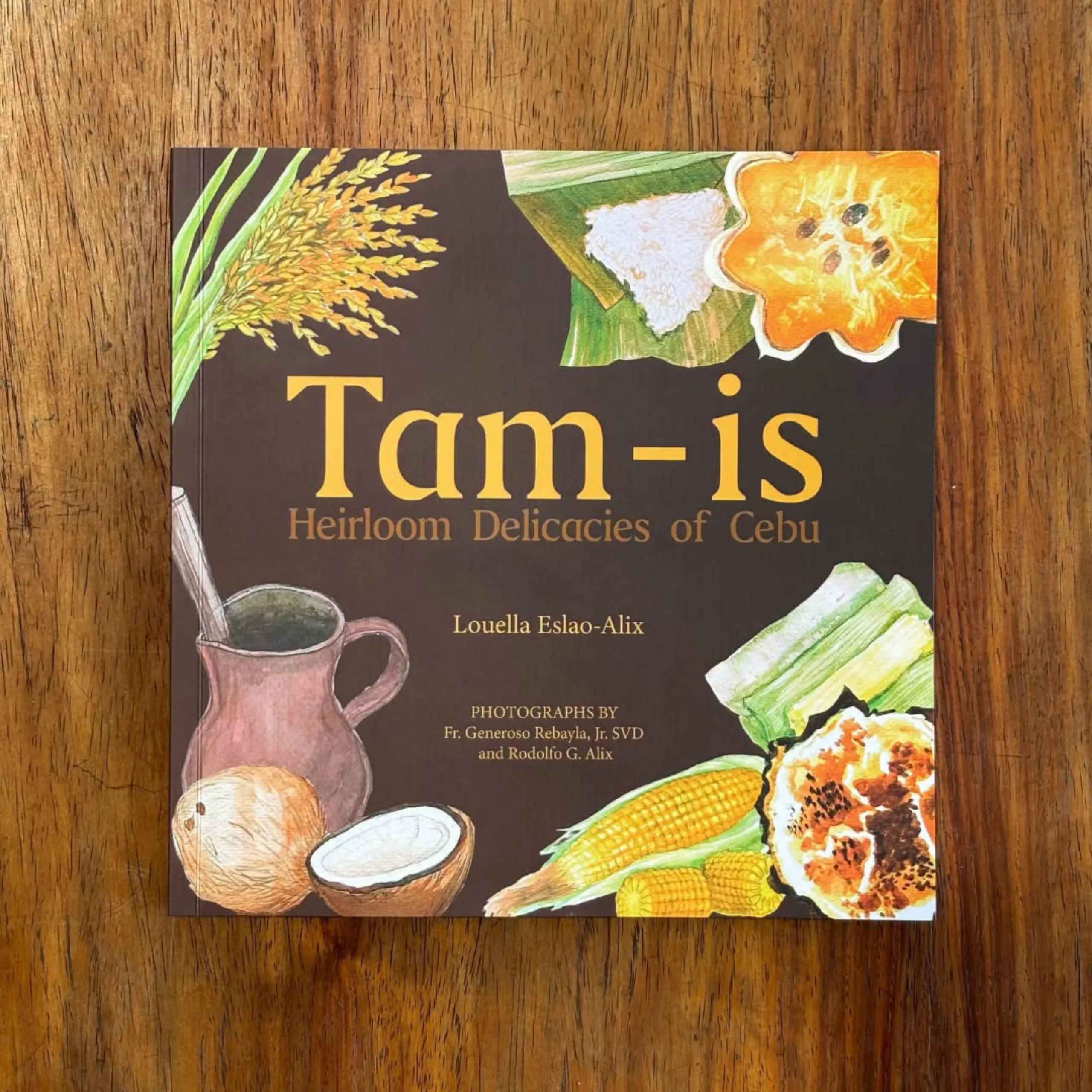
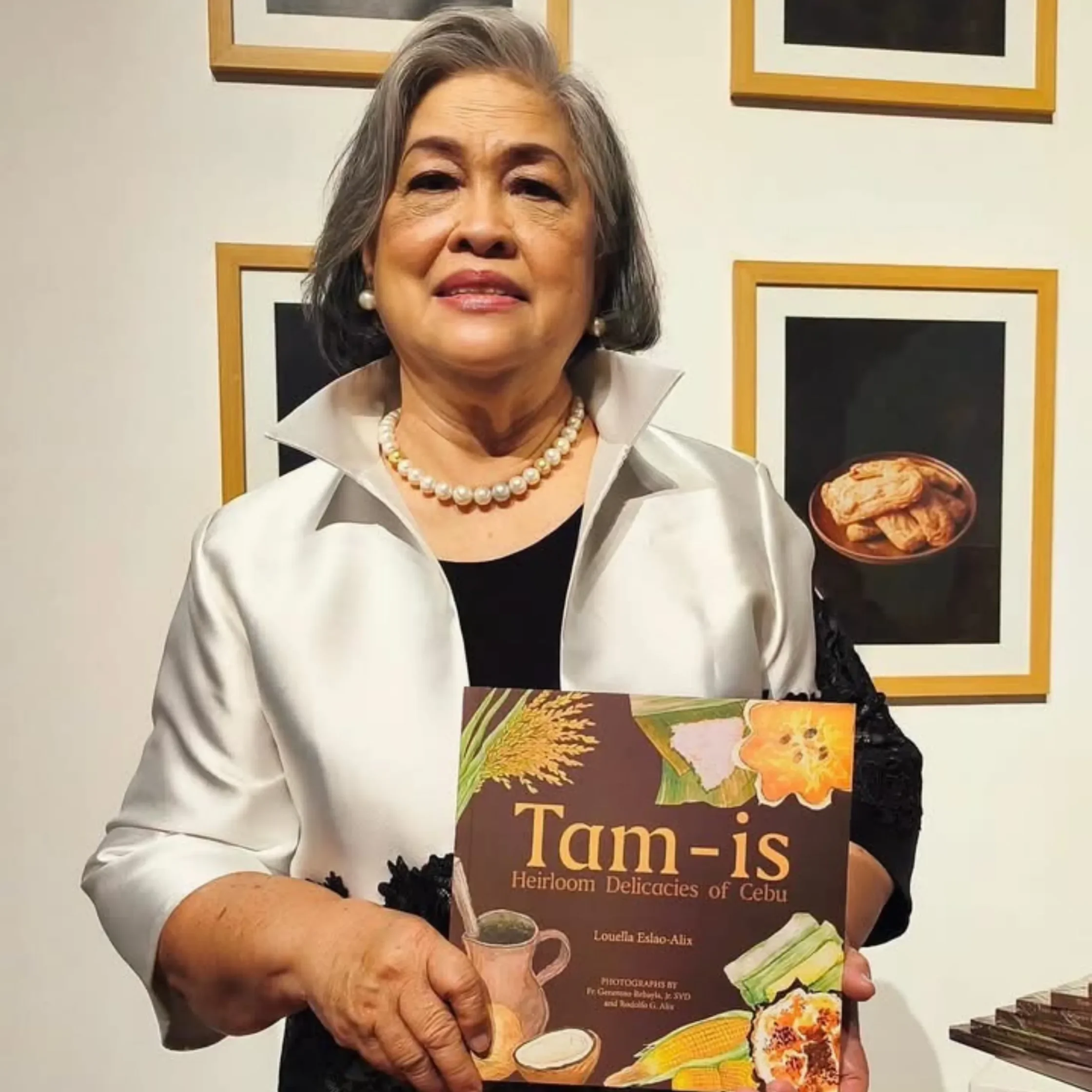
Louella Alix didn’t exactly plan on Tam-is: Heirloom Delicacies of Cebu to take a seven-year detour because of the global pandemic.
Back when her first cookbook, Hikay: The Culinary Heritage of Cebu, hit shelves, the University of San Carlos president immediately cornered her for an encore. While Hikay had mapped out the savory offerings of the southern province, the natural sequel was obvious: a deep dive into merienda and kakanin. The school loved the concept, funded the research, and sent Alix on a discovery spree with a goal to immortalize the province’s sweet tooth.
How Alix Traveled Across Cebu to Preserve Its Culinary Heritage
“Some were general knowledge,” she said. “But I still had to go around the island, town by town.” Especially if she wanted to see the real magic, which is the regional varieties of a single staple.
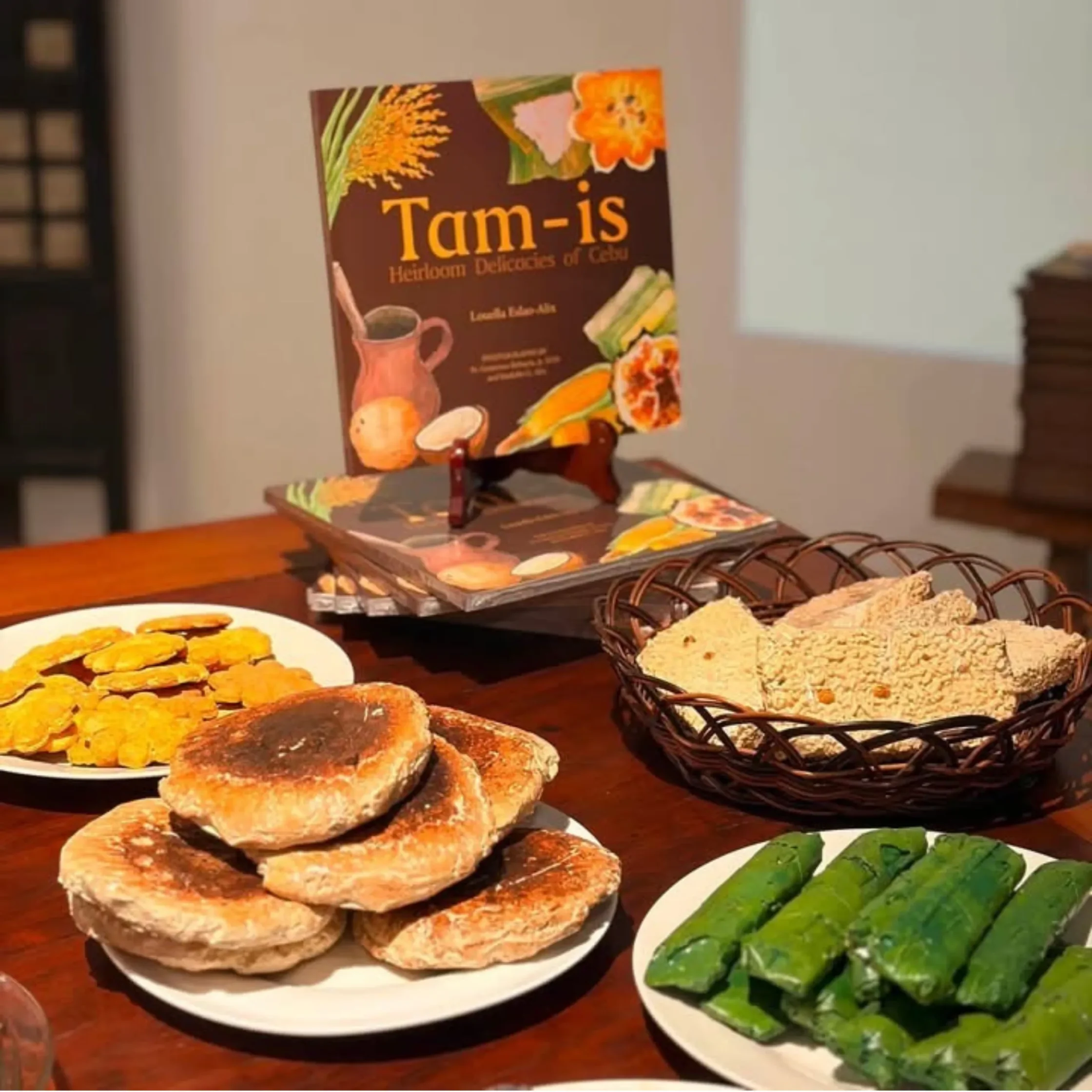
Take the bibingkaBibingkaA soft rice cake traditionally baked in a clay pot lined with banana leaves, with coals above and below. Topped with salted egg, cheese, butter, and grated coconut, it isGo to Bibingka Glossary, for example. “There are so many bibingka—Bibingka sa Catmon, sa Mandaue, sa Asturias. I looked for the more popular ones. We talked to the makers and they were willing to share the recipes.”
While those selling on the streets were quick to teach her how it’s done, it’s the old ladies who keep their family’s heirloom recipes closely guarded that took some convincing and gentle coaxing. The local vendors—like the women selling pan bisaya who line the barrio streets every afternoon, selling loaves meant to be eaten immediately before they turn tough—were surprisingly very open. They didn’t mind being documented in print and in video; they welcomed it.
Alix’s 2017 field trips hold much more meaning because of her cherished crew of two: her photographer, who happened to be a university VP, and her husband, who passed away in March. “The two of them had a nice time taking pictures,” she recalls with fondness. Back then, everyone was still in good health. But when the pandemic hit years later, the toll of time caught up, making those archival snapshots feel even more precious.
How Tam-is Went From a Forgotten Manuscript to a Published Book
Because of COVID and the change in school administrations, her manuscript was momentarily shelved in a digital folder, forgotten by the institution that commissioned it.
Until last December.
The publishing house’s new manager came looking for Alix because Hikay had completely sold out and needed a reprint. “During the meeting I casually mentioned that I had another book that was ready for printing.” They hadn’t even known.
By April 2026, the files were pulled and dusted off. “The book had always been ready,” said Alix. “It just needed final touches, a couple of updates, some pictures that had to be added. It took us about one month to fix and adjust and then it went to printers.” By the end of July, Tam-is was out.
The Culinary Discoveries That Make Cebu’s Food History Unique
For Alix, the thrill has always been in the discovery and the opportunity to tell others about it. Writing Hikay and Tam-is wasn’t just about collecting recipes; it was culinary archaeology. While tracing Cebu’s roots, she discovered that the island does have its own version of tamales—hidden in plain sight under the local name tamaus. She uncovered timke, a Chinese-inspired braised chicken cooked with Mallorca wine.
She learned the profound history of binignit. In a province where rice is only grown in a handful of towns, locals improvised brilliantly, turning to landang—raw sago harvested from the buri palm. The process is practically epic: once a buri tree flowers and fruits, it dies. Farmers chop the trunk, slice it, sun-dry it, pound it, and wash it into flour. They use it for puto, suman, and ginataan. There is even a folk song dedicated entirely to the laborious process.
“Fifty years from now, if a Cebuano wants to cook this dish, swerte pa because it’s documented,” Alix says.
All thanks to her.
Frequently Asked Questions
Louella Alix is a food author and culinary researcher dedicated to preserving Cebu’s heritage cuisine. She is the author of Hikay: The Culinary Heritage of Cebu, which focuses on the province’s savory dishes, and Tam-is: Heirloom Delicacies of Cebu, which documents traditional regional merienda and kakanin.
The manuscript sat shelved for seven years after COVID-19 and changes in university administration stalled the project. A new publishing manager rediscovered it last December while arranging a reprint of Alix’s first book, Hikay, and Tam-is was finalized and published by the end of July 2026.
Alix traveled across the island of Cebu town by town. While street vendors and local makers were very open to sharing their recipes and being documented, she had to use gentle coaxing to convince older women who kept their family heirloom recipes closely guarded.
Her research uncovered unique dishes and ingredients, including tamaus (Cebu’s local version of tamales), timke (a Chinese-inspired braised chicken cooked with Mallorca wine), and landang (raw sago harvested from the dying buri palm, used as a substitute for rice in dishes like binignit, puto, suman, and ginataan).
Alix views her work as a form of “culinary archaeology.” By thoroughly documenting traditional processes, such as the laborious production of landang from the buri palm, she ensures that future generations of Cebuanos will still have access to authentic recipes and culinary history fifty years from now.