Advertisement

What Are The Differences Between Lugaw, Goto, & Arroz Caldo?

There are 4 subtle but important distinctions between these comforting rice porridges.

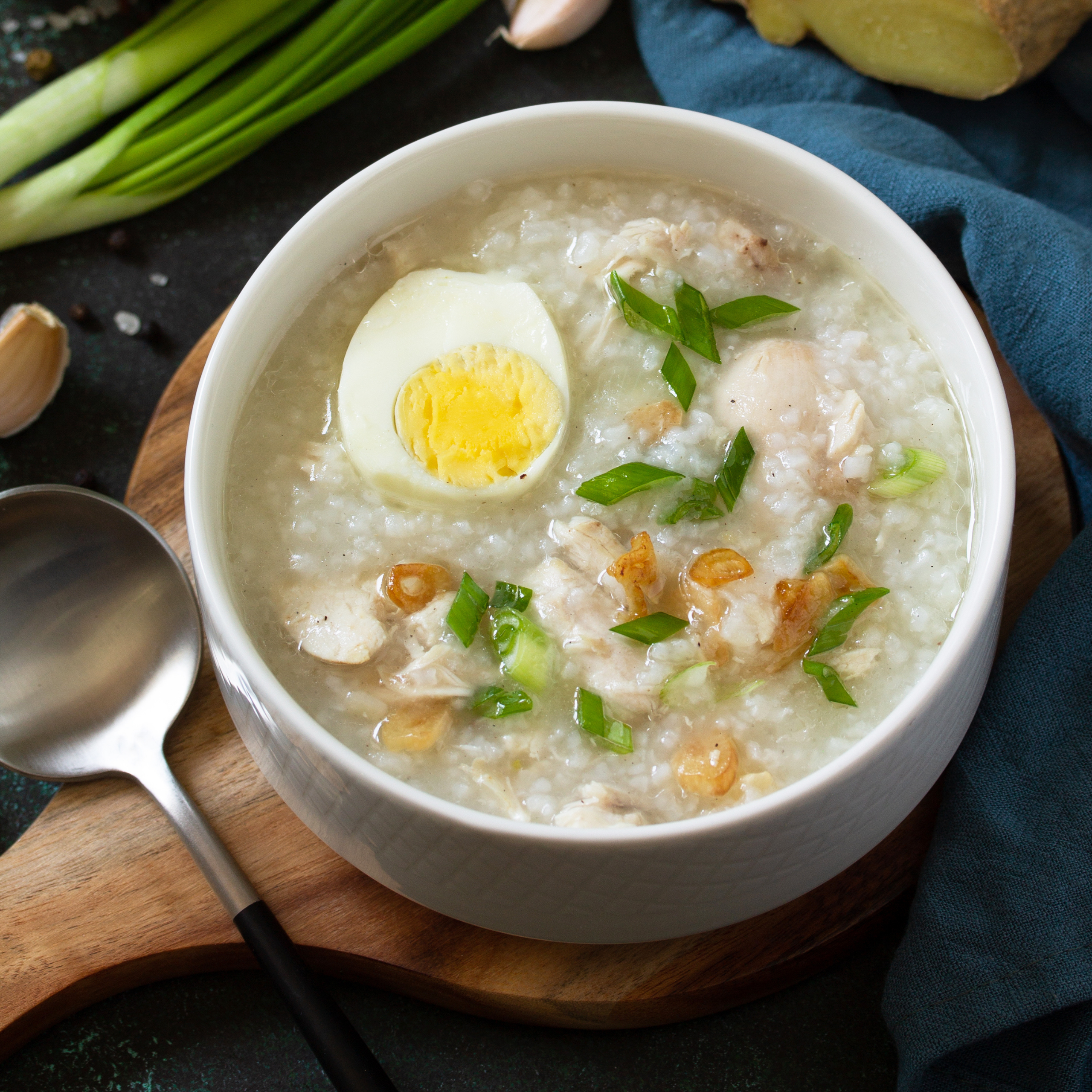
A white bowl of creamy chicken rice porridge topped with a halved boiled egg, scallions, and crispy fried shallots, served with a spoon on a wooden board.
Can you spot which comforting bowl is on your table?

Rice Porridge is one of the ultimate comfort foods in the Philippines. 

It’s a cure-all dish that brings warmth on rainy days, relief when you are under the weather, and a soothing embrace no matter the hour. 

But while terms like lugaw, goto, and arroz caldo are often used interchangeably, they are far from identical.   

Rooted in a history that dates back centuries, with “logao” first documented as far back as 1613 by friar and historian Fr. Pedro de San Buenaventura, these rice porridges have evolved into distinct culinary staples.

Here are the 4 subtle yet important differences to help you set them apart. 

1. Rice and Broth Preparation

This is for those who are actually doing the cooking. Even if they look fairly similar does not mean they are prepared the exact same way.

Lugaw serves as the ultimate umbrella term for Filipino rice porridge. Standard plain lugaw is made simply by boiling rice in water or basic broth, resulting in a mild, neutral dish customizable with seasonings and toppings.

When making arroz caldo, the rice is traditionally sautéed first with garlic, ginger, and onion in a pot before adding broth like chicken stock. This sautéing step infuses the grains with an aromatic, deeply savory foundation before they break down into a thick porridge.

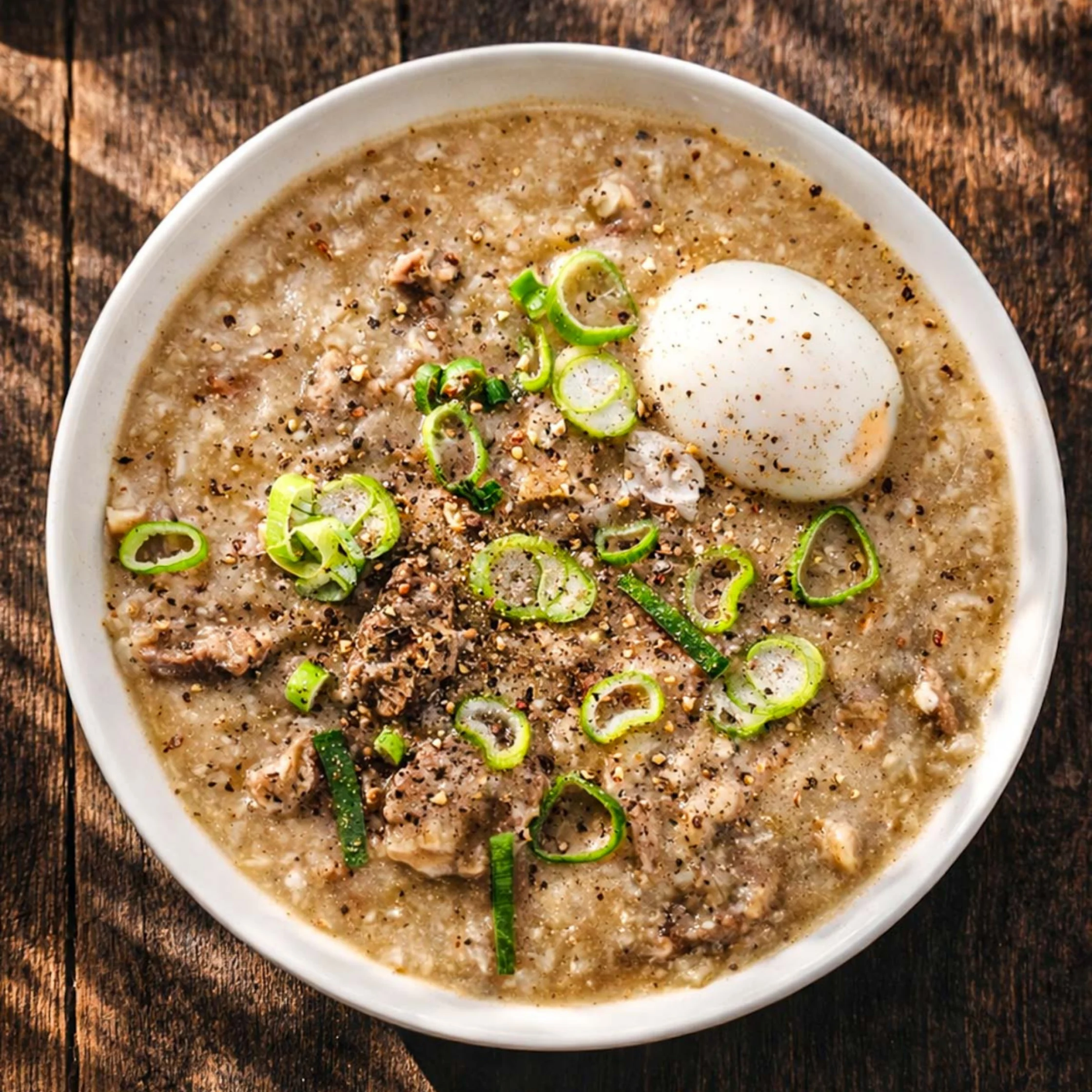
In goto, the rice is cooked in a rich, hearty broth derived from simmering beef bones, marrow, or offal for extended periods, giving the porridge a distinctly robust, beefy flavor profile.
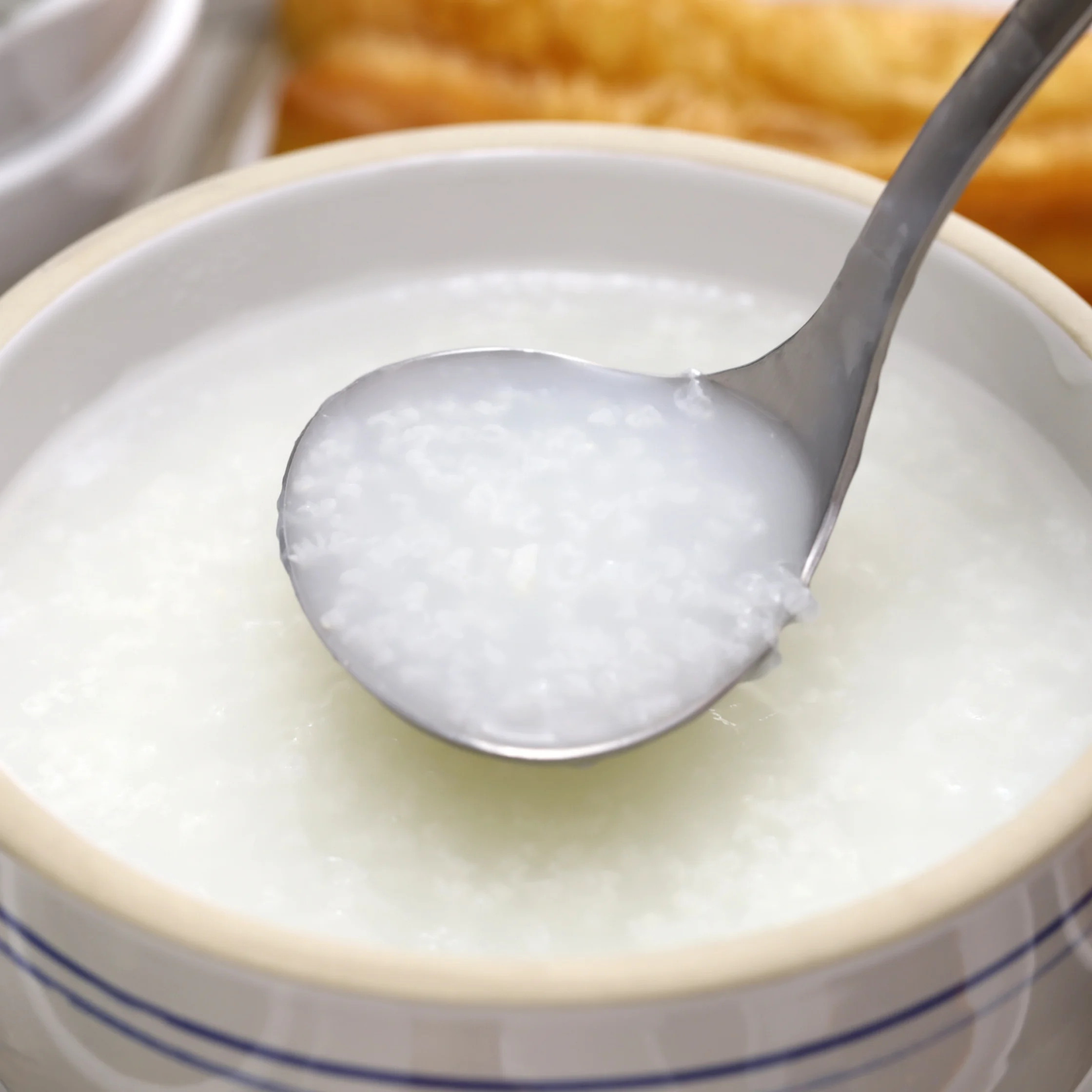
A metal spoon lifts thick white rice porridge from a ceramic bowl, with golden fried dough in the background; the scene feels warm and comforting.
Rice gently simmered in water or light broth to create a smooth, neutral foundation.

2. Main protein 

The most immediate way to distinguish between the three bowls lies in what is floating inside. 

Because lugaw serves as the ultimate blank canvas and base, it typically contains no meat on its own, though it is commonly dressed up with a hard-boiled egg, toasted garlic, spring onions, and chicharon. One of my favorite foods to eat with lugaw are fried tofu and spicy toyomansi.

Goto takes a heartier, savory turn with beef ox tripe or tuwalya, beef, pork, or other innards.

Meanwhile, arroz caldo features chicken as its star protein, seamlessly blending tender pieces into the porridge as it simmers.
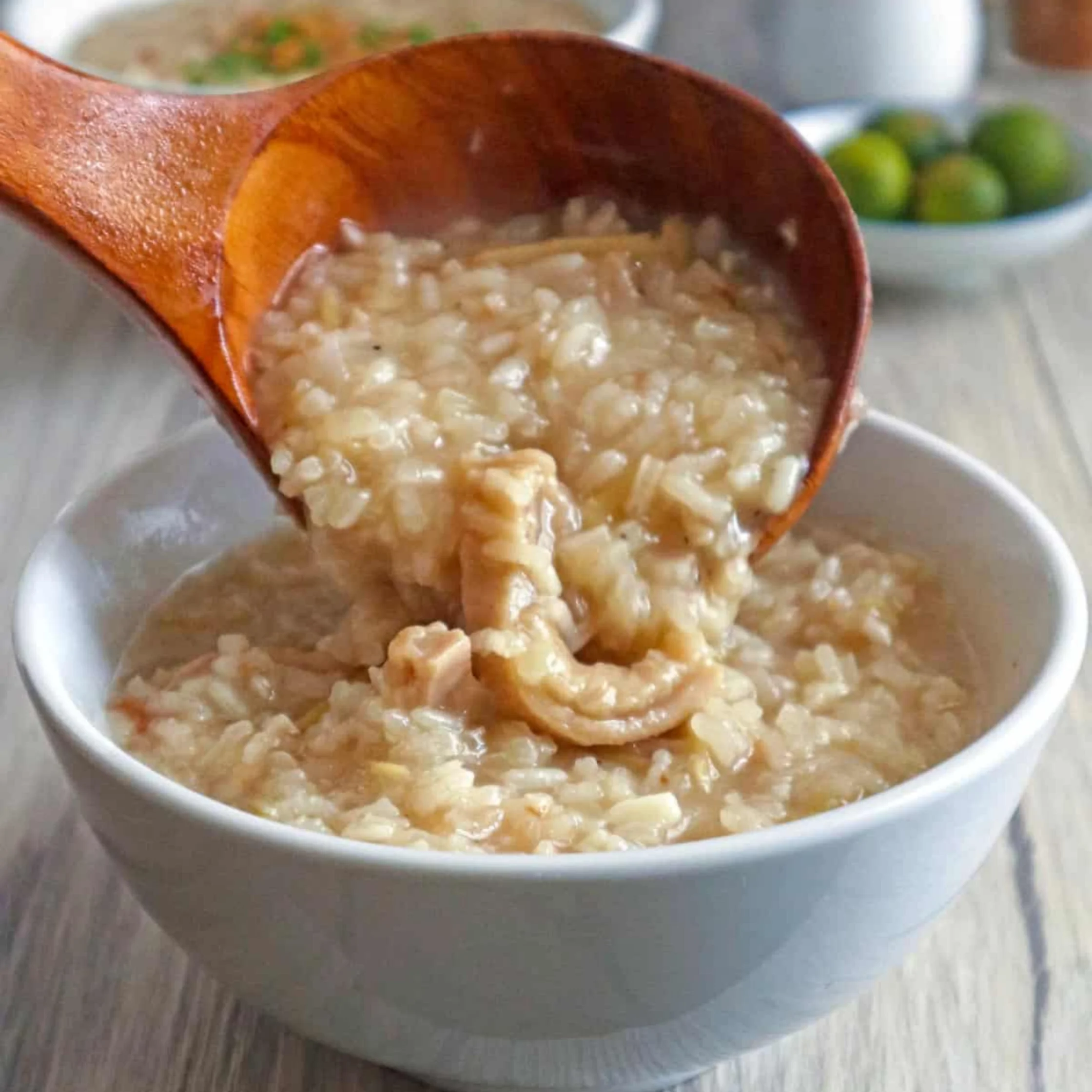
A wooden ladle pours steaming rice porridge with tender chicken into a white bowl, creating a warm, comforting meal on a bright kitchen table.
Classic goto is packed with tender beef ox tripe or tuwalya [PHOTO COURTESY OF Kawaling Pinoy]

3. Seasoning

While all three rely on a comforting, ginger-and-garlic-forward foundation, their flavor profiles carry unique nuances. 

Lugaw keeps seasoning minimal, often relying on a splash of to let the subtle flavor of the broken rice shine.

In goto, the broth is infused with ginger and , and is typically served with a squeeze of calamansi to balance the rich, deep flavors of the beef offal.

Arroz caldo leans heavily into a robust aromatic profile powered by generous amounts of fresh ginger, sautéed onions, and garlic.

Arroz Caldo
Each one shares a foundation of ginger, garlic, and patis. [PHOTO COURTESY OF Ang Sarap]

4. Color

While someone’s own recipe may alter the color of the porridge ever so slightly, there are general guidelines that will tell you exactly which variety you are looking at. 

Lugaw and goto share a similar range from a pale, creamy off-white to a soft brown derived naturally from the simmering broth and ingredients.

On the other hand, arroz caldo is distinct for its warm golden-yellow hue. This traces back to Spanish colonial influence, when Spaniards grew fond of lugaw and began adding a pinch of saffron. Today, local kitchens achieve this signature color using kasubha or safflower.
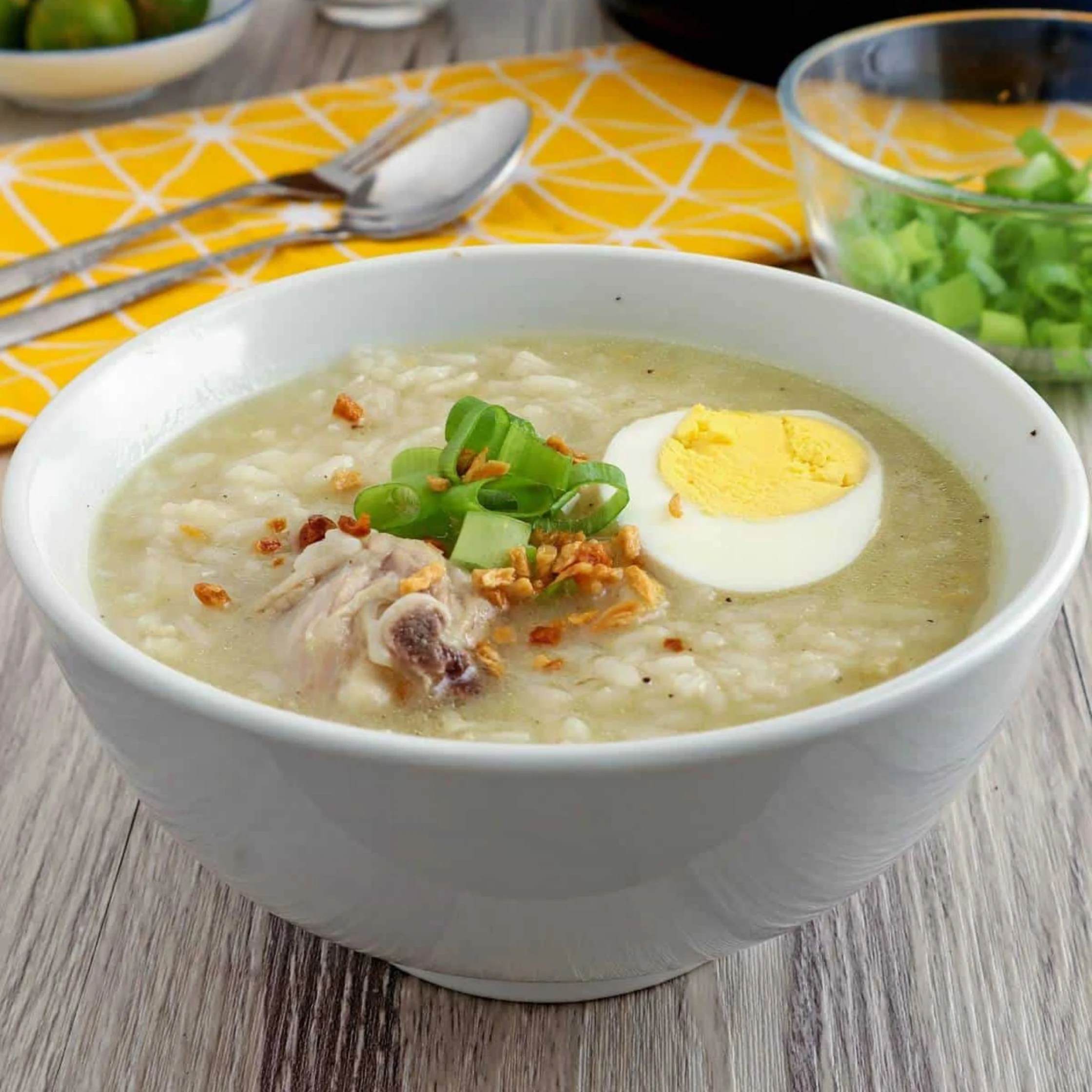
A white bowl of creamy chicken rice porridge, topped with boiled egg, scallions, and fried shallots, sits on a bright yellow tablecloth.
Arroz caldo is golden-yellow because of the kasubha or safflower [PHOTO COURTESY OF Kawaling Pinoy]

A Shared Symbol of Comfort

In my household, lugaw as a staple dish on our dining table went beyond being relatively easy to make. It felt like a love language all on its own as either my mom or my Ate Julie would make it whenever any of us are sick. Personally, there’s nothing more soothing than slurping hot rice porridge and occasionally biting tiny pieces of ginger speckled throughout.

Despite their differences, thousands of years and countless bowls served later, the true symbolism of Philippine rice porridge remains unchanged. Whether it is plain lugaw, rich goto, or golden arroz caldo, it remains a universal symbol of love and care. 

It is proof that Filipinos will always have a hot bowl ready to bring warmth to every table.

author avatar
Laura Mendoza Writer
Laura admits that she is a slow eater. She prefers to take her time with the food she likes to eat and the stories she wishes to write. Having graduated with a Creative Writing degree, she comes from a background in writing fiction and poetry. Because of this, she has set herself on a creative mission to explore and delve into what other modes and channels exist for stories and narratives to be told, expressed, and shared with others. For Laura, food as a medium is an exciting proposition. Behind every dish, every ingredient, and every cooking technique, there lies a history worth discussing, a human being worth listening to, a lived experience worth gleaning from. As a means to satiate her appetite for learning about and understanding new and known things, she aims to be the kind of food writer who is approachable, reliable, and personable to readers.

Frequently Asked Questions

While the terms are often used interchangeably, they are not identical. Lugaw acts as the umbrella term and mild base for Filipino rice porridge. Arroz caldo is a chicken-based porridge infused with sautéed aromatics and safflower, while goto is a heartier version featuring beef offal cooked in a beef bone broth.

author avatar
Laura Mendoza Writer
Laura admits that she is a slow eater. She prefers to take her time with the food she likes to eat and the stories she wishes to write. Having graduated with a Creative Writing degree, she comes from a background in writing fiction and poetry. Because of this, she has set herself on a creative mission to explore and delve into what other modes and channels exist for stories and narratives to be told, expressed, and shared with others. For Laura, food as a medium is an exciting proposition. Behind every dish, every ingredient, and every cooking technique, there lies a history worth discussing, a human being worth listening to, a lived experience worth gleaning from. As a means to satiate her appetite for learning about and understanding new and known things, she aims to be the kind of food writer who is approachable, reliable, and personable to readers.

For lugaw, uncooked rice is simply boiled directly in water or a basic broth

For arroz caldo, the rice is sautéed first with garlic, ginger, and onion before chicken stock is added, infusing the grains with aromatics.

For goto, the rice is cooked in a deep, hearty broth made by simmering beef bones, marrow, or offal for extended periods.

author avatar
Laura Mendoza Writer
Laura admits that she is a slow eater. She prefers to take her time with the food she likes to eat and the stories she wishes to write. Having graduated with a Creative Writing degree, she comes from a background in writing fiction and poetry. Because of this, she has set herself on a creative mission to explore and delve into what other modes and channels exist for stories and narratives to be told, expressed, and shared with others. For Laura, food as a medium is an exciting proposition. Behind every dish, every ingredient, and every cooking technique, there lies a history worth discussing, a human being worth listening to, a lived experience worth gleaning from. As a means to satiate her appetite for learning about and understanding new and known things, she aims to be the kind of food writer who is approachable, reliable, and personable to readers.

Arroz caldo gets its signature warm golden-yellow hue from kasubha or safflower. This practice traces back to Spanish colonial influence when Spaniards adapted local lugaw by adding a pinch of expensive saffron; today, local kitchens use kasubha to achieve the same vibrant look.

author avatar
Laura Mendoza Writer
Laura admits that she is a slow eater. She prefers to take her time with the food she likes to eat and the stories she wishes to write. Having graduated with a Creative Writing degree, she comes from a background in writing fiction and poetry. Because of this, she has set herself on a creative mission to explore and delve into what other modes and channels exist for stories and narratives to be told, expressed, and shared with others. For Laura, food as a medium is an exciting proposition. Behind every dish, every ingredient, and every cooking technique, there lies a history worth discussing, a human being worth listening to, a lived experience worth gleaning from. As a means to satiate her appetite for learning about and understanding new and known things, she aims to be the kind of food writer who is approachable, reliable, and personable to readers.

The main protein in goto is beef ox tripe or tuwalya, beef, pork, or other beef/pork innards and offal.

author avatar
Laura Mendoza Writer
Laura admits that she is a slow eater. She prefers to take her time with the food she likes to eat and the stories she wishes to write. Having graduated with a Creative Writing degree, she comes from a background in writing fiction and poetry. Because of this, she has set herself on a creative mission to explore and delve into what other modes and channels exist for stories and narratives to be told, expressed, and shared with others. For Laura, food as a medium is an exciting proposition. Behind every dish, every ingredient, and every cooking technique, there lies a history worth discussing, a human being worth listening to, a lived experience worth gleaning from. As a means to satiate her appetite for learning about and understanding new and known things, she aims to be the kind of food writer who is approachable, reliable, and personable to readers.

Lugaw is considered the umbrella term because it serves as the ultimate blank canvas and foundational base for all Filipino rice porridges. Its historical roots were documented as early as 1613 by the Spanish friar and historian Fr. Pedro de San Buenaventura, who recorded the term as “logao.”

author avatar
Laura Mendoza Writer
Laura admits that she is a slow eater. She prefers to take her time with the food she likes to eat and the stories she wishes to write. Having graduated with a Creative Writing degree, she comes from a background in writing fiction and poetry. Because of this, she has set herself on a creative mission to explore and delve into what other modes and channels exist for stories and narratives to be told, expressed, and shared with others. For Laura, food as a medium is an exciting proposition. Behind every dish, every ingredient, and every cooking technique, there lies a history worth discussing, a human being worth listening to, a lived experience worth gleaning from. As a means to satiate her appetite for learning about and understanding new and known things, she aims to be the kind of food writer who is approachable, reliable, and personable to readers.
Smiling woman with glasses tilted at an angle, wearing a blue top, against a light background.

Laura Mendoza

Writer

Laura admits that she is a slow eater. She prefers to take her time with the food she likes to eat and the stories she wishes to write. Having graduated with a Creative Writing degree, she comes from a background in writing fiction and poetry. Because of this, she has set herself on a creative mission to explore and delve into what other modes and channels exist for stories and narratives to be told, expressed, and shared with others. For Laura, food as a medium is an exciting proposition. Behind every dish, every ingredient, and every cooking technique, there lies a history worth discussing, a human being worth listening to, a lived experience worth gleaning from. As a means to satiate her appetite for learning about and understanding new and known things, she aims to be the kind of food writer who is approachable, reliable, and personable to readers.

0 0 votes
Total of Ratings
guest
Rating
Ratings for Article
0 Comments
Oldest
Newest Most Voted

To provide a customized ad experience, we need to know if you are of legal age in your region.

By making a selection, you agree to our Terms & Conditions.