

Toxic work environment—the food industry’s worst-kept secret anywhere in the world.
Behind the brittle façade of good food and warm, practiced smiles is the dark and depressing reality of the food world that we, both guests and industry professionals alike, conveniently sweep under the table at the first bite of perfectly seared scallops, a bottle of Krug, or the sound of praise and recognition.
Still, for many, food is life: It’s passion, it’s love, it’s community, it’s history. It’s something simultaneously consumed by necessity, enjoyed as leisure, savored as luxury, and appreciated as art. It’s an experience that is the most universal common ground, but also one that’s very personal, and why I believe so many are drawn to it—there’s something for everyone.
And yet, the food industry itself doesn’t reciprocate the romance.
Desensitized By Abuse and Corruption
A few months ago, the culinary world was abuzz with the allegations of years of abuse by Noma’s Redzepi towards his staff. Though, more notably, many weren’t shocked. And therein lies the issue: we are an industry so desensitized by abuse, news that would normally turn heads is simply brushed aside like yesterday’s prep.
Billy Wagner, owner and sommelier of Nobelhart & Schmutzig in Berlin (whose insights I admire greatly), points out the considerable gap between what the market is willing to pay and the quality of food it expects, and how a truer price reflection of the work that goes into food would likely make guests think thrice about dining out. Indeed, I can think of few other industries that are under as much constant scrutiny as F&B, where any reviewing platform gives guests the license to destroy. While I’m not suggesting exclusion from public criticism, the pressures and politics of a perpetually online culture do build up. After all, how does anyone correctly judge and objectively measure something as subjective as taste?
On top of this, rampant issues regularly plague the Philippines in every corner: inflation without assistance, ill-gotten PWD IDs, a largely disregarded agriculture sector, the most expensive utilities in Southeast Asia, and the billions of pesos lost to an incredibly corrupt and broken system, all of which the food industry is often at the receiving end.
Take It Out On The Little Guy In The Kitchen
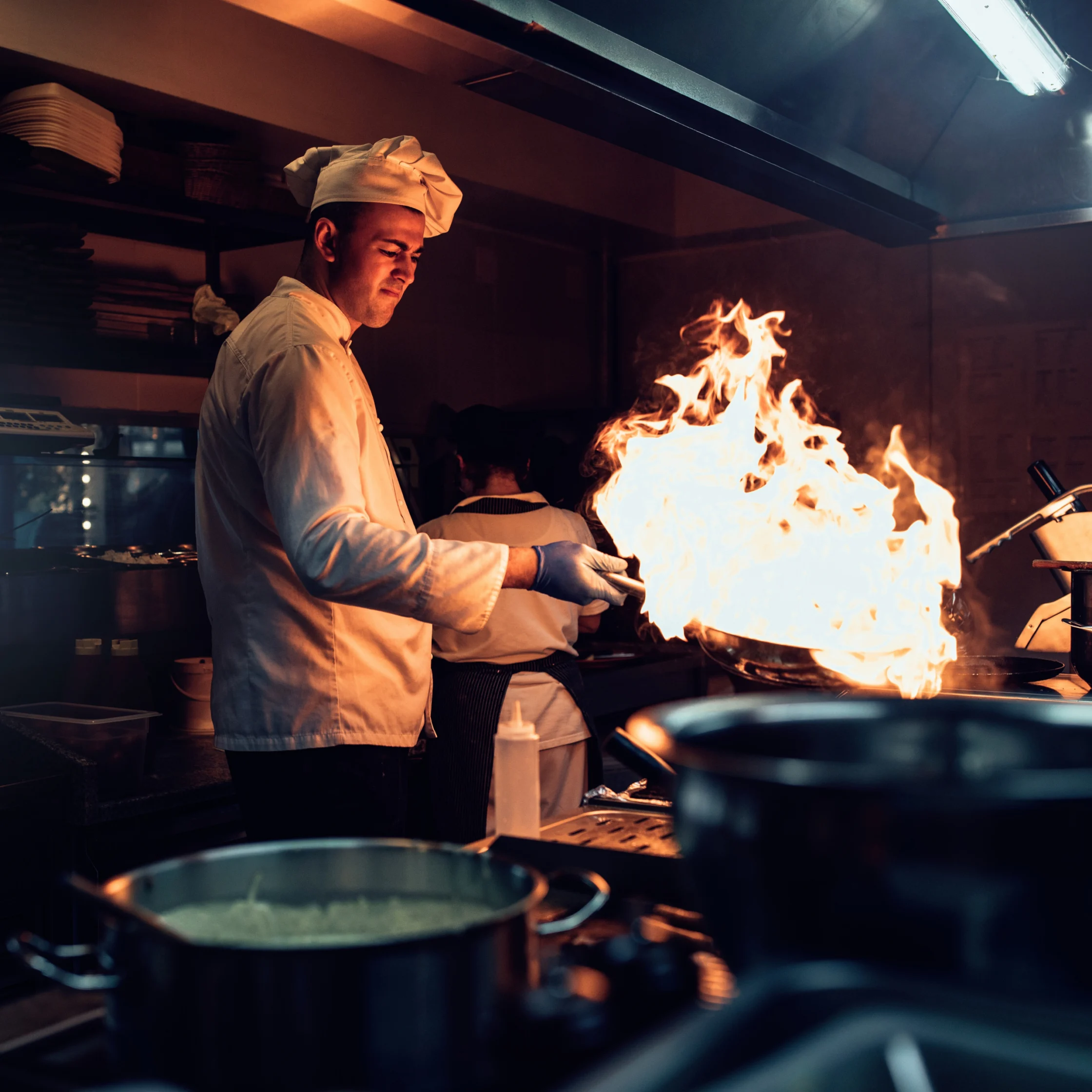
Thus, the industry compensates by exploiting the easiest targets: its workforce—one that, before the recent proliferation of culinary school, consisted mostly of outcasts and misfits who felt no place in the typical rhythms of the rest of the world. In here also lie the perfect conditions for abuse to fester: exhaustingly long work hours, poor working environments, compensation paid in insincere gratitude, and harassment of all kinds towards a group too powerless to fight back. Additionally, the deceivingly simple nature of cooking makes it easy to target the ego, which is reframed as a test of character. You got burned? Can’t keep up? Can’t cook a simple steak? Too much for you to handle? You gonna cry?
The endurance of violence is a rite of passage. It’s worn like a badge of honor—a twisted showcasing of physical, mental, and emotional superiority over those who are unable to handle the kitchen life. As this became the norm, society excused the perpetrators of abuse to give way to culinary genius. After all, diamonds are formed under pressure.

Correlation Does Not Equal Causation
Eventually, the abused become the abusers—the vicious cycle continues; the system locks itself in place. For a while, I was no different. I experienced my fair share of unwarranted cruelty. I spent years suffocating under the weight of the immense and unreasonable pressure; depriving myself of sleep, working consecutive shifts and never seeing the sun; and neglecting the cuts and burns I brandished like battle scars.
But the most difficult thing to deny was the correlation: through all the abuse, I did actually get better. I surpassed my colleagues who were once in higher positions, which hardened my belief that the more punishment I endured, the more successful I’d become. I began to crave the torment and eventually learned how to turn the anxiety into the fuel that burned within me, believing that an all-consuming obsession was the only way to greatness, and the normalization of abuse in the industry paved the road towards my future success.
Over the years, I’d like to think my perspective has matured. I see how the industry has misguided our mindsets in such rigid and painful ways, and I no longer have the same ambitions of my younger self. While they still remain high, the once violent fire now burns with a gentler, more patient flame, and it’s been for the better. At the very least, I no longer believe abuse is the only way up.

The Industry Still Has A Long Way To Go
Unfortunately, I think many of us in the industry are still too proud and unwilling to change—to unlearn the toxicity we experienced because maybe we feel it would negate decades of our own trauma. Maybe we think it’s unfair for the new generation to have it so easy when we never had a choice. Maybe we are so exhausted from the oppressive systems that we no longer see a way out. Maybe we’ve been so consumed by our obsessions that we have unknowingly allowed them to consume our humanity.
As for myself, I am far from perfect and even farther from being in a position to make the wide-scale changes I’d like to see. But there is so much potential in the Philippine culinary scene, and we are only just getting started. As we focus on fulfilling that potential, I believe we can also redirect our industry down a brighter path—one where we deny the culprits of our past trauma the satisfaction of perpetuating the toxicity they imparted onto us, and break the chains that hinder us from a more compassionate future.
Food is indeed life, but it is also just one of the many other aspects in life we must hold dear. May we never forget that.

Frequently Asked Questions
A toxic work environment can be identified as a workplace where negative behaviors occur frequently and chronic stress is rampant amongst employees.
Behind the scenes of the F&B industry is a very demanding, high stress environment. In the name of good food and service, employees in this industry are pushed to their absolute limit through long work hours, poor working conditions, and below average compensation.
There are many issues on a national level that have an effect on our local food industry, even if they are not directly about food per se. These include inflation, lack of attention on our agriculture sector, and systematic corruption.
The ones who suffer the most are the workforce, specifically the ones on the lower rank. An example of this can be seen in how much beginner chefs’ egos and overall character are targeted when their cooking skills are being questioned.
One way for our local industry to change for the better is to stop perpetuating the toxicty of today and to end the cycle of systematic abuse in the kitchen. Instead, introduce more compassionate ways of running the kitchen, all while still maintaining good quality of food and service.