

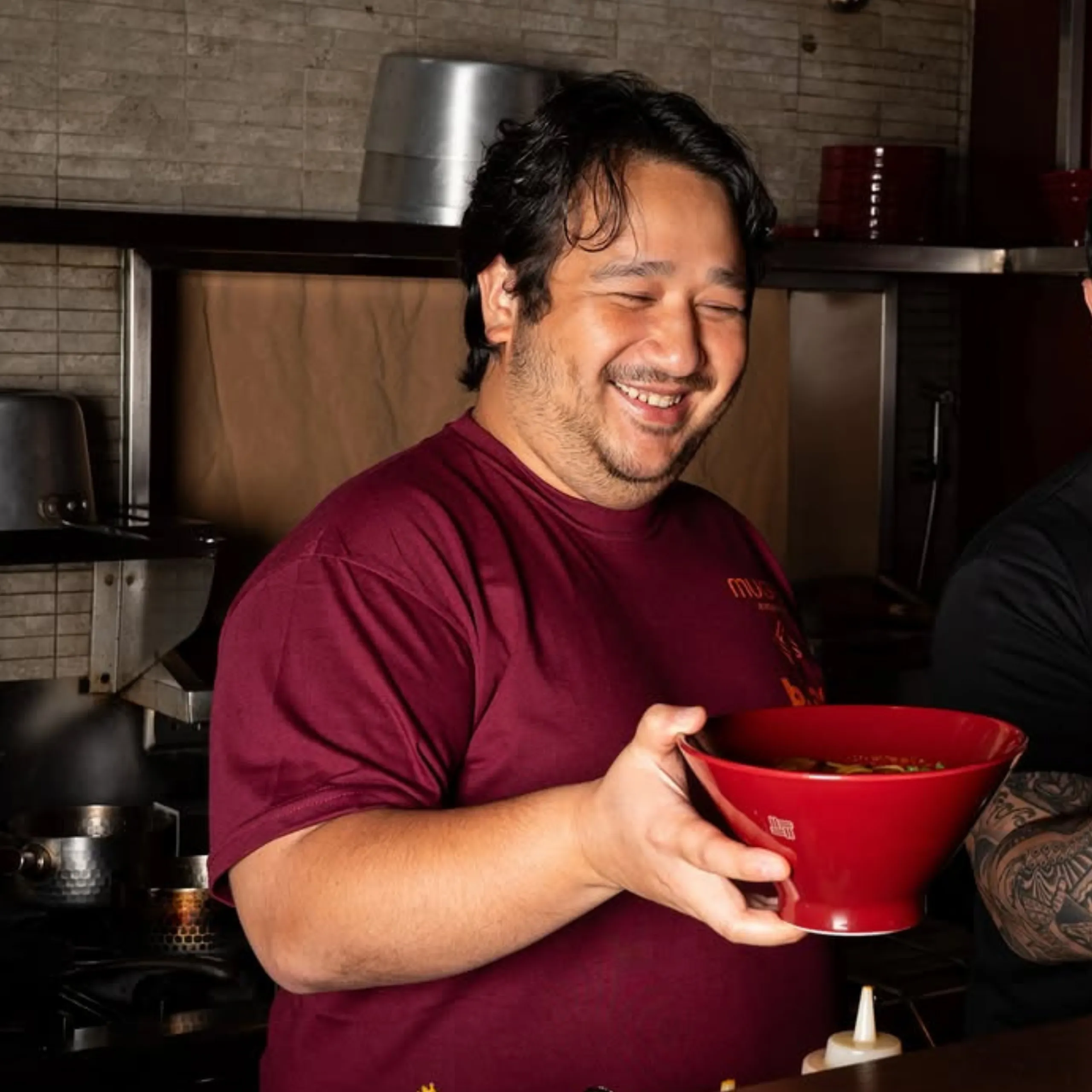
As part of the Fores family, and after years spent as a sous chef at Made Nice, he could have returned to the restaurant scene with a very clear idea of what he wanted his food to say. Instead, he came back with b.boi, a concept built around a much simpler question: “What do I actually want to eat?“
The answer, as it turns out, is almost anything.
Stepping Away From the Kitchen
B.boi began after Fores took a step back from cooking professionally. He had spent two years working on Mamou, opening around six branches in that time. “My parents were my bosses,” he says, eventually deciding he needed to explore what he wanted to do for himself, by himself.
It wasn’t a dramatic exit. He simply wanted some distance.
The idea for b.boi came somewhat unexpectedly. He and his wife were watching The Bear when she asked him what kind of restaurant he would open if he could do anything. “I thought about it—something casual,” he says. “I wanted to do something that was not intimidating. No fuss.”
That conversation eventually became b.boi.
What emerged wasn’t a restaurant built around a particular cuisine, but around Fores’ appetite. He calls it “comfort food without borders”—food that he, his wife, and his family actually enjoy eating. His one rule for the menu is that everything has to be a must-order dish. “If I see a bagnet, I’m gonna order,” he says. “If I see any lechonLechonWhole pig roasted over charcoal until the meat is tender and the skin turns shatteringly crisp. The star of any fiesta or celebration, lechon has regional variations across the Philippines,Go to Lechon Glossary kawali, I’m gonna order that. Or ikura, or chirashi. I’m probably gonna order that.”
There is something disarmingly straightforward about the philosophy. After years of being told that chefs have to pick a cuisine, Fores just wanted to figure out what food he really wanted to serve.
You Don’t Have to Pick a Cuisine
The advice that helped him get there came from chef Jorge Mendez. “You don’t really have to pick a cuisine,” Mendez told him. “You pick what’s your cuisine.” Mendez’s point was that your food can be its own thing—10% of this, 20% of that, and whatever you come up with, it’s 100% yours. With such profound advice, Fores laughs as he says wondering, “Jorge, man. How are you 2 years younger than me?” Fores describes it as one of the pieces of advice that stayed with him throughout his b.boi journey.
That meant allowing the menu to be as varied as his own appetite. Bagnet can sit beside fresh pasta. Steak can sit beside Filipino dishes. Raw seafood can share space with the kind of food Fores describes simply as something he likes to eat, whether it’s from his travels or simply the food he finds himself craving on a normal Tuesday night.
“The only difference is we’re not fusing them,” he says.
The distinction is important. He isn’t trying to take one cuisine and turn it into another. He’s letting different foods exist on the same table without claiming that they make sense together. And he doesn’t see this as particularly foreign to Filipino food. “If you look at Filipino food, I feel like it’s always been this hodgepodge,” he says.
He points to the many influences that have become embedded in the country’s food over time, from Chinese and Spanish cooking to American ingredients and traditions. Even something as ubiquitous as Spam, he argues, has become part of the Filipino culinary repertoire. For Fores, cuisine is less a fixed set of rules than something that naturally changes as people encounter new food, ingredients, and cultures.
With b.boi, he simply leans into that.
Cooking With Friends
That freedom has also shaped how Fores is building b.boi.
Rather than opening a permanent restaurant and presenting a fully formed concept, he has spent the past several months collaborating with chefs and restaurant friends with a “Friends Tour” edition. The collaborations are not an incidental part of b.boi’s rollout. They are part of how he’s showing what b.boi can become.
He has worked with chefs including Miko Calo, Jorge Mendez, Don Baldosano, and most recently collaborated with Donatello Montrone of Al Dente. Upcoming collaborations include Panaderya Toyo and Cutie Pie, with more expected throughout the year.
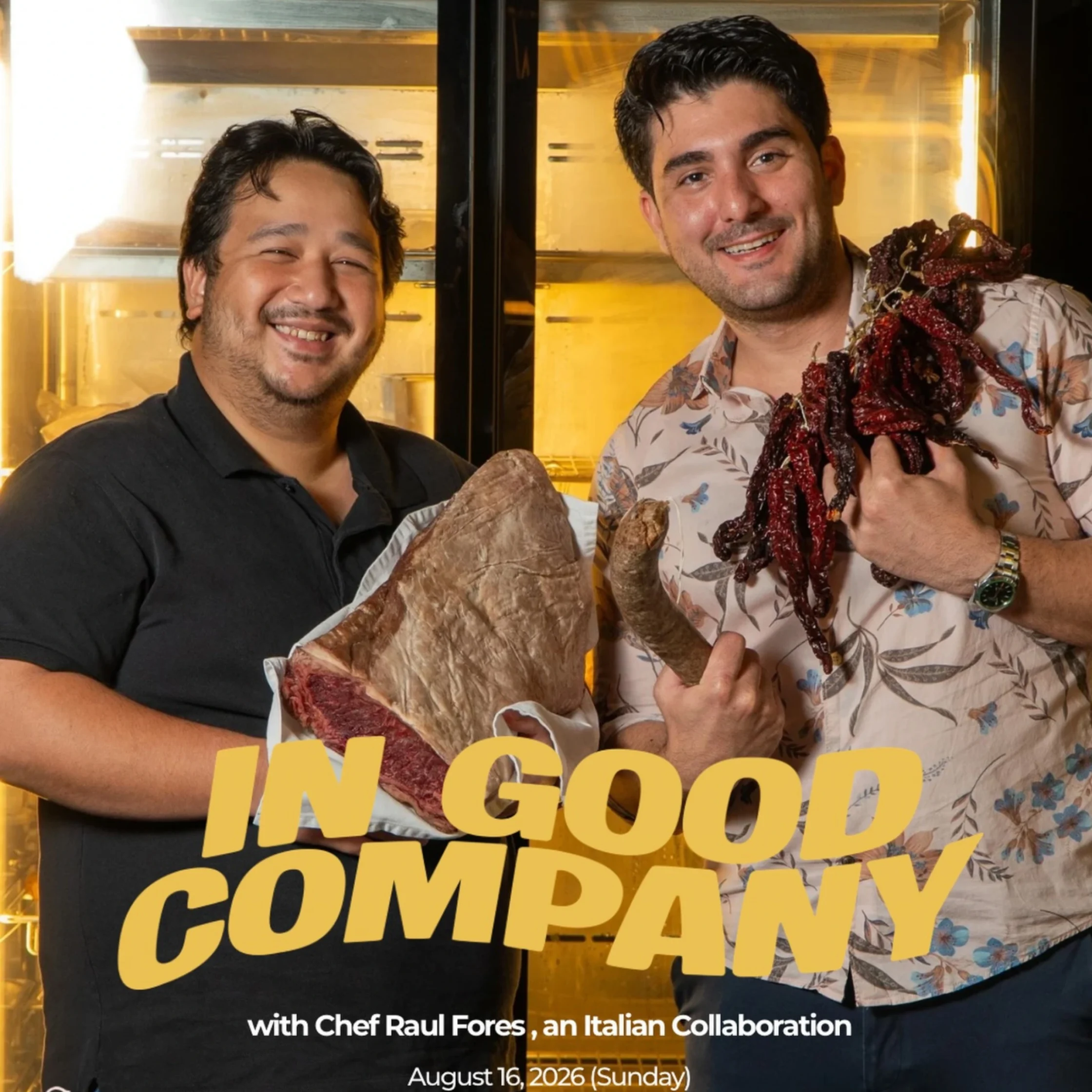
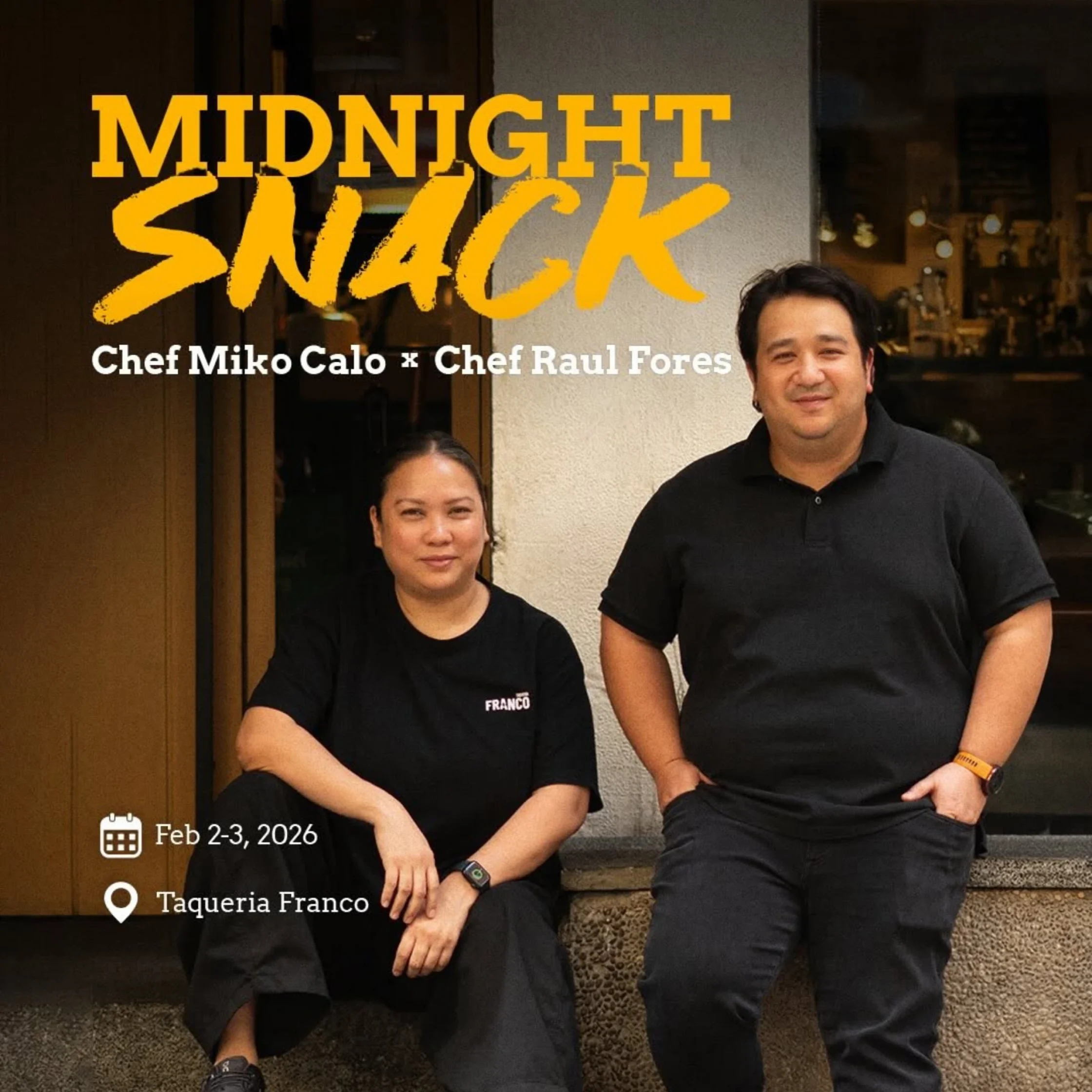
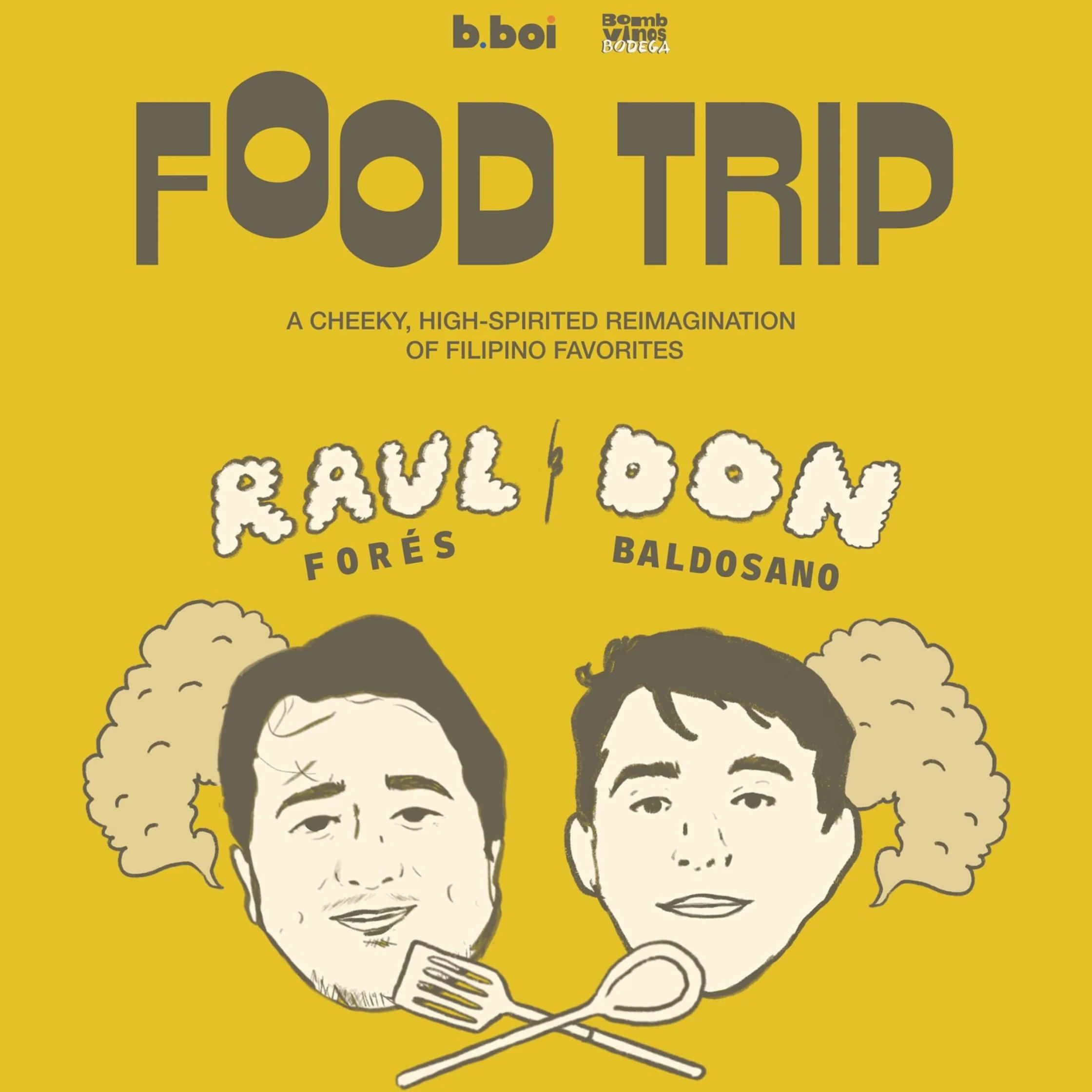
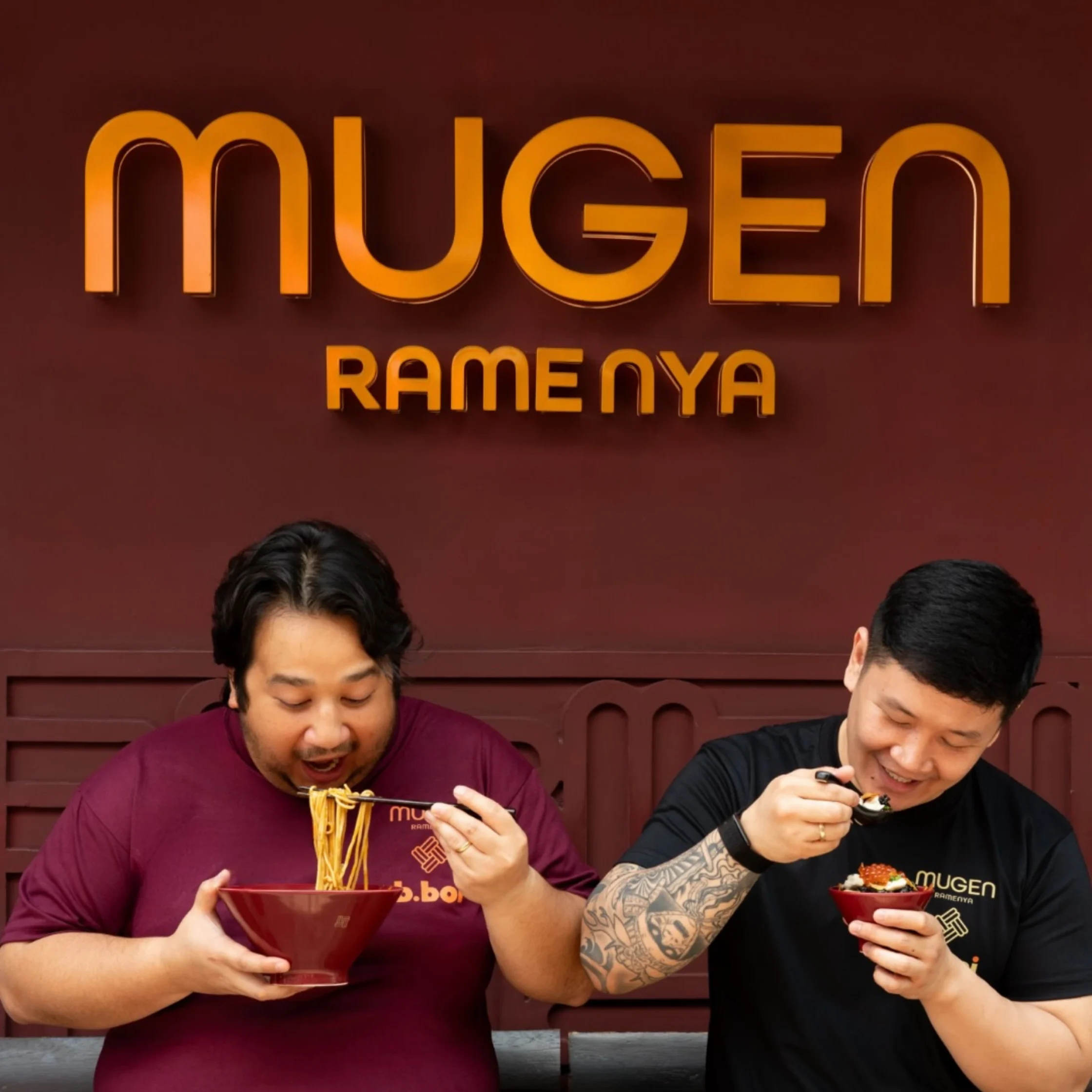
When asked how he chooses his collaborators, Fores’ answer is almost as simple as his philosophy on food. “The whole collab series is supposed to be called b.boi Friends,” he says. “It really is just people that I get along with, and we like food in very similar ways.” That makes the collaborations feel less like strategic partnerships and more like an extension of his social life: people he enjoys, food they have in common, and the happy curiosity of seeing what happens when they cook together.
Finding Common Ground at Al Dente
His recent collaboration with chef Donatello Montrone of Al Dente is a good example of how b.boi’s loose philosophy plays out in practice.
The collaboration came at an interesting point for Donatello, too. As he prepares to open Moderna, a new concept that will allow him to explore beyond the more traditional Italian cooking of Al Dente. The collaboration gave the two chefs a chance to meet somewhere in between; Fores wanted Donatello to bring something unmistakably his own to the table, while Donatello approached Filipino ingredients without trying to disguise them as Italian.
Everything came together when Fores asked Donatello for something personal: a pasta from his hometown—something his nonna might have made. That became their starting point.
“For the pasta, it’s something really from my own town, during summer,” Donatello says. “It’s a simple one.” The answer was Trittico Lucano, served with fermented mustasa and peperone crusco.
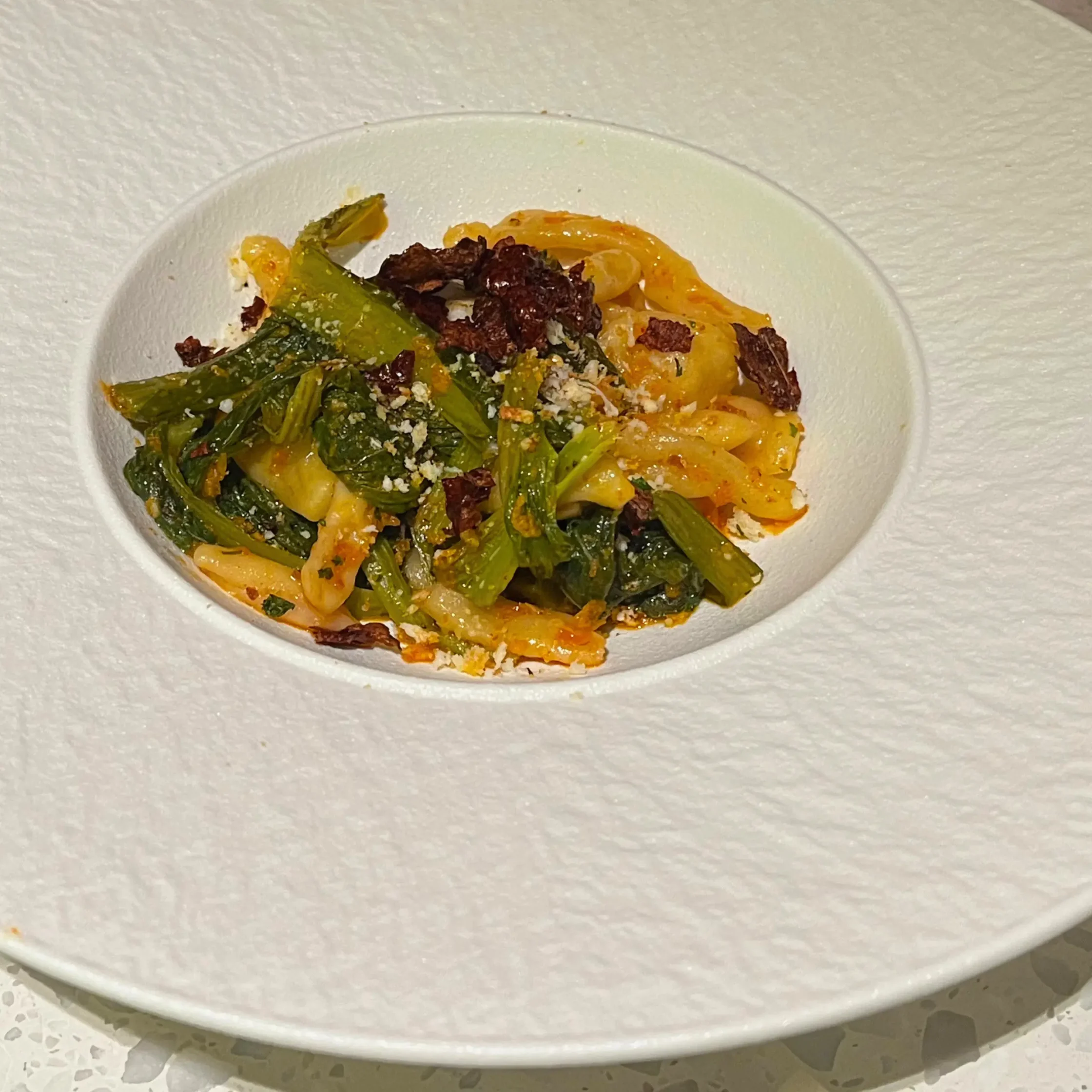
For Donatello, the Filipino ingredient that proved most interesting was mustasa. Our variation of mustard green can have a pronounced bitterness, but he found that something about its flavor was familiar enough to his own palate to work naturally with the dish. It wasn’t about taking a traditionally Italian preparation and making it more Filipino. It was about finding an ingredient that could exist within the dish without compromising what made either one work.
That instinct reflects much of how Donatello has approached cooking in the Philippines. Italian food comes with plenty of rules, and he has had to learn how Filipino diners respond to flavors that can be more acidic, bitter, or assertive than they are accustomed to. But rather than fundamentally changing his food to make it more familiar, he has largely held his ground. He told me that the adjustments he makes are about balance—using ingredients like calamansi or other elements available here when they help a dish land better—not about abandoning the character of Italian cooking he came here to make.
The composition felt relaxed and carefree; consisting of three different shapes of fresh pasta served in a single plate. And worked naturally, it did—it was my favorite thing on the menu as it felt like something hand-made that I would have at home with family.
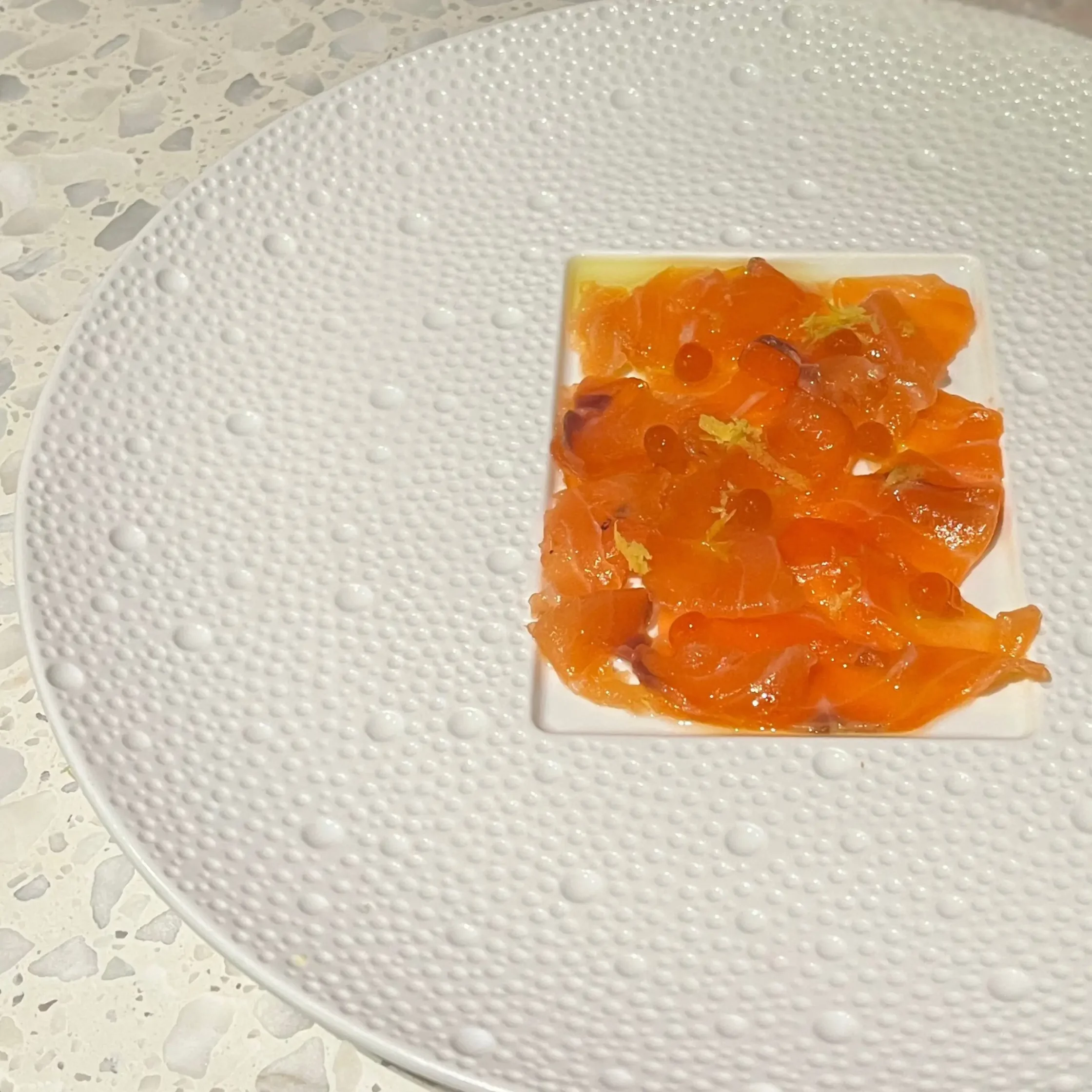
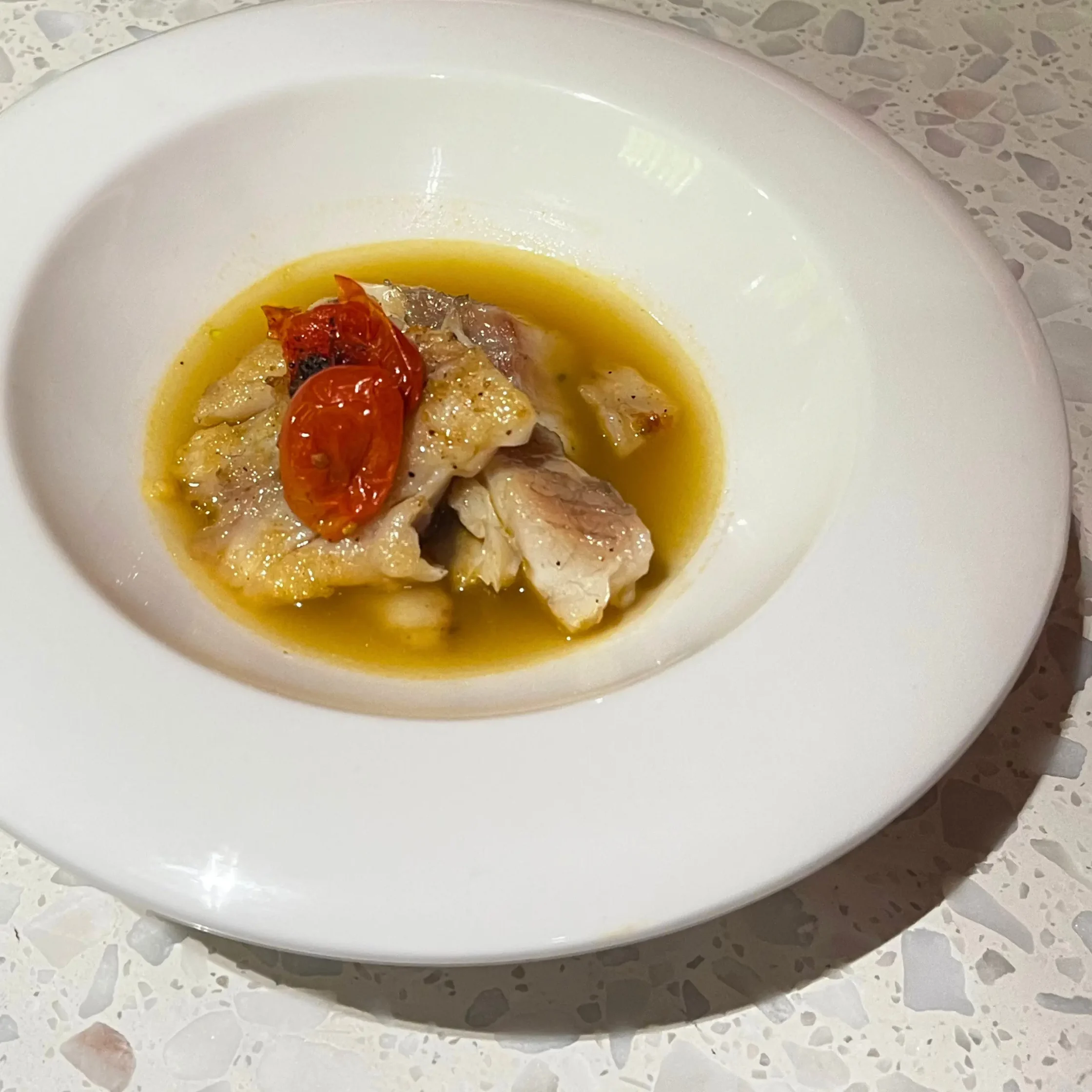
That same conversation between the two cuisines continued throughout the menu. There was Stracciatella Salad with kang kong, Salmon Carpaccio with ikura and olive oil, Barramundi All’acqua Pazza, and Spaghetti Talanka Aglio e Olio.
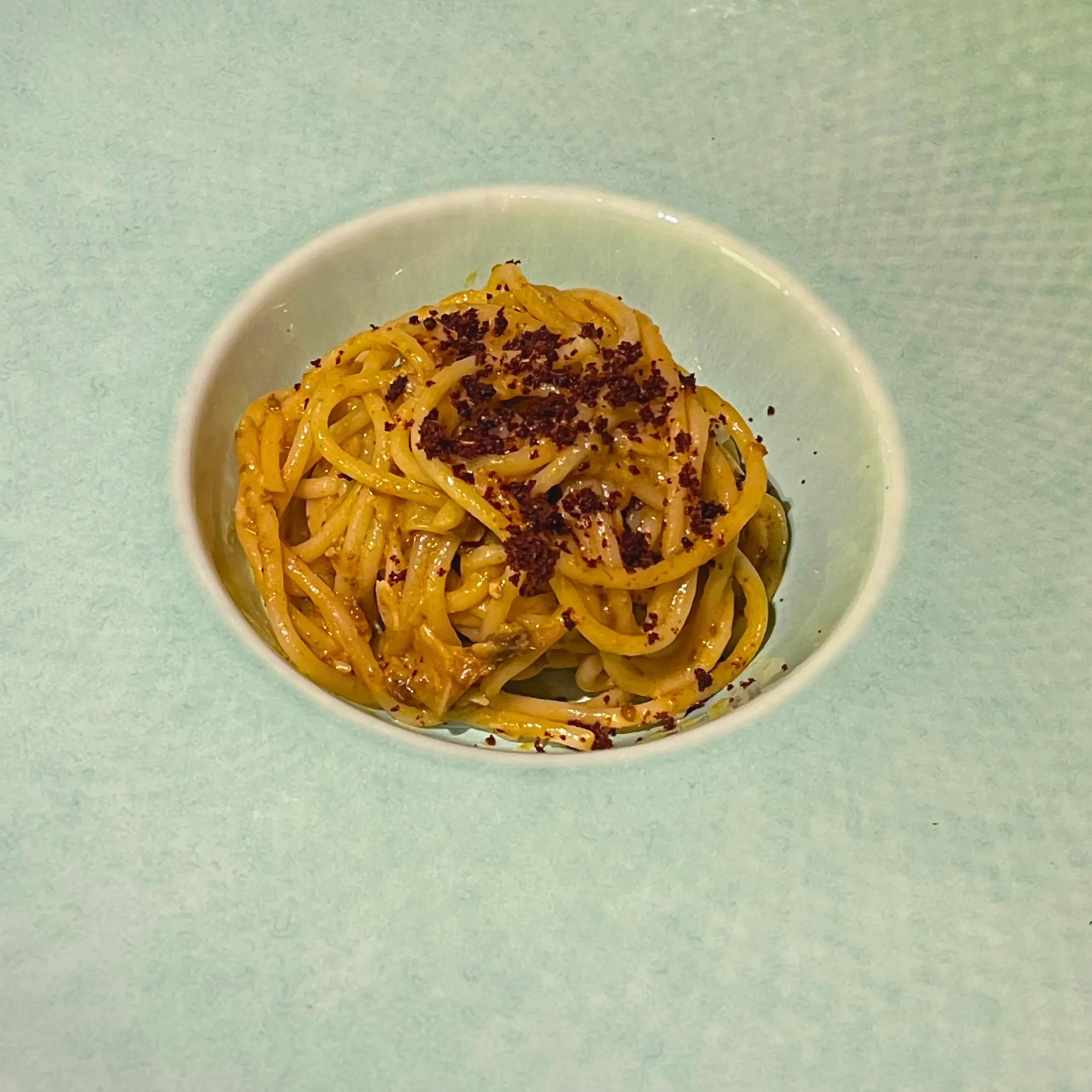
The Talangka pasta, in particular, had a history of its own. Fores says the dish goes back to when he returned from culinary school and his mother had started The Blue Kitchen, asking him to develop recipes using the ingredients they had. He made a simple preparation with talangka and oil then and brought the idea back for this collaboration, pairing it with Al Dente’s spaghetti. Only that this time, it was finished with powdered shrimp heads from Sicily, and it’s a rendition I won’t forget.
It was the clearest example of what b.boi is trying to do: not take Filipino food and dress it up as a different cuisine, but allow something distinctly Filipino to sit comfortably within a foreign framework—in this case, Italian.
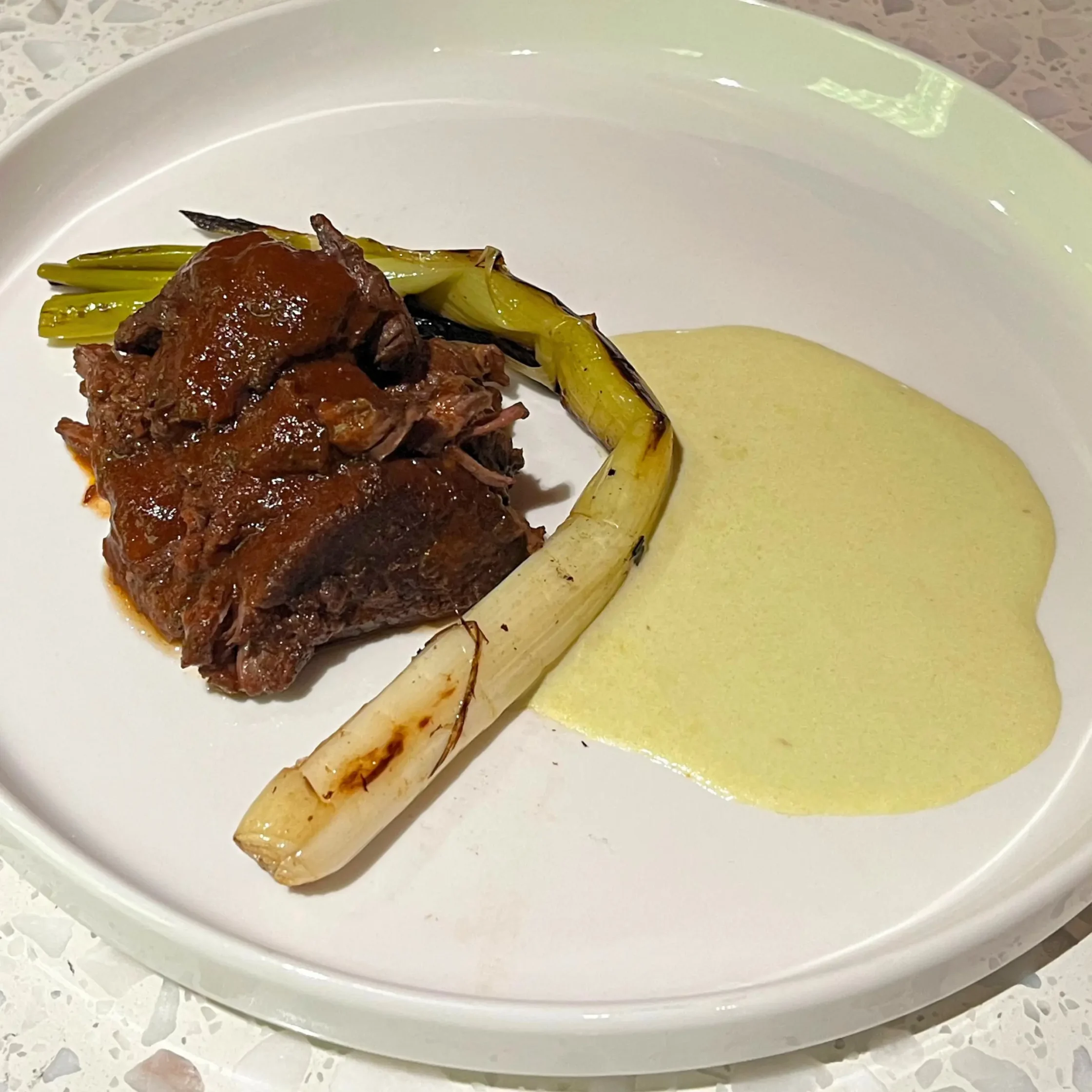
Even the Beef Cheeks with Charred Leeks leaned into something familiar to both chefs. For Donatello, the dish felt closest to home. The long cooking time, patience, and deep flavor reminded him of the stews he grew up with—an Italian sensibility that happens to have plenty in common with the way Filipinos approach dishes.
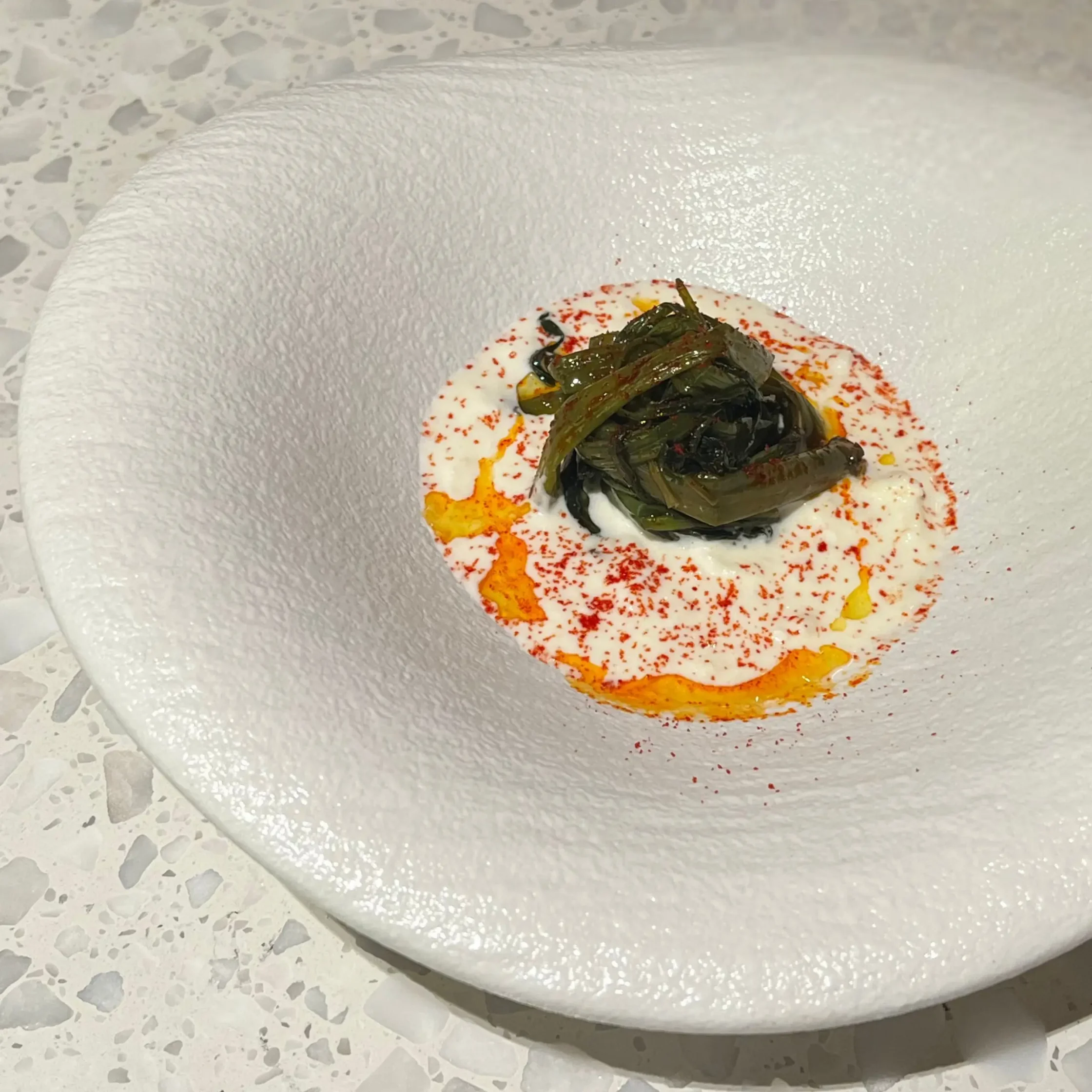
I would admit I was caught off guard when I saw stracciatella with kangkong on the menu, but once I stopped trying to make sense of it, it was simply stracciatella with kangkong, and it tasted good.
There’s something fitting about that. Fores has spent this stage of b.boi figuring out what he wants to cook by giving himself permission to follow his appetite. Donatello, meanwhile, has built Al Dente by staying remarkably committed to his own idea of Italian food, even while cooking for a Filipino audience. Neither needed to loosen their grip on what they knew for this collaboration to work.
The menu didn’t resolve similarities into a single identity. It was the result of two chefs recognizing something they both understood, without muddying the essence of what makes it good.
They just needed to find the places where their instincts already met.
Tradition Still Has a Place
For all its looseness, b.boi isn’t about throwing tradition out.
If anything, Fores seems more interested in giving tradition the freedom to exist alongside everything else he likes.
He talks about a bagnet dish that will eventually appear on the permanent menu that will come with a traditional Ilocano sauce he learned only recently from a family member.
No elaborate reinterpretation. No attempt to make it more contemporary. It’s just the way of eating bagnet that Fores genuinely enjoys.
That distinction feels particularly important for someone coming from a family so deeply associated with food. Fores isn’t rejecting his culinary inheritance, nor is he trying to escape the expectations that come with his name.
He’s making room for more things.
The same instinct is evident in the Al Dente collaboration. Donatello wasn’t asked to abandon Italian cooking, and Fores wasn’t trying to make every dish Filipino. Instead, they looked for the points where their cooking already made sense together: a bitter fermented mustard green with Lucano’s traditional pasta, a Filipino crab-based pasta preparation with Al Dente’s spaghetti, slow-cooked beef cheeks that could speak to both Italian and Filipino ideas of comfort.
It’s a subtle distinction, but an important one.
So much of the conversation around food eventually comes back to belonging and home. But what’s interesting about b.boi is that Fores doesn’t decide what either of those things should look like, and it’s hard to find places that translate a philosophy this well.
What b.boi isn’t doing is making everything belong to the same cuisine. It’s making different things belong at the same table. Perhaps that is closer to the tradition he’s actually preserving.
A lola might make sure there’s hotdog for one grandchild, fried chicken for another, adobo for someone else, and a pot of something slow-cooked sitting in the middle for everyone to share—all at the same breakfast. There isn’t necessarily a single logic holding it all together.
The logic is that everyone gets fed.
In an era of tasting menus, carefully paced courses, and restaurants built around a single culinary point of view, there is something refreshing about a place that doesn’t ask you to choose a cuisine before you sit down. You can come with friends who want completely different things, order what speaks to each of you, and still share the same table.
Maybe that’s what makes b.boi still feel so Filipino in the first place. It makes sure there’s something for everyone at the table to enjoy.
Letting Himself Play
While it would be easy to imagine that his next restaurant would arrive tailed by significance, speaking with Fores felt like a breath of fresh air. His excitement for food shone from the moment I asked him my first question. He beamed about talangka, bagnet, and chirashi the same way he beamed about the wines and sake they’re exploring for the final menu.
He stepped away from the restaurant world, took some time to figure out what he wanted, and came back without the need to declare where his cooking belonged. Where he has landed feels like its own thing, and it’s one that is earning its place on its own merits. Even without knowing the name behind it, it’s exciting to see where this goes.
The collaborations are still coming. The menu is still changing. The permanent b.boi is still taking shape.
That uncertainty doesn’t seem to bother him.
If anything, it seems to be where he’s having the most fun.
He wants to eat good food. He wants his family to enjoy it. He wants to cook with friends whose food he respects. He wants diners to be able to order whatever sounds good to them.
And he wants to see what happens.
After years of being told that a chef needs to choose a cuisine, he’s found himself comfortable in just choosing what he likes instead.
b.boi is the result—and, for now, a very fun experiment.
b.boi is slated to have more collaborations over the year, with a brick and mortar place by the end of the b.boi friends series.

Frequently Asked Questions
b.boi is Raul Fores’ restaurant concept centered on what he calls “comfort food without borders.” Rather than focusing on one cuisine, the menu brings together dishes he, his family, and friends genuinely enjoy.
It means b.boi isn’t tied to a single culinary tradition. Filipino dishes can sit alongside pasta, steak, raw seafood, and other foods without trying to fuse them into one cuisine.
Fores has collaborated with chefs including Miko Calo, Jorge Mendez, Don Baldosano, and Donatello Montrone of Al Dente. Upcoming collaborations mentioned in the article include Panaderya Toyo and Cutie Pie.
The collaboration with Donatello Montrone featured dishes such as Trittico Lucano with fermented mustasa and peperone crusco, Stracciatella Salad with kang kong, Salmon Carpaccio with ikura, Barramundi all’Acqua Pazza, Spaghetti Talanka Aglio e Olio, and Beef Cheeks with Charred Leeks.
The concept allows tradition to exist alongside new influences. Fores embraces Filipino dishes and traditions, while his collaborations give chefs like Donatello room to maintain the character of their own cuisine.