

Simplicity requires serious work because there’s nowhere to hide when the food is modestly uncomplicated.
That’s especially true of Japanese cooking, where a slice of fresh fish, a hand-formed mound of properly seasoned rice, and the lightest touch of wasabi can compose an entire bite. No elaborate garnishes, no tableside spectacle can come to the rescue.
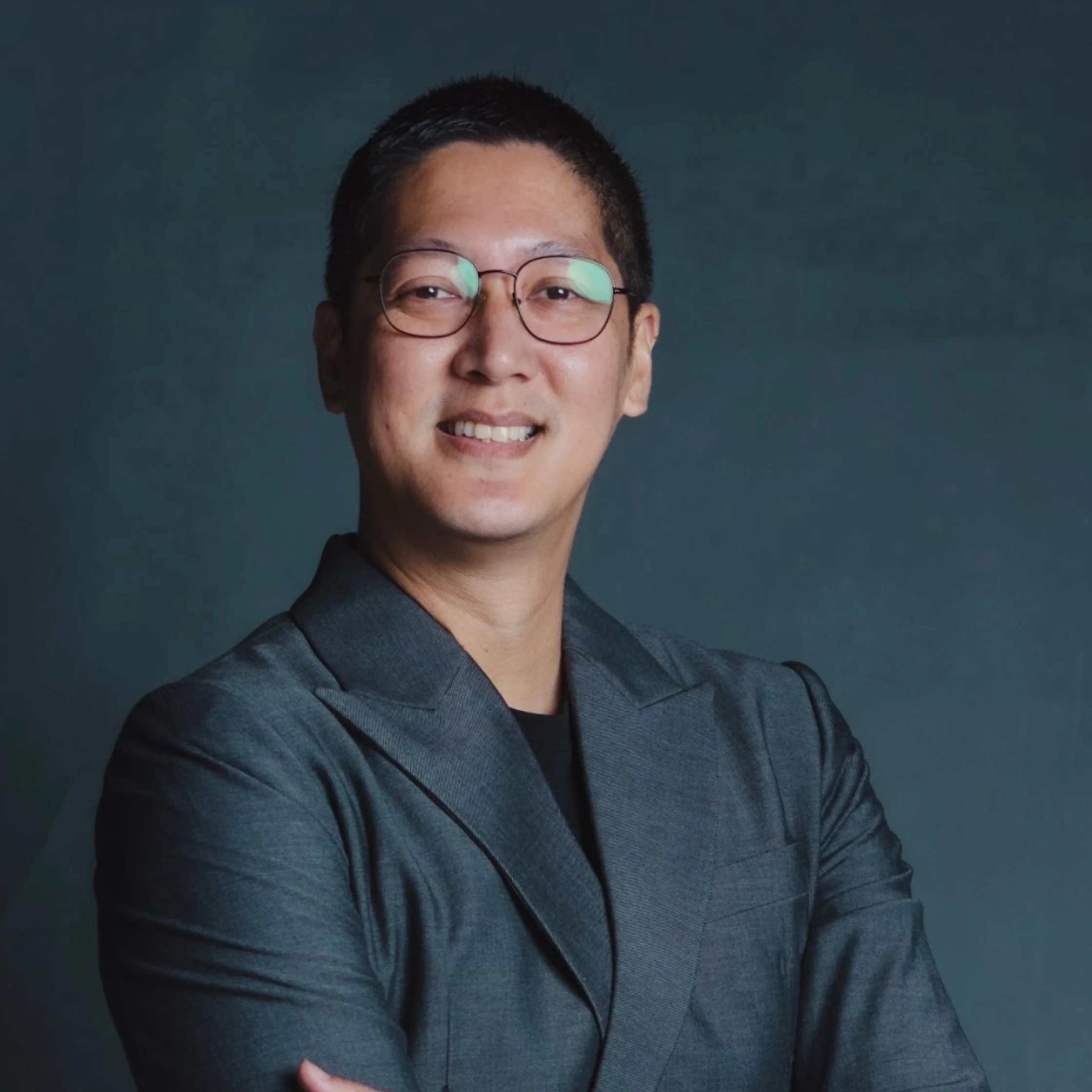
Hinoki, a new Japanese restaurant along Arnaiz Avenue in Makati, recognizes this. And it’s a good thing that chef Yusuke Hino is the one behind the table as he’s got decades of experience to make his argument for keeping things simple very convincing.
Inside Hinoki, Makati’s New Japanese Restaurant
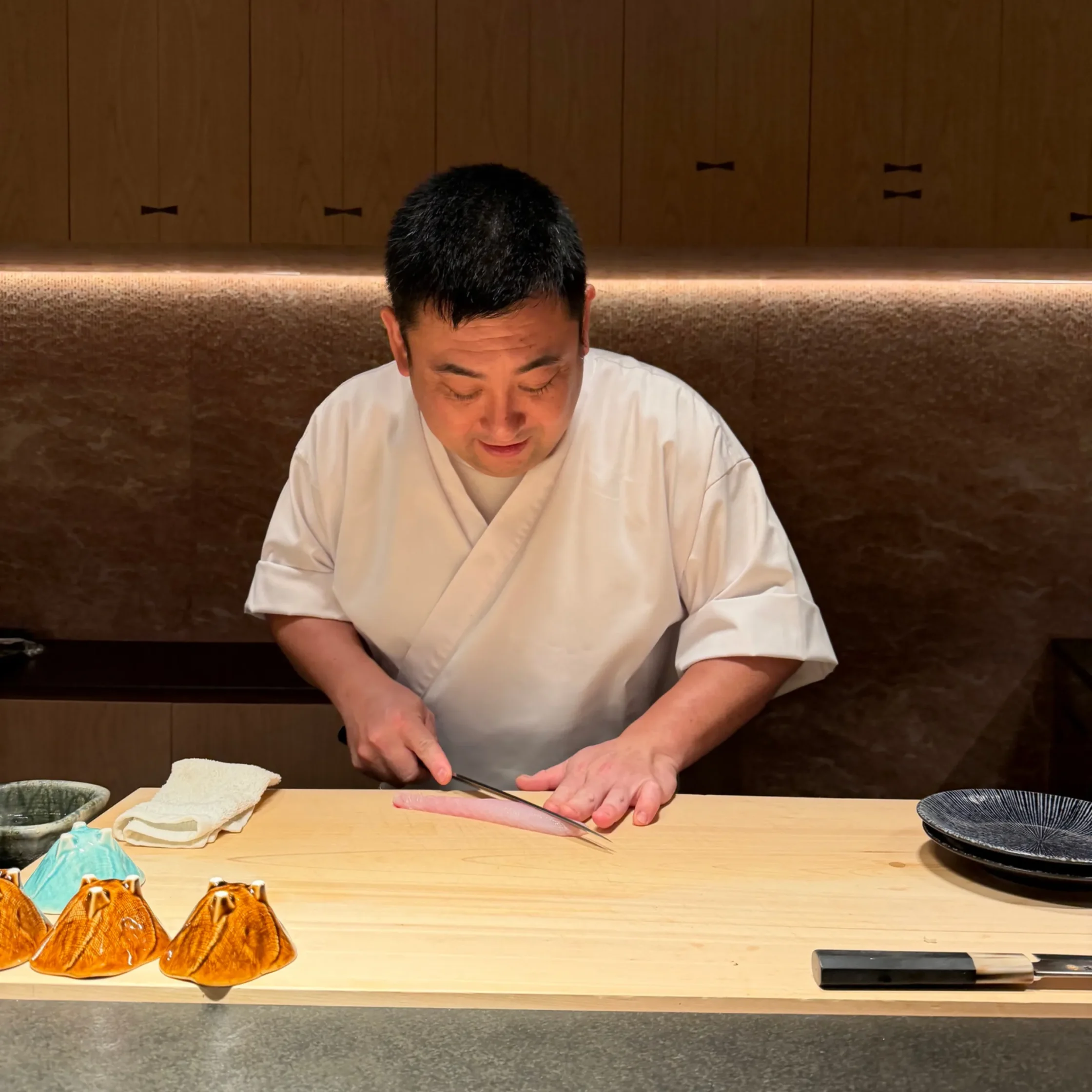
Chef Hino is a familiar face. I first met him in a Japanese restaurant tucked inside an Edsa hotel where he was hired as a consultant. Years later, we meet again, this time in his namesake restaurant, which he opened with a couple of business partners. It’s an endeavor he has told me already before and to see it in the flesh is quite fulfilling.
Having spent years in the Philippines, Hino already speaks impressive Tagalog—possibly, he admits, even better than his English. But even if he regales you with stories of his illustrious career while seated at the chef’s table, his food still does most of the talking—and it says quite a lot.
Where the Fish Does the Talking
As with any proper omakase, what appears on Hinoki’s counter depends on what is best that day and that season so your first visit may look quite different from the next. What remains consistent though is Hino’s insistence on quality ingredients and careful preparation. The experience is hinged pretty much on traditional Japanese cooking, yet he makes just enough room to inject a few creative ideas of his own.
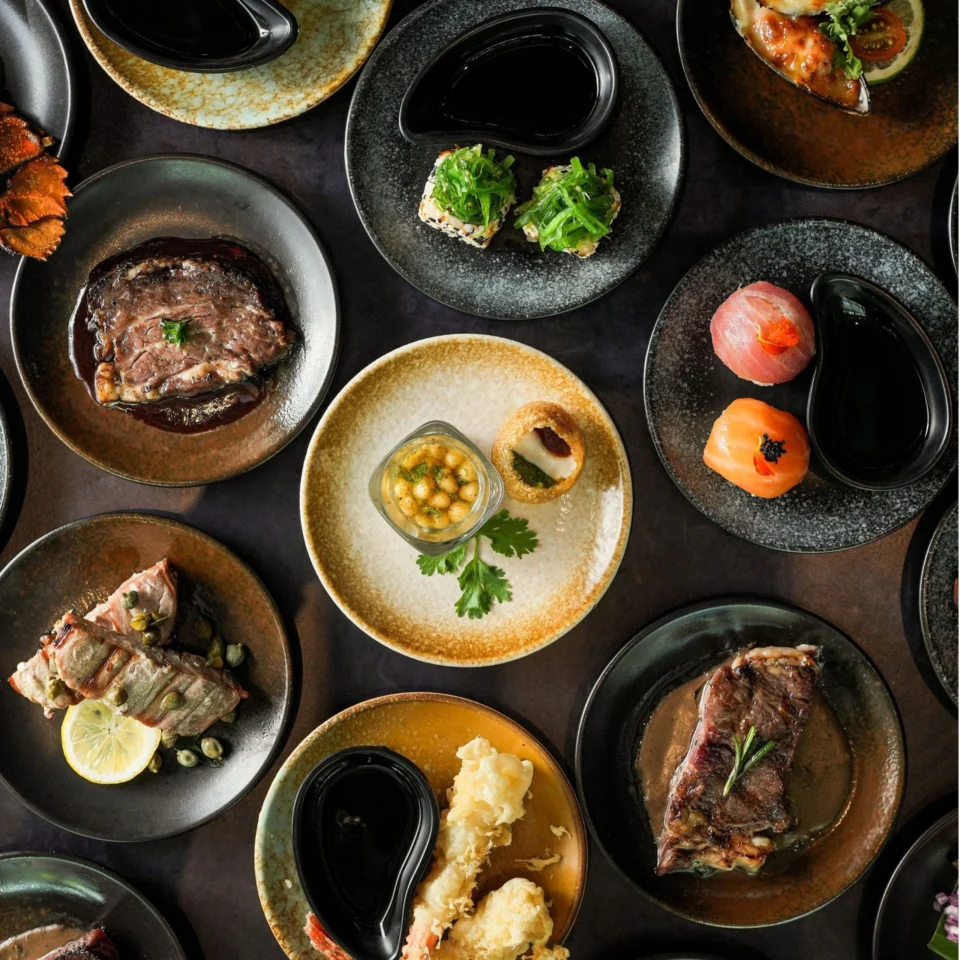
During my dinner, the nigiri progression included different cuts of bluefin tuna from Japan: akami marinated in a special soy sauce, medium-fatty chutoro, and richly marbled otoro. There was horse mackerel with a delightful spring onion paste, a Japanese sardine dabbed with ginger which ate like butter, and kinmedai where the skin was lightly torched, complemented with yuzu kosho.
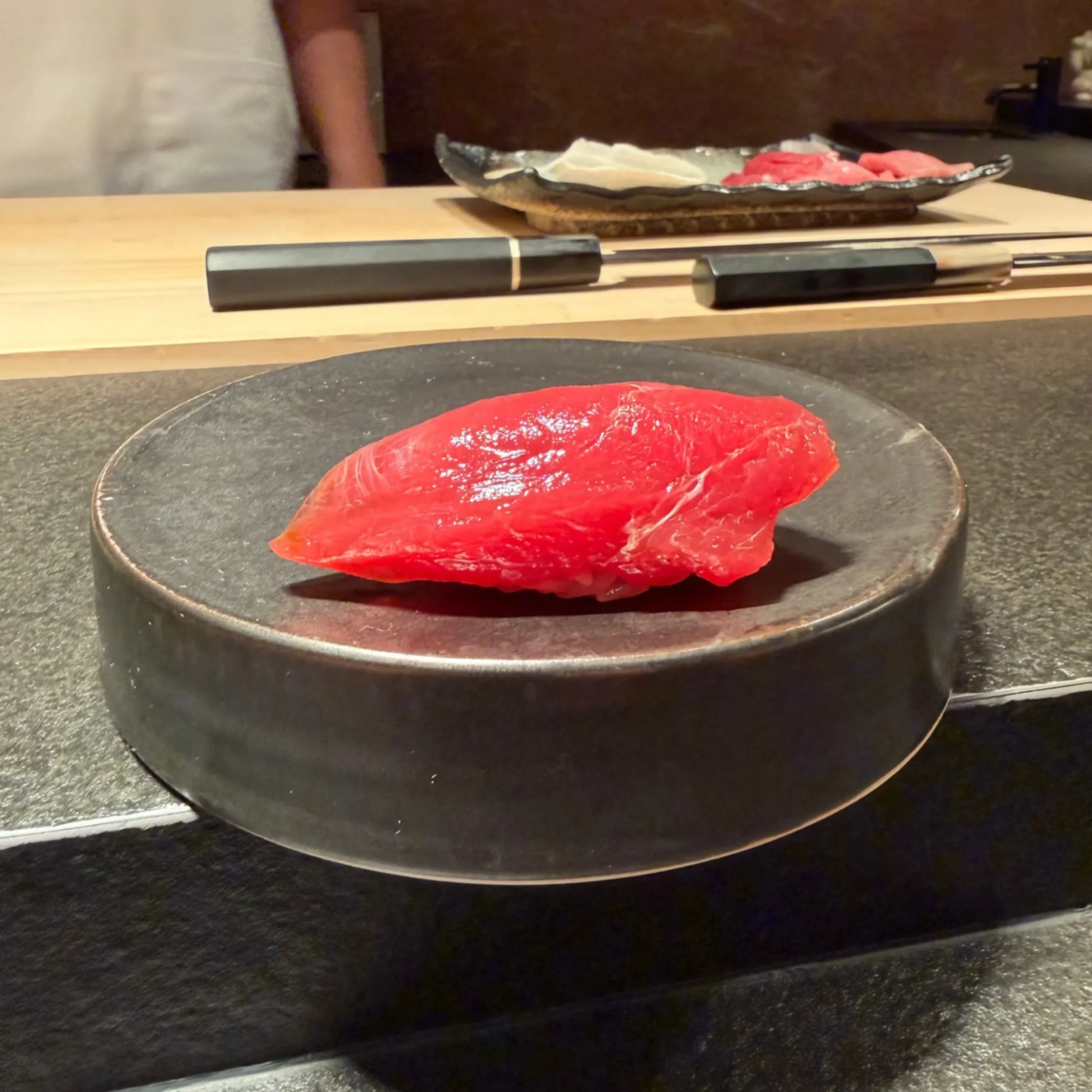
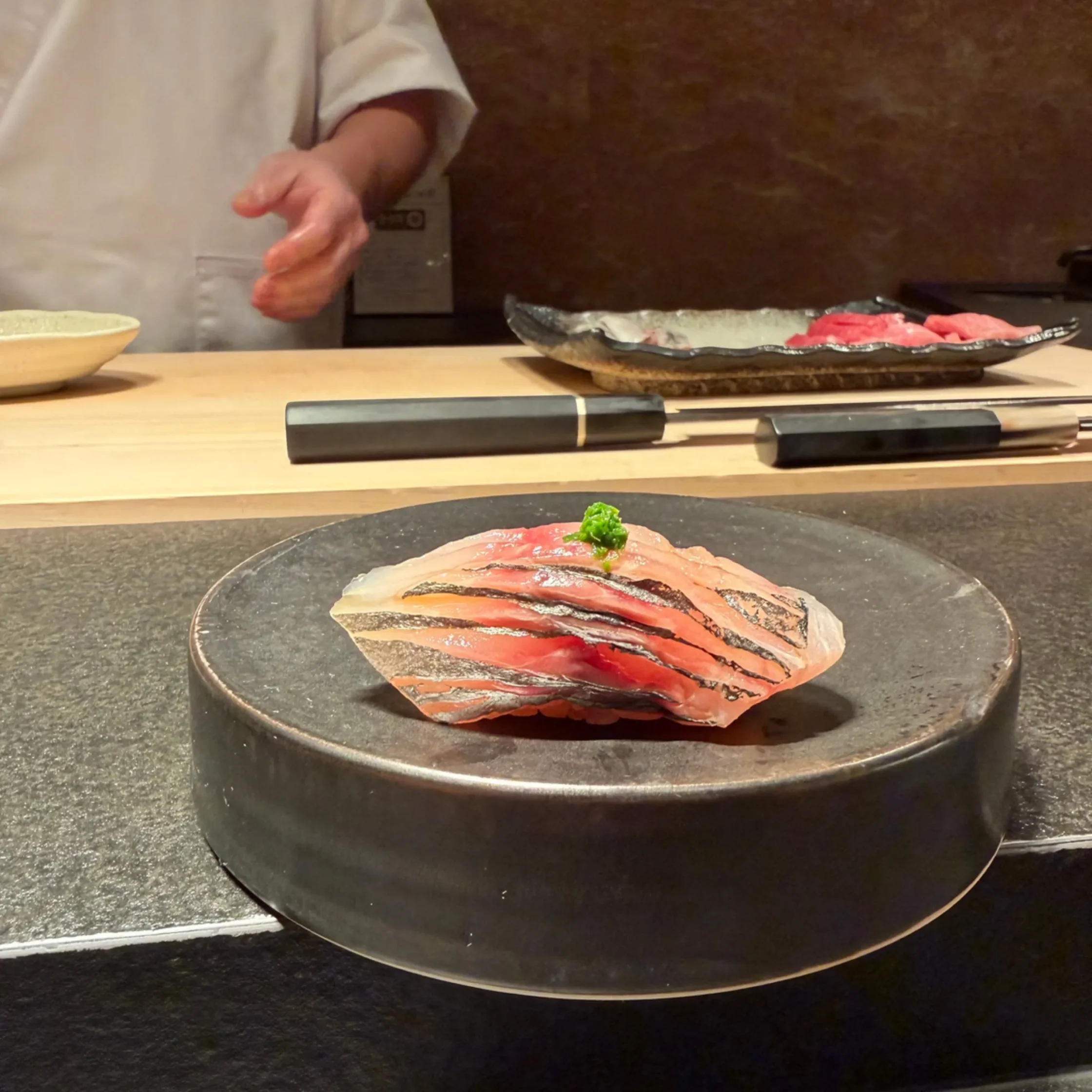
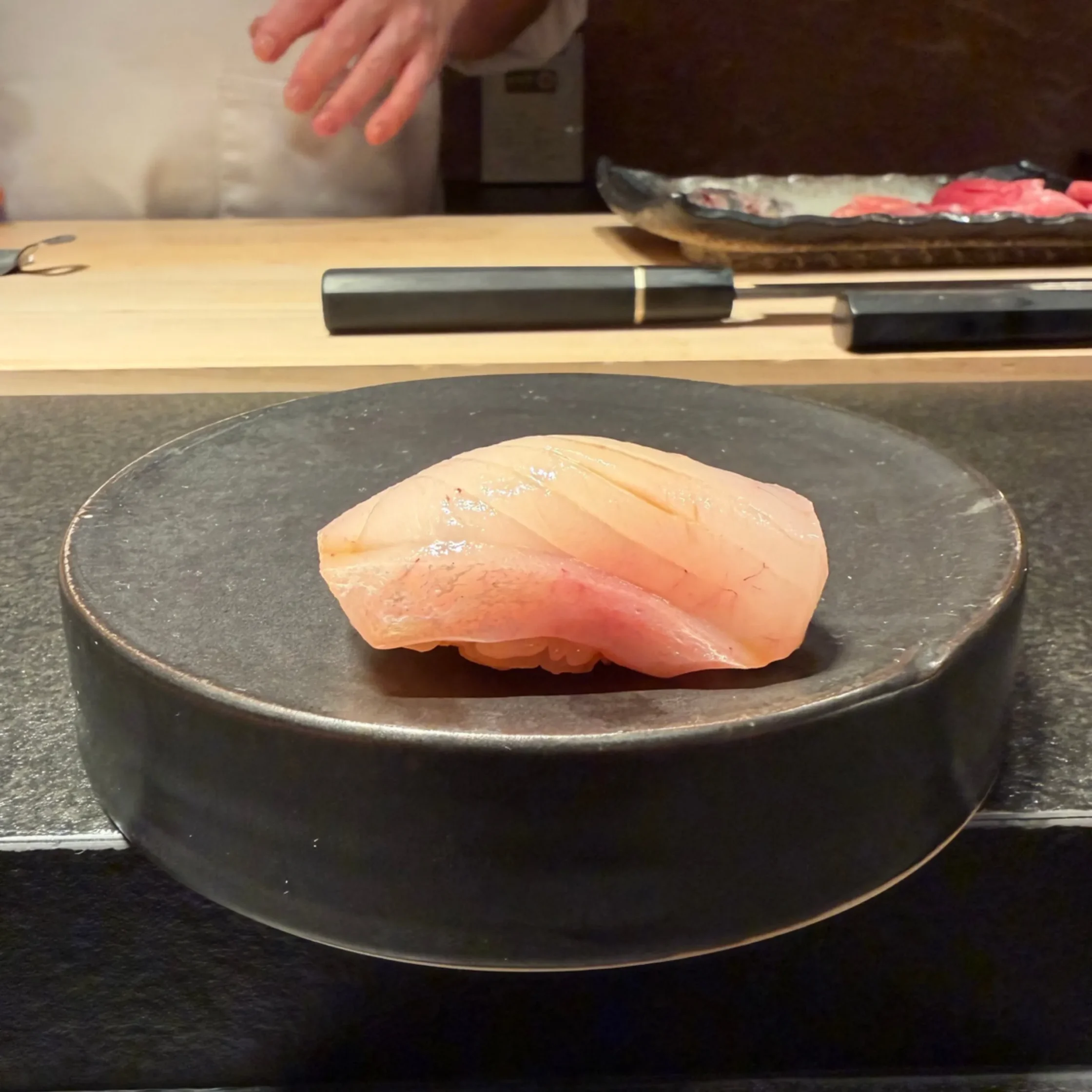
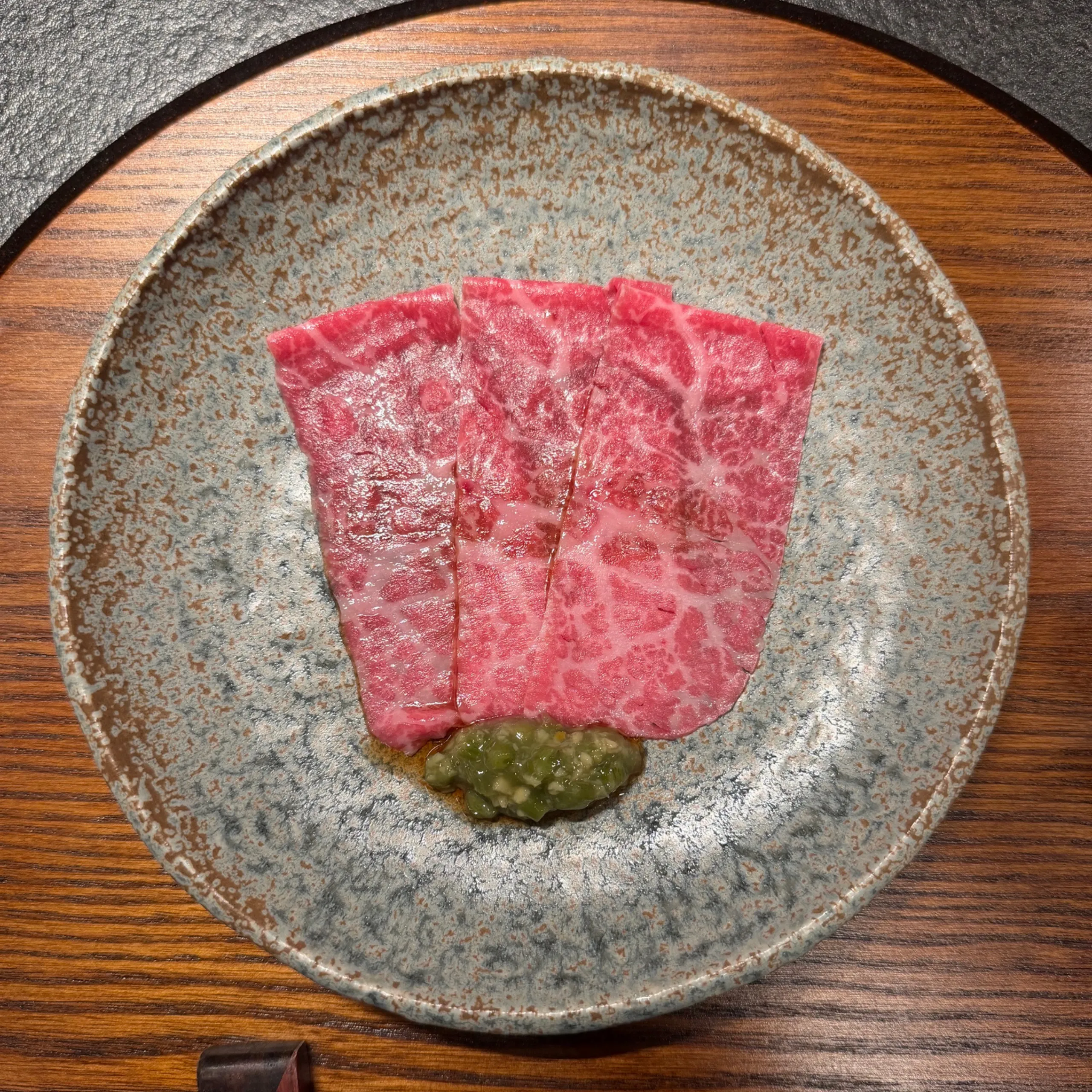
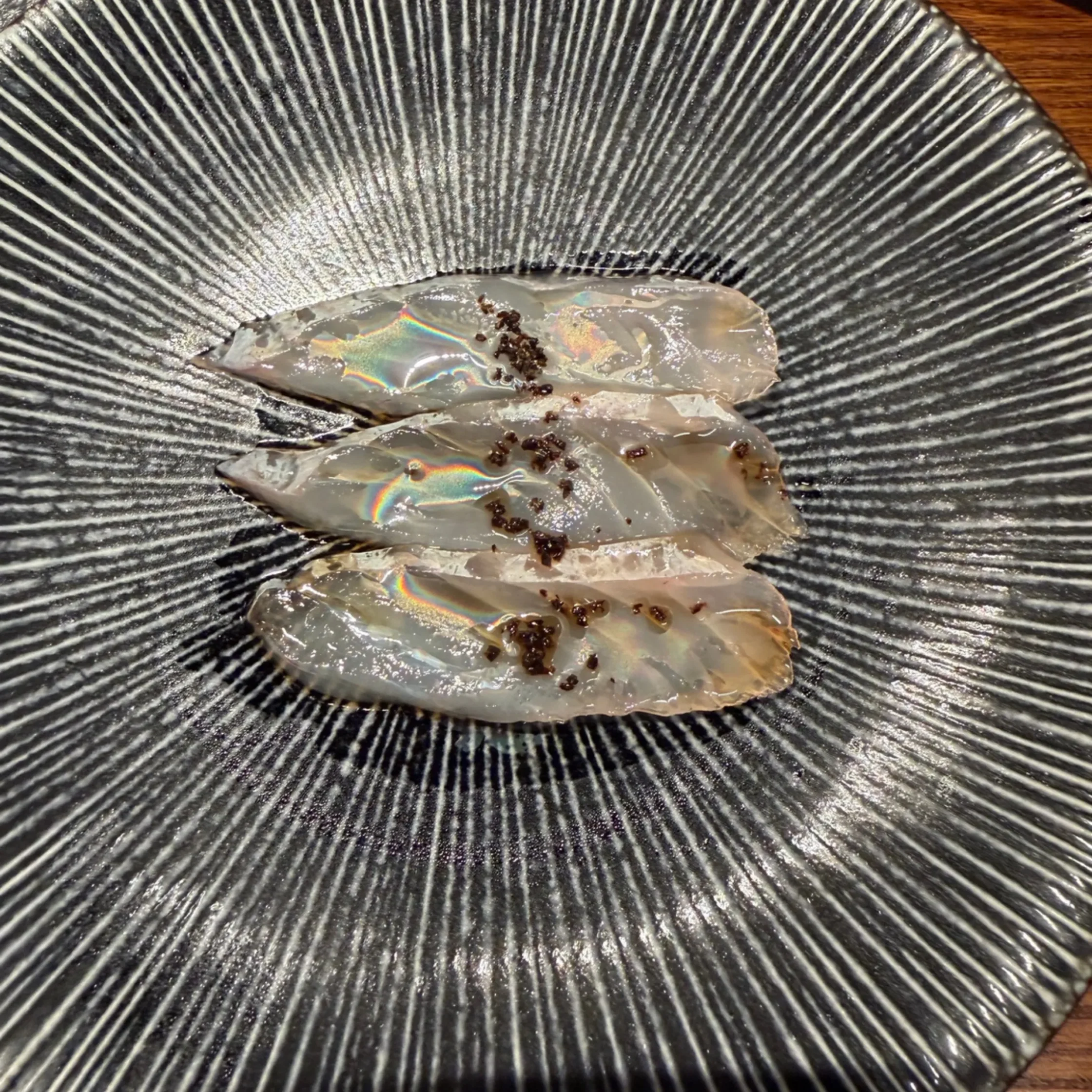
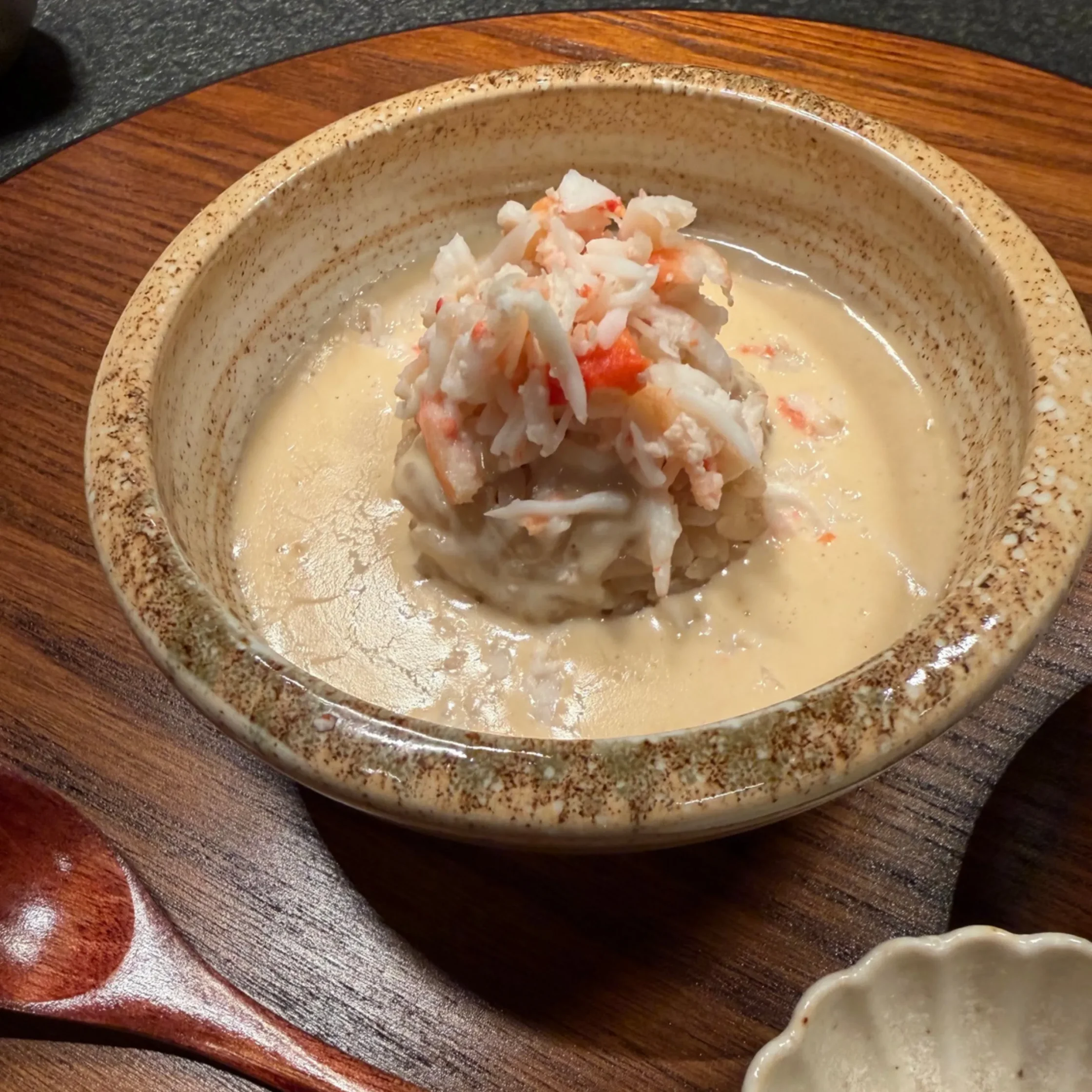
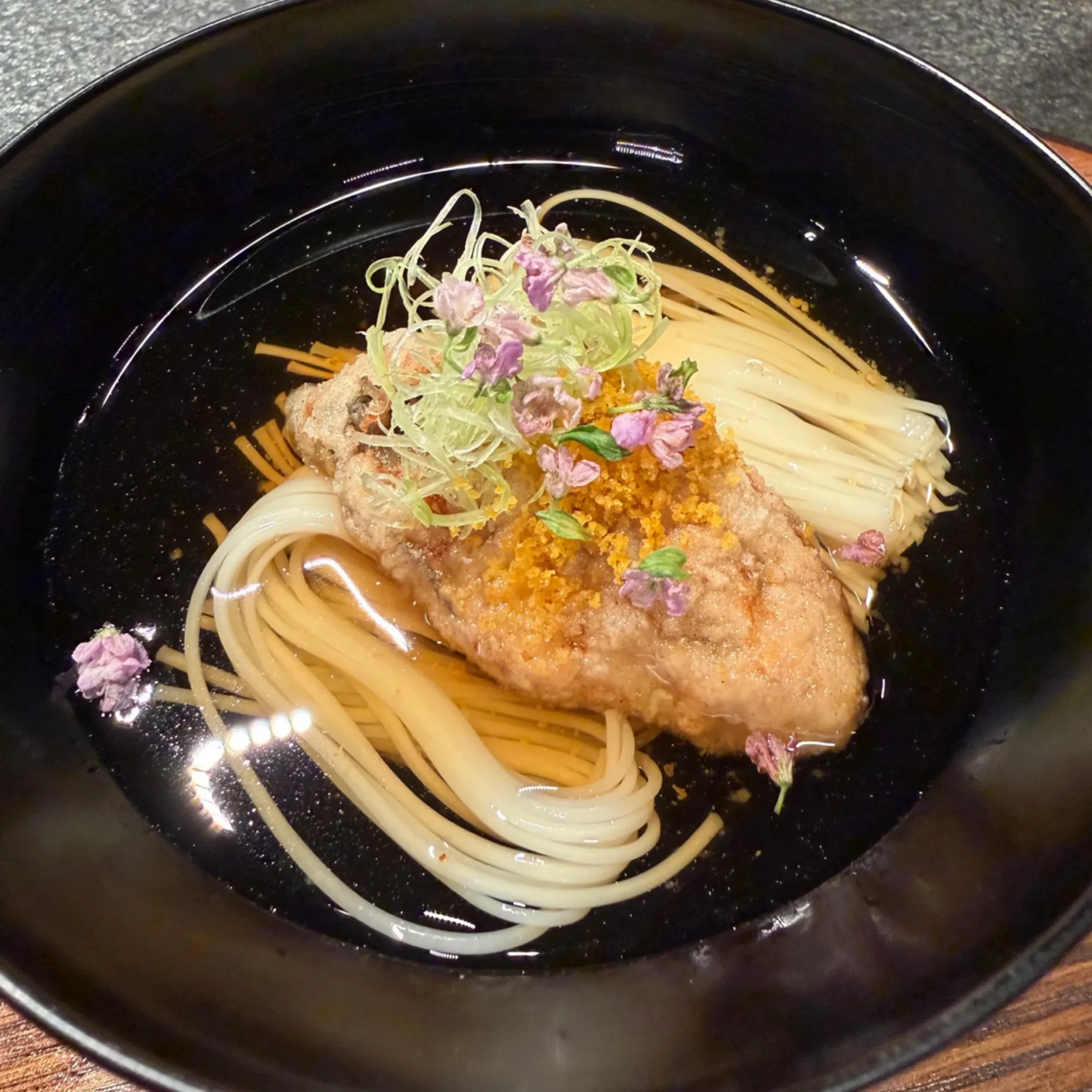
These were nothing short of stellar, but slightly expected as the dishes that preceded it already set the tone for the whole meal—a warm crab soup that not only warmed the tummy but also teased the palate, revelatory slices of glistening aged lapu-lapu, Wagyu beef carpaccio seasoned with fresh wasabi, deep-fried oyster dusted with sea urchin powder, sushi of pompano, and a Wagyu beef sando, which will have you hoping for an ala carte-sized portion.
The meal crescendoed with a dish that made the most mark—his signature crab risotto. Sushi rice folded into cream sauce, then crowned with succulent pieces of king crab. It’s Hino taking a slight detour from the route of a traditional omakase, yet though different, it didn’t feel out of place. In fact, if anything, it gave the entire meal some sense. Like, now I know why the chef had less-than-usual vinegar rice underneath his nigiris. It was to prepare guests for this.
Simple Doesn’t Mean Easy
Towards the end of our meal, when I felt more at ease intruding his routine, I asked if he offered the same omakase for lunch. Apparently, it takes him four to five hours to prepare for the night’s dishes. Looking at the counter, I wonder where all those hours went as the finished dishes appeared almost effortless. He made the whole operation look deceptively easy.
That, of course, is the trick.
Behind every seemingly simple bite are hours spent sourcing, cutting, curing, seasoning, preparing rice, and deciding exactly how much—or how little—a particular ingredient needs.
Hinoki’s appeal lies precisely in knowing when enough is enough. Because when the fish is impeccable, the rice is flavored right, and the chef knows exactly what to do with both, sometimes the smartest thing you can add is nothing at all.
Hinoki Japanese Restaurant is located at Ground Floor, Keyland, 851 Antonio Arnaiz Avenue, Legazpi Village, Makati.
Frequently Asked Questions
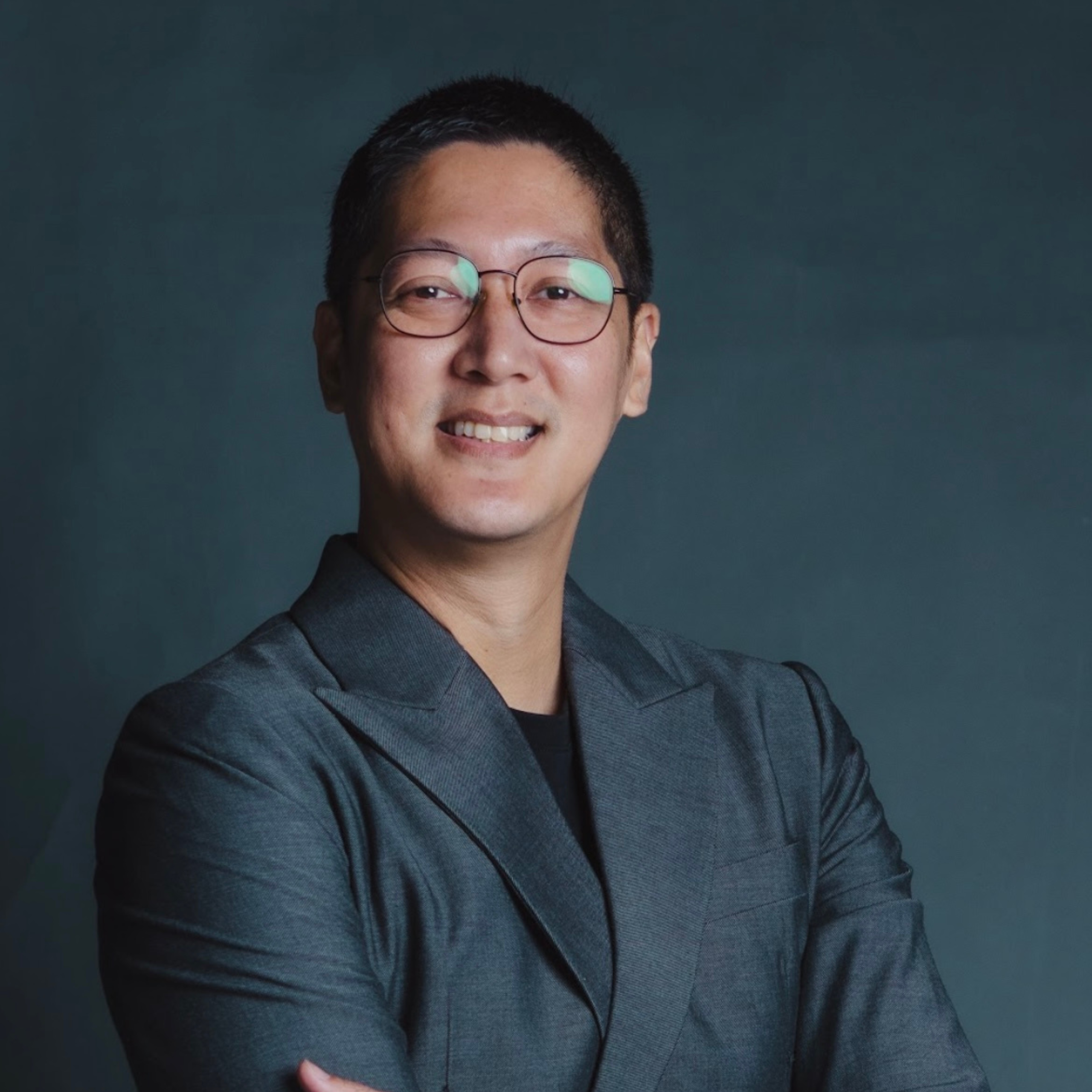
Yusuke Hino is the current chef and owner of Hinoki. Formally, he was the master chef at Edsa Shangri-La’s Senju and a chef at the Dubai-based Japanese fine dining concept TakaHisa.
Hinoki is a Japanese restaurant that primarily does omakase and à la carte dining. Based in Makati, they serve simple yet meticulously prepared dishes including different cuts of Japanese bluefin tuna, Wagyu beef carpaccio, and their signature crab risotto.
Omakase is a Japanese dining style wherein the multi-course menu is personally curated by the chef made with premium-grade ingredients.
Hinoki is located at Ground Floor, Keyland, 851 Antonio Arnaiz Avenue, Legaspi Village, Makati.