

What began simply as a casual conversation about milk eventually evolved into something much bigger.
Bacolod-based organic farmer and Slow Food International Councilor for Southeast Asia Ramon “Chin-Chin” Uy, Jr. first met couple Ian and Christina McKay through chef Filippo Turrini of Roots Siargao, initially discussing milk supply and dairy sourcing. Having worked closely with organic farmers for over two decades, Chin-Chin already has deep relationships with local dairy communities. But their chat went beyond logistics, led to a shared vision, and consequently opened up the possibility of building an artisanal cheese brand together committed to craftsmanship, sustainability and community-building. The McKays lend their expertise in European-style cheesemaking, while Chin-Chin shares his long-established farmer network, facilities, and milk supply.
“The cheese business began as a way to create more value for local dairy farmers while reviving the traditional art of cheesemaking, a craft that, in many ways, has long been overlooked in Filipino food culture,” says Christina. “As international travel and dining became more accessible, Filipino consumers developed a greater appreciation for artisanal cheeses they encountered abroad. This created an opportunity to produce fresh, natural cheeses locally for chefs, restaurants, and food lovers looking for authentic quality and locally made products.”
But more than the cheese itself, the business works on a deeper purpose: supporting farmers by creating an organic demand for high-quality milk and uplifting communities through initiatives such as children’s nutrition and adult literacy programs.
What Cheeses Does Wild Pasture Cheesemakers Make?
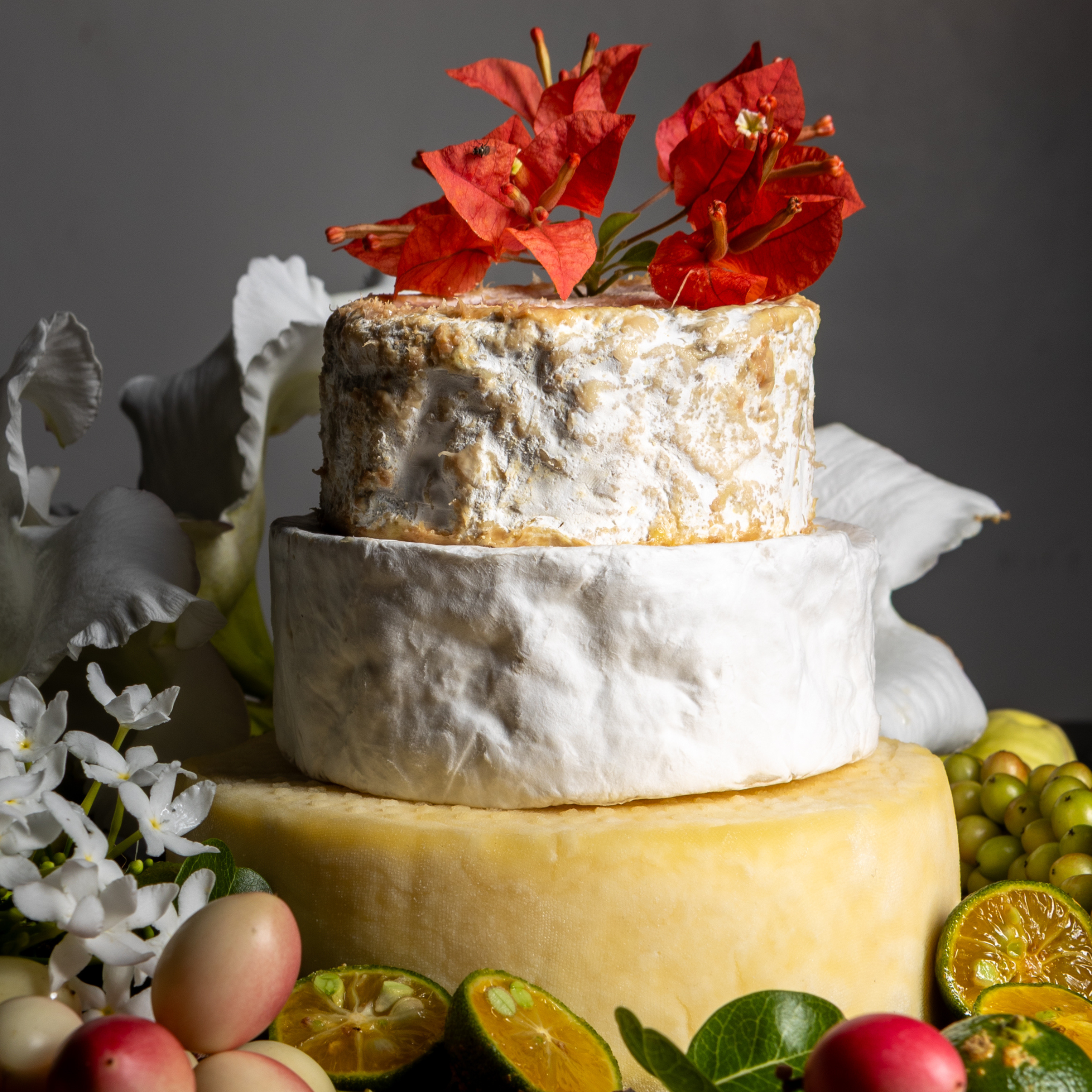
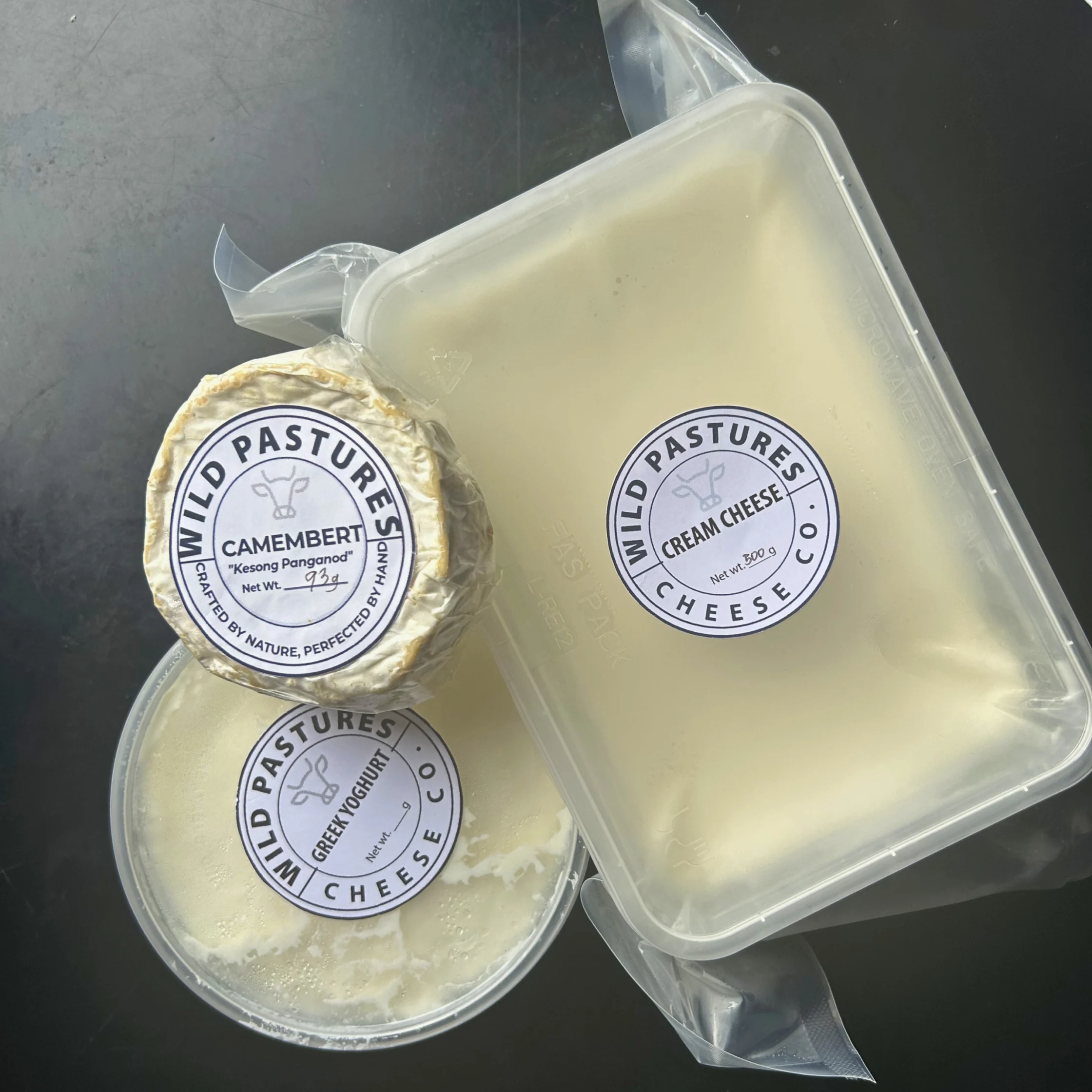
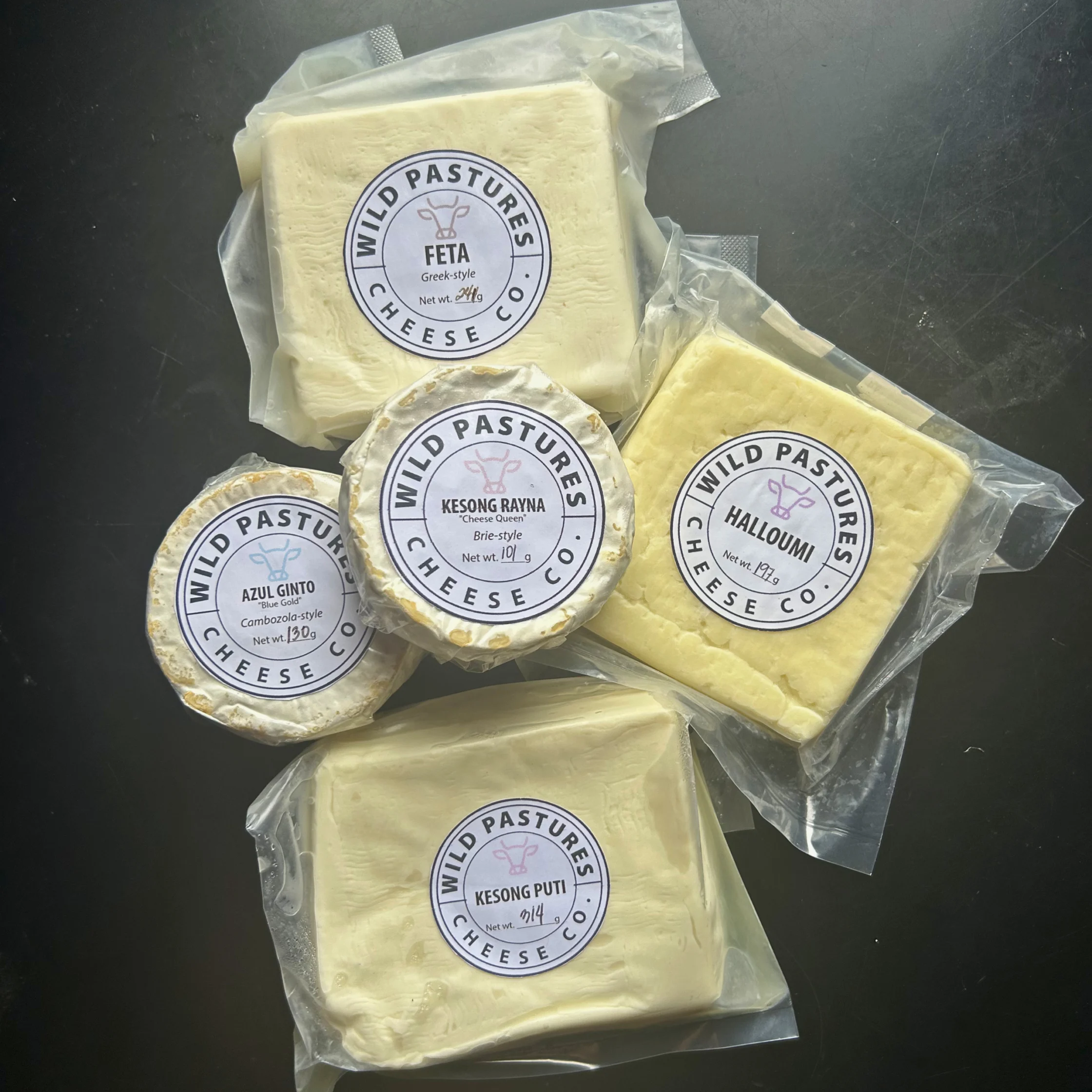
Wild Pasture’s bestsellers include the Kesong Panganod (camembert style), Kesong Rayna (brie style), halloumi, Azul Ginto (cambozola), and cream cheese. Apart from their fresh, artisanal cheeses, they also carry cultured dairy products such as Greek feta and Greek yogurt. Their products are currently landing on the plates of several restaurants including The Pig & Palm, Shawarma Gourmet, and Roots. They are packed according to their specific type and aging requirements—either in breathable cheese paper or vacuum-sealed to maintain freshness and integrity.
The number of artisanal cheesemakers in the Philippines remains relatively small. While there are pioneering producers in regions like Negros and Mindanao, handcrafted natural cheese is still very much a niche industry locally.
What Makes Wild Pasture Cheesemakers Different From Mass-Produced Cheese
“What sets our cheeses apart is the level of traceability, craftsmanship, and care behind every product. We can trace each cheese from the moment the cow is milked all the way through production and delivery. Every stage is carefully monitored to ensure consistency and quality,” says Christina.
Unlike mass-produced supermarket cheese made through highly industrialized processes, their cheeses are handcrafted in small batches using traditional methods. This creates more depth of flavor, character, and authenticity.
She adds, “our philosophy is deeply rooted in Slow Food values: respecting the milk, honoring traditional cheesemaking techniques, and supporting the farmers behind every wheel and batch we produce.”
More than producing artisanal cheeses, Wild Pasture Cheesemakers is proving that local dairy can stand proudly next to imported brands, one carefully crafted wheel at a time.

Frequently Asked Questions
Wild Pasture Cheesemakers is a Philippine artisanal cheese producer that crafts small-batch cheeses using locally sourced milk while supporting dairy farmers through sustainable and ethical practices.
Wild Pasture Cheesemakers operates in Negros and works closely with local dairy farming communities in the region.
Their lineup includes Kesong Panganod (Camembert-style), Kesong Rayna (Brie-style), Halloumi, Azul Ginto (Cambozola-style), cream cheese, Greek feta, and Greek yogurt.
The brand focuses on traceability, traditional cheesemaking methods, local milk sourcing, small-batch production, and support for Filipino dairy farmers.
Wild Pasture cheeses have appeared on menus at restaurants such as Pig & Palm, Shawarma Gourmet, and Roots.
Yes. Wild Pasture Cheesemakers uses locally sourced milk and works directly with dairy farming communities.
Wild Pasture cheeses are available through select restaurants, specialty food retailers, and directly through the brand’s distribution channels.