

Fruits like pineapple have greater purpose than to be eaten as merienda or served as panghimagas. They actually have a solid place in Filipino cooking.
Whether it’s using its juice to add a sweet and tangy punch to a sauce or a marinade, or using its bright yellow fruit as garnish, it’s important to not only know how to cook with pineapple but also know how to cut and peel it. There are a lot of fruits in the Filipino fruit index that can be intimidating to handle by yourself at home—its the types that have you thinking you might need an adult present in the kitchen to help you. Don’t worry, I feel that way too.
The first thing you need to understand is that there is no singular, perfect way to cut and peel a pineapple, because this can be entirely dependent on how you will use it, even down to just personal preference. But regardless, here are some general reminders to keep in mind the next time you find yourself tempted to finally face the challenge and add a whole uncut pineapple into your shopping cart.
1. Make sure your knife is sharp
Pineapples are known for having very tough skin. So you have to make sure you use a knife that is sharp enough to cut through both the skin and the fruit. Avoid using dull or serrated knives like bread knives, or any knives whose blades are shorter than the overall diameter of the pineapple you’re trying to cut. If you do, you run the risk of your knife or the fruit slipping and overall just causing potential injuries. If it’s not a wound you should we worried about, it’s the extra pressure for having to compensate for an inferior knife causing you to unnecessarily crush bits of the pineapple.
A sharp 8 to 10 inch chef’s knife or serrated knife should be good enough to use for taking the whole pineapple apart. And then smaller knife could be an option if you need to remove the leftover dark spots more precisely.
2. Cut the top and the bottom first
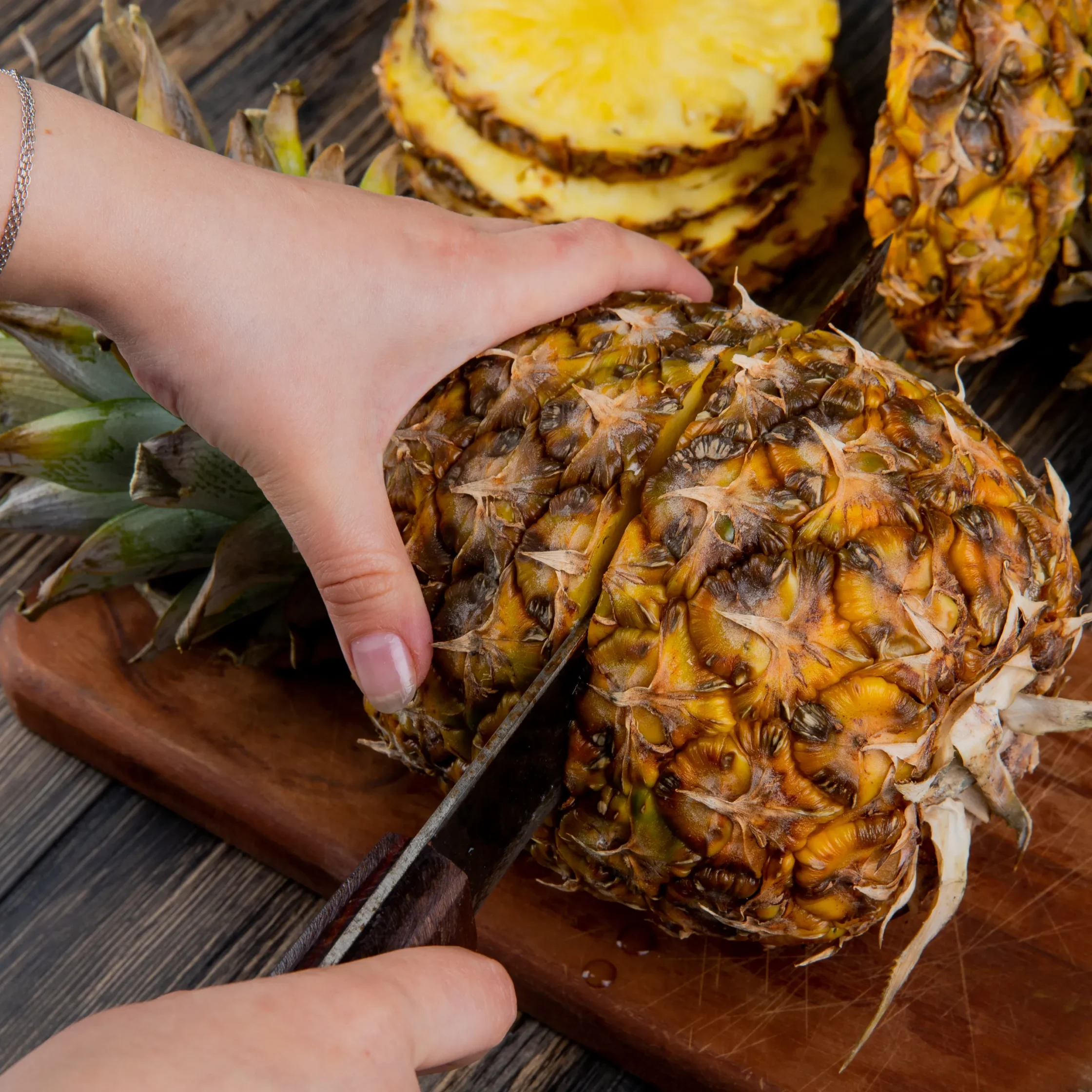
Place your pineapple horizontally on your cutting board and cut the top part (must include both the crown and leaves) and the bottom end. Try not to cut too much fruit from either end as you will be discarding these, so just make sure not to waste too much fruit in the process.
The goal here is to create a flat and stable base for when you start removing the skin.
3. Remove the skin and dark spots
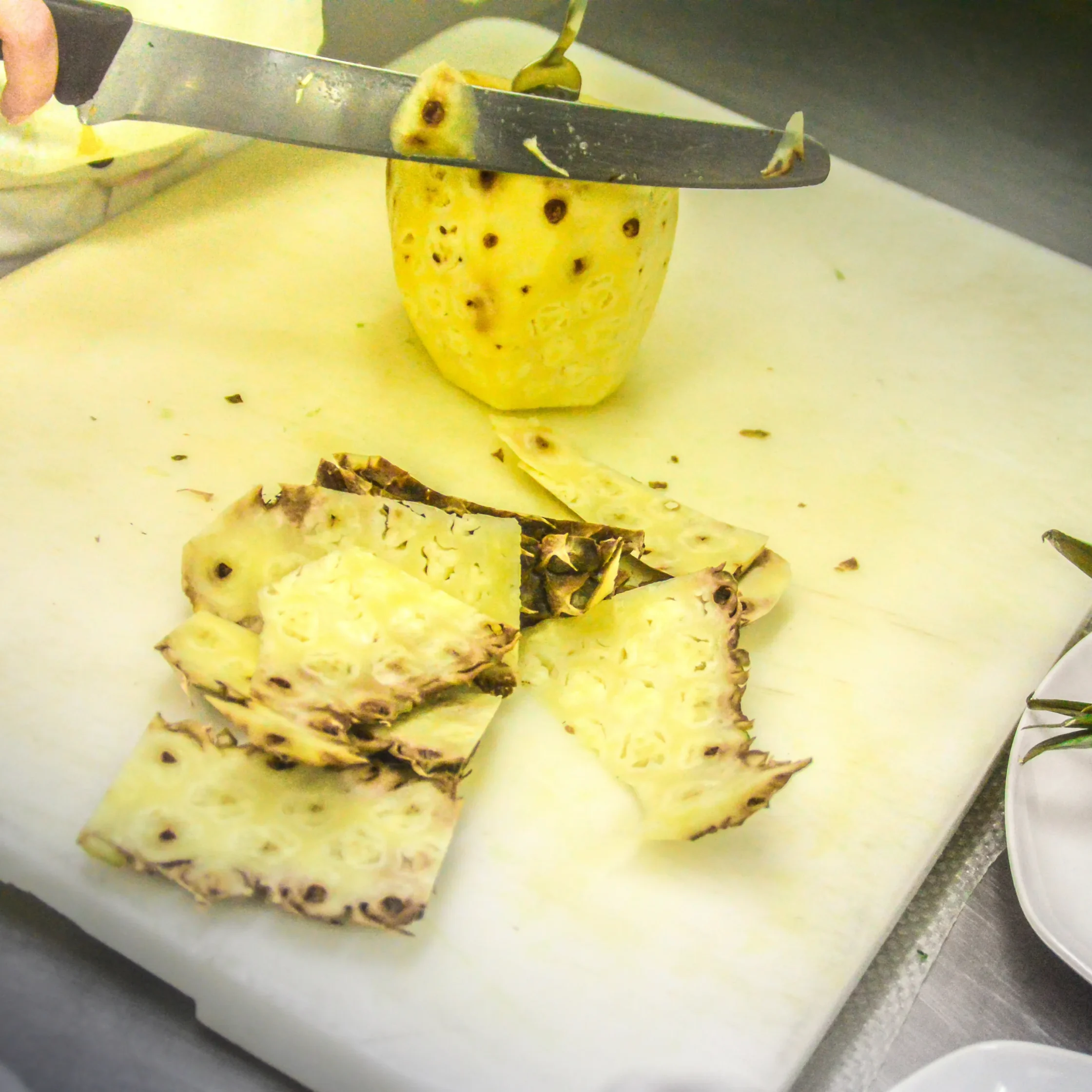
With your pineapple propped up vertically, use your knife to start cutting off the peel in strips about one to two inches wide. Keep doing this all around the pineapple until you’ve removed all of the skin. Once you’ve practiced and feel more comfortable with your knife, you can try shaving off exactly where the peel ends. You’re essentially following the shape of the pineapple instead of just slicing straight down.
The next step is to more thoroughly remove the dark spots or the “eyes” of the pineapple. When eaten, they are very tough and unpleasant, so it’s best to remove all of them as much as possible.
4. Core or no core? It’s up to you
The core of the pineapple is tougher, more fibrous, and less sweet. Some do prefer to still eat the core as it is known for its nutritional value, having vitamin C, minerals, and enzymes. So whether or not you remove it can depend on what you are going to use the pineapple for and if it’s simply just personal preference.
If you do wish to remove the core, there are two ways to go about it.
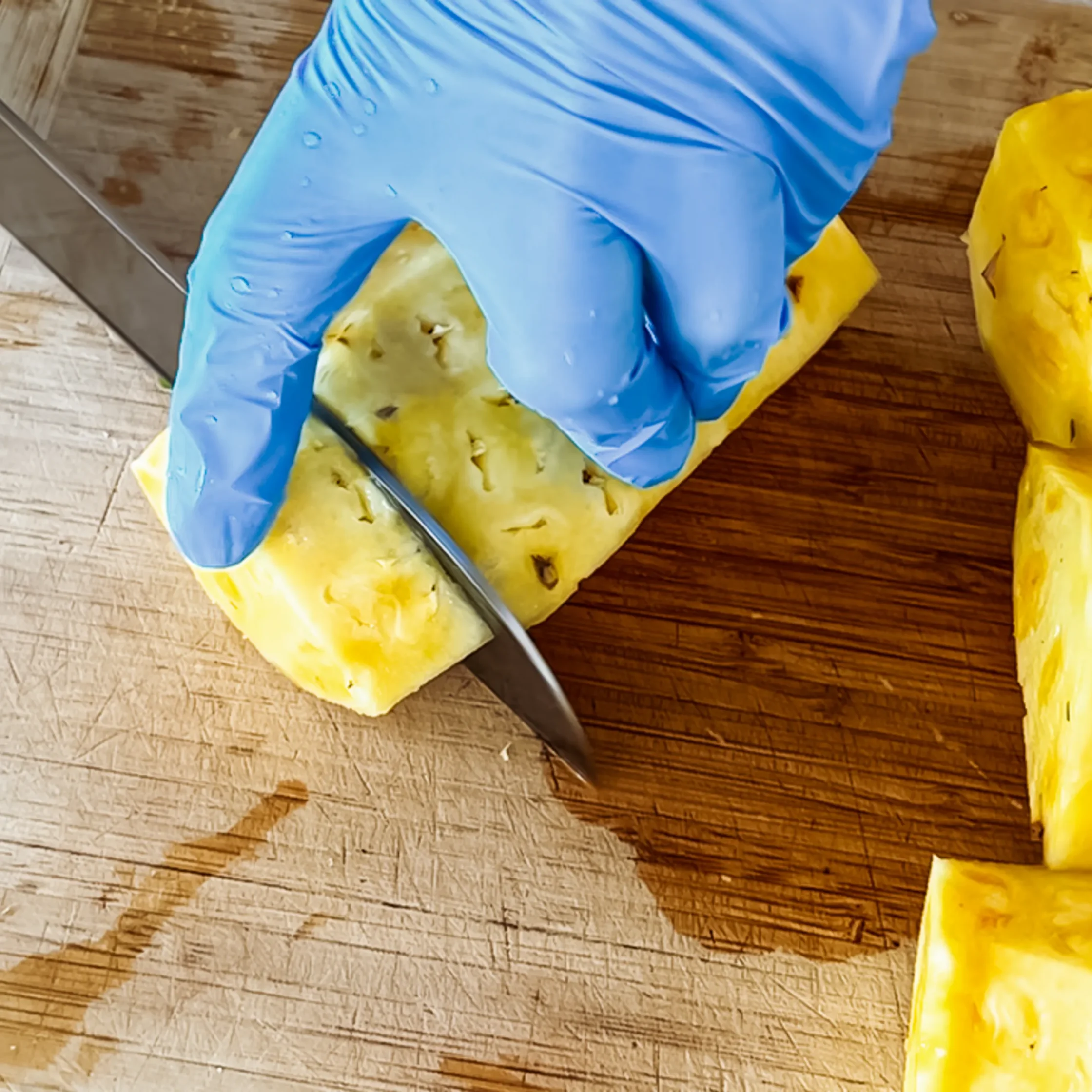
The first is to cut your pineapple into 4 equal quarters. From here, you should be able to see how much of the core of the pineapple you need to remove as it is paler and denser compared to the outer flesh. Take each quarter, stand them up, and cut straight down.
The second is if you want to remove the core but keep the fruit intact, you can opt to use a pineapple corer as well. This way, you won’t even need to peel the pineapple beforehand, you just need to cut the crown and the leaves to make a flat surface, line up the corer over the center of the pineapple, press down until it has a good grip of the fruit, and twist downward to remove the entire core.
5. Cut based on how you will use it
After peeling and coring you pineapple, the next step is really fully up to you. Now you have the edible parts ready for consumption either way. How you end up cutting your pineapple all comes down to what you need it for.
If you’re thinking of making something like pininyahang manok, fruit salad, or if you just want to store it in your fridge to eat whenever, you can cut your pineapple into the triangle chunks its most known for.
For each of the 4 quarters, cut them lengthwise into smaller sticks. From here, it’s up to you to decide how big or small you want your triangle pieces to be. If you want bigger ones, you can opt to directly chop up the 4 quarters into smaller pieces.
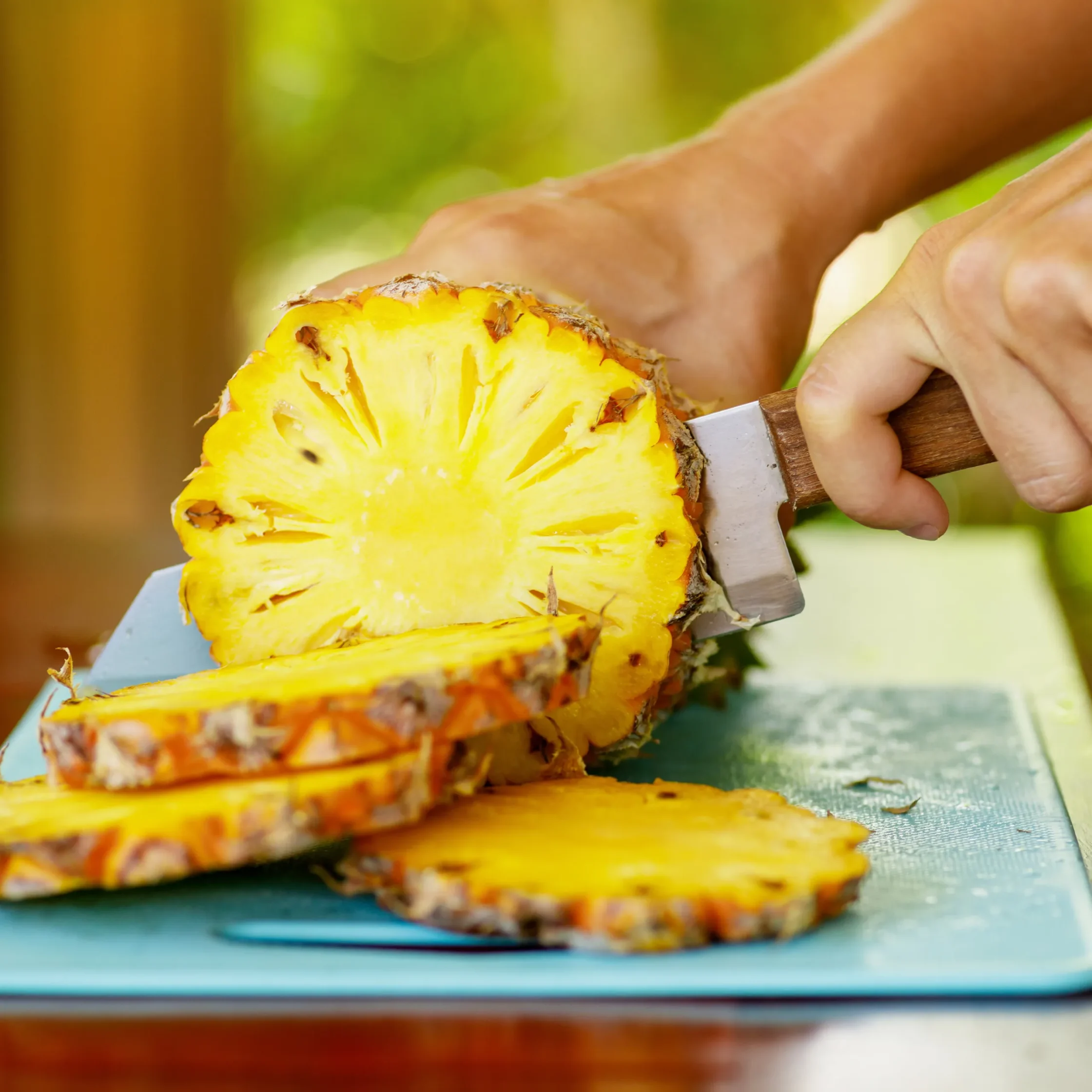
If you’re making hamonado or anything that involves baking or grilling, cutting your pineapple into slices or rings would be best.
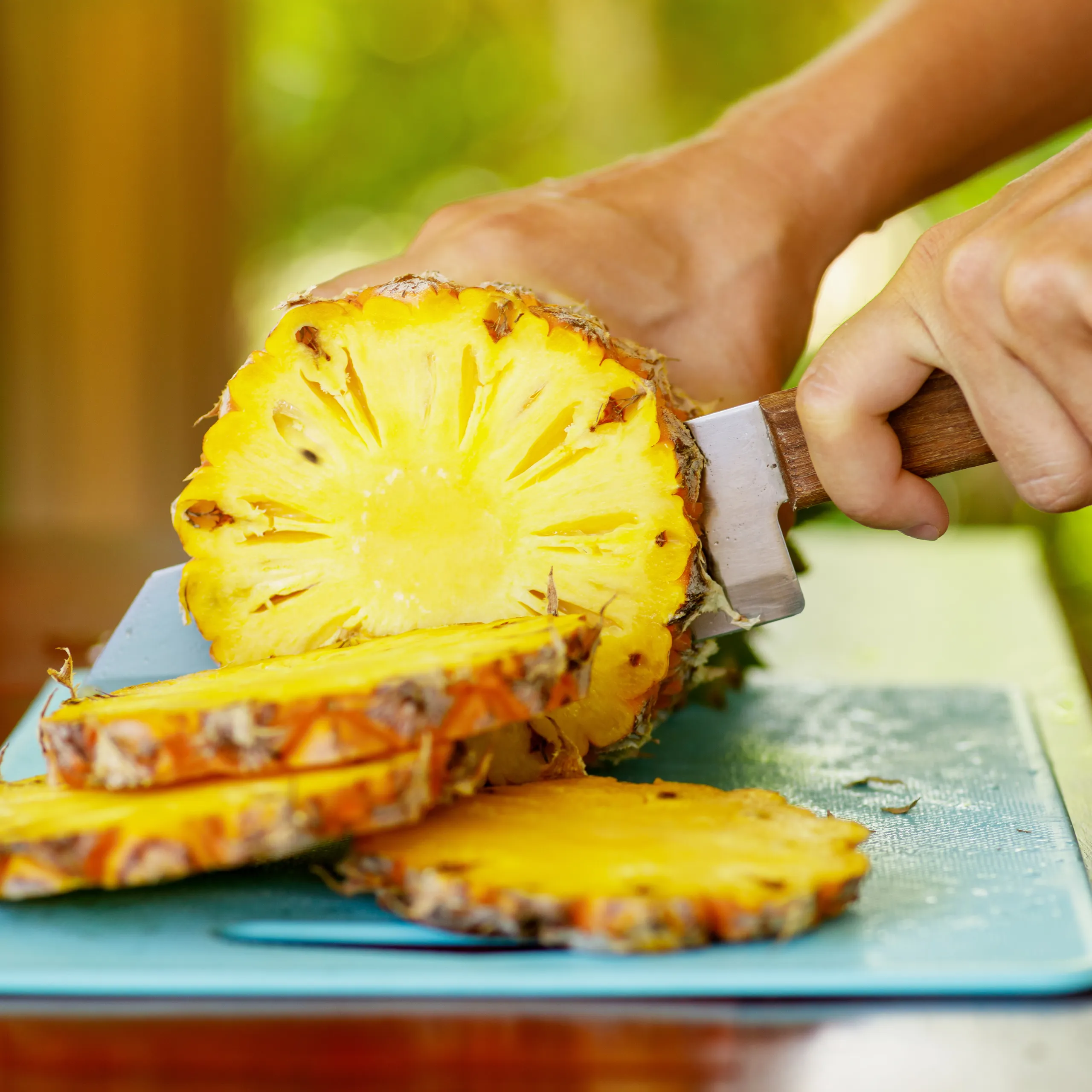
After removing all the skin and dark spots, lay your peeled pineapple on its side and start cutting into ¼ or ½ slices depending on what you will be using them for. You can either keep the core or remove it by using a one-inch round cookie cutter or cutting it out using a paring knife.
Learning how to cut a pineapple is yet another skill you can add to your toolbox, always ready to whip it out the next time you get to buy pineapple in season. Beyond that, it can become another step forward in your traditional Filipino food-making foundations!

Frequently Asked Questions
The “eyes” refer to the dark spots you see on the flesh of the pineapple after peeling off the skin. These dark spots are always removed as it is known to have an unpleasant, woody taste.
Get a sharp and long enough knife. Cut both the top and bottom end of your pineapple and start peeling off the skin and removing the dark spots by going around the pineapple with your knife. After that, you can cut them into chunks or rings.
Either a sharp 8 to 10 inch chef’s knife or serrated knife should be good enough to cut a pineapple. You can also use a smaller paring knife to remove the dark spots of the pineapple.
Yes, the core of the pineapple is edible. Whether or not you actually eat it is entirely based on preference. Some prefer to remove it completely as they do not like its lesser sweet taste and fibrous texture. There are also people who like to eat it whether because of its taste and texture or because of their nutritional value.