



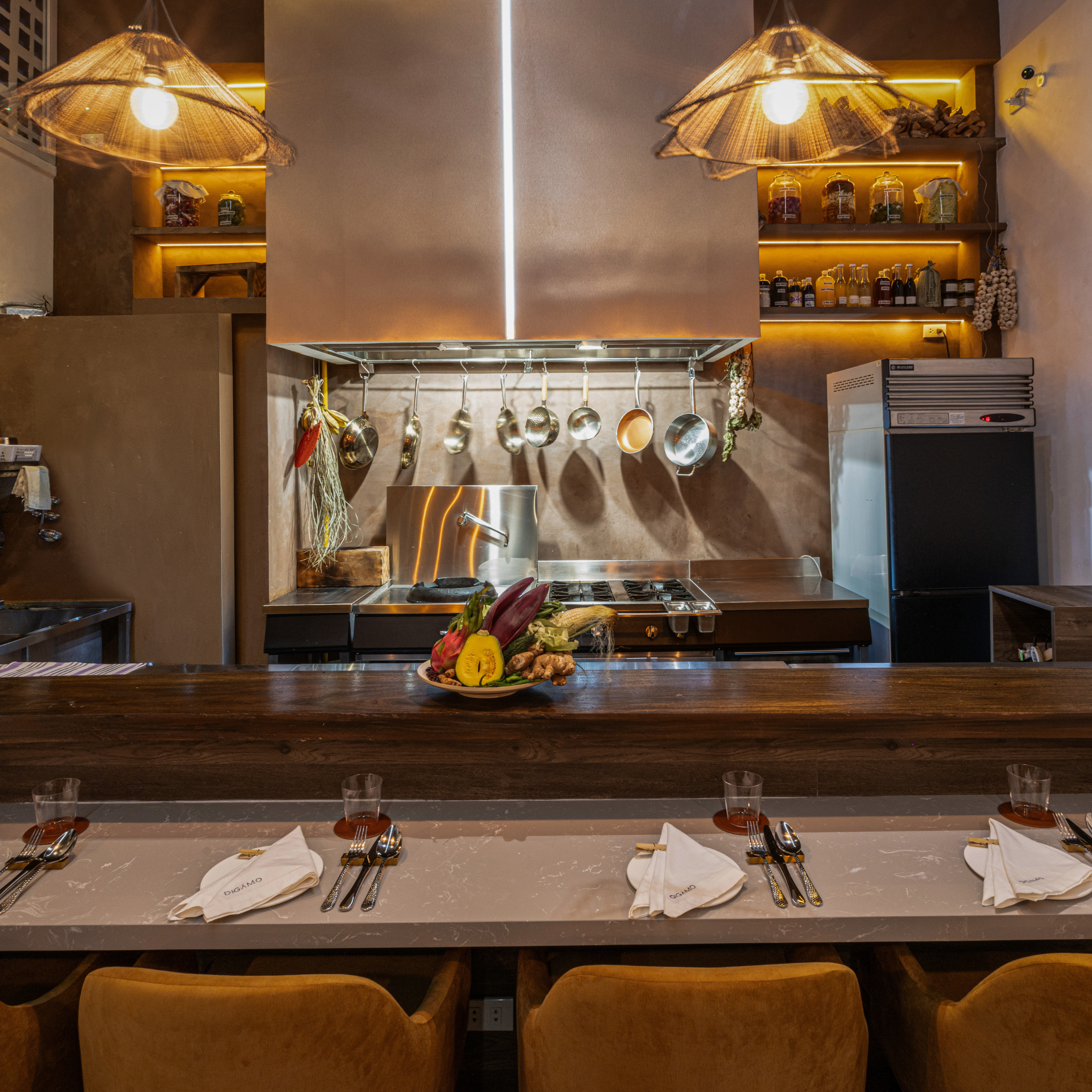
If the saying, “You are what you eat” is true, then how does our food make us truly Filipino? Chef Francis Lacson answered this question through Digámo, his degustation restaurant in Marikina that opened its doors early May.
With an understanding of our country as a melting pot of cultures, he blends the flavors and techniques of what is ours and what is borrowed through a 10-course that feels like a trip to our history classes—minus all the grueling readings and nerve-wracking recitations and reports. This time, you get to sit back, relax, and taste the richness of our history through the gastronomical journey of Lacson’s maiden menu called “Playful Evolution.”
More Than Just a Fusion of Flavors
Tenga at Tenga at Tenga, the first course of the tasting menu, testifies to the vision of chef Francis for Digámo as a conversation starter attempting to go beyond the idea of a “fusion.” When you bite into the dish, you will first appreciate the smokiness courtesy of the sugba cooking method. This was further elevated by the bloodless diniguan made from Quezon Province’s corn smut where you can coat or dip your skewer in. These elements bound each “ear” together, until the texture and taste of every tenga would make itself known to your tastebuds—tenga ng baboy, tenga ng daga, and abalone or sea ears. Right off the bat, you were already chewing on the idea of fusion with this dish.
After the strong sugba starter comes the delicate comfort brought by Linagpang, a soup named after the Visayan method of producing a rich, savory broth from the smokiness of grilled meats and aromatics. And the Kinilaw, which Chef Francis admitted to be the most challenging yet rewarding dish to prepare. His version understood the crucial technicalities involved in perfecting one’s making of it—the fish and the vinegar. The salt-cured tanigue was tossed in sukang sasa, and further enhanced by sharp and sweet flavors from the pili nut puree, palapa oil from Maranao, and dahon ng sili essence. Think it’s the pickled ginger adding more dimension to your dish with every bite? That’s actually pickled ubod ng niyog, which amazed me with its close resemblance to pickled ginger.
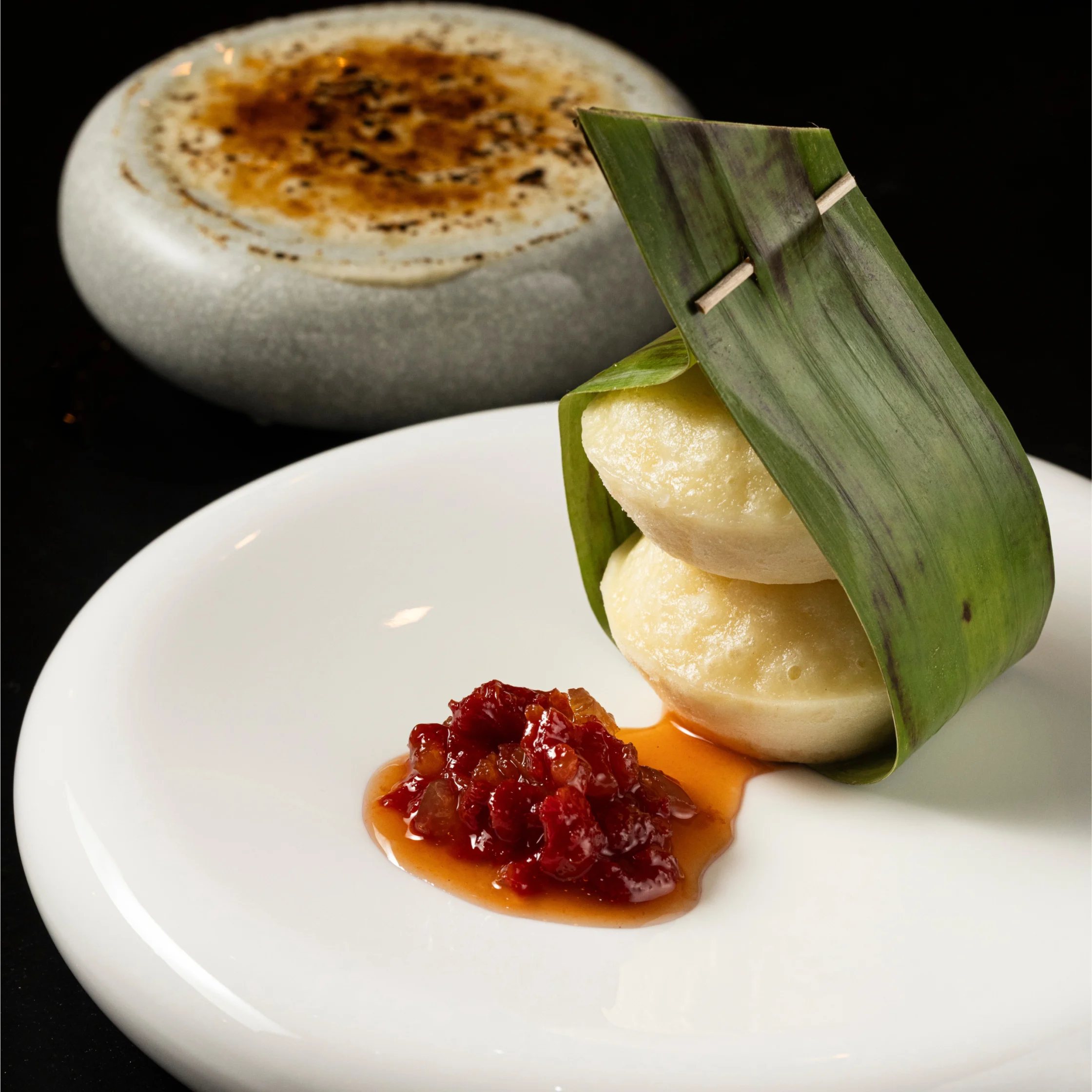
Of the starters, the kulawo was my favorite. The puto was less on the sweeter side and its texture was dense yet soft, too. There were two ways to enjoy the rice cake—you can either dip it into the talong kulawo with bruleed topping for the puto’s savory dimension to shine; or spread the watermelon jam for its sweetness to come out. As for me? I tried combining both the kulawo and the jam for a sweet-savory experience in my mouth.
Technique and Technicality, the Digámo Way
If you’re familiar with a fast food’s combo order of spaghetti and chicken, you’d be amazed by how Lacson turned the soft-shell crab into a drumstick of sorts. Dipping it into the strawberry ketchup, we didn’t think that it was Maria Orosa’s banana ketchup variation. Once we took a bite of the makeshift drumstick with our hands for the full fast food experience, it was crispy and juicy with a taste of the sea without any lansa. If it were possible to order another piece, I definitely would. The cuttlefish spaghetti and egg rice completed the whole dish, which was made with taba ng talangka to complement the main star of the first main course.
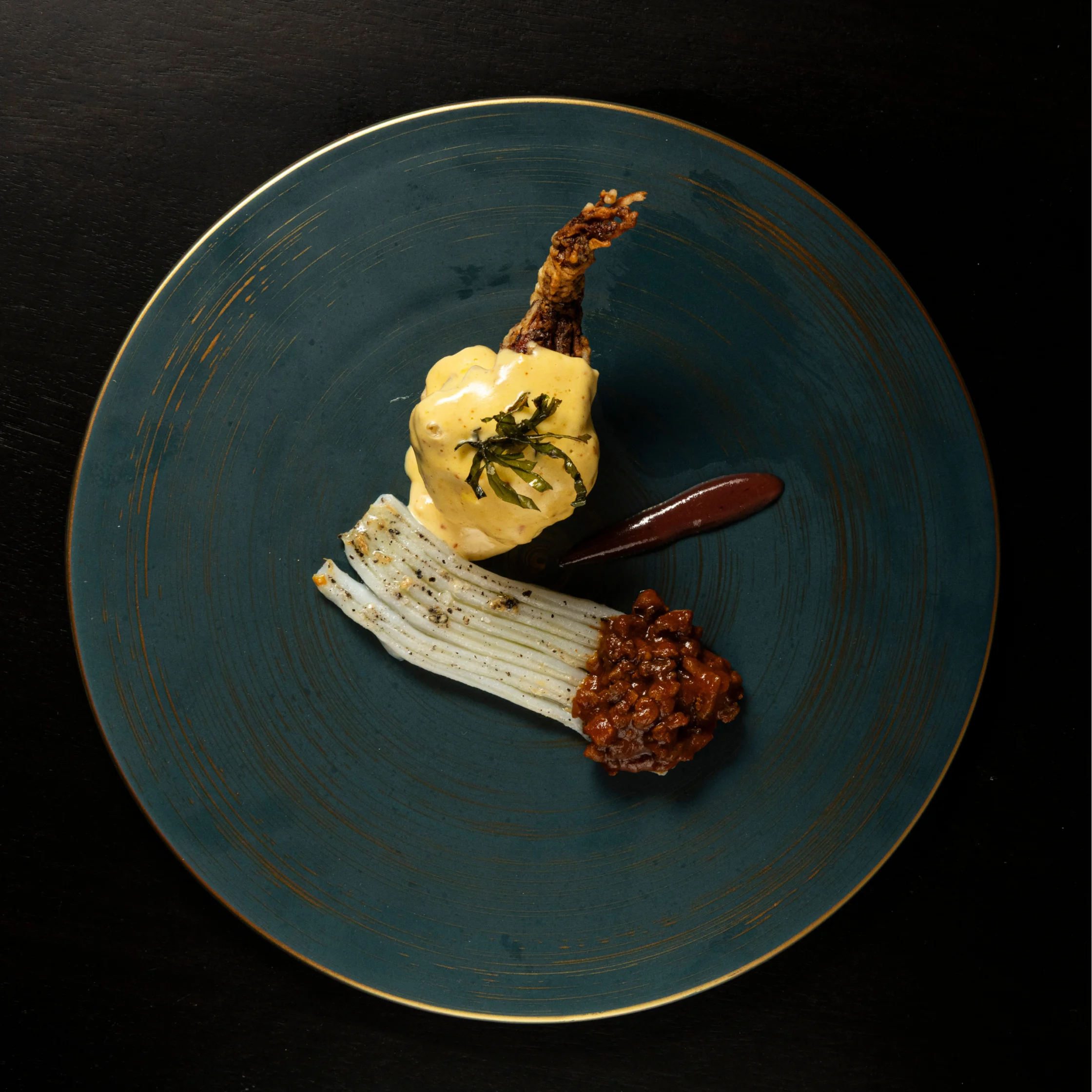
Meanwhile, the Pansit Batil Patung’s was a rich after rich explosion of flavors. There’s the beef tallow and the etag or the Cordilleran cured pork where the miki noodles were sauteed, plus the cold-smoked carabeef. The most interesting element of the dish was the Toyo Malabon, which was actually patis because of its dark color.
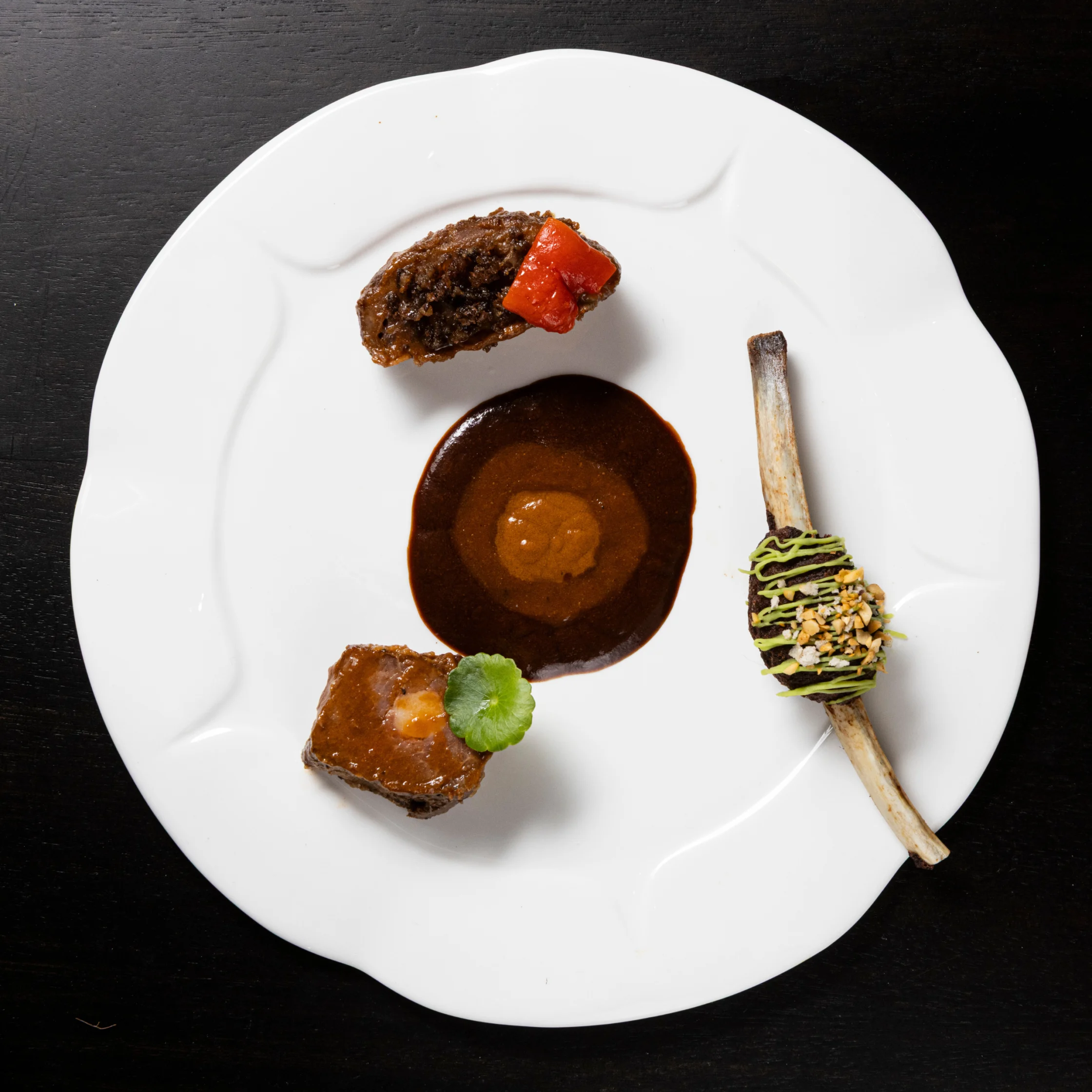
Lastly, don’t let the Sarsa Confusion, well, confuse you. This dish was actually like a crash course to our popular tomato-based stews—menudo, kaldereta, and mechado. As I tasted each portion, the distinctive qualities of all these Spanish-influenced stews stood out. For the menudo, it was the crisp flavors of the pinuneg crumble and red bell pepper confit mimicking the hotdog and raisin. With the kalderata, it’s the earthy taste of the goat and the presence of kesong puti. The mechado, much like the original method of cooking the dish, was pretty straightforward and had the goodness of Bukidnon beef kalitiran.
Ending on a Sweet Note
Doubling as a palate cleanser and dessert, Digámo’s Iskrambol had a fruitier iteration on the cooling refresher found in our country’s streets. With the guyabano iskrambol and the grilled pineapple from Bukidnon, it had a more tropical twist to it which complemented well with the summer season.
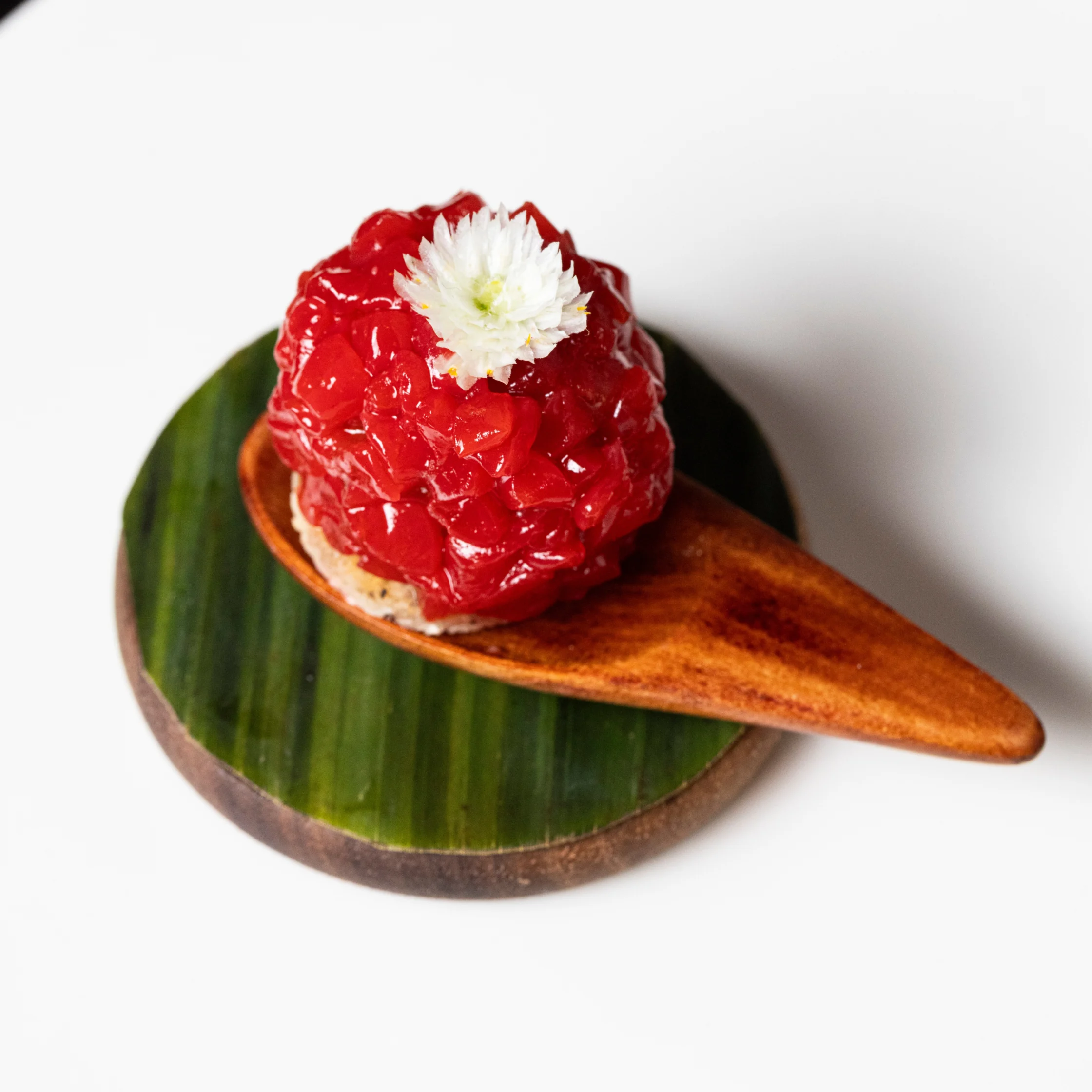
Wrapping up the tasting menu was the Five Stages of Coconut, which depicted all the life forms of coconut in the form of pianono. Literally a depiction of a coconut’s usefulness, its taste was still balanced despite the repeated usage of the fruit.
Meet Digámo’s Mastermind
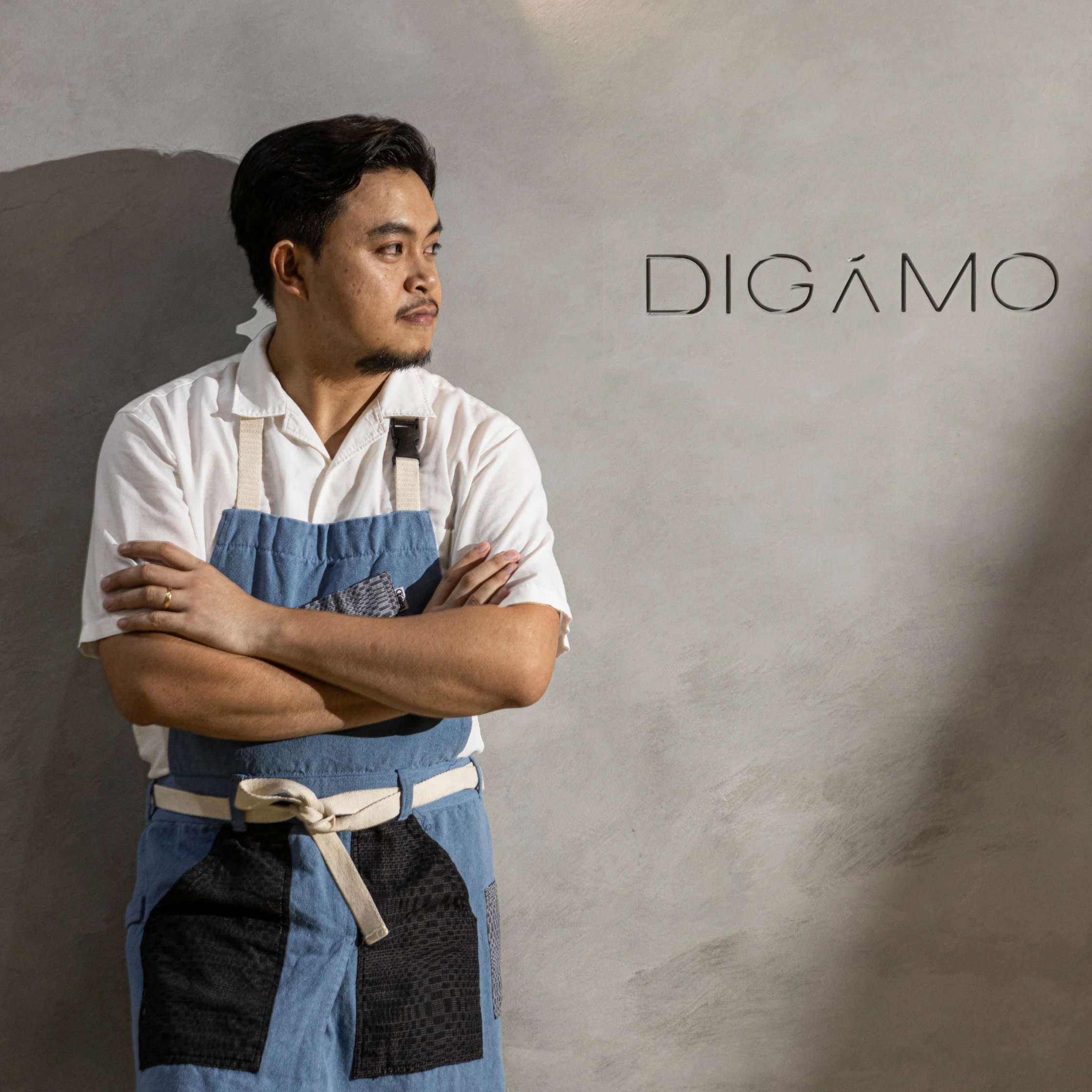
If there’s one thing that Chef Francis Lacson’s tasting menu proved, it’s that he’s a gastronomic storyteller. “I grew up in a family of community cooks in Mambusao, Capiz. I was raised among a lineage of cooks—grandparents and uncles who were hired for our town’s celebrations. They used to bring me and let me help butcher chickens. Being a self-taught chef, my “training” was a rigorous immersion into the restaurants I and my friends opened in Capiz and Iloilo.
As Digámo has opened its blue door to each guest, this project was truly a full circle moment for him. “Digámo is the fruition of a promise I made to myself a decade ago: to cook the food that actually defines our Filipino-ness.”
Digámo is located at GCN Commercial Building, 240 NW Narra St, Marikina, 1810 Metro Manila.

Frequently Asked Questions
Digámo is a Filipino degustation restaurant in Marikina created by Chef Francis Lacson. Its tasting menu explores Filipino identity, culture, history, and regional ingredients through contemporary cuisine.
Digámo is located at GCN Commercial Building, 240 NW Narra St, Marikina, 1810 Metro Manila.
Chef Francis Lacson is a self-taught Filipino chef from Mambusao, Capiz, whose culinary philosophy focuses on exploring Filipino identity through food, storytelling, and regional traditions.
Playful Evolution is Digámo’s inaugural 10-course tasting menu that examines the evolution of Filipino cuisine through indigenous ingredients, regional dishes, historical influences, and modern techniques.
Digámo serves contemporary Filipino cuisine through a degustation format, featuring dishes inspired by regional traditions, indigenous ingredients, and cultural influences that shaped Filipino food.
Guests may contact Digámo directly through its official social media pages and reservation channels for availability and booking information.