Advertisement

No Bad Blood Here: 4 Interesting Filipino Blood Stews You Should Know

No bad blood among these regional cousins—just plenty of pork, bold flavors, and delicious differences.

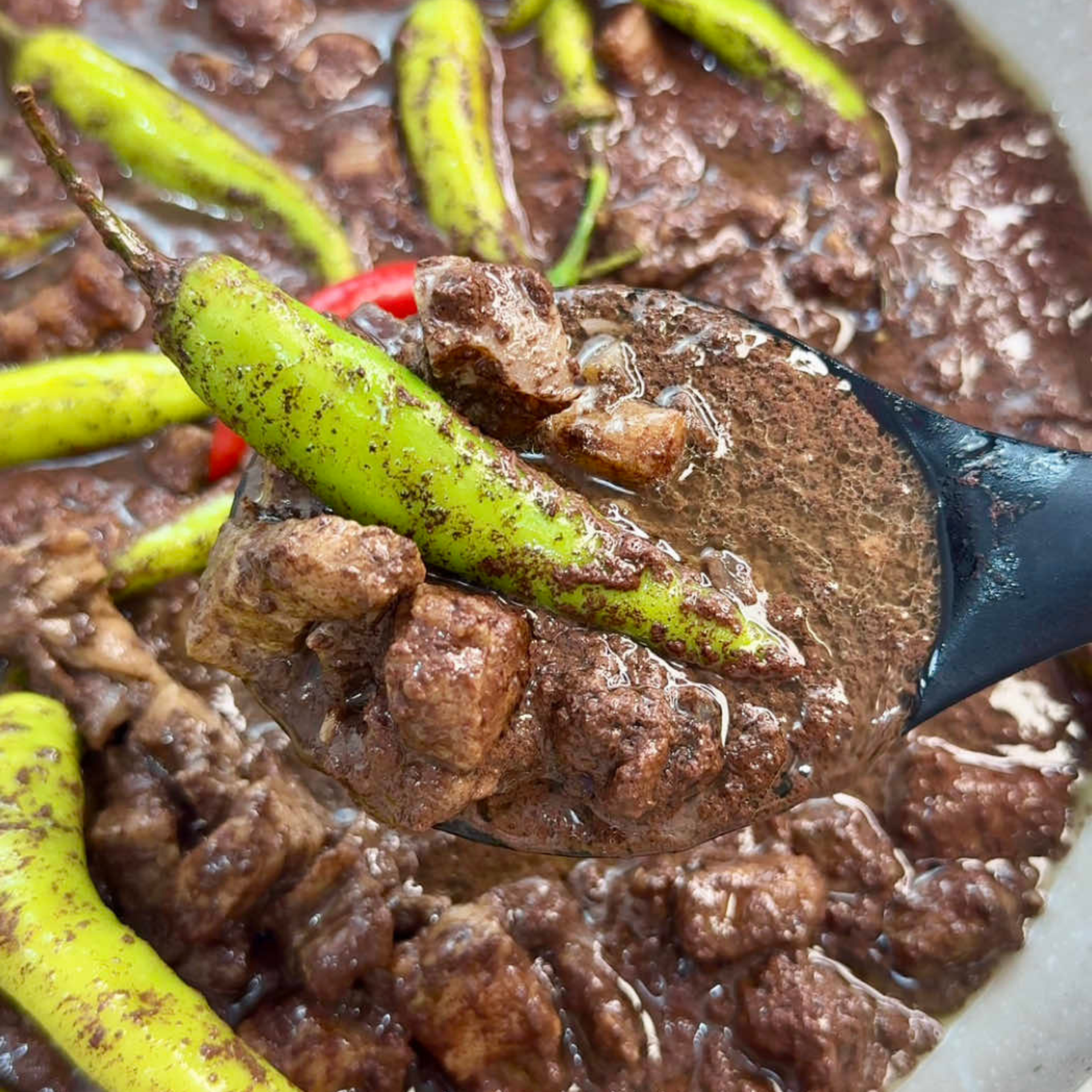
FILIPINO BLOOD STEW Dinuguan lead photo PHOTO COURTESY OF Busog PH on TikTok
You probably know what dinuguan is, but are you familiar with its regional blood relatives? [PHOTO COURTESY OF Busog PH on TikTok]

Dinuguan might be the most famous, but it’s just one of several Filipino blood stews shaped by a diverse cast of regional cooking traditions and ingredients. 

While all of them share the same foundation of pork and blood, each variation brings something different to the table—whether it’s dinardaraan’s drier texture, tinumis’ tamarind tang, or tidtad’s chunks of coagulated blood.

Here’s what sets these four Filipino favorites apart.

1. Dinuguan

If there’s a Filipino blood stew that people already know, it’s probably dinuguan.

Rich and savory, it’s typically made with bite-sized chunks of pork simmered in its signature dark sauce made from pig’s blood, vinegar, garlic, onions, and green chilis. Depending on who’s cooking, it can be made with different cuts of pork, while some versions also include offal for even more depth and texture.
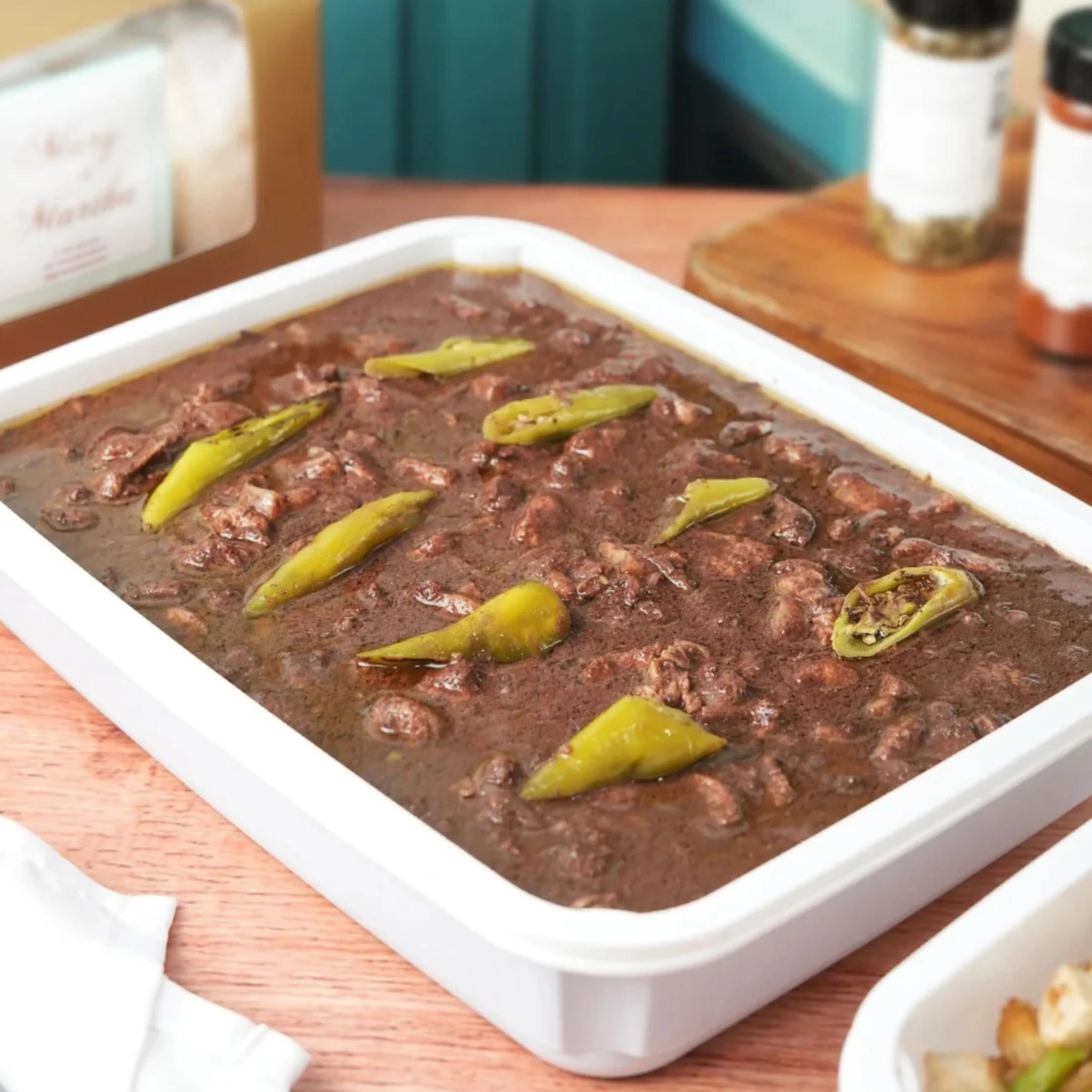
FILIPINO BLOOD STEW Dinuguan PHOTO COURTESY OF Mary Martha Official Website
Dinuguan [PHOTO COURTESY OF Mary Martha Official Website]

It’s understandably meaty, so it’s on the vinegar to bring balance to the thick, almost-creamy sauce. Best enjoyed over steamed rice or alongside a piece of fluffy puto, dinuguan is a familiar fixture on Filipino tables, and a good starting point for understanding the regional variations that follow.

2. Dinardaraan

If dinuguan is the saucy classic, then dinardaraan, or sometimes called mollo, is its drier, more intense cousin from up north.

Often cooked down until most of the liquid evaporates, this Ilocano blood stew carries the same rich, savory flavors of pork and blood but is noticeably oilier too.
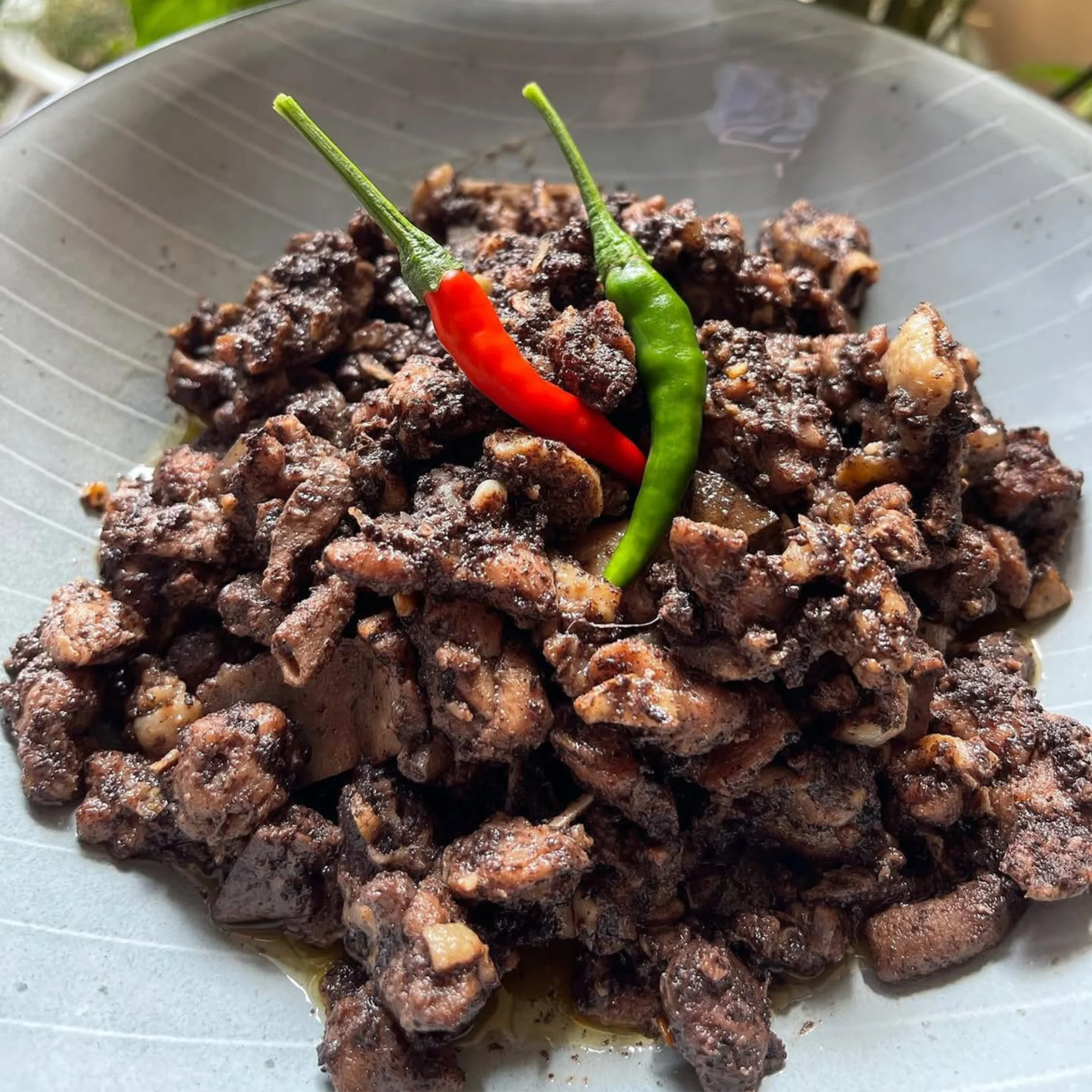
FILIPINO BLOOD STEW Dinardaraan PHOTO COURTESY OF kusinerangnarsss on Instagram
Dinardaraan [PHOTO COURTESY OF @kusinerangnarsss on Instagram]

Traditional versions are said to use pork offals, innards, and of course blood. Some recipes, however, choose to add a satisfying crunch to the otherwise rich dish with crispy pork belly or bagnet.

Garlic, onions, and plenty of long green chilies bring even more flavor and heat to the mix. And like its cousin dinuguan, dinardaraan is typically enjoyed with steaming white rice or puto—perfect vessels for soaking up whatever sauce remains.

3. Tinumis

Tinumis may look like every other Filipino blood stew, but one ingredient is responsible for its totally different personality: tamarind.

A regional favorite from Nueva Ecija, this pork stew trades in the tang of vinegar for the sharp sourness of sampaloc.
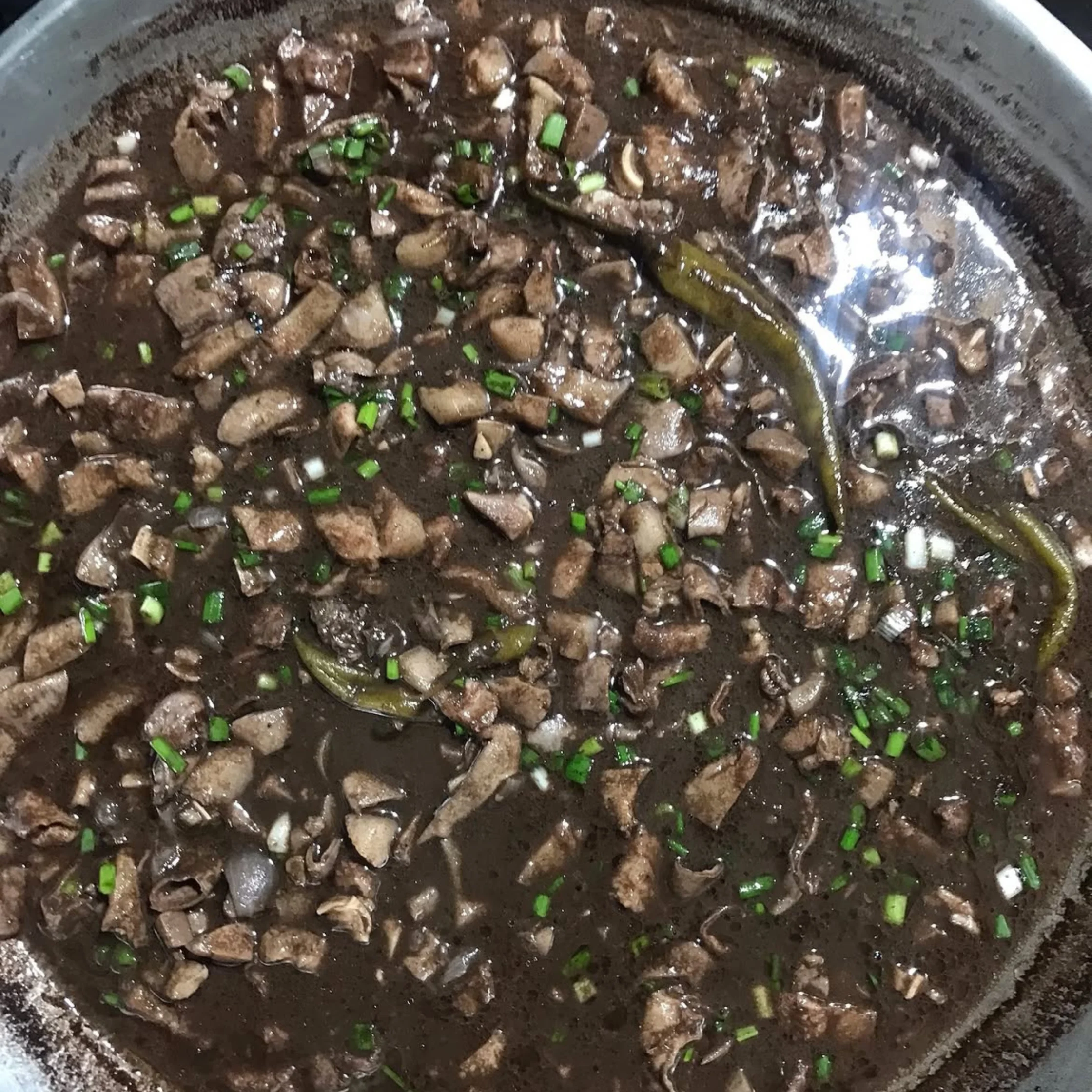
FILIPINO BLOOD STEW Tinumis PHOTO COURTESY OF foodamnphilippines on Instagram
Tinumis [PHOTO COURTESY OF @foodamnphilippines on Instagram]

And much like its relatives, the pork, aromatics, fiery chilies, and blood all come together in a single pot to create a rich stew with both savory notes and a refreshing sour kick.

The latter is thanks to the tamarind’s natural acidity, which helps cut through the richness of both the pork and the sauce it’s swimming in. It may share dinuguan’s dark, comforting character, but the tamarind gives tinumis a flavor all its own.

4. Tidtad

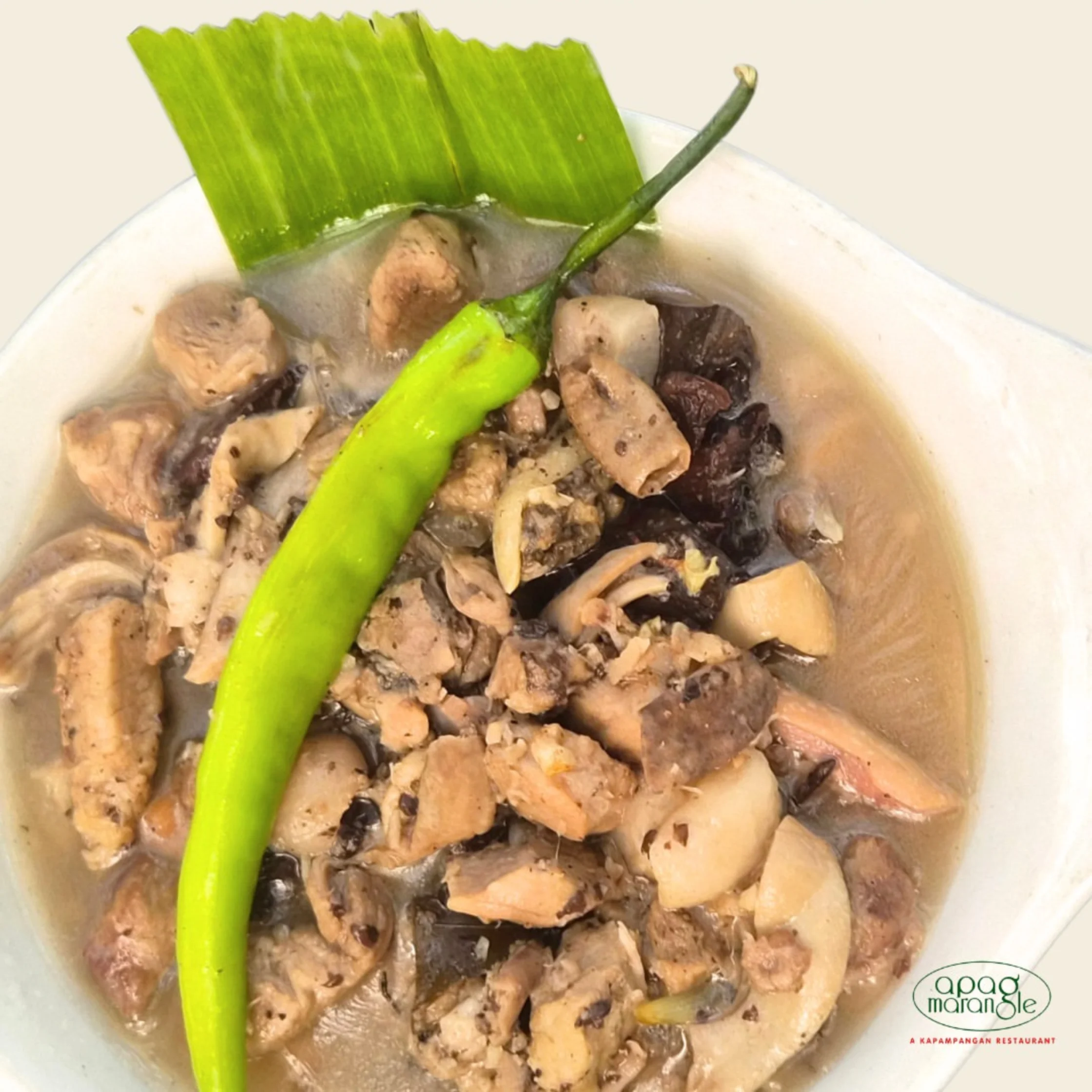
Crowned the culinary capital of the Philippines, Pampanga is no stranger to Delish-cious dishes—and tidtad is no exception. As the Kapampangan take on dinuguan, tidtad stands out visually because of its lighter, soup-like broth.

Instead of the usual thick chocolate-like sauce that its more famous relatives have, it incorporates pork blood through solid, coagulated chunks that mingle with the meat

FILIPINO BLOOD STEW Tidtad PHOTO COURTESY OF Apag Marangle Official Instagram
Tidtad [PHOTO COURTESY OF Apag Marangle Official Instagram]

Don’t be fooled, though, because that lighter broth is still packed with flavor, thanks to vinegar, garlic, onions, and chilies, while the chunks of blood add an entirely different texture. It may look different from the usual dinuguan, but the same rich and savory spirit remains.

It’s All in the Blood

Different names, different textures, different flavors—but the same Filipino love for making the most of every ingredient.

Dinuguan, dinardaraan, tinumis, and tidtad each showcase the creativity of regional Filipino cooking, proving that even the most familiar dishes still have plenty of stories to tell.

author avatar
Paolo Elwick
Paolo is a food writer and storyteller exploring the intersections of food, culture, and identity through thoughtful, people-centered storytelling. He believes that, second only to language, food is one of humanity's most powerful expressions of culture—a medium for preserving history, expressing identity, and coming to understand ourselves and connect with others. Drawn to the histories, traditions, and personal experiences behind every dish, his writing combines curiosity with emotional honesty, highlighting diverse voices and celebrating the communities that shape our food landscape. Influenced by writers and artists who embrace vulnerability and introspection, Paolo uses a reflective, metaphor-rich approach to uncover the deeper meanings found in everyday meals and shared tables. He is passionate about creating stories that foster empathy, preserve cultural narratives, and invite readers to see food as more than sustenance—as memory, identity, and belonging. Through his work, Paolo hopes to amplify underrepresented perspectives and spark meaningful conversations that extend far beyond the plate.

Frequently Asked Questions

Filipino blood stews refers to several regional dishes made with pork and pig’s blood, typically combined with aromatics, vinegar or other souring ingredients, and chilies. Dinuguan is the best-known example, but other versions include dinardaraan, tinumis, and tidtad.

author avatar
Paolo Elwick
Paolo is a food writer and storyteller exploring the intersections of food, culture, and identity through thoughtful, people-centered storytelling. He believes that, second only to language, food is one of humanity's most powerful expressions of culture—a medium for preserving history, expressing identity, and coming to understand ourselves and connect with others. Drawn to the histories, traditions, and personal experiences behind every dish, his writing combines curiosity with emotional honesty, highlighting diverse voices and celebrating the communities that shape our food landscape. Influenced by writers and artists who embrace vulnerability and introspection, Paolo uses a reflective, metaphor-rich approach to uncover the deeper meanings found in everyday meals and shared tables. He is passionate about creating stories that foster empathy, preserve cultural narratives, and invite readers to see food as more than sustenance—as memory, identity, and belonging. Through his work, Paolo hopes to amplify underrepresented perspectives and spark meaningful conversations that extend far beyond the plate.

Dinuguan is generally a saucier stew with a thick, rich blood-based sauce, while dinardaraan is an Ilocano version that is often cooked down until it has a noticeably drier, more concentrated texture.

author avatar
Paolo Elwick
Paolo is a food writer and storyteller exploring the intersections of food, culture, and identity through thoughtful, people-centered storytelling. He believes that, second only to language, food is one of humanity's most powerful expressions of culture—a medium for preserving history, expressing identity, and coming to understand ourselves and connect with others. Drawn to the histories, traditions, and personal experiences behind every dish, his writing combines curiosity with emotional honesty, highlighting diverse voices and celebrating the communities that shape our food landscape. Influenced by writers and artists who embrace vulnerability and introspection, Paolo uses a reflective, metaphor-rich approach to uncover the deeper meanings found in everyday meals and shared tables. He is passionate about creating stories that foster empathy, preserve cultural narratives, and invite readers to see food as more than sustenance—as memory, identity, and belonging. Through his work, Paolo hopes to amplify underrepresented perspectives and spark meaningful conversations that extend far beyond the plate.

Tinumis is a regional Filipino blood stew associated with Nueva Ecija. Unlike dinuguan, which typically relies on vinegar for acidity, tinumis gets its distinctive sourness from tamarind or sampaloc.

author avatar
Paolo Elwick
Paolo is a food writer and storyteller exploring the intersections of food, culture, and identity through thoughtful, people-centered storytelling. He believes that, second only to language, food is one of humanity's most powerful expressions of culture—a medium for preserving history, expressing identity, and coming to understand ourselves and connect with others. Drawn to the histories, traditions, and personal experiences behind every dish, his writing combines curiosity with emotional honesty, highlighting diverse voices and celebrating the communities that shape our food landscape. Influenced by writers and artists who embrace vulnerability and introspection, Paolo uses a reflective, metaphor-rich approach to uncover the deeper meanings found in everyday meals and shared tables. He is passionate about creating stories that foster empathy, preserve cultural narratives, and invite readers to see food as more than sustenance—as memory, identity, and belonging. Through his work, Paolo hopes to amplify underrepresented perspectives and spark meaningful conversations that extend far beyond the plate.

Tidtad is a Kapampangan blood stew from Pampanga. It differs visually from dinuguan because it has a lighter, more soup-like broth and incorporates coagulated blood in chunks alongside the pork.

author avatar
Paolo Elwick
Paolo is a food writer and storyteller exploring the intersections of food, culture, and identity through thoughtful, people-centered storytelling. He believes that, second only to language, food is one of humanity's most powerful expressions of culture—a medium for preserving history, expressing identity, and coming to understand ourselves and connect with others. Drawn to the histories, traditions, and personal experiences behind every dish, his writing combines curiosity with emotional honesty, highlighting diverse voices and celebrating the communities that shape our food landscape. Influenced by writers and artists who embrace vulnerability and introspection, Paolo uses a reflective, metaphor-rich approach to uncover the deeper meanings found in everyday meals and shared tables. He is passionate about creating stories that foster empathy, preserve cultural narratives, and invite readers to see food as more than sustenance—as memory, identity, and belonging. Through his work, Paolo hopes to amplify underrepresented perspectives and spark meaningful conversations that extend far beyond the plate.

Pork is the traditional foundation of the blood stews discussed here, although recipes can vary by region, household, and cook. Some versions may also incorporate pork offal or other cuts.

author avatar
Paolo Elwick
Paolo is a food writer and storyteller exploring the intersections of food, culture, and identity through thoughtful, people-centered storytelling. He believes that, second only to language, food is one of humanity's most powerful expressions of culture—a medium for preserving history, expressing identity, and coming to understand ourselves and connect with others. Drawn to the histories, traditions, and personal experiences behind every dish, his writing combines curiosity with emotional honesty, highlighting diverse voices and celebrating the communities that shape our food landscape. Influenced by writers and artists who embrace vulnerability and introspection, Paolo uses a reflective, metaphor-rich approach to uncover the deeper meanings found in everyday meals and shared tables. He is passionate about creating stories that foster empathy, preserve cultural narratives, and invite readers to see food as more than sustenance—as memory, identity, and belonging. Through his work, Paolo hopes to amplify underrepresented perspectives and spark meaningful conversations that extend far beyond the plate.

Filipino blood stews are commonly eaten with steamed rice. Dinuguan is also famously paired with puto, whose mild sweetness and soft texture complement the rich, savory stew.

author avatar
Paolo Elwick
Paolo is a food writer and storyteller exploring the intersections of food, culture, and identity through thoughtful, people-centered storytelling. He believes that, second only to language, food is one of humanity's most powerful expressions of culture—a medium for preserving history, expressing identity, and coming to understand ourselves and connect with others. Drawn to the histories, traditions, and personal experiences behind every dish, his writing combines curiosity with emotional honesty, highlighting diverse voices and celebrating the communities that shape our food landscape. Influenced by writers and artists who embrace vulnerability and introspection, Paolo uses a reflective, metaphor-rich approach to uncover the deeper meanings found in everyday meals and shared tables. He is passionate about creating stories that foster empathy, preserve cultural narratives, and invite readers to see food as more than sustenance—as memory, identity, and belonging. Through his work, Paolo hopes to amplify underrepresented perspectives and spark meaningful conversations that extend far beyond the plate.
paolo elwick delish ph food writer

Paolo Elwick

Writer

Paolo is a food writer and storyteller exploring the intersections of food, culture, and identity through thoughtful, people-centered storytelling. He believes that, second only to language, food is one of humanity's most powerful expressions of culture—a medium for preserving history, expressing identity, and coming to understand ourselves and connect with others. Drawn to the histories, traditions, and personal experiences behind every dish, his writing combines curiosity with emotional honesty, highlighting diverse voices and celebrating the communities that shape our food landscape. Influenced by writers and artists who embrace vulnerability and introspection, Paolo uses a reflective, metaphor-rich approach to uncover the deeper meanings found in everyday meals and shared tables. He is passionate about creating stories that foster empathy, preserve cultural narratives, and invite readers to see food as more than sustenance—as memory, identity, and belonging. Through his work, Paolo hopes to amplify underrepresented perspectives and spark meaningful conversations that extend far beyond the plate.

0 0 votes
Total of Ratings
guest
Rating
Ratings for Article
0 Comments
Oldest
Newest Most Voted

To provide a customized ad experience, we need to know if you are of legal age in your region.

By making a selection, you agree to our Terms & Conditions.