

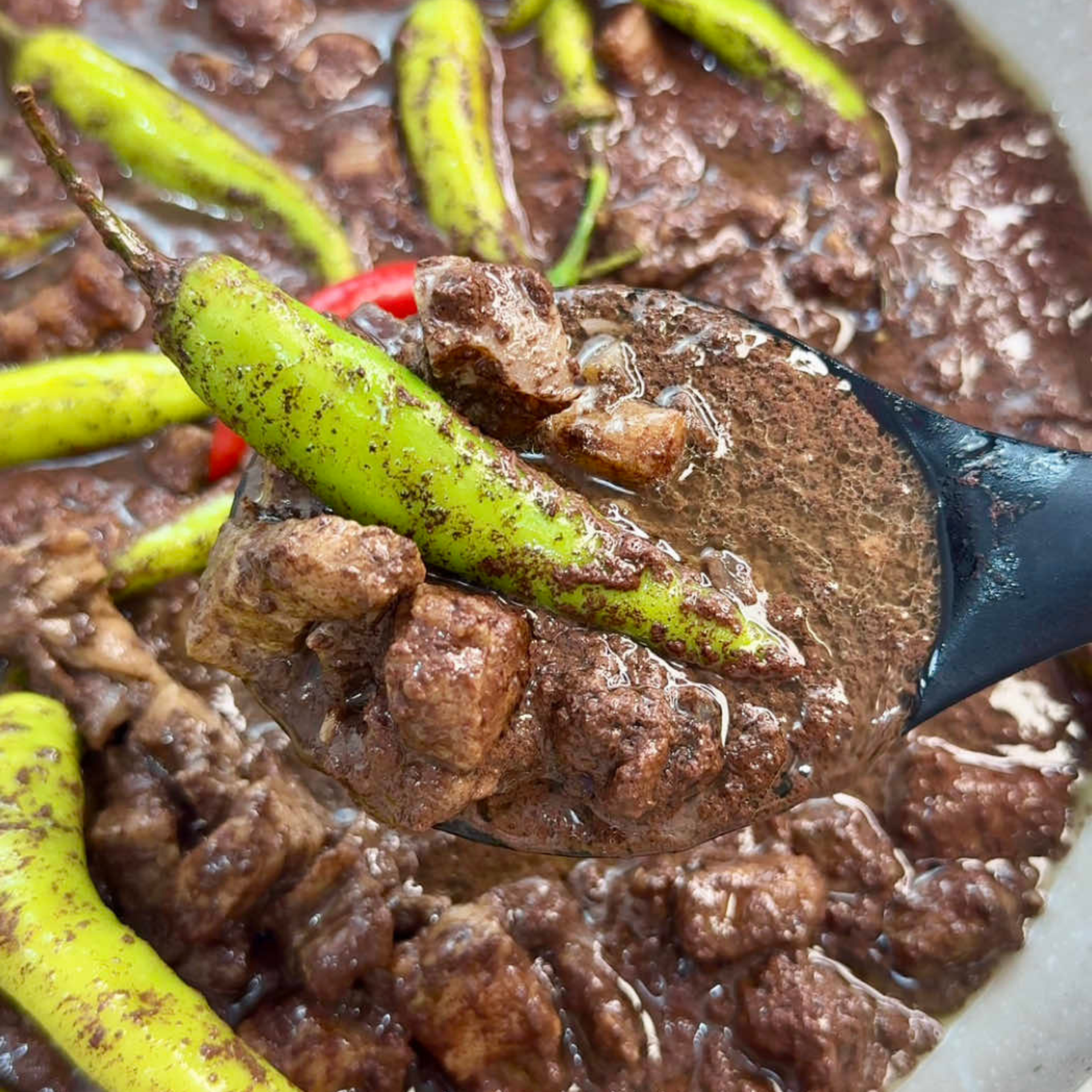
Dinuguan might be the most famous, but it’s just one of several Filipino blood stews shaped by a diverse cast of regional cooking traditions and ingredients.
While all of them share the same foundation of pork and blood, each variation brings something different to the table—whether it’s dinardaraan’s drier texture, tinumis’ tamarind tang, or tidtad’s chunks of coagulated blood.
Here’s what sets these four Filipino favorites apart.
1. Dinuguan
If there’s a Filipino blood stew that people already know, it’s probably dinuguanDinuguanA rich, savory Filipino stew of pork simmered in seasoned pork blood, vinegar, garlic, and long green chilies. Sometimes nicknamed chocolate meat for its dark color, dinuguan is best pairedGo to Dinuguan Glossary.
Rich and savory, it’s typically made with bite-sized chunks of pork simmered in its signature dark sauce made from pig’s blood, vinegar, garlic, onions, and green chilis. Depending on who’s cooking, it can be made with different cuts of pork, while some versions also include offal for even more depth and texture.
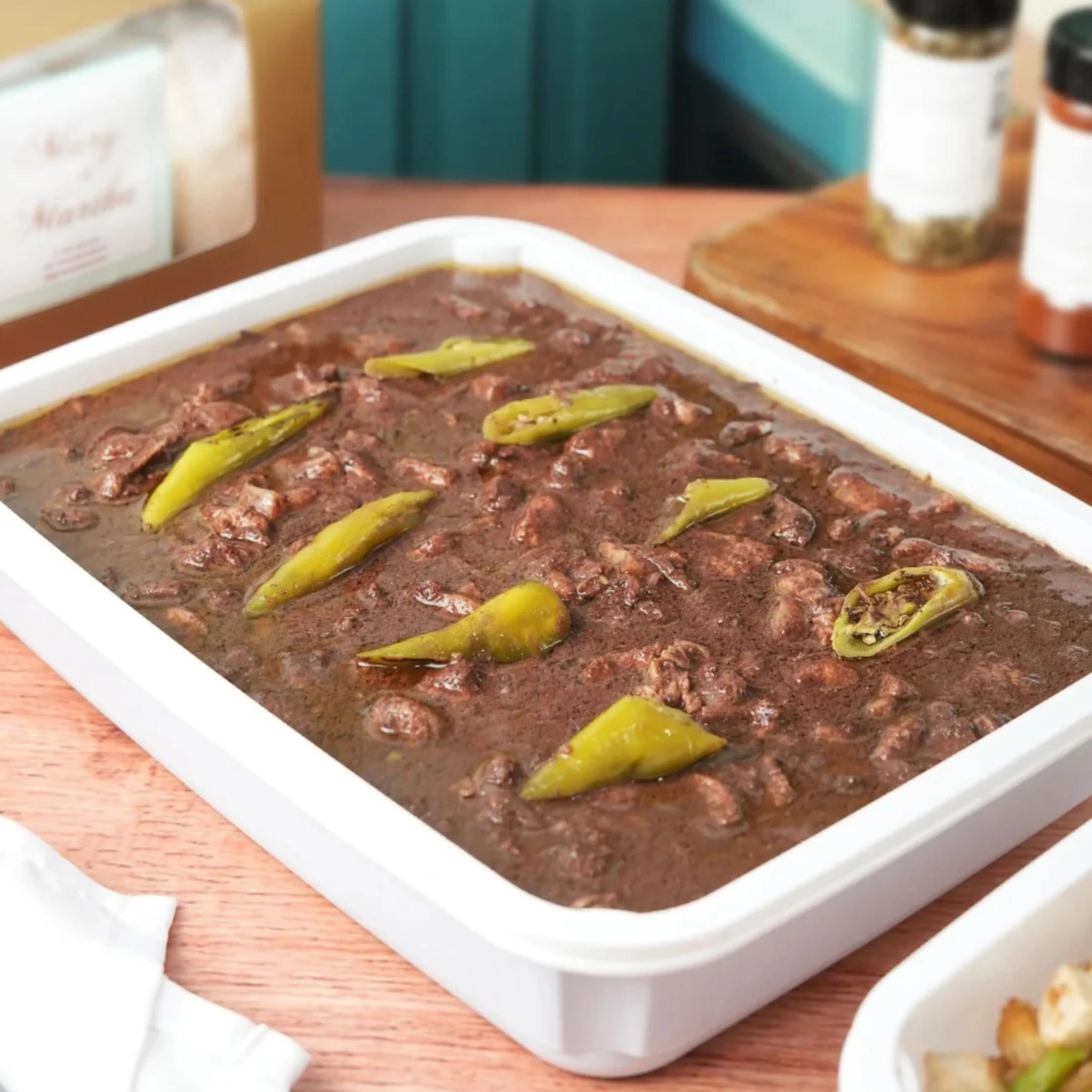
It’s understandably meaty, so it’s on the vinegar to bring balance to the thick, almost-creamy sauce. Best enjoyed over steamed rice or alongside a piece of fluffy puto, dinuguan is a familiar fixture on Filipino tables, and a good starting point for understanding the regional variations that follow.
2. Dinardaraan
If dinuguanDinuguanA rich, savory Filipino stew of pork simmered in seasoned pork blood, vinegar, garlic, and long green chilies. Sometimes nicknamed chocolate meat for its dark color, dinuguan is best pairedGo to Dinuguan Glossary is the saucy classic, then dinardaraan, or sometimes called mollo, is its drier, more intense cousin from up north.
Often cooked down until most of the liquid evaporates, this Ilocano blood stew carries the same rich, savory flavors of pork and blood but is noticeably oilier too.
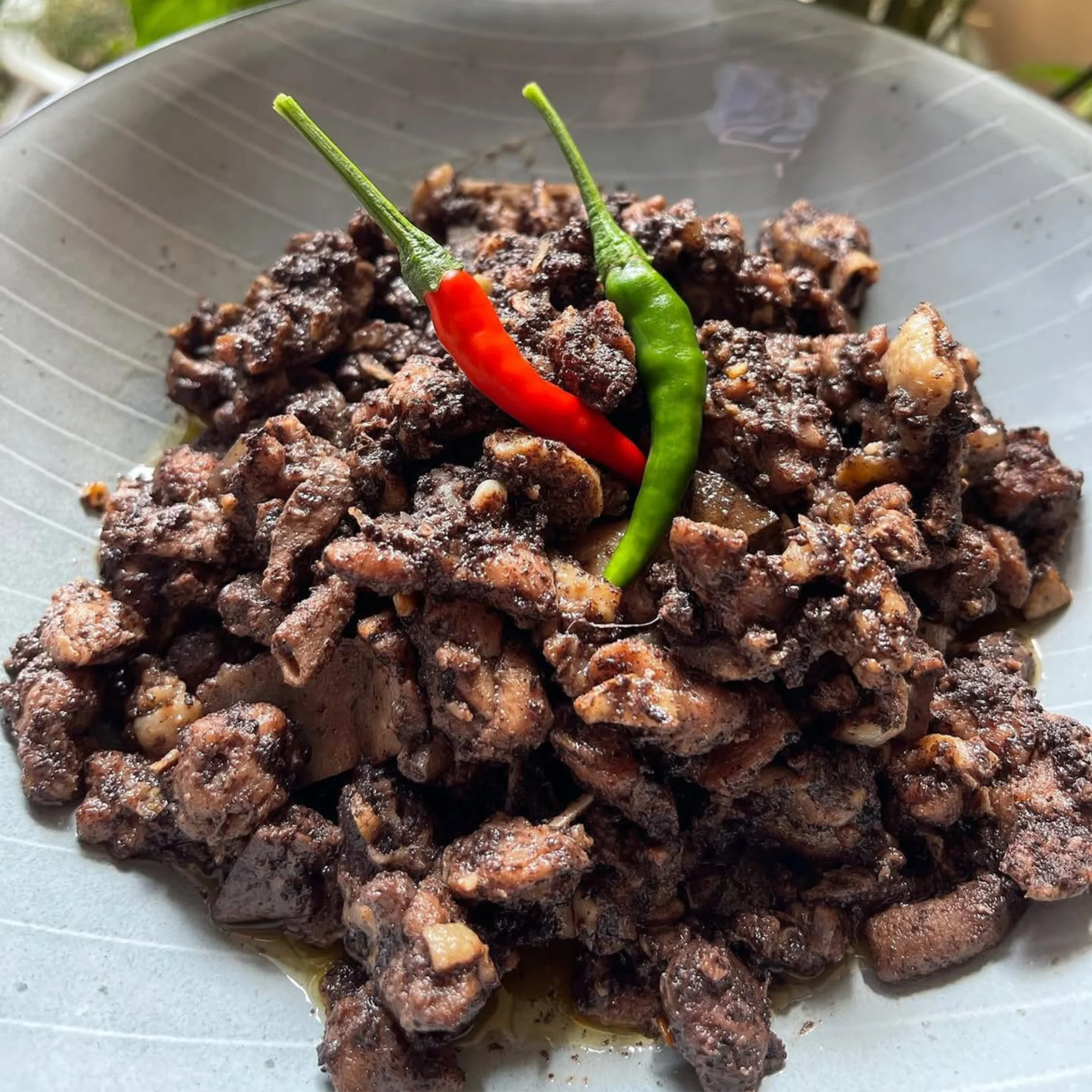
Traditional versions are said to use pork offals, innards, and of course blood. Some recipes, however, choose to add a satisfying crunch to the otherwise rich dish with crispy pork belly or bagnet.
Garlic, onions, and plenty of long green chilies bring even more flavor and heat to the mix. And like its cousin dinuguanDinuguanA rich, savory Filipino stew of pork simmered in seasoned pork blood, vinegar, garlic, and long green chilies. Sometimes nicknamed chocolate meat for its dark color, dinuguan is best pairedGo to Dinuguan Glossary, dinardaraan is typically enjoyed with steaming white rice or puto—perfect vessels for soaking up whatever sauce remains.
3. Tinumis
Tinumis may look like every other Filipino blood stew, but one ingredient is responsible for its totally different personality: tamarind.
A regional favorite from Nueva Ecija, this pork stew trades in the tang of vinegar for the sharp sourness of sampaloc.
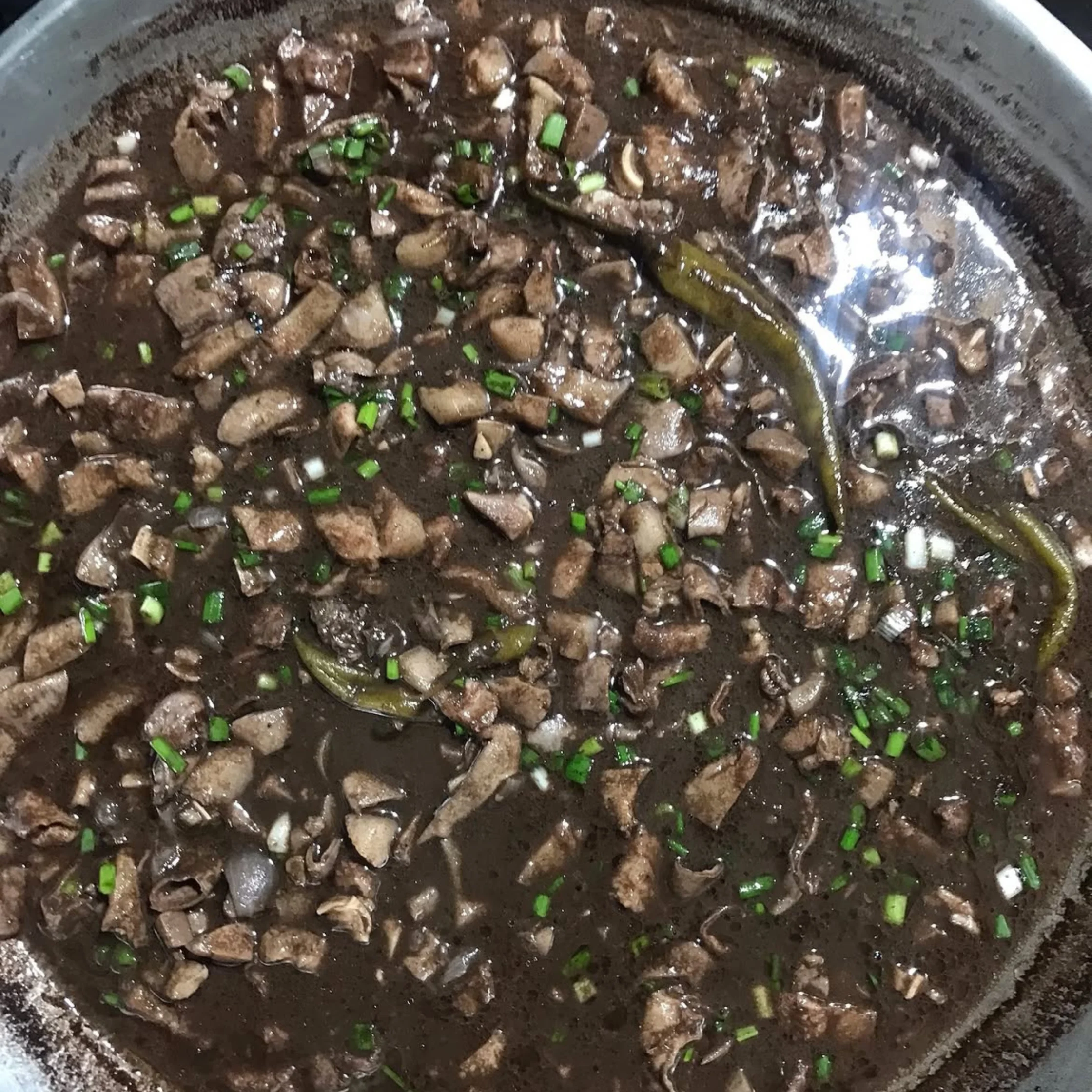
And much like its relatives, the pork, aromatics, fiery chilies, and blood all come together in a single pot to create a rich stew with both savory notes and a refreshing sour kick.
The latter is thanks to the tamarind’s natural acidity, which helps cut through the richness of both the pork and the sauce it’s swimming in. It may share dinuguan’s dark, comforting character, but the tamarind gives tinumis a flavor all its own.
4. Tidtad
Crowned the culinary capital of the Philippines, Pampanga is no stranger to Delish-cious dishes—and tidtad is no exception. As the Kapampangan take on dinuguanDinuguanA rich, savory Filipino stew of pork simmered in seasoned pork blood, vinegar, garlic, and long green chilies. Sometimes nicknamed chocolate meat for its dark color, dinuguan is best pairedGo to Dinuguan Glossary, tidtad stands out visually because of its lighter, soup-like broth.
Instead of the usual thick chocolate-like sauce that its more famous relatives have, it incorporates pork blood through solid, coagulated chunks that mingle with the meat.
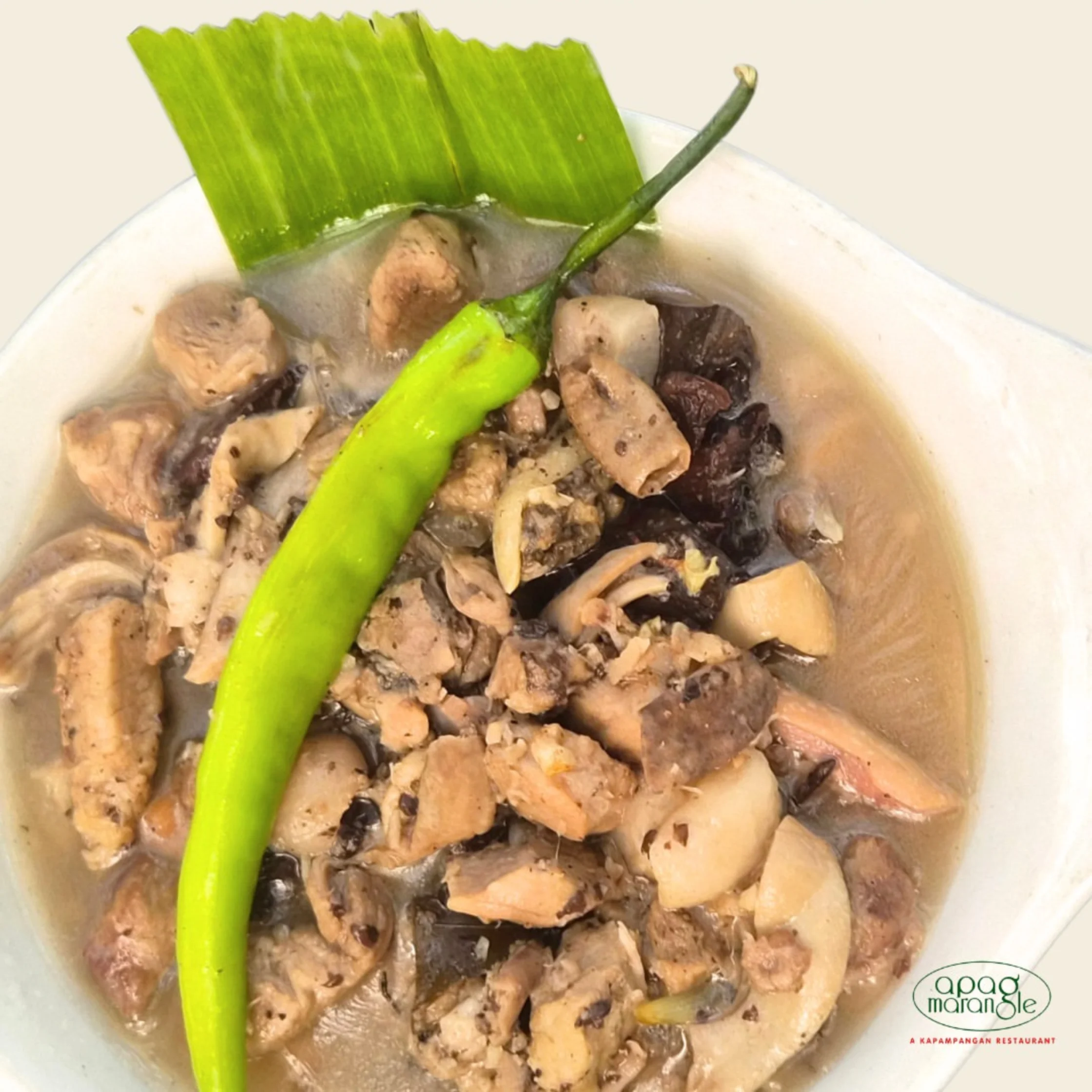
Don’t be fooled, though, because that lighter broth is still packed with flavor, thanks to vinegar, garlic, onions, and chilies, while the chunks of blood add an entirely different texture. It may look different from the usual dinuguan, but the same rich and savory spirit remains.
It’s All in the Blood
Different names, different textures, different flavors—but the same Filipino love for making the most of every ingredient.
Dinuguan, dinardaraan, tinumis, and tidtad each showcase the creativity of regional Filipino cooking, proving that even the most familiar dishes still have plenty of stories to tell.

Frequently Asked Questions
Filipino blood stews refers to several regional dishes made with pork and pig’s blood, typically combined with aromatics, vinegar or other souring ingredients, and chilies. Dinuguan is the best-known example, but other versions include dinardaraan, tinumis, and tidtad.
Dinuguan is generally a saucier stew with a thick, rich blood-based sauce, while dinardaraan is an Ilocano version that is often cooked down until it has a noticeably drier, more concentrated texture.
Tinumis is a regional Filipino blood stew associated with Nueva Ecija. Unlike dinuguan, which typically relies on vinegar for acidity, tinumis gets its distinctive sourness from tamarind or sampaloc.
Tidtad is a Kapampangan blood stew from Pampanga. It differs visually from dinuguan because it has a lighter, more soup-like broth and incorporates coagulated blood in chunks alongside the pork.
Pork is the traditional foundation of the blood stews discussed here, although recipes can vary by region, household, and cook. Some versions may also incorporate pork offal or other cuts.
Filipino blood stews are commonly eaten with steamed rice. Dinuguan is also famously paired with puto, whose mild sweetness and soft texture complement the rich, savory stew.